Making an Emotional Impact on Readers

Photo by Suzy Hazelwood on Pexels.com

When I think back to the best books I’ve ever read, the ones that stand out most have made an emotional impact on me. They have made me feel something that I didn’t feel before. It doesn’t happen often, but when it does, it’s magic. And isn’t that what we want to create with our writing? Magic. Wouldn’t it be nice to make readers feel something when they read your work?

That something can be anything—joy, anger, surprise. Some books I’ve read have put a huge smile on my face, like The Messy Lives of Book People by Phaedra Patrick. Others have left me feeling sad but hopeful, like The Book of Ruth by Jane Hamilton and The Nightingale by Kristin Hannah. Yet others leave me feeling introspective, like The Truth about Forever by Sarah Dessen. 

While each of these books represent different genres, the one thing they have in common is the presence of empathy. Some would call that heart. Without heart, without empathy, what kind of story do you have? A story that isn’t memorable.

How do these authors create this literary magic? Why do their books touch my heart and soul when so many others don’t? There are five things that these stories have in common.

They craft an engaging plot. Not only do these best stories begin with a compelling premise, they take me on a journey with more twists and turns than a roller coaster ride.  Note how many twists occurred toward the end of The Nightingale that, at times, shocked and saddened me (and many other readers, I’m sure). Those plot twists were even more dramatic to me because I bought into the story from the very beginning. I had connected with the characters, and I saw what was at stake for them. With rising stakes, the story built momentum toward a dramatic conclusion.

They create relatable main characters. If I can’t connect with the main character, I’m not likely to follow along on their journey. Creating meaningful and relatable characters takes skill. Authors need to understand everything about them—what they look like, what they think, their habits and hobbies. Even if they aren’t the most likeable people, there is something about them that makes me want to root for them, like Ruth in The Book of Ruth, who was smarter and more observant than people in her life gave her credit for. There is usually something they desire, something they feel is lacking in their lives, like love, success, respect, or wealth. Put them into difficult situations with rising stakes, and I can’t help but follow them on their journey. When I can see the complexity of a character’s personality, complete with their strengths, flaws and desires, I can relate to them more easily

They bring us inside the character’s world view. There are moments when the lead character pauses to reflect on the world around them and what they have experienced. Through their thoughts, I’m able to see how the character was changing and growing. Dessen is especially adept at this, often bringing me inside her character’s head so I could see the world through her eyes, often written with an emotional depth and empathy far beyond her character’s teen years.  

They provide vivid sensory details and imagery.  Through vivid sensory details and imagery, these authors created a world for me to experience along with their characters. I saw what they saw, whether that’s the deep blue of the ocean or the various shades of green in the forest. I could taste the crispness of the apple, smell the sweetness of freshly baked cookies just out of the oven, or hear the roar and whistle of the wind during a storm. These details, gave me a sense of place as if I was there with the characters. It’s another way I connected with the characters.

They provide a satisfactory ending. There is nothing more disheartening than to spend hours reading a book that doesn’t resolve all the conflicts to the readers’ satisfaction. When I’ve spent so much time with a story, I want to see the pay off at the end. When it doesn’t come, I feel cheated. In the best books I’ve read, the author tied up loose ends in a way that made sense to the story. It may not have been the happiest of endings, but at least, it provided some hope for the characters’ future. And that makes reading the story worthwhile.

The best books are ones you want to keep reading, even after the story ends. The best ones touch you in some emotional way, and that’s what makes them memorable and shareable.

What about you? What books have left an emotional mark on you? How did the author accomplish that?


10 Signs Readers Connect with a Story

Photo by Inna Lesyk on Pexels.com

Over the weekend, I stayed up past my regular bed time to finish a book I’d been reading. That doesn’t happen often. Usually, after reading a chapter or two, I’m ready to hit the sack.

But this book, The Truth about Forever by Sarah Dessen, made me want to keep reading until the end. With about 40 pages left to read and the climax fast approaching, I didn’t want to wait until the morning to find out how the story ended. So I kept reading.

That experience made me wonder about reader engagement. Are there certain signs or behaviors that show readers are engaged with your story? I thought about my own reactions when I read. I started to notice the differences between how I feel about a story that truly engages my heart and mind and ones that fail to connect with me.

There’s a lesson to be learned here for aspiring writers. When writing your own stories, think about how you want your readers to react to them. What do you want them to remember about your story? How do you want them to feel when they finish reading it?  

So how do you know your story is connecting with readers? Here are the signs I’ve noticed in my reading experience. Which of these reactions resonate with you?

  • I keep turning the pages to find out what’s next. Sometimes that means staying up late past my bed time to finish reading a book. Especially if I’m getting close to the end of the book and I want to finish it. It’s that feeling of unfinished business that prevents me from turning off the light. So I keep turning the pages until I get to The End.
  • I mark the pages with memorable passages. Some of the books that are the most engaging tend to have moments of profound insight. When I find a passage that’s especially poetic and insightful, I use a post-it note to tab those sections, just in case I want to go back and read them. That way, I can find them more easily.
  • I want to find out more about the author. Where are they located? Did they obtain an MFA? How many other books did they write? After reading Dessen’s book, I did a Google search about her and read summaries of her other books, making note of which ones I want to read.
  • I refuse to give the book away—at least not right away. After I’ve read my favorite books, they tend to sit on my shelf for several years sometimes. A part of me wants to stay connected with the story for as long as possible. By giving the book away, I feel like I might forget the story. So I hold onto it until I’m ready to part with it, usually when I need to make space for other books.
  • I share my experience with other readers. I gladly refer the book to someone else who’s looking for an engaging read. I might even take a photo of the cover and share it with my friends on Facebook. Or I might write about it here on my blog. If the book is that good, it’s a shame to keep it to yourself. I have to let other people know about it.
  • I tell myself that this is the type of story I want to write. I observe how the writer has weaved the plot points, developed the characters and created suspense. There’s a lot I can learn from observing how they developed their story. Add to it some emotional insight or message that resonates with me, and I’ve found the formula for success. I know then that that’s the type of story I want to write.
  • I constantly think about the story and the characters when I’m not actively reading it. I could be doing some house cleaning or going for a walk, but I may still think about certain scenes that somehow stay with me.
  • I occasionally think about the book long after I’ve read it. It could be six months later or several years later, and I’m still thinking about the story. Perhaps that is the greatest level of engagement—longevity. I will always remember how I felt reading the ending of The Nightingale, even though I read it about five years ago. Some books simply have staying power.
  • The book touches my emotions in some way. When I get to the end of a story, I check in with myself. How do I feel about how the story ended? Satisfied? Surprised? Disbelieving? When I finished reading The Messy Lives of Book People by Phaedra Patrick (which is still sitting on my book shelf), I recall having a big smile on my face. The book gave me such joy, and the journey the author took me on was satisfying in so many ways. Patrick resolved all the plots in a way that not only made sense, but made me feel good. That’s a mark of a smart story teller.
  • I develop a relationship with the main character. When I can connect with the main character, I have more at stake in the story—the protagonist’s story. I’m a bit partial to first person POV, and Dessen used it effectively to bring emotional depth to her main character. I felt her pain and her joy. I saw what she saw and experienced what she did. When I connect with the main character, I want to keep reading to make sure they find their happily ever after.

    What about you? What signs do you see in your own reading experience that show you are truly engaged with the story?

Favorite Books of 2023

Photo by Alissa Nabiullina on Pexels.com

Hello readers! Hope the New Year is getting off to a strong start. I’m back from my holiday break feeling refreshed and ready to work toward my writing goals. Hope you are too!

Before I get too deeply into this week’s post, I want to tell you about one small change to my website. As you may know, I post a writing prompt on my site. I tried to post the prompt every week, but frankly, it got more difficult to come up with a situational writing prompt. This year, I decided to post the  writing prompt twice a month, on the 15th and 30th of the month.

Secondly, in the past, the prompts had focused on a situation, such as a surprise guest or an event that takes place during a storm. But this year, the prompt will feature a word or phrase that might conjure up a memory or inspire you to write a scene related to that word.

For example, this week’s word is “bittersweet.” What images come to mind for that word? Perhaps it’s a bittersweet moment in your life? Or perhaps you tasted something that was bittersweet. Whatever that word might mean for you will lead you to your essay or short story. Hope those words/phrases will inspire you to write your best stories.

Now back to this week’s post.

Before we get too far into the New Year, I like to reflect on the books I’ve read over the past year. As usual, I created my own reading challenge to read a variety of genres. I find that reading different genres and writing styles keeps me honest as both a reader and a writer.

That said, 2023 was not the best year for my reading. Sure, I read a variety of stories, from mystery and romance to memoir and nonfiction, but few of impressed me.

What I look for in a novel is good storytelling, an interesting premise, strong, compelling characters, surprising plot twists and a satisfying ending. Below are my favorite books that excelled in those areas.

Before We Were Yours – Lisa Wingate
Told in a dual timeline in the past and present, Before We Were Yours is one of Wingate’s best. I was immediately drawn into the story, and the events of the past and the break-up of the five children was heartbreaking. This book was hard to put down, and the story and its characters stayed with me long after it ended.

The Little French Bistro – Nina George
It’s rare to read a book featuring a main character over the age of 60. This year I read two of them. (See Arthur Pepper below.) Wanting to escape her loveless marriage and boring life in London, Marianne wants to end her life. Rescued by a good Samaritan, she decides to venture out of London, joining up with a tourist group and ending up in a small French town where she meets a cast of characters who open her up to new possibilities for the future and who convince her that her life is only just beginning.

The Guest List – Lucy Foley
This is the first novel I’ve read by Foley, and it won’t be the last. As guests gather on a remote Irish island for a wedding, several of them are nervous about events from the past. The dual timeline didn’t slow down the pace of the story, but it could be confusing at times. Readers see events unfold from the points of view of five different characters, each with a reason to kill the victim. The speedy pacing made this a difficult book to put down.

The Last Thing He Told Me – Laura Dave
Of all the books I read the past year, this one was the most suspenseful. In an interview with Dave I heard last year, she admitted that it took her 12 years to write this book. She kept going back to it ever so often, sure that there was a nugget of a story. It was worth waiting for. A strong female lead character, snappy dialogue and brisk pacing made this a fast, easy read. I’m looking forward to reading more of Dave’s books.

The Curious Charms of Arthur Pepper – Phaedra Patrick
I adored Patrick’s last release, The Messy Lives of Book People, so I figured this novel would be just as good. Arthur Pepper is a 60-something widower who feels lost without his wife. While searching through his wife’s belongings, he comes across a piece of jewelry that belonged to her, which he knows he never gave her. He begins to wonder who is wife really is and what other secrets she may be hiding. In a series of events and journeys, Arthur begins to learn more about his wife, and about himself.

In Five Years – Rebecca Serle
Imagine waking up five years in the future in an apartment that is not yours and next to a man who is not your husband? That is the premise for this engaging novel by Serle, who takes readers on a time travel journey that makes you realize that things aren’t always as they seem. At the start, the story gives the impression of being a lightweight rom-com, only to turn somber at the midpoint. After a few interesting plot twists, the story hints at a happy ending. It’s a rare story that I still think about a whole year after I’ve finished reading it.

Honorable Mentions:
While not my personal favorites in 2023, the following books were worth reading for one reason or another.

Look Again by Lisa Scottoline – suspenseful, strong female lead
While Beauty Slept by Elizabeth Blackwell – a reimagined story of Sleeping Beauty
The Woman in Cabin 10 by Ruth Ware – psychological thriller set on a private luxury cruise ship
Safe Haven by Nicholas Sparks – fun, suspenseful read, perfect for summer
Lessons in Chemistry by Bonnie Garmus – Didn’t love the book as much as everyone else seemed to, but I felt I had to read to see what the excitement was about.

What about you? What were the best books you read in 2023?

Tips for Designing a Compelling Book Cover for Your Novel

Photo by Dids on Pexels.com

Have you ever bought a book solely because you were drawn to its cover? Or are you planning to self-publish and are struggling to find the right balance of imagery and text?

Let’s face it. Some book covers are more interesting than others. But just because it looks good doesn’t mean it will do what it’s supposed to do, which is to sell books.

When produced well, the cover design should not only grab readers’ attention, it should communicate several things to readers, such as:

* show an intriguing focal point
* provide a subtle preview of the plot
* introduce the protagonist
* establish the book’s genre and tone

I’ll tackle each one of these in detail.

An intriguing focal point
When you first look at a book cover, where does your eye automatically go? It might to an image, like the drawing on the cover of Lessons in Chemistry. If the author is well-known, their name might appear larger than the book title. In many cases, it might be the book title itself that in larger print to draw your attention. This may be especially true for newer writers who haven’t earned the name cache of a Stephen King or a Nora Roberts. Comb your shelves for examples. Notice the ones that stand out and which ones don’t. Then experiment by replicating a focal point suitable for your work in progress.

A subtle preview of the plot
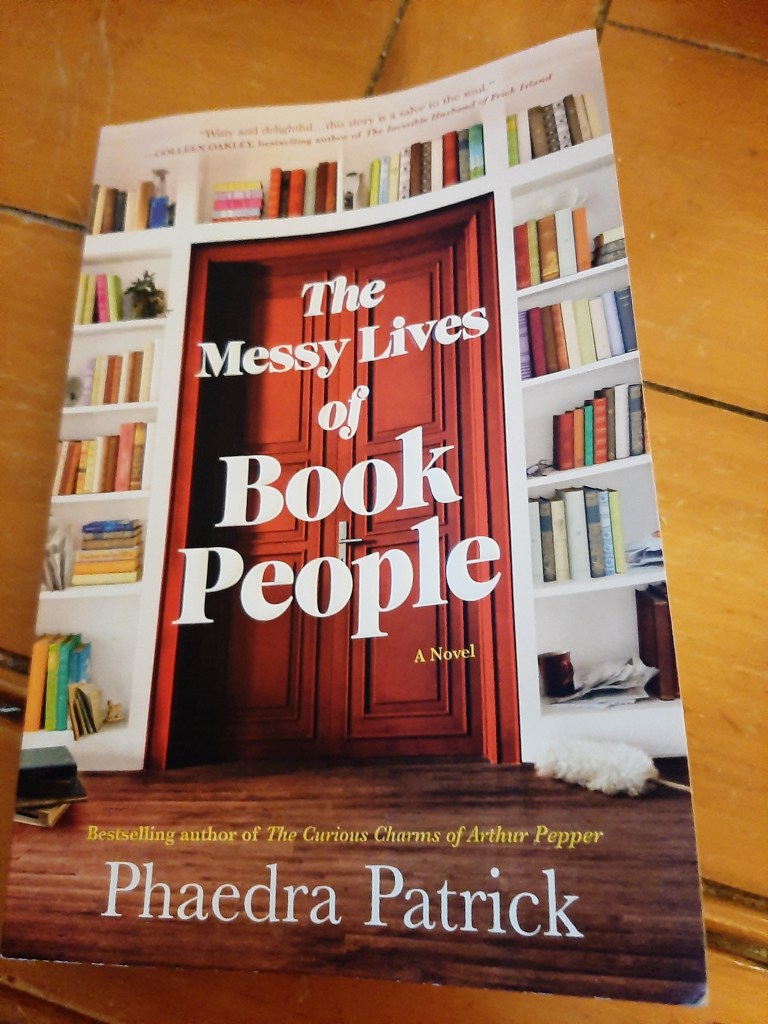
The combination of imagery and title should hint at the plot. For example, the cover of The Messy Lives of Book People by Phaedra Patrick features a background image of a closed door surrounded by shelves of books, hinting at the story of a house cleaner tasked with finishing her employer’s last novel behind closed doors. Think about the key point of your story, then select images that present the clearest representation of that point.

An introduction to the protagonist
In addition to hinting at the plot, the cover design should also hint at the protagonist in some way. The image could reflect the person’s face, such as the ghostly image of Coralie Sardie whose story is at the heart of The Museum of Extraordinary Things by Alice Hoffman. It could also hint at their occupation or where they live. In The Hundred-Foot Journey by Richard C. Morais, for example, the image of someone slicing the skin off a piece of fruit with the silhouette of the Eiffel Tower behind it hints at a young man’s journey as a chef in Paris. As with the plot, think of your protagonist’s character and their journey, then choose an image that reflects their story.

The book’s genre and tone

Make sure the cover design is suitable for the book’s genre and establish the right tone. You want readers to recognize the type of story it is at first glance. For a light-hearted rom-com, for example, you might use lighter colors or pastels for the background with some humorous or playful image. On the other hand, mysteries and thrillers are likely to have darker backgrounds with equally darker images, like dripping blood or a bottle of poison.

More tips for book cover designs

1. Keep it simple, almost minimalistic. Covers that are overly complicated and cluttered have difficulty reaching readers. Give the cover some space to allow any images and text to breathe. “Using space wisely draws attention to the elements that you want potential readers to focus on, writes Jessica Bell at Jane Friedman.com.

2. Be unique and distinctive. You don’t want your book to look like every other one on display. Referring to Lessons in Chemistry again, the cover is simple with a single image and bright orange-salmon color that captures the eye. The color stands out because you rarely see it on book covers. If the cover’s goal is to sell the book, think of ways to make the cover stand out while still staying true to the story.

3. Create strong composition. The experts at Self-Publishing School suggests following the rule of thirds. Imagine breaking up the cover into three sections, allowing enough space for the book title, author name and image. Again, check your book shelf for examples. Add patterns and texture in subtle ways so they don’t distract readers.

4. Don’t overlook the back cover or spine. According to the design experts at Ingram Spark, the back cover usually includes a brief book summary, book reviews, an author bio, the ISBN number and bar code. Make sure the book title is clearly marked on the spine so readers can see it when standing upright on a shelf.

Whether you design the cover yourself or work with a professional designer, it’s helpful to keep these tips in mind. When conceived and designed well, your book cover can go far to market your book.

Favorite Books of 2022

Photo by Alissa Nabiullina on Pexels.com

As 2022 comes to a close, I like to review what I’ve accomplished over the past year, especially what I’ve written and what I’ve read. I began the year with a target of reading 32 books. I’m proud to say that I have met that goal. I’m looking forward to matching or surpassing the same goal of 32 books in 2023. I’m well stocked on books and ready to go.

But first, I’d like to share my favorite reads of 2022. My list consists of a few favorite authors, and a few new names that I’ve always wanted to read. They are presented in no particular order.

My criteria for favorites is fairly simple and straightforward: tell me a good story. Keep me turning the pages. Start with a strong, enticing premise. Give me complex characters that I can sympathize with (most of the time). Give me a satisfactory ending. It doesn’t necessarily have to be a happy one (although I prefer that best) but one that makes sense and ties up all the loose ends to my satisfaction.

What about you? What books landed on your favorites list?

The Husband’s Secret by Liane Moriarty
Is it ever okay to keep secrets from your spouse or family? What would you do if you found a letter from your spouse to be read upon their death, only to find out a terrible, dark secret when you finally do read it many years later while they are still alive? That is the premise for The Husband’s Secret. It’s not one of Moriarty’s more popular novels, but it is one of her better ones. While it takes an impossibly long time for the contents of the letter to be revealed, what follows is an emotional journey showing how the letter impacts different characters in the story.

One By One by Ruth Ware
This is the first novel by Ware that I’ve read, and it likely won’t be the last. From page one, Ware took me on a fast-paced thrill ride up and down the slopes of the mountains in the French Alps. It reminded me a lot of Agatha Christie’s classic mystery And Then There Were None. The short chapters with alternating points of view kept me glued to the story, but there were times when I couldn’t sleep at night.

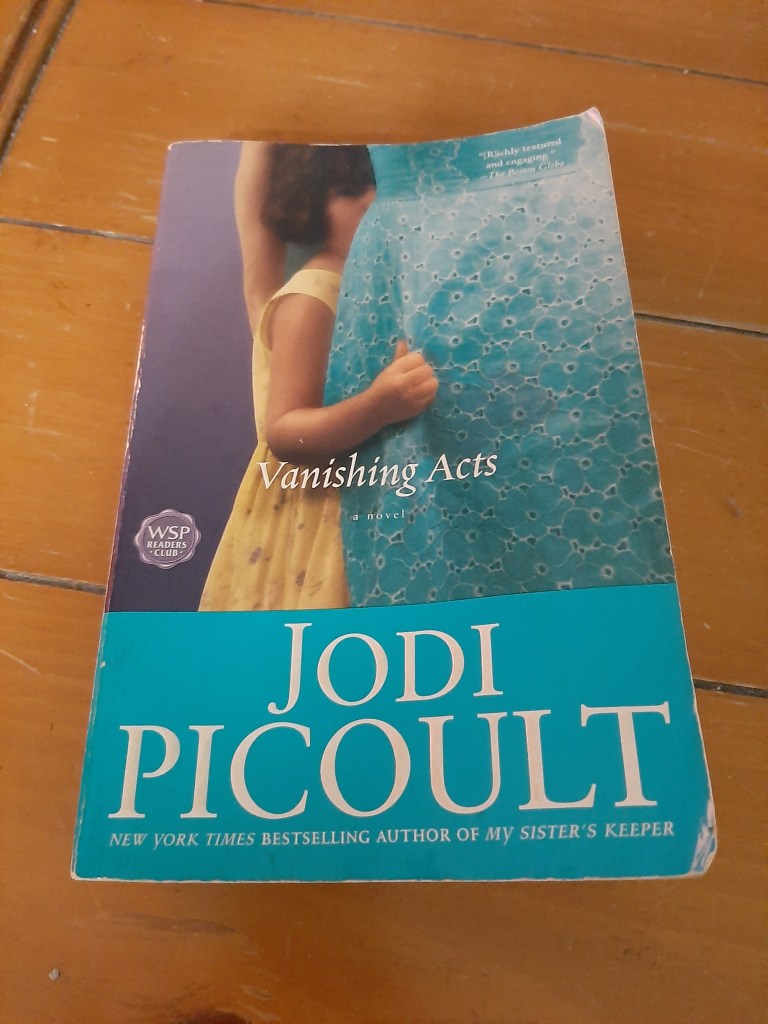
Vanishing Acts by Jodi Picoult
Picoult has a reputation for tackling some tough social issues in her books, which I appreciate. In Vanishing Acts, one of Picoult’s early novels, a woman’s life is turned upside down when she learns that she may have been kidnapped by her own father when she was a child. The story raises some interesting questions about the passage of time and how time can influence what we remember about key events from childhood. The ending with its quickly developing twists leaves the reader wondering what really happened so long ago, long after the story has ended.

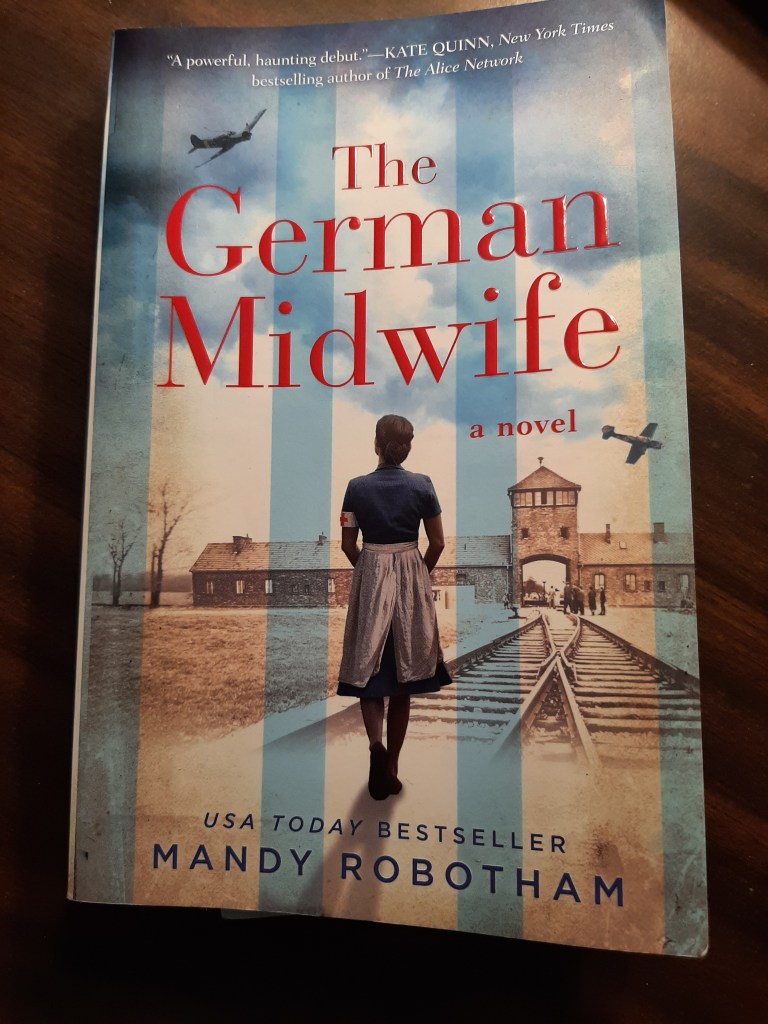
The German Midwife by Mandy Robotham
Set during World War II in Nazi Germany, The German Midwife is a historical fiction novel about a Holocaust prisoner and midwife who is assigned a dangerous task: to serve as the midwife for Hitler’s pregnant mistress. Every day the midwife confronts her own prejudices toward the mistress and her unborn child, but in the end relies on her own common sense and medical training to protect the young mother and infant while risking her own life.

The Family Plot by Megan Collins
In this third book by Collins, a dysfunctional family with a weird fascination for true crime is at the heart of this story. When younger brother Andy is found murdered on their secluded island, his twin sister Dahlia is quick to blame his death on the serial killer that has terrorized residents for years. As it turns out, her eccentric family and the mansion they live in all hold the key to solving the mystery of Andy’s death. Written in first person from Dahlia’s POV brought me into the story along with her.

The Night Circus by Erin Morgenstern
If you’re a fan of magic and magic realism, then The Night Circus is a must read. The circus arrives in town without notice and is open only at night. Underneath the black-and-white striped tents is a unique experience full of amazing sights and smells. Behind the scenes is a fierce competition between two young magicians who have been trained for this purpose. Only problem is they fall in love with each other and that sets in motion a chain of events that threatens the lives of the circus performers and the circus itself.

The Messy Lives of Book People by Phaedra Patrick
This is the first book by Patrick that I’ve read, and I will definitely read others by her. I’m a sucker for any novel involving authors, books or bookstores, and this one did not disappoint. A house cleaner of a famous, reclusive author must carry out her employer’s last wish: to complete the author’s latest novel before her death can be formally announced to her adoring fans. I loved the way Patrick handled the conflicts in the story, and happily resolved all loose ends in a way that made sense and was satisfying.

The Mistletoe Inn and The Mistletoe Promise, both by Richard Paul Evans
Evans has made a career of writing heartwarming Christmas stories. I added both of these to my favorites list because they are also among by favorite Hallmark Christmas movies, although the books include some darker back stories. All the same they are both fast, easy reads that will warm your heart any time of the year.

Honorable mentions: The following titles didn’t make my favorites list, but they were quite good anyway and are worth reading.

Sanctuary by Nora Roberts
Virgin River by Robyn Carr
Drenched in Light by Lisa Wingate
Winter in Paradise by Elin Hildenbrand
Life is Sweet by Elizabeth Bass
Three Wishes by Barbara Delinsky

Thank you for reading my posts this past year. I look forward to continuing to share my insights about writing and reading in 2023. Until then, have a happy new year, and may all your publishing wishes come true!