The Most Memorable Books of 2025

Looking back over the past year, 2025 was a banner year for reading. Not only had I finally gotten around to reading several authors I’ve wanted to read, but several books were true surprises.

My choices cover a range of genres from historical fiction to contemporary romance, from literary fiction to mystery and magical realism. I selected these books based on the following criteria:

* A compelling premise. Did the story hook me from the start?
* Strong main character (and not necessarily likeable either)
* Engaging storytelling that kept me turning the pages
* A satisfying conclusion that actually made sense for the story

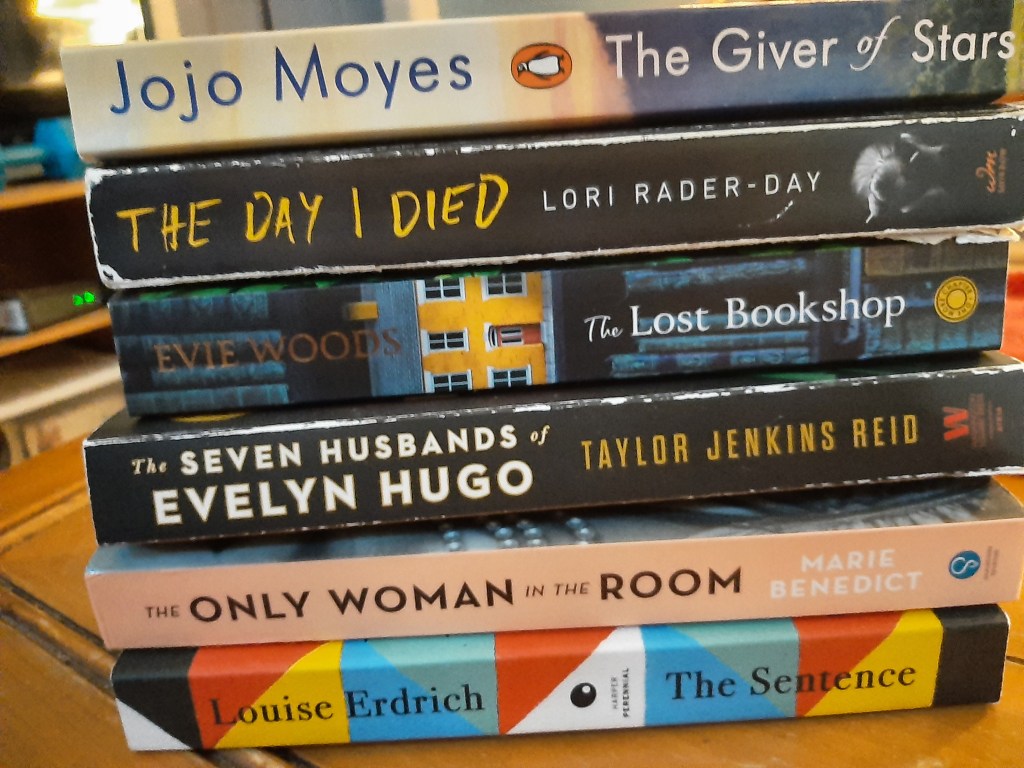
Below are my top seven picks of the year followed by honorable mentions. How many of these stories have you read and enjoyed?

The Best:

The Giver of Stars by Jojo Moyes

This book had been on my Want-to-Read list for ages, and it did not disappoint. Based on a true event and set during the Depression era, the story highlights a group of women who volunteer to deliver books to poor residents in rural Kentucky as part of Eleanor Roosevelt’s traveling library. According to the marketing blurb on the back cover, it’s a “captivating tale of friendship, true love and reaching for what’s possible.” I’m looking forward to reading more of Moyes’ books.

The Sentence by Louise Erdich

Here’s another author I’ve wanted to read for a while. The Sentence takes place in Minneapolis over the course of one year from November 2019 to November 2020, taking readers through the narrator’s experience during the Covid pandemic and the George Floyd murder and ensuing riots. All the while, she deals with a capricious ghost haunting the book shop  where she works as well as her conflicted feelings about her marriage and her efforts to reconcile her own dark past. An intriguing character study of one woman’s life in turbulent times, and Erdich’s Native-American heritage brings an added narrative layer. I’m sure I’ll be reading more of her works.

The Seven Husbands of Evelyn Hugo by Taylor Jenkins Reid

Evelyn Hugo, a retired film star of the 1950s and 1960s, hires a novice magazine writer to help her draft her memoir. Over several ensuing weeks, the actress shares her life story, though she does so at her own pace and is determined to control the narrative. The hired writer wonders why she was chosen for the job because the two women have nothing in common. Hugo, by her own admission, is not the kindest person in the world and her relationships are fraught with tension. This was another fascinating character study, and the story stayed with me longer have I closed the book.

The Lost Bookshop by Evie Woods

Fans of magic realism will enjoy this novel by Woods, set in Dublin where a vanishing bookshop casts its spell over three unsuspecting characters who have played minor side roles in their own lives. Told through two timelines and three characters’ point of views, readers follow them on their journey to self-discovery and self-empowerment. What I enjoyed most is the way Woods weaved and intertwined the characters’ lives despite the different timelines and how she created a magical bookshop that only a few could see.

The Only Woman in the Room by Marie Benedict

In her novels, Benedict often features bright, talented young women whose career achievements are suppressed by the strong, dominating men in their lives. This story is no exception. Most people knew Hedy Lamarr as a stunningly beautiful Hollywood film star of the 1950s. What they don’t know is that she was also a scientist. She grew up in an aristocratic family in Austria, and through her marriage to an Austrian arms dealer, she often overheard conversations detailing the Third Reich’s  plans. After escaping to the United States and becoming a screen star, she used her scientific knowledge to design a communications system that would help the U.S. fight the Nazis. Except as a woman, no one would listen to her idea.

Murder Under the Tuscan Sun by Rachel Rhys

File this one under gothic romantic suspense. In some ways, the tone and storytelling of this novel reminds me of Daphne DuMaurier’s Rebecca. When a recently widowed woman responds to an ad for a companion to an ill aristocrat at his estate in rural Italy, she has no idea what to expect. While there is no actual murder, there is plenty of suspense as the widow experiences strange dreams, ghost sightings while she cares for her charge who doesn’t seem to want her help. Over time, the two grow closer even as he seems close to death. This was a surprising read that kept me turning the page.

The Day I Died by Lori Rader-Day

After reading two earlier works by Rader-Day (Little Pretty Things and The Black Hour), I fully expected another stellar novel. I was not disappointed.  From the opening pages, I was taken on a wild journey through the eyes of the story’s protagonist Anna, who has a unique talent of analyzing people’s handwriting. The local sheriff isn’t convinced of Anna’s abilities, but hires her anyway to help in his search for a missing boy. But to solve this mystery, Anna has to face her own fears about her past and her relationship with her own teenaged son.

Honorable Mentions:

The following didn’t make my best list but are all worthy of your time.

Mexican Gothic by Silvia Moreno-Garcia
I don’t usually read horror novels–I get too easily creeped out–but Garcia’s writing helped create a dark and suspenseful story. I just didn’t buy into the romantic relationship.

Book Lovers by Emily Henry
After hearing so much about Emily Henry, I had to check out one of her books. This was a solid, engaging story, but the more compelling story line was the relationship between the two sisters.

The Midnight Library by Matt Haig
I was fascinated by the premise of this novel. Imagine what your life would be like if you made different choices.

The Memory of Lemon by Judith Fertig
A mix of magical realism and contemporary romance, this story is about a young baker who has a knack for tasting people’s emotions and has the ability to sense which ingredients will touch her customers’ hearts.

The Ten Thousand Doors of January by Alix Harrow
A young woman unwittingly uncovers a network of secret doorways to other worlds and explores many of them to find her father who had disappeared long ago. I don’t read many fantasy novels, but this was a surprising and entertaining read.

What about you? What books did you read this past year that impressed you most? Which books would you recommend?
Design Your Own Reading Challenge for 2026

Photo by Bryan Schneider on Pexels.com

Mention the term reading challenge and some people will roll their eyes. Not me. I’m a big fan of them, so much so that I’ve created my own challenge the past few years.

For those not familiar with them, reading challenges are a test of sorts to coax you to read different types of books, explore new genres or new authors. It can be done either alone or as a small group, and for any length of time, whether it’s for three months or one year.. Reading challenges can spice up your reading life and even help you tackle those books in your TBR pile. It’s one of the reasons I look forward to the start of the new year, so I can begin a new challenge.

If you decide to participate in a challenge, or want to create your own, here are a few things to keep in mind:

* It’s not about how many books you read, but the quality and nature of those books. Some people aim to read as many books as they can, but do you really want to rush through the reading experience? Books are meant to be consumed at a slow, steady pace to absorb the plot, characters, theme and emotions.

* Set a goal for yourself. What do you want to accomplish during the challenge? Is there a certain genre you want to explore that you haven’t read before? Perhaps you want to return to the classics? Or an author you’d like to read more of, say Stephen King or Agatha Christie.

* Set a time allotment. Most challenges I know usually take place over the course of one year. But maybe you prefer a shorter challenge, like three or six months where you can focus on a particular genre or author.

* Have fun with the challenge. Be imaginative. Come up with unique categories, such as a book you found in the garbage or dumpster. (Hey, you never know what you might find there.) Check your TBR shelf for inspiration.

With these tips in mind, you’re ready to start 2026 with a brand new approach to reading. If you’re not sure where to start, I’ve come up with several challenge options that you can adapt for your own use.

Reading Challenge #1: By Prompt

Challenge #1 is the traditional version you’ve likely heard of with a never-ending list of prompts. Do a search online and you can find all sorts of challenges of this nature. There are roughly 40 prompts in the list below, but you don’t have to follow all of them. You can add or alter the list as you see fit. Most importantly, have fun.

1. A favorite author
2. An author from your hometown
3. An author you’ve never read
4. A book you read when you were in high school
5. A genre you don’t normally read
6. A book that’s been sitting on your TBR shelf for more than 2 years.
7. A book with more than 400 pages
8. A book with less than 200 pages
9. A book published in the year you were born
10. A book with a one-word title
11. A book you bought second-hand or at a discount store
12. A book you bought new
13. A book you borrowed from the library
14. A book recommended to you by a fellow reader
15. A book set in a foreign country, not Paris or London
16. A book with a color in the title
17. A book with a number in the title
18. A book with a place in the title
19. A book made into a movie or TV series
20. A book by a debut author
21. A banned book
22. A fairytale retelling
23. A workplace romance
24. A memoir by a non-celebrity
25. A book with an job/occupation in the title
26. A book published in the past year (2025)
27. A book published more than 100 years ago.
28. A book published by a small or indie publisher
29. A book with a lengthy subtitle
30. A book written by two authors or one author with a pseudonym
31. A book with a character with a unique name
32. A book you found in the garbage or dumpster
33. A book with a picture of food on the cover
34. A book with a body of water on the cover
35. A book you heard about on social media
36. A book by a minority author
37. A current bestseller
38. A book with a person’s name in the title
39. A book set in Hawaii or Alaska
40. A young adult mystery or romance

Reading Challenge #2: By genre

Each month is dedicated to a different genre. For example, January might be ideal for curling up by the fire with a lengthy fantasy or science fiction series. Another month might be dedicated to current bestsellers or indulging in one of the classics. I always find October to be the perfect time for a good mystery or horror novel, while February is always reserved for romance because of Valentine’s Day.

I’ve listed the most common genres below. How you want to assign one to each month is up to you.

Mystery/suspense
Romance
True crime
Science Fiction
Fantasy/Romantasy
Memoir or Biography
Non-fiction
Literary fiction
Young adult
Classic literature
Current bestseller
Horror
Spy thriller
Paranormal
Historical fiction

Reading Challenge #3: By theme or topic

If genre is too basic and you wish to take your reading challenge to the next level, try making reading choices based on theme. You probably notice from your TBR collection that you’ve acquired books with similar themes. For example, I tend to read books about libraries, bookshops and struggling writers. Perhaps you read stories set on a university campus or feature students as the main characters. Or your favorite memoir is about sports celebrities. You get the idea.

Themes can be fun to read because they’re broad enough to cover different genres and authors, so you don’t have to think about that aspect of the challenge. Here are some common themes, or come up with one of your own.

Money or finance
Love/romance
History
Family
Faith
Pets or animals
Books or libraries
Bodies of water
Sports
The arts (dancing, music, painting, etc.)
Sports
Food/Cooking
Earth/environment
Science or technology
Health or medical theme

Reading Challenge #4: By Setting or Location

If none of the aforementioned categories rocks your boat, there’s another option: by location. Whether you love to travel or prefer to stay close to home, reading a book set in a specific location can transport you to any place in the world. Think of these possible locations for your next reading challenge:

Parts of the U.S.:
Washington, D.C.
California
Texas
Florida
New York City
A farm in the Midwest
Pacific Northwest
Boston or Northeast
New Orleans
Southern states
Hawaii
Alaska
On a cruise ship

Outside the U.S.:
Mexico
Canada
Paris, France
London, England
Italy
Greece
India
Germany
The Caribbean
Japan
China
Russia

Reading Challenge #5: By Time Period or Decade

I came across this challenge by The Book Girls Guide and thought I would add it to our challenge options. The ladies at Book Girls Guide do a great job of compiling and summarizing books for their readers. Every year for the past six years, they’ve presented a reading challenge based on decades. If you love historical fiction, this might be the challenge for you. Sure, it’s one single genre, but with the focus on the time frame of history, no two stories are alike and you can learn so much about events and people who shaped history.

My challenge to you is to choose one challenge and have fun with it.

Books to Read for Hispanic Heritage Month

Every so often, I like to share a list of reading recommendations–books I’ve either read or would like to read. Usually, they’re focused on a specific genre or location.

For example, in August 2024, to go along with the Summer Olympics in Paris, I shared a list of books by French authors or stories that took place in France. Earlier that same year in March 2024, I posted a list of books by Irish authors or with settings in Ireland to go along with St. Patrick’s Day..

As Hispanic Heritage Month gets underway, I thought it would be fun to compile a list of books by Hispanic authors or set in Spanish-speaking countries. The list covers a range of genres from literary and historical fiction to magic realism and romance. What I appreciate most about these stories are the unique characters and colorful settings. The true magic is in the storytelling, which brings the Hispanic heritage to life on the page.

I’ve broken the list into two sections: books I’ve read and books I’d like to read. Perhaps you’ve read these books yourself or have your own favorites to share. I welcome them in your comments.

Books I’ve Read

Bless Me, Ultima by Rudolfo Anaya.  I first heard about this book when it landed on PBS’ The Great American Read list of must-read books several years ago. It’s a coming-of-age story about a young boy’s spiritual transformation, guided by his mentor, an elderly medicine woman. I found the story fascinating. As with many stories written by Latino authors, there’s plenty of magic and surrealism. The book has been banned in some locations because of its Spanish profanity and occult themes.

Like Water, For Chocolate by Laura Esquival. I remember seeing this as a movie so I wanted to read the novel too. It has romance, magic and tragedy featuring an all-female family. Youngest daughter Tita has fallen in love with Pedro, but cannot marry him because Mexican tradition requires that she must stay and care for her mother until she dies. To stay close to Tita, Pedro marries her older sister. Meanwhile, Tita pours all her unresolved emotions into her cooking, which makes for some interesting results. 

The Alchemist by Paulo Coelho. It’s been a long time since I’ve read this book, which is considered a modern classic. It’s the story of a shepherd boy named Santiago who yearns to travel the world and the treasures he finds along the way. It’s a story about longing, the wisdom of listening to our hearts and learning to follow our dreams. I may have to re-read this one.

The House on Mango Street by Sandra (Esperanza) Cisneros. Written by Chicagoan Sandra Cisneros and structured as a series of vignettes, this novel appeared on The Great American Read list and is considered a modern classic. It follows 12-year-old Esperanza, a Chicano girl growing up in a Hispanic neighborhood of Chicago over the course of one year where she enters adolescence and faces the realities of living in a poor and patriarchal community.

In The Time of The Butterflies by Julia Alvarez. I loved this historical fiction novel about the four Mirabel sisters who fought back against the Trujillo dictatorship in the Dominican Republic. Written from their four different perspectives, their bond as sisters and family grew even as the world they once knew fell apart.

I Am Not Your Perfect Mexican Daughter by Erika Sanchez. This Young Adult novel features a young girl Julia dealing with the loss of her older sister and the pressures and expectations of her family, particularly her overprotective mother. Instead, Julia has dreams of her own, including moving out of her neighborhood to explore the world.

Mexican Gothic by Silvia Moreno-Garcia. I’ve had this book on my shelf for the past year, and I’m finally getting around to reading it. Though I’m only a couple of chapters in, I am enjoying it so far. The book is described as a blend of creepy horror and classic gothic tropes, set in a crumbling mansion in the mountains of Mexico in the 1950s. It’s earned high praise from critics and readers alike, so naturally I want to read what the excitement is about.

Books to Read on My TBR Shelf

One Hundred Years of Solitude by Gabriel Garcia-Marquez. This title lands at the top of almost every must-read list. It’s been sitting on my shelf for several years and I haven’t opened it yet because I find the size (more than 500 pages) is rather daunting.

In The Time of Cholera by Gabriel Garcia-Marquez. This one is also on my shelf. I tried to read it once, but it was at the start of the pandemic. The plot was too much like what we were all going through at the time.

How the Garcia Girls Lost Their Accent by Julia Alvarez. The follow up to In The Time of the Butterflies, this story spans 30 years in the lives of four sisters, told from their different perspectives, as they begin their adult lives in the United States. The cool thing about this novel is that the story is told in reverse chronological order with the story concluding in their native Dominican Republic as children.

The Spanish Love Deception by Elena Armas. For a change of pace from the somber tones and serious themes of previous works, here comes a rom-com I’m looking forward to reading. Besides, who wouldn’t want to be invited to a wedding in Spain?

The House of the Spirits by Isabel Allende. This novel has been on my wish list for several years. Combining elements of romance and magic realism, this title appears on many must-read book lists and has received praise from readers and critics alike.

Of Love and Shadows by Isabel Allende. Of Allende’s many other published works, this is next in line to read behind The House of the Spirits.

Romance, mystery and magic are hallmarks of these stories, which makes them more fun to read.

Libraries: More Than Just a Place to Find Books

Photo by om tu00e1pie on Pexels.com

This is National Library Week. In honor of this event, I’m reposting this story from several years ago. I’ll be back next week with a fresh story. Enjoy.

Several years ago, I wrote about how libraries have evolved since my childhood. For awhile, many people thought libraries were on the verge of extinction as Amazon dominated the book marketplace. But that may no longer be the case. Just as independent bookstores found ways to survive by offering products and services not offered by Amazon and national chains, the public library has extended its offerings beyond short-term book loans.

According to a recent article on Vox, the library’s main purpose is to help educate the community;  Amazon’s purpose is to simply sell books (and a million other things). The library still remains relevant today because it serves the public’s demand for information and resources, especially to underserved populations, at no cost.

With a focus on education and lifelong learning, the neighborhood public library has expanded its services beyond book loans. They’ve become multi-purpose destinations. And libraries are being re-designed to accommodate these expanded offerings.

If you haven’t visited a library lately, you may be surprised to find what’s available there. A Pew Internet survey from 2014 found that while many people think libraries continue to serve a useful purpose in their communities, a significant percentage did not realize the scope and depth of the services offered at libraries. For example, visitors can get income tax advice or job assistance. They can learn a new language, get literacy tutoring, participate in film discussions or research their family history.

Libraries house historic and genealogy records, map collections and other archival documents. For example, a library in Birmingham, Alabama, has preserved records and documents related to the Civil Rights movement of the 1960s, according the Project for Public Spaces.

Public libraries also have community rooms, ideal for having discussions and debates about zoning changes and new proposed developments, all with the intent to help residents understand their community better.

Today’s libraries are trying to reach younger generations of readers by offering more programs aimed at teens and children. Some offer 3D printing, community access TV and radio stations, language labs and recording studio so they can record their own stories in their own words. Others encourage visitors to relax and linger over their reading materials by providing private reading nooks, creative spaces and even a fireplace.

These types of amenities aim to reach younger adults in their 20s and 30s, who have been largely absent in recent years but are the key to the library’s future viability.

As long as people have the desire to explore the world at large and engage in lifelong learning, and as long as there are family-friendly programs for people of all ages, the public library will continue to serve as a vital resource in our communities.

Favorite Reads of 2024

Photo by Leah Kelley on Pexels.com

Before we get too far into 2025, I’d like to take one final look back at the year that was and the books I most enjoyed reading. Below were my favorite reads of 2024 as well as a list of honorable mentions.

Have you read any of the following books? What were your favorite reads from 2024?

The Snow Child by Eowyn Ivey (magic realism). Imagine leaving behind the world you know  and making your home in the isolated wilderness of Alaska in the 1920s to explore new opportunities and make a fresh start. Jack and Mabel don’t know what awaits them when they make the move across country. Childless, they struggle as homesteaders. After making a snow child from freshly fallen snow, they awake the following morning to find the snowman gone, but a young girl running around their property. Faina is the child they wish they had, except when the winter snows end and it gets warm, she disappears into the woods. I thought I would be bored by the lengthy descriptions of snow and ice in the Alaskan wilderness, but Ivey does a great job keeping reader interest as the story unfolds and we’re brought into Jack and Mabel’s life.

The Truth about Forever by Sarah Dessen (YA romance). I think I found a new favorite author in Sarah Dessen. While this book is written for young adults, I didn’t find it juvenile in any way. Written in first person POV, I was immediately drawn into Macy’s world and the way she experiences the changes in her life. Macy’s internal dialogue is especially poignant at times, revealing a maturity far behind her teenage years. All the characters were drawn with depth and thoughtfulness. They were fun and interesting, especially when they interacted with each other as a group. I’m looking forward to reading more of Dessen’s books.

The Flight Girls by Noelle Salazar (historical fiction). This story is about a group of women pilots who became involved in the war effort during World War II. Known as the Flight Girls, their role was to support the U.S. military by delivering supplies and personnel across the U.S. One of the most intense scenes was the day that Pearl Harbor was attacked as our primary character gets caught in the middle of a mid-air battle with the Japanese fighter plane. It’s a fascinating look at a little known conclave of brave women who risked their lives with very little reward and recognition.

The Diamond Eye by Kate Quinn (historical fiction). While Quinn is better known for her earlier work The Alice Network, I thought The Diamond Eye was a more compelling story based on the real life of Mila Pavlichenko, a bookish history student from Kyiv turned deadly sniper in World War II. It’s well-written and well researched, providing a fascinating character study into the life, love and military career of a single mother who became Lady Death. The extensive author’s note provides some additional backstory that gives an added layer to the story.

Handle with Care by Jodi Picoult (women’s fiction). I can always count on Picoult to write a story that challenges my heart and soul. This one is no different about a mother who goes to great lengths to protect her youngest daughter who is diagnosed with a rare condition called osteogenesis imperfecta, sometimes known as brittle bone disease, in which the girl’s bones break easily. I always appreciate how Picoult looks at the conflict from multiple perspectives so readers see the complexity of the story.

Carrie Soto Is Back by Taylor Jenkins Reid (upmarket fiction). I wasn’t a huge fan of Malibu Rising, an earlier work of Reid’s. But as a tennis fan, I was intrigued by this story. In an interview with Reid, she admitted that she knew nothing about tennis when she wrote this book about a self-absorbed fast-rising tennis star. But as a former amateur player, I think she did a fine job capturing the details of the game. Carrie Soto isn’t an easy character to like, but underneath her harsh, brittle exterior was a vulnerable human being who didn’t understand how to connect with others. That’s what makes this story so appealing to me. It’s a great character study.

The Sugar Queen by Sarah Addison-Allen (magic realism/YA)
I read Addison-Allen’s debut Garden Spells several years ago, and I was immediately captivated by her imagination and storytelling. The Sugar Queen is a charming tale about 27-year-old Josey who still lives at home with her mother and feels she’s destined to live a life of disappointment and limitation in her mother’s household. Josey compensates by hiding out in her closet to eat sweets and read paperback romances. Until she meets tough-talking Della Lee who takes over the closet and the secret stash of sweets. Della Lee acts as both nemesis and fairy godmother to guide Josey out of the closet and into the real world.

Almost Home by Joan Bauer (young adult). Like The Truth about Forever, this young adult story reveals an emotional depth far beyond the young protagonist’s years. In this story, after her grandfather dies and her gambling father takes off again, 12-year-old Sugar and her mother must abandon their home in Missouri. They make their way to Chicago to make a new life and make new friends. As she learns to navigate her new world, she still harbors hope that she and her mother will return to their home in Missouri.

The Secret Lives of Dresses, Erin McKean (literary fiction). This surprising read is a coming-of-age story about Dora who has a job she hates but sticks around because she’s in love with a man who barely notices her. When her grandmother has a stroke, Dora returns to the small town where she grew up and helps out in the family’s vintage clothing shop. There, she discovers notes written by her grandmother describing the legacy and history of some of the dresses. A fun and entertaining read with interesting characters.

Honorable Mentions:
Every Note Played, Lisa Genova
One Italian Summer, Rebecca Serle
Open House, Elizabeth Berg
The Library of Lost and Found, Phaedra Patrick 
Stealing Home, Sherryl Woods
The Beach at Painter’s Cove, Shelley Noble

15 Ways to Honor National Book Month

October is National Book Month. To honor this occasion, I am reposting this story from a couple of years ago.

For readers, authors, publishers, book sellers, and book lovers of all ages, this is an important occasion to celebrate books. It’s a month dedicated to literary pursuits, for snuggling up on the sofa with a hot beverage and burying yourself in the pages of a classic or current bestseller, no matter what genre you enjoy.

This is not to be confused with National Reading Month which takes place every March. National Book Month was formed by the National Book Foundation in 2003 to honor the best books and authors. It’s also encourages the reading books of all genres, to support others’ rights to acquire and read books, and support authors and independent bookstores. If you love books and if you love to read, this themed month is one to savor.

So how can you honor National Book Month? Here are a few suggestions that are sure to keep you busy all month – and beyond. What is your favorite way to celebrate National Book Month?

1.  Enjoy a reading retreat. Set aside an entire weekend just for indulging yourself with a good book. Turn off the TV and streaming services. Instead, immerse yourself in the written word rather than watching it on the screen.

2. Read a new author. Scan the bookshelves at the library or local bookstore and find an author you’ve never read before. Perhaps it’s someone you’ve heard good things about. Or maybe you’ve never heard of them, but the book title and premise intrigues you. When you try new authors, you open yourself up to new ways of storytelling.

3. Re-read a favorite author. Re-reading a novel from a favorite author is much like wearing an old favorite sweater that’s warm and comfy. If a lot of time has passed since the first time you read the book, you may see something new in the story that you didn’t notice before.

4. Visit an independent bookstore. Independent bookstores have seen a resurgence in recent years, thanks in part to their connections to their communities. This National Book Month, show your love of reading by visiting your favorite, local bookstore.

5. Visit your local library. For those who can’t afford to buy books, libraries are their go-to place for reading. These days, libraries are more than just a place to borrow books. You can also borrow DVD movies, audio books and music. Libraries are the ultimate literary community center of the neighborhood.

6. Join a book discussion group. There are numerous book discussion groups around and many of them specialize in a particular genre, such as mystery, current events or memoir. Check your local church, library or bookstore for one near you. If you can’t find a group that fits your interests, start one of your own.

7. Swap books with other readers. When you’re done reading a book, spare it from a life on your bookshelf collecting dust. Consider swapping books with friends, neighbor or colleagues so you all can enjoy them. Or set up a lending library in your apartment building so all residents can contribute their used books.

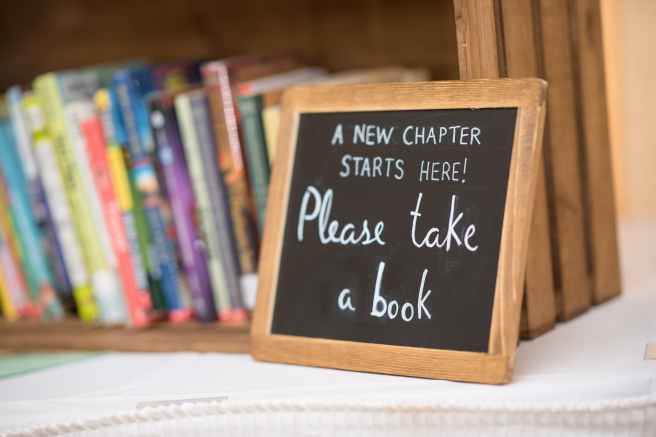
8. Set up a Little Free Library. Share your love of reading with your neighbors through a local Little Free Library. You’d be surprised at the types of books you might find at one, including recent bestsellers. These little libraries not only bring readers together, but they’re a great place to donate your own books you no longer want.   

9. Support local authors. Follow your favorite local authors on social media, comment on their postings, or attend an author book signing in person. Show them how much you appreciate their work. After spending long hours honing their craft or working on their novel, getting fan support often gives them a boost of confidence.  

10. Donate books. There are many non-profit organizations that collect books to pass on to people who don’t have access to them. One such organization is Chicago Books to Women in Prison, which responds to letters from women in prison and sends them books upon request from their library. Consider donating books you’ve already read so others may enjoy them too.

11. Carry a book with you wherever you go. Tuck a book in your briefcase, backpack or purse. If you’re out and about and you suddenly find yourself stuck in traffic, waiting at the dentist’s office or riding the bus, you can use the spare time to read.

12. Read a banned book. A surprising number of books are falling on the banned hit list in many areas of the country. Many of these books are banned because they are either considered sexually explicit, depict child abuse or contain LBGTQIA+ content, among other things. You can find lists of banned books on the ALA’s website as well as ways you can get involved in fighting book banning.

13. Listen to an audio book. If you can’t sit down to read, try listening to a book instead. Audio books make it possible to multi-task, so you can enjoy the latest best-seller while driving your car or cooking dinner.

14. Write a book review. Is there a book you absolutely LOVED? Or conversely, is there one that disappointed you? Write a brief review about it. Post it to your own blog (if you have one) or post on a review site like Good Reads.

National Book Month is the perfect time to express your love of books.

Reading Present Tense Stories vs. Past Tense

Photo by rawpixel.com on Pexels.com

I remember picking up a book several years ago and opening to the first chapter. I don’t remember what book it was or where I was reading it. I do remember my first impression when I noticed it was written in present tense.

It was jarring, like my brain couldn’t adjust to the different tense. I’d been so accustomed to reading stories in the standard past tense that seeing a different tense struck me as odd.

Not just odd, but wrong. Out of place.

I’ve since softened my stance. I’ve read enough books written in the present tense since then that I’ve simply gotten used to reading it. Still, there are some hard-liners who refuse to read any book written in present tense. Do a Google search, and you’ll find plenty of opinions on the subject—both good and bad. Critics call it “unnatural,” “trendy,” and “a distraction,” while proponents say it makes the story more interesting, real and immediate.

Present tense writing seems like it’s a fairly new phenomenon, but actually, it’s been used for years. There are numerous top sellers that have used that feature. Rabbit, Run by John Updike is one, though I have not read it. This post on The Write Practice blog does a fairly good job of explaining the difference between past and present tense and provides the pros and cons of present tense

It does seem as if more writers are experimenting with present tense writing in recent releases. When combined with first person point of view, the story can pack a powerful and suspenseful punch by putting you in the scene along with the protagonist.

A good example of how it can work is The Last Thing He Told Me by Laura Dave, one of the most suspenseful books I’ve read in a long time. From the opening pages, readers are taken along on a suspenseful ride with the protagonist as she opens the front door and a young girl hands her a cryptic handwritten note from her husband.

When you’re right there next to your character seeing what they see, feeling what they feel, present tense can create a stronger impact on readers. Isn’t that what you want your readers to feel when they read your story?

That said, it would be a mistake to use it all the time. Some stories are simply better read and written in the past tense. It is still the standard in publishing, and it will never go away. It’s also the standard in verbal storytelling. Do you share a story with your friends in present tense? Hardly. It would seem odd rolling off your tongue. Why should written stories be any different?

My advice is to experiment with both styles and see which one works best for your story. There are three factors to consider:

* Genre – Some genres are better suited for present tense. Novels of suspense or action/adventure come to mind. The Hunger Games series is a case in point. Readers are present from the moment the story begins and they experience the suspense along with the narrator/protagonist. Meanwhile past tense is probably better suited for literary fiction and historical fiction.  

* Point of view – Present tense might best be used with first person to get a real “up close and personal” feel to the story. I don’t think it works as well with third person POV, though I have seen it done with some success.

* Readers’ preferences – This might be the most critical factor. Which tense do readers prefer to read? Are your readers willing to read a present tense story that you’ve written?

The truth is, many readers hate present tense writing, so much so that they will close the book and put it back on the shelf. If any of your intended readers fall into that camp, you could lose them.

On the other hand, there are other readers who say they don’t notice the tense at all when reading. As long as the story is well written, they don’t mind if it’s present or past tense. Perhaps that is the key point to remember. Make sure the story is so well written that readers hardly notice whether it’s written in present tense or past tense.

I’ll always stick with past tense as my preferred reading format. But an occasional trip through a story with present tense can be worth the journey.

In case you want to explore present tense stories, here are a few to check out (though in truth, I’ve only read the one by Laura Dave so I cannot vouch for how enjoyable they are):

The Hunger Games series
All the Light We Cannot See, Anthony Doerr
The Hate U Give, Angie Thomas
The Last Thing He Told Me, Laura Dave
The Seven Husbands of Evelyn Hugo, Taylor Jenkins Reid
Room, Emma Donoghue

How Independent Bookstores Make an Impact on Readers and Communities

Photo by Tuur Tisseghem on Pexels.com

I love visiting independent bookstores, especially the one in my neighborhood. There’s a cozy, warm, welcoming feeling the moment I walk in the door. I can usually find something on their shelves that I can’t find at other sales outlets.

Indie bookstores are key contributors to the local economy, provide kind and friendly service to customers, and simply make the book shopping experience more pleasurable.

This Saturday is Independent Bookstore Day, a time when we can all show our love for independent booksellers by visiting their shops, browsing their shelves and making purchases.

Indie bookstores never went away, even as larger, online retailers dominated the market. While some indie stores did go out of business, many others have thrived and the industry continues to grow. According to the American Booksellers Association, the national trade group for independent booksellers, 254 independent bookstores opened in 2022 of which 179 were brick-and-mortar shops. Another 198 bookstores were expected to open in 2023 and 2024 nationwide. Meanwhile, only 53 indie bookstore businesses closed in 2022. The future looks bright.

A recent white paper by Harvard Business School attributes the resurgence of independent bookstores to their three main strengths: community, curation and convening.

Community—Bookstore owners won back customers by stressing stronger connections to the local community. They often give back to their communities, and choose book titles that reflect the interests of local residents.

Curation—Bookstore owners are focused on acquiring inventory that provides a “more personal and specialized customer experience.” In doing so, they have developed better relationships with customers by helping them discover up-and-coming authors and unique titles that they may never have considered reading.

Convening—Independent bookstores have become places to gather for everything from book signings and reading groups to lectures, game nights and birthday parties—events that online retailers can’t offer.

I would add one more component to the mix: personalized service. By focusing on the quality of book selections (rather than quantity) and the book knowledge of their staffs, indie booksellers can offer titles geared toward specific needs and interests of local readers. Staff are readers too, and their book reviews and suggested readings can help customers choose books based on their recommendations. Even Barnes & Noble has adopted this approach to bookselling to get back into brick-and-mortar bookselling.

These businesses are also strong advocates for free speech. They speak out against book bans and showcase the work of authors from underrepresented communities.

I have my own personal reasons for appreciating indie bookstores:

* I often find authors and book titles that I wouldn’t find elsewhere. I have found some true hidden gems on their shelves.

* Some bookstores specialize in a particular genre. For example, a romance-based bookshop opened recently in my area and, so far, is doing quite well.

* The store often offers discounts for special events, like Independent Bookstore Day and Black Friday, and my favorite place has a decent discount sale section.

* The staff are knowledgeable about the latest releases and up-and-coming authors. Their Staff Picks section is usually an interesting mix of classics, trending titles and new authors.

* Because they’re community-focused, they support and cross promote with other businesses in the neighborhood. For example, on a busy Black Friday, a bakery from the area provided freshly baked cookies for their event.

* They support the local publishing scene and authors. One author I know has her self-published memoir on display at a couple of independent bookstores.

* Booksellers are advocates for free speech. They fight against book bans and make sure the works of underrepresented authors get on their shelves.

Independent bookstores are here to stay, and for that I am grateful. Without them, I would not have been able to broaden my reading interests.

What about you? Do you visit independent bookstores? What do you love most about them?

How to Nurture Your Love of Reading During National Reading Month

I realized only recently that March is National Reading Month, a month-long celebration of reading and literacy. Inspired in part by the author and cartoonist Dr. Seuss (The Cat in the Hat and Green Eggs and Ham), whose birthday is March 2, the event is sponsored by the National Education Association to encourage people of all ages to develop a love of reading.

According to literacy experts, reading has numerous benefits, including:

  • Building your vocabulary
  • Improving writing skills
  • Helping us understand the world we live in
  • Improving our mental well-being and reducing stress
  • Keeping up with current events
  • Sparking creativity and imagination
  • Developing critical thinking skills
  • Developing empathy for others and emotional intelligence

    With so many benefits, it’s a wonder more people aren’t in love aren’t in love with reading. One statistic I came across noted the average person reads only 12 books a year. Meanwhile, the top 1% of readers consume 80 books per year. I’m lucky that I’m usually able to read 30-35 books a year, or roughly 2-3 per month.

There are several ways to develop your love of reading:

* Increase the amount of time spent reading
* Increase the number of books you read in a given year
* Share your love of reading with others
* Ramp up the quality of your reading experience

I’ll tackle each one of these in detail.

Increase the amount of time spent reading. I get it. Life gets busy. There are too many responsibilities and obligations getting in the way of valuable reading time. If a hectic schedule limits your reading time to only two hours a week or less, consider ways to increase that time. It doesn’t have to be significant either. Even an extra 15 minutes a day can bring you some of benefit. Start by bringing a book with you wherever you go so you have something to do while you wait for your ride share driver or sit in a waiting room for a doctor appointment. If you take public transit, sneak in some reading time instead of staring into your phone. Or start your day with a brief reading session while you have your morning coffee or tea. If you look carefully enough, you may find openings in your schedule to enjoy a little reading break.

Increase the number of books you read in a given year. This might be harder than it looks. Again, hectic schedules often get in the way of our reading intentions. If your current reading number is the average 12 books per year, how can you increase that by one book? You may find that by squeezing in those mini reading breaks I mentioned above, you can add that one extra book to your annual total without much stress or fuss. Another option is listening to audio books. This might be especially beneficial if you travel by car or take public transit. 

Share your love of reading with others. It’s fairly easy to find other bookworms who share your reading interests. Check with your local bookstore or library for book discussion groups that focus on a specific author or genre. So if you love cozy mysteries, you might be able to connect with a group that loves those types of stories.

Or consider joining a reading club, which is often confused with book discussion groups. (This post by Dany Books blog does a nice job of explaining the difference.) Reading clubs don’t have a set author or genre. Members get together periodically to simply read together, usually a book of their own choice, followed by a social hour where they enjoy refreshments and talk about the books they’re reading. Check out The Silent Book Club, for example, which caters to the more introverted readers among us. The focus of reading clubs is on the reading experience, while book clubs focus on the book they’re discussing.

Ramp up the quality of your reading experience. This might seem a more nebulous task. Rather than increase the number of books you read, try improving the quality of the experience. Maybe it’s finding a quieter, more solitary place to read or lighting a candle to read by. Maybe it’s sipping your favorite beverage while you read, or reading alongside a best friend who also loves to read. Maybe it’s focusing on one favorite genre, say memoirs or graphic novels. Only you know what will enhance your experience of reading.

While National Reading Month might take place during a single month, the love of reading can be nurtured all year round.

10 Signs Readers Connect with a Story

Photo by Inna Lesyk on Pexels.com

Over the weekend, I stayed up past my regular bed time to finish a book I’d been reading. That doesn’t happen often. Usually, after reading a chapter or two, I’m ready to hit the sack.

But this book, The Truth about Forever by Sarah Dessen, made me want to keep reading until the end. With about 40 pages left to read and the climax fast approaching, I didn’t want to wait until the morning to find out how the story ended. So I kept reading.

That experience made me wonder about reader engagement. Are there certain signs or behaviors that show readers are engaged with your story? I thought about my own reactions when I read. I started to notice the differences between how I feel about a story that truly engages my heart and mind and ones that fail to connect with me.

There’s a lesson to be learned here for aspiring writers. When writing your own stories, think about how you want your readers to react to them. What do you want them to remember about your story? How do you want them to feel when they finish reading it?  

So how do you know your story is connecting with readers? Here are the signs I’ve noticed in my reading experience. Which of these reactions resonate with you?

  • I keep turning the pages to find out what’s next. Sometimes that means staying up late past my bed time to finish reading a book. Especially if I’m getting close to the end of the book and I want to finish it. It’s that feeling of unfinished business that prevents me from turning off the light. So I keep turning the pages until I get to The End.
  • I mark the pages with memorable passages. Some of the books that are the most engaging tend to have moments of profound insight. When I find a passage that’s especially poetic and insightful, I use a post-it note to tab those sections, just in case I want to go back and read them. That way, I can find them more easily.
  • I want to find out more about the author. Where are they located? Did they obtain an MFA? How many other books did they write? After reading Dessen’s book, I did a Google search about her and read summaries of her other books, making note of which ones I want to read.
  • I refuse to give the book away—at least not right away. After I’ve read my favorite books, they tend to sit on my shelf for several years sometimes. A part of me wants to stay connected with the story for as long as possible. By giving the book away, I feel like I might forget the story. So I hold onto it until I’m ready to part with it, usually when I need to make space for other books.
  • I share my experience with other readers. I gladly refer the book to someone else who’s looking for an engaging read. I might even take a photo of the cover and share it with my friends on Facebook. Or I might write about it here on my blog. If the book is that good, it’s a shame to keep it to yourself. I have to let other people know about it.
  • I tell myself that this is the type of story I want to write. I observe how the writer has weaved the plot points, developed the characters and created suspense. There’s a lot I can learn from observing how they developed their story. Add to it some emotional insight or message that resonates with me, and I’ve found the formula for success. I know then that that’s the type of story I want to write.
  • I constantly think about the story and the characters when I’m not actively reading it. I could be doing some house cleaning or going for a walk, but I may still think about certain scenes that somehow stay with me.
  • I occasionally think about the book long after I’ve read it. It could be six months later or several years later, and I’m still thinking about the story. Perhaps that is the greatest level of engagement—longevity. I will always remember how I felt reading the ending of The Nightingale, even though I read it about five years ago. Some books simply have staying power.
  • The book touches my emotions in some way. When I get to the end of a story, I check in with myself. How do I feel about how the story ended? Satisfied? Surprised? Disbelieving? When I finished reading The Messy Lives of Book People by Phaedra Patrick (which is still sitting on my book shelf), I recall having a big smile on my face. The book gave me such joy, and the journey the author took me on was satisfying in so many ways. Patrick resolved all the plots in a way that not only made sense, but made me feel good. That’s a mark of a smart story teller.
  • I develop a relationship with the main character. When I can connect with the main character, I have more at stake in the story—the protagonist’s story. I’m a bit partial to first person POV, and Dessen used it effectively to bring emotional depth to her main character. I felt her pain and her joy. I saw what she saw and experienced what she did. When I connect with the main character, I want to keep reading to make sure they find their happily ever after.

    What about you? What signs do you see in your own reading experience that show you are truly engaged with the story?