
The Path from Journalist to Fiction Writer

Photo by Andrea Piacquadio on Pexels.com

Writers come from all walks of life. Many have had previous careers, such as lawyers, doctors and journalists. No matter our background, we have one thing in common: a desire to tell stories. However, the journey to get published isn’t the same. In fact, it’s a struggle for most. That shouldn’t stop us from trying however.

I came from a professional background in association publishing. I knew how to string together complete sentences to present clear ideas. But how that would translate into a fiction writing career remained to be seen.

For me, writing an 85,000-word novel was a huge challenge. But did I have the patience and determination to see it through? That was the question. One I was itching to find out.

I started on this writing journey for several reasons.

* To determine the next chapter in my career. I was at a crossroads and wasn’t sure what was next for me. I had just left a full-time job after eight years and I wanted to take time out to consider other options. One thing I knew for sure was that writing was the core of my being, and it would play a significant role in my career in some shape or form.

* To fulfill a fantasy. I had toyed with the idea of writing a novel earlier in my life, but did nothing with it, likely because I didn’t know what I was doing. I knew nothing about story structure or scene development back then, nor were there the amazing number of sources available to help a newbie like me to learn the ropes.  

* To meet my accountant’s challenge. While getting my taxes done about 10 years ago, I updated my accountant on my job search woes. I confided that I wasn’t sure what to do next in my career. Her response? “I think you should write a book.” The challenge was on. My dear accountant has since retired, but I still hear her words of encouragement in my head.

* To sow the creative seeds that were sprouting in my brain. I don’t know if it was all the free time I had after I left my job or the writing classes I took, but my creative muse started working in earnest, spitting out story ideas like a factory. I had no choice but to work with them. I started to see story ideas everywhere, and there were too many to ignore. I saw them as a sign to take my dabbling to the next level.

Even though I wanted to take my writing to the next level and explore different genres, I knew there was plenty of work I needed to do. How did I move from corporate writer to aspiring novelist?

* I signed up for writing workshops and classes. It was at a local writing studio that I was able to unleash my creative writing juices. Being around other writers and getting their feedback helped me to hone my craft. 

* I subscribed to Writer’s Digest. Each issue is chock full of articles about the writing process, author interviews, agent profiles, news about the publishing industry, and tips for new writers. It also explores different genres, and gives a clear-eyed view of the writing life. There are other similar publications, like The Writer, Poets & Writers, Publishers Weekly (about the publishing industry) and Script Magazine (about script writing).

* I ramped up my novel reading. Since I had more time on my hands, I dove into my favorite hobby in earnest. I had forgotten how much I enjoyed reading. The more I learned about the writing process, the more I started paying attention to how the stories played out in the books I read. Reading was part of the self-education process.

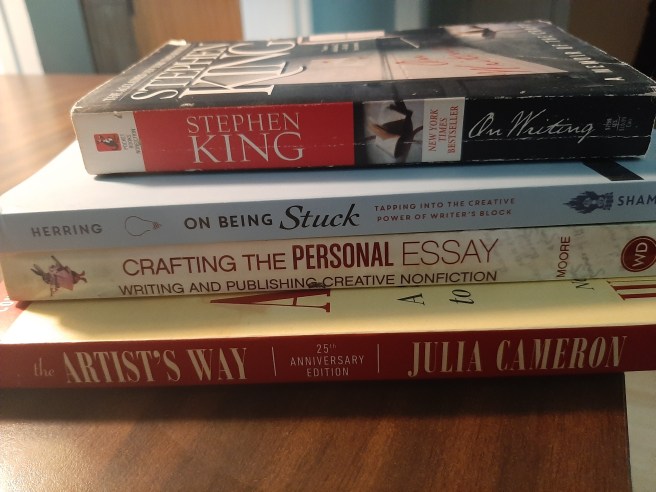
* I started reading books about writing. The two best I’ve come across are by Stephen King (On Writing) and Anne Lamott (Bird by Bird). Though there were two very different approaches to writing, both provided the inspiration and motivation to support my writing goals.

* I started following authors, editors and publishing pros via newsletters and social media. I especially enjoy the insights shared by Jane Friedman, a former editor of Writer’s Digest, and book coach Janice Hardy. There are plenty of blogs and writing communities online covering the publishing business too.

* I joined a writer’s group. Though our group is small, only three people, we meet monthly to share best practices and motivate each other. The group is more about accountability and socializing than anything else. Still, it’s fun to talk shop with people who share my interests.

Though I started this journey in 2014, I’m still learning and growing. The more I have learned about writing fiction, the more I realize I need to learn and the more it feeds my determination to succeed. I hope one day to become published, and while I have accomplished a lot, that first completed novel to show editors and agents remains elusive.

For my readers and fellow writers who are in the midst of their own transitions or are considering one, here are a few tips based on my experience:

* Learn about creative writing and story structure as much as you can. No matter how much you think you know, there will always be something new to learn.

* Read as much as you can in your preferred genre. Notice how those authors crafted their stories and learn from their writing styles. It also helps you see what people are reading in that genre.

* Be patient with yourself. Learning about the writing process takes time and you will certainly make missteps along the way. Don’t beat yourself up when that happens. Instead, take a deep breath and start over. But don’t give up.

* Ask for help and support when you need it. Find a support group, not necessarily a writer’s group, but one or two people who will listen to your writing woes and be your biggest cheerleaders.

* Be consistent with your writing practice. That way you won’t lose momentum. Take breaks when you need it or when you feel stuck. Most importantly, have fun.

For more about this topic, check out these articles:

Navigating the Road from Journalist to Novelist
From Astrophysicist to Author: Tips for Making the Transition to Career Author
15 Tips for Starting Your Writing Career Later in Life

I’ll leave you with this wonderful tidbit of wisdom from science fiction author Mark Alpert: “Don’t worry about how long it takes to reach your dream. The long road just gives you more life experiences to enrich your fiction.”

Amid Chaos, Stories Matter Even More

Photo by Suzy Hazelwood on Pexels.com

Imagine if we lived in a world where there were no stories–no stories to write, to tell, to read, to enjoy, to make us laugh and to make us cry. Where would we as humans be? How could we live? What would we know and understand about our lives?

Writing stories matters. But for those stories to matter, they need to be conceived and written.  That’s where writers and creatives come in. The world–as chaotic and uncertain as it may be–needs us.

If you’ve ever stopped to wonder why you’re putting yourself through the emotional and physical turmoil of writing stories, think about all the good you’re doing for the world, for your audience, and most importantly, for yourself.

Tiffany Yates Martin said it best in the latest issue of Writer’s Digest (print version, so no link is available to the article.) We may feel overwhelmed by the chaos happening around us to the point that we can’t find the motivation to write. Yet that is exactly when writing stories matters the most. 

Yates Martin outlined five reasons that stories matter through turbulent times:

  • Stories offer solace and hope. Stories offer comfort, especially during times of unrest. They not only offer an escape from our troubles and worries, Martine writes, they remind us of what’s important and what’s worth fighting for.
  • Stories connect us in a divided world. Because stories provide insight into the human condition through alternative perspectives, we can learn to understand the universal longings and struggles that others experience. We might understand what motivates people we might disagree with, and perhaps see them as just as complex, flawed and wounded as we are.
  • Stories make sense of the senseless. Our world is often messy and complex. Stories can help us make sense of the chaos by offering logic and cohesion. It may offer a big-picture view that we may not have considered.
  • Stories give a voice to the voiceless. Stories can highlight the injustices and oppression that others might experience, and thus heighten our awareness of it. Consider The Diary of Anne Frank which put a human face on the plight of Jews during the Nazi regime.
  • Stories can change the world. Stories can broaden and impact people’s views, which in turn can spark needed change. For example, Uncle Tom’s Cabin fueled the abolitionist movement that ended slavery. While our own writing won’t necessarily change society on a grand scale, it might change individuals in some way by providing inspiration and insight that they might not have had before.

While Yates Martin speaks about the collective reasons for writing stories, there are personal ones too. We all have our personal reasons for writing and telling stories. I’ve compiled my own list of reasons below:

  • Writing stories presents a new challenge to my skillset. I’ve always been a competent business writer, but writing fiction is a totally different animal. It wasn’t enough to be a good writer and string a series of sentences to create a cohesive thought. The question I wanted to answer for myself was: Could I become a good storyteller? Storytelling requires a different skillset than business journalism. Learning how to tell a good, compelling fiction story was a new challenge.
  • Writing stories calms me and keeps me grounded. With so much turmoil and uncertainty in the world, writing stories gives me a safe space away from all that. When I can put those disruptive news stories out of my mind, I can focus on what really matters to me–my writing.
  • Writing stories is one thing I can control. With everything happening around us–from weather-related disasters to social and political strife–it can feel like the world is out of control or that we have no control over our environment. And in many cases, we can’t. I may not have control over the unsettling changes taking place in our world, but I do have control over the stories I write. I can control the direction of the plot, the narration, the dialogue, the way the characters may grow and change. I can control how the story ends–usually in a peaceful, happy way.
  • Writing stories allows me to give free rein to my imagination. Otherwise, those brilliant ideas dancing in my brain will only remain trapped there. By writing them down, I’m bringing them to life.
  • Writing stories enables me to communicate a message to others. This is usually through the story’s theme or a character’s words of wisdom. I might be too afraid to speak for myself, so through stories, I can let a character do the talking for me.

The next time you feel tempted to walk away from your desk and give up on your story, or if you have trouble finding the motivation to write, think about why you do this. Why do you write stories? Why are you writing this particular story? Because writing stories not only can change the world, it can change you. 

List Making Can Make a Writer’s Life Easier

Photo by Ivan Samkov on Pexels.com

I’m a notorious list maker. I create lists for all sorts of things from basic to-do lists for work and grocery lists to the books I plan to read from my TBR shelf and events I want to attend. I’ve also kept lists for not-so-obvious things, like foods I want to try (every try dragonfruit?) and music I want to eventually download. Anyone who saw my lists would either think I’m incredibly organized or hopelessly scatterbrained!

But I’ve found over the years that lists can be a useful tool not just in your personal life but in your professional life. As writers, it’s important to keep track of all sorts of details for our work and list making is one way to keep it all organized so the information is accessible.  

For writing purposes, lists can help you perform the following tasks:

  • Brainstorm story or plot points
  • Create characters with roughly drawn traits and possible names
  • Draft scenes for a story before you begin writing
  • Jot down blog post ideas
  • Track ideas for website content
  • Jot down article ideas to pitch to an editor
  • Track potential clients to contact for assignments
  • Track subject matter experts to interview for a story you plan to write
  • Prioritize errands and chores you want to finish in a week
  • Keep track of small tasks needed to complete a larger project.

Lists have made my life easier in many ways. Jotting down story ideas as soon as I think of them helps to get them out of my head so they don’t become a distraction and get in the way of what I need to do. Keeping lists also helps me stay focused on the most essential tasks I need to work on, and it helps me prioritize the tasks that are most important. This process works whether the list is a home to-do list or a work task list.

But there are downsides too. Looking at a lengthy list can make you feel overwhelmed. Even looking at my list of books that I want to read can feel overwhelming. I often think there’s no way I will ever finish them all, especially when I keep adding to the TBR shelf.

Fortunately, there are strategies for dealing with feelings of overwhelm.

  1. Tackle one task at a time. Rome wasn’t built in a day, so neither should you feel you have to tackle the entire list in one afternoon. One step at a time will get you where you need to go.
  2. Review your list often, if not every day. Prioritize and highlight the three most important items on the list. Then focus on completing the most important items first. If you get to the fourth or fifth task, that’s a bonus.
  3. Remember that you shouldn’t be at the mercy of your lists. The most effective list is one that serves you, not put obstacles in your path.
  4. Find a tool that works best for you, whether that’s an old school notebook or an app on your phone. PC Magazine has a nifty list of apps for creating and tracking your tasks.
  5. Keep lists separate for work and home, so your shopping list doesn’t end up with your work tasks. Review your lists and revise every day.
  6. Write down ideas and tasks as soon as you think of them so you don’t forget them.

    Remember that lists are meant as a guide for your work life, not a set of rules etched in stone. Be flexible and shift priorities as deadlines and needs change. When you get to the bottom of your list, congratulations. Imagine how good it will feel when you cross that last item off your list.

Not everyone is a big fan of lists, but give them a try. In time, you may find that they can be one of the most helpful tools you’ll ever need.

Do you use lists? What kind of lists do you use? Does it make you feel more organized or more stressed?

Nine Lessons I’ve Learned on My Writing Journey

Image courtesy of the Regal Writer

After a brief hiatus, I’m back to writing for The Regal Writer. The time away has cleared my head. I’ve been writing this blog since 2016, and I found that I was running out of story ideas. I’ve had a lot of time to think about my writing journey, and I wanted to share what I’ve learned with you. Hopefully, my lessons will resonate with you.

Lesson 1: It’s never too late to begin your writing journey.

I’ve dreamed of writing a novel since I was in my 20s when I dabbled with a few story ideas. But nothing concrete ever took shape. Once I got to my 50s, well, it seemed all the more pressing to begin the process. So I took a few classes to learn about the writing process and experimented with different storytelling techniques. I realized early in this journey that I was not alone. I’ve met several new writing friends along the way with similar goals. I also learned that numerous other authors were late bloomers. Laura Ingalls Wilder wrote Little House on the Prairie and its series at age 65, Bram Stoker wrote Dracula at 50 and Raymond Chandler penned his first novel The Big Sleep at 51. I figured if they could find success, so could I.

Lesson 2: Read widely in different genres.

One of the first books I read about the writing life was On Writing by Stephen King, which I highly recommend. The book freed me to start this writing journey and to take chances with my writing. One piece of wisdom he shared was to read and to read widely, not just my chosen genre but others, because reading is the best way to learn about crafting stories. My library is stocked with everything from non-fiction, romance, literary and the classics. There is something to learn from each one.

Lesson 3: Keep learning – and growing.

Much like reading books of different genres, it’s important to keep up with your education about writing. It seemed that the more classes I took and the more articles I read, the more there was to know and understand about writing. I’m still learning and growing, and I expect I will continue for as long as I call myself a writer. I have also learned that the best education was the actual process of writing. The more I experiment with ideas and characters and plot lines, the more I’m learning about the craft of storytelling. You learn best by doing.

Lesson 4:  Fiction writing is very different than writing for the business world.

I’ve enjoyed a successful career as an editor and communications professional. I’ve seen my work published in association publications and earned a byline. But I quickly learned on this journey that writing fiction is a very different animal. Like other newbies, I had to start at the bottom and learn how to craft a story, how to create the plot, develop characters with depth, and how to create suspense that will satisfy readers. It’s been a long, arduous process, and I’m still working on it. That said, writing fiction is more fun.

Lesson 5: Don’t be afraid to experiment with different writing styles.

When I began this journey, I had yet to settle on novel writing. The first classes I took focused on essays of about 1,000 words. The hardest part of this experience was revealing personal details of myself, which made me uncomfortable at times. I wondered if essays were the best avenue for me. I experimented with other styles – short stories, novellas, and eventually worked my way up to a full novel. I’ve dabbled with writing suspense, romance and women’s fiction, because I enjoy reading all those types of books. Experimenting with the different genres and lengths helped me determine that women’s fiction is probably the best outlet for my talents.

Lesson 6: Don’t be afraid to fail.

I once heard those words of advice from someone interviewing me for a job some years ago, and they’ve stuck with me ever since. In writing, it’s easy to fall into the mind trap that I’ve failed just because I never finished a manuscript or an editor rejected your latest piece. But no writing effort is ever a true failure. There’s always something to be salvaged from the manuscript – a piece of dialogue or a character with a unique perspective – that you can adapt to another piece of work. In writing, the only true sign of failure is giving up. Which leads to lesson 7.

Lesson 7: Never give up on your writing dreams.

I’ve had this dream of being a writer since I was in my teens. I’ve had teachers who encouraged me along the way. While I didn’t write a word for a couple of decades while I focused on my career, built a home life and enjoyed a social life, I was still compiling life experience. When I was ready to write again, I had plenty of fodder to draw from. So if you’re grappling with how to fit writing into your life, all I can say is there are ways to make it happen if you want it badly enough.

Lesson 8: Finishing the first draft is easy; it’s the revision process that is most challenging.

With several manuscripts in various stages of completion, I can honestly say that drafting stories is so much fun. I may sketch out the first few chapters, then begin writing. That’s when my imagination takes over. Characters show up that I never envisioned and plots develop in unexpected ways. It’s when I get to revising, shaping it into a marketable piece, that the hard work begins. That’s when I need to arm myself with patience to get through the often slow, painstaking revision process.

Lesson 9: It’s not the destination; it’s the journey. Enjoy the ride.

As I mentioned above, once I begin writing, I allow my creative muse to take over. My hands on the pen or keyboard are only the conduit for the words that come. It’s that part of the process that I enjoy most. I rarely think about what the end goal is. Maybe I’ll get my work published, more likely I won’t. But I relax and enjoy the process all the same. Don’t worry about what the end looks like, just enjoy the ride. Hope these lessons inspire you to keep writing.

Five Signs That You’re Ready to Share Your Writing


Remember to check out the weekly writing prompt on my website.

Most writers I know are private people, especially when it comes to their writing. I’m certainly one of them. It’s always been difficult for me to share my writing with others because I have a terrible fear of criticism. I always breathe a sigh of relief when I get few minor comments on my drafts. It’s why I take great care to make my writing as clean and complete as possible before I submit it to an editor or share it with anyone else. I want to minimize the chance of painful criticism that damages my confidence.

You may be torn between sharing your story and keeping it to yourself. The words you put on the page are personal, and you wonder if it’s worthwhile to share something so personal with others. Getting it down on paper is the first step, of course. It’s the direct path from inspiration to reality. But reading it to others, and letting people view your work, is a huge and difficult step. It’s like crossing a rushing stream when you can’t see how deep the water is, and you don’t know how to swim. Or it’s like crossing a rickety bridge that you fear might collapse under your weight.

But there’s comfort in knowing that most writers have survived those moments. They realize that to be taken seriously as writers, they had to share their work at some point. As Paul Coelho, author of The Alchemist, writes, “Writing means sharing. It’s part of the human condition to want to share things – thoughts, ideas, opinions.”

As you continue your writing practice, you may notice several signs that you’re ready to share your work with others.

Sign 1: You feel stuck in your current work-in-progress.

After working on a story for weeks, you’ve made steady progress toward the conclusion. Then at about the midpoint, you hit a brick wall in the plot. Your brain draws a blank. How do you get unstuck? Maybe you’re too close to the story or too emotionally involved in the plot to see what needs to be done to move it forward. Sometimes having someone you trust read the piece can provide insights on what to do next. It might mean having to rewrite an earlier scene or introduce a new character who interrupts the status quo. Sharing your writing at this point can provide the insight and motivation to keep writing despite the road block.

Sign 2: You feel the story is “finished” as far as you can take it.

When you feel the story is finished, or as good as you can make it, it might be a good time to share it with others. Perhaps this is the third draft of the story and it’s as complete as you can make it. Sharing your piece with others at this point can tell you if readers will appreciate the story. You might read it out loud to a writer’s group or class, have a teacher or mentor review it, and get it published in a small literary magazine. On the other hand, reading out loud may reveal cracks in the foundation of the story that you need to fix.

Sign 3: You’re too excited about the story to keep it to yourself.

You’ve finished a piece on a topic that excites you and you’re eager to share it with others. Maybe you’ve labored over a 3000-word essay for weeks and you’re thrilled with how it turned out. Thrilled too at the topic you wrote about because it has a lot of personal meaning to you. It might be time to share your work with others to revel in your accomplishment.

Sign 4: You’re bored with the current work-in-progress.

This might seem counterintuitive, writes Michael Gallant at the BookBaby blog. But when you’re bored with the piece you’ve been working on, it might help to share that piece with someone else. Their excitement at reading your piece can galvanize you into further action, and their joy can be contagious. With their input, you may look at the piece with fresh eyes and see that it isn’t as boring as you first thought.

Sign 5: You sense that someone can benefit from the story you’ve written.

You may write because they want to inspire readers and share your experiences with them. Maybe you write with someone specific in mind. Perhaps that person has gone through some difficult times, overcome hardships. Sharing your work with that person or with others just like them can cheer them up, and motivate them to stay optimistic despite those difficult times.

There is one caveat to these signs. Never let anyone see your first draft. Wait until after your second draft before allowing someone else to see it. The first draft is usually a disorganized mess where you are still working out the structure of the piece. The first draft is usually written just for you, not for outside consumption. Better to wait for a cleaner second or third draft to get an objective opinion of your piece.

Another rule of thumb, writes Patrick Ness at the BookTrust blog, is don’t show you work to friends. They may be overly enthusiastic about your work and may not critique it the way you need in order for you to grow and improve your writing. It may be better to have an agent, editor, fellow writer or mentor review your work because they have the knowledge and experience to know what will work.

As many writers and published authors can tell you, writing is meant to be shared. So don’t hold back. Don’t keep it to yourself. If you’ve written something, no matter how good, bad or indifferent it may be, don’t be shy about sharing your work with others. It will allow you to see your work through a reader’s eyes.

How Writers Can Cultivate Curiosity

“Research is formalized curiosity. It is poking and prying with a purpose.”

Zora Neale Hurston, author of Their Eyes Were Watching God

Last week, I wrote a post about the habits of highly productive writers. One of the habits I mentioned is  the ability to maintain an open, curious outlook. For today’s post, I’ll be delving deeper into that habit.

Curiosity, by definition, is the strong desire to know or learn something. It is one of the most valued traits a writer can have. By staying curious about the world around them, writers are able to find answers to the questions they’ve long asked, and by extension, answer questions that readers want to know.

According to this Lifehack blog post, curiosity is important for several reasons:

* It makes your mind active rather than passive. By asking questions and doing research, curiosity makes your mind stronger and more engaged.
* It makes your mind more observant of new ideas. You’re more likely to recognize new ideas when they occur. When you fail to be curious, those ideas may pass you by.
* It opens up new worlds and possibilities. You’re able to explore different cultures and ways of doing things.
* It brings more excitement into your life. Because there are always new things to try and new ideas to explore, a curious person’s life is never dull or boring. Curious people have an adventurous life.

I will add one more reason to that list:

* Curiosity begets creativity. Curious people who have done their research tend to be more creative because the new knowledge feeds their desire to create something new.

By nature most writers are curious. They’re not afraid to ask questions. The five Ws are always in their writing arsenal. They’re the first to ask at an accident scene what happened, how it happened, who drove the car, when did it happen, where did it happen, and why.

Sometimes the grind of daily life can sap your curious nature, however. If you find yourself struggling to be curious about the world around you, here are a few ways to cultivate more curiosity in your writing life.

1. Read, read and read some more.  Reading books and magazine features on a variety of topics broadens your mind. If you prefer fiction, you can use curiosity as you read novels. For example, as you read, jot down questions about the characters, plot and setting. Where does the story take place? Is it a place you’ve never been to before, such as Alaska? Then jot down questions about Alaska that you’d like to find out.

2. Ask lots of questions. The five Ws plus How should be part of your writing toolbox. I would add a couple more:  “what if?” And “I wonder.” (Yes, I know “I wonder” isn’t a question, but it open up possibilities all the same.)

3. People watch. Hang out in the park, a shopping mall or a food court. Watch people as they go about their day. Be curious about them. Who are they? What do they do for a living? Why are they there? Create different scenarios for each person you observe.

4. Experiment. Be adventurous. Is there something you’ve always wanted to try? For example, several years ago, I finally had the chance to ride in a hot air balloon, something I’d always wanted to do. I enjoyed every minute of it. The experience gave me something to write about. Experiment with your writing too. For example, if you’re struggling to find the right viewpoint for your story, try writing it from different character points of view until you find one that works best for the story.

Judge a man by his questions rather than his answers.

Voltaire

5. Research something just for fun. Think of something you’d like to learn more about, preferably something not related to your every day job or your writing practice. It could be how to make lasagna from scratch or how to begin bird watching – whatever tickles your fancy. Then spend 30 minutes on the internet researching everything you can find out about it.

Michelle Richmond at The Caffeinated Writer suggests this exercise to test your research skills:

1) Make a list of ten subjects you’d like to know more about.
2) Choose one of those subjects. Then write a list of questions about that subject.
3) Spend 30 minutes researching this question on the internet.
4) Then find one book that will help you delve further into the topic and deepen your understanding. You can buy a book or borrow it from the library. Richmond says buying the book allows you to make notations.

Remember this is strictly for fun, so enjoy the research process. But be sure to cap the amount of time spent researching. It’s easy to get carried away and lose track of time!

6. Connect with an expert. We all know people who are experts at something. I have a friend who is a scientist, another who runs marathons, a third teaches yoga, and a fourth studied engineering. They’re all experts at what they do, and I know that if I ever need their insights or want to learn more about what they do, I can reach out to them, armed with my toolbox of questions.

I challenge you to jot down the names of 10 people you know along with the special knowledge or skill that they have. Then jot down questions you might ask them about what they do. Bonus points for reaching out to one of them and chatting with them about their work.

Because curiosity can boost your creativity. So it makes sense to cultivate more curiosity into your writing life.

How to Love Your Writer Self (Even When It Isn’t Perfect)

Photo by Andrea Piacquadio on Pexels.com

Check out this week’s writing prompt: Write about a time when a stranger did something nice for you.

As individuals, we play different roles – parent, child, student, employee, boss, spouse and friend. Add one more to that list – writer.

The writer self may start out small and vulnerable, like an infant or toddler. Just like a toddler who is just learning to walk, your writer self must learn to walk too. That means taking baby steps, such as writing a little bit each day, taking a class or workshop to develop skills and experimenting with different writing styles to figure out what kind of writer you want to be.

Most important, as you grow into your writer role, you learn to recognize your strengths and weaknesses as a writer. You also must learn to love your writer self, flaws and all. In her book Milk and Honey about resilience and overcoming adversity, Rupi Kauer writes, “How you love yourself is how you teach others to love you.”

At My LA Therapy blog, Tobias Foster writes, “Accepting our strengths and weaknesses and reconciling the conflicting parts in our inner world is critical to our health and happiness. You cannot achieve anything substantial in the outer world without fixing your inner world.”

In order to make an impact with your writing and create meaningful work, you must take steps to clear your inner world of negative thoughts and replace it with kinder, gentler ones. You must strive for self-kindness and self-acceptance.  “Having self-compassion builds resilience in the face of adversity, and helps people recover more quickly from trauma or romantic separation,” writes Ana Sandoui in Medical News Today. “It also helps us cope with failure and embarrassment.”

The harsh self-criticism we give ourselves, she adds, is because we’re driven by a deep need to do everything perfectly all the time, which can cause physical and mental health issues down the road.  

So what does all this mean for writers? How can writers move past these mental and emotional road blocks to become a more loving writer self? Here are a few tips for practicing self-compassion for your writer self.

* Avoid judging yourself. Or at least, don’t judge yourself so harshly. This isn’t as easy as it sounds. You may not be aware that you are judging yourself because you may become so lost in your own world that you don’t pay attention to your own thoughts. Many times, we are our own worst critics when judging our own writing. If you find yourself judging yourself too harshly, have someone else review your work. They may be more objective than you, and they may find that it’s not nearly as terrible as you think it is.

* Recognize that perfection is a myth. Realize that no one is perfect; we all have flaws we’d prefer to hide from the public. But as part of a larger community of creatives, you experience the same feelings of self-doubt and fear. That makes you more alike with your fellow creatives than you are different. When you accept that you are not perfect and everyone else is not perfect, you won’t feel so alone or as different as you fear.

* Avoid comparing yourself to others. One mistake new writers make is comparing themselves to other writers, especially to those whose work they admire. Remind yourself that you are at a different experience level than they are, and you bring a different set of experiences to the table. When you compare yourself to others, you will always lose. You will set yourself up for failure before you even begin. Know that your life experience and writing skill has value.

* Learn to practice mindfulness. Whether through meditation, yoga or journaling, it’s important to quiet your mind so you can hear yourself think. Be still and be in the moment. Turn off social media and electronic devices and turn in to yourself. You may realize that your thoughts aren’t nearly as negative as you believe them to be. When you practice mindfulness, you develop emotional equanimity – that feeling of being in balance with your inner world, and you’re less likely to identify with painful emotions and experiences that can hold you back from writing.

* Don’t seek approval from other people. When you begin writing, it may be important to seek other people’s opinions of your work. You may wonder if you’re moving in the right direction, or if the story you’re writing is boring. While it’s important to get feedback, don’t let it influence your writing practice. Take everything than anyone says with a grain of salt. Remember to write for yourself first, then for your readers. If you write strictly for someone else’s approval, you will never be satisfied with your effort because you will always be looking at it through their eyes. Learn to trust yourself.

* Practice self-kindness. Learn to forgive yourself for any mistakes you’ve made. As I mentioned, no one is perfect. Treat yourself as you would treat a friend or a sibling – with kindness, compassion and understanding. Learn to speak tenderly with yourself, suggests mystery author Julie Glover. If you’re constantly berating yourself about your writing, then flip the script. Talk to yourself as a lover would, she says. (Glover gives a nice example of this on her Writers in the Storm blog.)

When you practice self-compassion for your writer self, you’ll forgive yourself for your mistakes and become more resilient in the face of adversity, such as a loss of a contract or a bad review.

Most important, remember that no one is perfect; all writers and creatives are flawed in some way. It’s a waste of time and energy to let self-doubt ruin your writing. In the words of poet Henry David Thoreau: “It is not worth the while to let our imperfections disturb us always.”

Five Ways Your Writing Life Improves When You Say “I Am a Writer”

Image courtesy of HubSpot Marketing

For many aspiring writers, it can be difficult to say the words, “I am a writer.” Deep down, they feel they don’t deserve the title because they’re new at writing. Many newbies argue that they don’t feel justified in calling themselves a writer because they haven’t published anything.

But the truth is, it’s a key step in your writing journey. Because if you are serious about your writing, you need to call yourself a writer.

But if you write, you are a writer. It’s as simple as that. It doesn’t matter if you craft posts for your blog, pour your heart out in your journal every morning, or slug away on a novel, you are a writer. It doesn’t matter if you are published or not. As long as you are putting in the effort, you can honestly and proudly say, “I am a writer.”

The thing is, once you begin to say it (it might help to say it out loud or in front of a mirror), and say it every day, the name becomes a part of you. Even better, good things happen in your writing life.

As Jeff Goins writes (or more specifically his cat) at The Write Practice blog, “the only way to be a writer was to act like one.” For more definitions about what makes a writer, check out this post by Anne R. Allen.

But I think there’s more to it than what Goins and Allen suggest. Saying “I am a writer” alters your mindset. It’s all about belief in yourself. When you think of yourself as a writer, your behavior follows suit. You begin to form the habits that will make you successful.

Here are five ways your writing life will change when you begin to call yourself a writer.

1. You begin to take your writing more seriously than before. Maybe you already had a writing routine, but now, you’ve decided to add to your daily word count or you have a specific goal in mind, such as writing two novel chapters every week. Maybe you contemplate taking classes to learn more about technique, or you feel a need to share your work with others. Even though you may never get published, you call yourself a writer and you start acting like one.

2. You no longer want to hide behind your writing. You’re more willing to “put yourself out there.” That means reading your work aloud to a roomful of strangers, participating in critique groups or submitting your work to editors. You seek feedback from others in the hopes of improving your craft because you realize you no longer want to work in isolation. You no longer want to hide your writing from others.  

3. You’re no longer afraid of expressing yourself. To say “I am a writer” means you bravely share your ideas and opinions, and speaking your truth. The words you need to say come more naturally because they come from your heart.

4. Your confidence soars. When you say “I am a writer” with a smile on your face, people know you are proud of your calling. You stand taller, and you feel energized. You are filled with story ideas and you can’t wait to work on them. You don’t wait for inspiration to strike before you begin writing. Instead, inspiration finds you because you’ve already been writing consistently. 

5. Your writing life becomes more real. This isn’t a fantasy anymore, a dream. By saying, “I am a writer,” the writing life becomes real and worthy of your gifts. Writing isn’t just a hobby; it’s your calling. You decide to do the work you need to do to make your writing life real.   

The power behind these four magic words is belief. You must believe in yourself to write and write well. If you lack faith in your abilities or if you believe you are not worthy of this calling, you will never write anything. So it’s important to call yourself a writer to express belief in yourself. And when you believe in yourself, others will follow along on your writing journey with you.

Create a vision for your writing practice in 2021

Photo by Pixabay on Pexels.com

Happy New Year! I’m pleased to announce the debut of my white paper “Find Motivation to Start Writing — and Keep Writing” which you can find on my website. Also check out the new weekly writing prompt in the sidebar.

What does your writing life look like a year from now? What kind of writer do you want to be by then? If this was January 2022, what would you have achieved, especially in your writing?

If you’ve been asking yourself these questions lately, then it may be time to create a vision for your writing practice.

Even if you don’t make New Year’s Resolutions, I’m sure you have ideas of what you want for yourself in the coming year. Envisioning your future writing life isn’t easy – too many variables and unknown factors can throw you off your game. But you can use a number of tools to help you clarify your goals and help you envision your writing life for the coming year.

I’ve written in the past about setting a one-year goal. (You can read about it here.) Five years seems too long in the future to plan that far in advance, so I don’t. I only look ahead for one year. Then working backward from that starting point, I set milestone goals for myself on the way to that year-end goal. Make sense?

Visualization is somewhat like goal-setting. It’s a technique for using positive mental images to achieve a particular goal or outcome. It can help you create the future you want. For example, your goal for 2021 might be to write and publish an e-book for your business but visualization can help you imagine the steps you need to take toward that goal and how you will feel when you accomplish it.

Here’s how I once used visualization (and a bit of intuition) in my career. While working at a membership association some years ago, I started out in a lower level position, but I knew I wanted to work my way up into a manager role. However, at that time, I didn’t think I was being taken seriously in my job by some of the directors. So rather than complain, I assessed my own behavior. I asked myself, “How would I act if I already was a manager? How would I dress? How would I interact with people?”  

Over the next few weeks and months, I dressed more professionally and I responded more promptly to phone calls and emails from members and staff. I got to work on time, met my deadlines and proved that I was a reliable worker. I did everything to up my game. Within a year, I had my promotion to manager.

As my case shows, visualization can work. However, as life coach and TV show host Mel Robbins says, it’s doesn’t guarantee success. You might get some version of your goal and it may not happen exactly as you wish or in the time frame you’d like.

Having a vision changes your expectations, Robbins adds. When you alter the expectations of yourself, you alter your behavior accordingly to achieve that goal. Visualization helps you the steps you need to take to get where you want to be. All good things come to those who are willing to work for it.

What tools can help you visualize the future of your writing practice? A few of those below I’ve done on my own; others I’m just learning about. Find one or two that work best for you.

1. Write your vision as if it has already been achieved. Imagine that it is one year from now – January 2022. Describe what your writing practice looks like. Where do you write? Is anyone with you? Are you alone or in a roomful of other people? Remember that it might be different than it is now. What have you accomplished over the past year of 2021? This isn’t about describing what you wish your practice would look like, but putting yourself in a new pair of shoes in January 2022 and looking back at what you have achieved in the previous year. Seeing yourself a year from now can help you reset your goals and expectations for the coming year, as well as the steps to take you there.

2. Create a vision board. This is a fun, creative and personal project that anyone can do. When you have a goal in mind for the year, you create a visual representation of that goal. For example, using the e-book example above, you might cut out pictures from magazines that show someone writing or reading a book, or a laptop and other tools of the writing trade. You can make drawings with markers and add a positive message to keep you motivated. When you’re done, you can set the board somewhere in your office where you can see it every day. For a good example of a vision board and how to create one, check out this post at Mind Body Green. Review and update your vision board at least once a year, more often depending on your goals.

3. Do some heavy-duty soul searching by answering a series of questions. Mel Robbins has a list of questions that can help you visualize your ideal future. The questions can be used whether you’re looking ahead five years or one year. While Robbins’ questions can help you get a handle where your life is right now, I’m not sure how it helps people create their vision for the future. But contemplating your progress so far can be a strong foundation for creating a stronger future.

4. Create a writer’s vision statement. Once you’re done answering the above questions, use the answers to create a writer’s vision statement. Or use the method used by writing coach Marisa Mohi, who says that having a writer’s vision statement can help you stay on track to meet your career goals even as your non-artistic friends don’t understand the path that you’re on.

5. Use visualization exercises. If none of the previous tools work for you, you can always try the traditional visualization exercises, a form of meditation that guides your internal mental images of the life you want to lead. The images are all inside your mind but you can convert them to a visualization board or write an essay about your experience.

No matter what method you use, visualizing your future self as a writer is key to finding success on your terms and building a practice that you can be proud of.

Six Lessons Writers Can Learn from the Life and Career of Ruth Bader Ginsberg

Photo by Matthis Volquardsen on Pexels.com

Like most people I know, I was devastated to learn of the passing of Supreme Court Justice Ruth Bader Ginsberg. She had been a mainstay on the U.S. Supreme Court for several decades, and only the second woman to serve behind Sandra Day O’Connor.

Her passing has made me think about my own legacy. What kind of impact do I want to make in my career as a writer? I can’t possibly live up to the same standards of success as RBG, but certainly I can make the world a better place in my own way through my writing.

Fight for the things you care about, but do it in a way that will lead others to join you.” Ruth Bader Ginsberg

As writers, we can all learn something from Ginsberg through her experience as a law student, an attorney, college professor, circuit court judge and Supreme Court Justice. Here are a few of them.

1. Don’t let rejection deter you from your goals. Ruth Bader Ginsberg graduated from law school at a time when women weren’t allowed to practice in law firms. She applied to hundreds of law firms and was turned away because she was a woman. RBG altered course and did what most other women who graduated law school did – she went into teaching. But she used her legal education to take up the fight for gender equality so that women wouldn’t experience discrimination like she had.

As writers, we’re bound to receive hundreds of rejection letters. But that shouldn’t mean we stop writing. Don’t let rejection deter you from writing. There’s always something to say, something to write about, even if others don’t want to read it or publish it. Keep writing. Somewhere there is an audience for your work.

2. Find a cause to be passionate about. After her numerous rejections by law firms, Ginsberg found her cause – gender equality and civil rights. And she persisted in her fight for equal rights throughout her career.

Writers too can find a cause to be passionate about. Whether that cause is social equity, climate change or rescuing homeless pets, your passion can fuel your writing. Write essays, letters to the editor, opinion pieces, even short stories that carry a theme around your cause. Use your words to fight for a cause that’s important to you.

3. Have a Plan B. I heard an interesting story during RBG’s televised memorial last week. Sandra Day O’Connor, the first female Chief Justice of the Supreme Court, once asked Ginsberg, “Where do you think we’d be if we had been accepted into a law firm? We’d most likely be retired from a law firm.”

In other words, neither woman would ever have been named to the Supreme Court. Their rejection by so many legal firms proved to be a blessing in disguise for it paved the way for a different legal career path.

As writers, it’s important to view repeated rejection as a sign that it may be time to change course, to redirect your energies elsewhere. For example, if you keep looking for work in the corporate world and keep getting turned down, it may be a sign that your talents are needed elsewhere, perhaps in a new industry or as a freelancer. It’s up to you to figure out how and where. Sometimes rejection means a better opportunity awaits you in a direction you never considered.

4. Do your homework and get the facts. For every case Ginsberg ever worked on, she needed to do research. Her ability to review past cases, study data, and conduct interviews was key to making her case in a court of law. As a Supreme Court Justice, there were numerous cases to review, hearings, review testimonies and more reading and research. Only then was she able to provide her judgment on key issues.

As writers, especially those in journalism, research is a key component of your work. It’s necessary to get all the facts, interview credible sources, and be thorough in your investigation. Presenting factual data helps establish your authority and credibility. People will want to believe you because you’ve taken the time to do your homework.  

5. Work for the common good. Whether through her teaching, trying cases on behalf of the ACLU, or hearing cases as a Supreme Court Justice, Ginsberg made sure she made decisions that benefited all people. She was committed to making the world a better place.

As writers, it’s important to write for the common good too. Use your words to persuade, examine, educate and inspire others. Like RBG, be kind and helpful to others, even if they don’t share your views.

6. Surround yourself with a strong support team. Ginsberg’s husband Marty saw Ruth’s potential while they were in college together. Many years later, when RBG was nominated for the Supreme Court, Marty became her cheerleader. Because she didn’t care for schmoozing, Marty met with Senators to persuade them that she was the right person for that role.

Writers can benefit by having one or two people in your inner circle who will go to bat for you, who will cheer you on when you finish that first novel, promote your work, and give constructive feedback. We all need that one person who supports our work and who sees our potential long before we do.

Throughout her long and productive career, Ruth Bader Ginsberg made a big difference in many people’s lives. As writers, we can all learn to approach our life’s work with the same grace, compassion and wisdom that made RBG so successful.