
How AI Can (and Cannot) Help Writers

Photo by ThisIsEngineering on Pexels.com

I recently attended several webinars about AI, and while I don’t think it’s appropriate for writing, I do see its potential in other areas, such as research and administrative tasks. 

I’m not alone. Many journalists and communicators are cautiously feeling their way around this new technology, wondering if and how it can make a difference in their workflow and productivity. The key is finding a balance between using it for practical purposes and maintaining creative and professional credibility.

How AI Assists Writers and Journalists

In a recent webinar by the American Society of Business Publication Editors (ASBPE), Bridget Botelho of B2B publisher Informa Tech Target outlined all the things AI can and cannot do. I think her insights are worth sharing. 

* Save time. Tasks like research or drafting a report using multiple sources can take hours. But AI simplifies the effort. Case in point: A colleague was charged with drafting a year-end report incorporating data from several sources that her employer had published throughout the year. Using AI, she was able to produce a rough first draft in a matter of minutes rather than hours.

* Research. Journalists like myself love this aspect of AI. We can ask AI to sift through vast amounts of data to uncover trends and connections. That makes it easier to write about those trends in a published article or news story.

* Cross-referencing. Users can request AI to cross-reference information claims against trusted databases to verify that the sources are credible.

* Transcription. Another aspect of AI I like is transcription. When recording Zoom interviews or attending press conferences, AI can quickly transcribe the recordings so you have a printed piece to review. I’ve used Otter.ai for this purpose which has been a huge time saver. You can set it up to connect with Zoom so it will automatically take notes during Zoom chats.

* Summaries. AI can generate concise summaries of lengthy articles, legal documents, research reports and speeches so you have a brief outline of key points.

* Source vetting. Looking for an expert to interview? You can ask AI to produce a list of sources with expertise about certain topics. AI will scour the web for their website and provide their background, location and contact information so you have their basic info before following up.

* Multilingual support. If you’re looking for a quick translation of a document that’s in a foreign language, say Russian or Arabic, AI can scour the language and present a clean English-language version.

Mind you, AI is not used for writing purposes but for non-writing tasks, such as research, administration, and organization. It’s meant to streamline our task operations so we have more time to do the things that DO matter, such as writing.  

What AI Cannot Do
Despite its advantages, AI has its limitations. There are many activities that are best performed by humans.

* Conduct nuanced interviews and build rapport with sources. You still need that ability to communicate and connect with the other person, listen actively for their responses and ask follow up questions. There’s a more active give-and-take when interviews take place.

* AI cannot break news stories. While it can collect and disseminate information upon request, it can’t keep track of what’s happening in the current moment. For breaking news stories, you need to follow the reporters who are on site gathering the news as it happens. You won’t find AI on the ground reporting on the wildfires or flash flooding.

*  AI can’t exercise ethical judgment on sensitive reporting situations. Journalistic reporting requires a certain amount of discretion so that sensitive information isn’t shared, such as the name of underage victims of assault.

* Understand cultural differences. While AI can handle quick translations, it doesn’t understand cultural nuances, say between the U.S. and Canada. The political environment in every country is different, so what might work fine in the U.S. may not be acceptable behavior elsewhere.

* Make editorial decisions that balance the public interest and ethical considerations.

* Generate a loyal following for your brand. It doesn’t know how to create the trust that’s needed to entice customers to follow your brand.

AI can’t do these things because it lacks critical thinking skills, which is (or should be) a human creator’s strength. Another characteristic it lacks is human emotion. It doesn’t know how to express love, fear, guilt, sadness or anger. That is where human writers excel, and that’s what sets us apart from the bots. For that reason alone, AI will never replace writers and journalists.

To use AI well is to understand its strengths and weaknesses, to recognize when it’s making stuff up, then push it to correct itself. It will do that, insist the professionals who use it regularly, especially if you say “please” and ‘thank you” in your prompt. 
Which leads to the final point of this discussion: make sure you prompt AI properly. One common mistake is to accept the output AI gives without looking at it critically. Here are a few  tips for creating prompts.

* Start with a simple request that describes the task you want done.

* Give clear directions. Describe the desired output you want, including format, structure, audience and any specific details you want included.

* Evaluate the output. Review the information from AI, check for quality and accuracy. Then provide feedback if something in the output seems off.

* Restate your request. Add on to your initial request with additional details to get the output you’re looking for.

* Double check the revised output. Always edit and fact check against reliable sources.

AI is here to stay. Rest assured it will not replace writers, editors and journalists. It’s up to us to make peace with this new technology and learn how to make it work for us. 
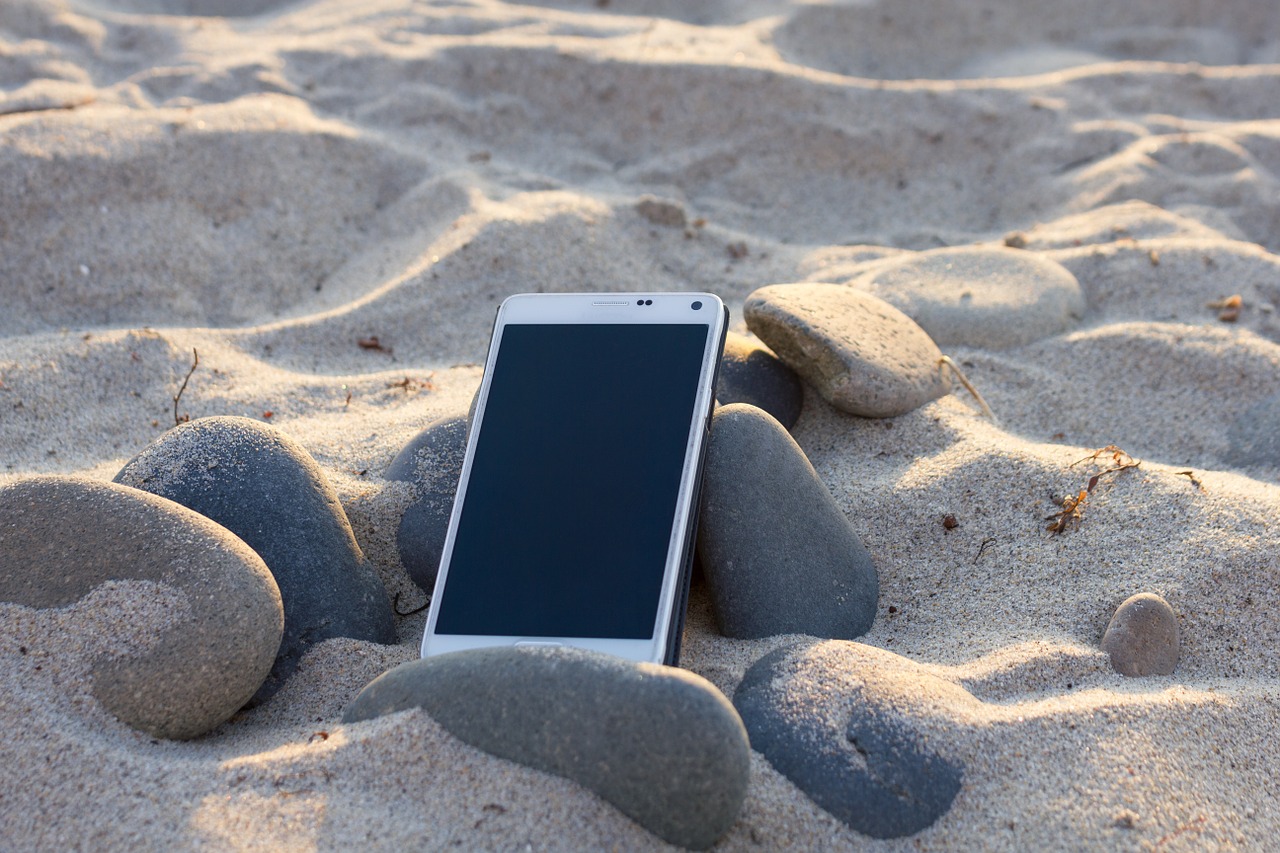
With Mobile Devices, Can Workers Ever Truly Enjoy Vacation Time?

cell-1344985_1280
Photo courtesy of Pixabay

The following post was originally published on The Regal Writer three years ago. It seemed like a good time to re-post as most people begin planning summer vacations. RL

Some years ago, I spent one week at a health spa located outside Chicago for vacation. I had a glorious time meeting people from other parts of the U.S. who were there to relax and jumpstart their health routines. There were no phones in the rooms, so most guests brought their cell phones, though the spa advised us to keep them shut off as much as possible during our stay.

Among the guests was a heavyset, stressed out attorney in his 50s, who was there with his wife under doctor’s orders to reduce the stress in his life. Every morning at breakfast, he’d be at the table talking on his phone with someone from his office. It always seemed that he was constantly on the phone, or his phone would ring during meal times. As that attorney raced out of the dining hall one day to deal with yet another business crisis at the office, another guest, a manager of a retail store, shook his head in disbelief. “I can’t believe he doesn’t have someone who can take care of things while he’s away. I’ve got a manager at my store that I trained to take care of things so I don’t have to worry about anything,” he said.

With the long holiday weekend ahead, many workers are taking extended vacations. But how many of them will still check business emails and phone messages when they’re supposed to be enjoying a massage or swimming in the pool? How can any of us truly enjoy our vacation if we’re still conducting business via our smartphone?

Granted, some businesses need to be open for the holidays, and certain professionals, such as medical staff and news reporters, must work part of the time or need access to their smartphones in case of an emergency. But for most people who are enjoying some time off, limiting their use of mobile technology for work is a necessary part of the vacation experience.

According to research from Pew Research Center, 64 percent of American adults owned a smartphone as of October 2014, and I’m sure that percentage has increased since then. Of American smartphone owners, 7 percent are “smartphone dependent,” meaning their mobile device is their only connection to the Internet because they don’t have broadband at home. In addition, 90 percent of adults own a cell phone, 32 percent own an e-reader and 42 percent use a tablet computer. With so many electronic gadgets available, it’s getting harder and harder to detach from work, even while sitting on a beach in the Caribbean.

The U.S. is not alone. Other countries are beginning to realize how overworked their employees are and are relaxing demands on their time. A few weeks ago, for example, thanks to legislation passed by the French government, French workers are no longer required to check into the office or check business emails on the weekend. Their workers, they say, need to take a mental break from work to be more effective.

If you are about to embark on vacation this summer, here are several strategies to help you truly “get away” from the office so you can enjoy the beach, golf, picnics and other fun activities.

1. Set time limits for checking emails and phone messages. Give yourself 30 minutes in the morning, and maybe, MAYBE, 30 minutes at dinner time if necessary. Only respond if there’s an emergency. The less time you spend responding to business emails and calls, the more time you have to relax.

2. Send reminders to co-workers and business associates that you are about to go on vacation. Explain that you will have limited accessibility to email and cell phone, so it will be difficult to reach you except in case of an emergency. Outline what you mean by emergency too, because, as we all know, one person’s idea of a minor issue is a crisis to someone else.

3. Ask yourself, how important is this issue? Does it have to be resolved now, or can it wait until you get back to the office? See if you can barter for more time.

4. If possible, train someone in the office to deal with problems in your absence. If there is no one you can trust to handle business in your absence, you might need to shut down for a few days with a sign on the door and a message on your voicemail indicating you are on vacation.

5. If you really want to get away from it all, go somewhere with spotty Internet service. You won’t be able to check emails, phone messages or update social media profiles, but no one will be pestering you from the office either.

The last thing anyone wants to do on vacation is to think about work. Depending on your job, sometimes it can’t be helped. But by implementing a few personal strategies, you can relax and enjoy your vacation the way you are meant to.


Why Vacations Matter for Your Professional Life

cell-1344985_1280

Yes, Virginia, you are allowed to take a summer vacation.

The long Memorial Day weekend marks the start of the summer, and the start of summer vacation season. But many American workers are likely to forego any summer plans. For some it is because it costs too much to pack up the kids and the dog and head to far-off destinations. For others, work calls for them to stay close to home and to their jobs. If you’re one of these workers skipping your summer vacation because you are tethered to your job, you are not alone.

According to a 2017 survey by employment website Glassdoor, 66 percent of American workers report working when they take a vacation, up from 61 percent in 2014. Fewer employees are able to completely “check out” while on vacation (54 percent in 2017 versus 63 percent in 2014).

Even when they were able to take time off, 27 percent of workers said they were expected to stay aware of work issues and get involved if a problem arose, and 12 percent were expected to be reachable by phone or email, deliver work projects and participate in conference calls while on vacation.

Much of this has to do with technology, which has enabled people to work anywhere and at any time. But it also makes it difficult to shut down and unplug ourselves, to truly unwind and relax. Most employers give their workers earned time off for a reason – to regroup mentally, emotionally and physically so they can return to work refreshed and avoid burnout.

But not everyone takes advantage of this employee benefit. We should though. Science says so. A 2016 study by the University of California-San Francisco and Harvard University finds that taking a vacation for one full week brings about genetic changes in our body that reduces stress and boosts the immune system, and the mood-enhancing benefits can last up to 30 days.

To get that mood-enhancing benefit, you have to take the time out for yourself. You need to give yourself permission to take a vacation. No one is going to force you to take it. It’s all about setting boundaries to your work life.

The key, say scientists, is to do it right. Yes, apparently, there is a right way and wrong way to take a summer vacation. According to small business expert Barry Moltz, here are a few suggestions for getting the most out of your summer vacation.

1. Make a plan. Put it on your calendar. Browse destination websites and brochures and learn about places you plan to visit. Just by researching and looking at travel images can boost your mood – before you have even begun your vacation.

2. Keep it simple. Don’t try to cram every activity into every day. Keep your schedule loose, and allow time to just “veg out.” There’s nothing wrong with doing nothing. That’s what vacations are for.

3. Break free of patterns. Try something different that can get you out of your comfort zone. For example, try disconnecting from electronic devices and talk to people you are traveling with, or sleep in until 8 a.m. if you are used to waking up at 5 a.m. When you change up your routine on vacation, see what creative ideas come up.

4. Seek out blue spaces, like bodies of water. Blue is associated with calmness and leads to lower levels of stress, according to researchers. I would also seek out green areas too, which is grounding and calming. Think public parks and golf courses.

5. End your vacation on a positive note. Enjoy a romantic dinner for two or plan a fun adventure, like sky diving or zip lining. People tend to remember their vacations more favorably if it ends on a high note.

With these suggestions, there’s no reason to skip a summer vacation. When you do it right, you’ll come back to the office more refreshed and energized. Your bosses will thank you, and you’ll wonder why you didn’t do it sooner.

Have a safe and relaxing holiday weekend!

With Mobile Devices, Can Workers Ever Truly Enjoy Vacation Time?

cell-1344985_1280
Photo courtesy of Pixabay

Some years ago, I spent one week at a health spa located outside Chicago for vacation. I had a glorious time meeting people from other parts of the U.S. who were there to relax and jumpstart their health routines. There were no phones in the rooms, so most guests brought their cell phones, though the spa advised us to keep them shut off as much as possible during our stay.

Among the guests was a heavyset, stressed out attorney in his 50s, who was there with his wife under doctor’s orders to reduce the stress in his life. Every morning at breakfast, he’d be at the table talking on his phone with someone from his office. It always seemed that he was constantly on the phone, or his phone would ring during meal times. As that attorney raced out of the dining hall one day to deal with yet another business crisis at the office, another guest, a manager of a retail store, shook his head in disbelief. “I can’t believe he doesn’t have someone who can take care of things while he’s away. I’ve got a manager at my store that I trained to take care of things so I don’t have to worry about anything,” he said.

With the long holiday weekend ahead, many workers are taking extended vacations. But how many of them will still check business emails and phone messages when they’re supposed to be enjoying a massage or swimming in the pool? How can any of us truly enjoy our vacation if we’re still conducting business via our smartphone?

Granted, some businesses need to be open for the holidays, and certain professionals, such as medical staff and news reporters, must work part of the time or need access to their smartphones in case of an emergency. But for most people who are enjoying some time off, limiting their use of mobile technology for work is a necessary part of the vacation experience.

According to research from Pew Research Center, 64 percent of American adults owned a smartphone as of October 2014, and I’m sure that percentage has increased since then. Of American smartphone owners, 7 percent are “smartphone dependent,” meaning their mobile device is their only connection to the Internet because they don’t have broadband at home. In addition, 90 percent of adults own a cell phone, 32 percent own an e-reader and 42 percent use a tablet computer. With so many electronic gadgets available, it’s getting harder and harder to detach from work, even while sitting on a beach in the Caribbean.

The U.S. is not alone. Other countries are beginning to realize how overworked their employees are and are relaxing demands on their time. A few weeks ago, for example, thanks to legislation passed by the French government, French workers are no longer required to check into the office or check business emails on the weekend. Their workers, they say, need to take a mental break from work to be more effective.

If you are about to embark on vacation this summer, here are several strategies to help you truly “get away” from the office so you can enjoy the beach, golf, picnics and other fun activities.

1. Set time limits for checking emails and phone messages. Give yourself 30 minutes in the morning, and maybe, MAYBE, 30 minutes at dinner time if necessary. Only respond if there’s an emergency. The less time you spend responding to business emails and calls, the more time you have to relax.

2. Send reminders to co-workers and business associates that you are about to go on vacation. Explain that you will have limited accessibility to email and cell phone, so it will be difficult to reach you except in case of an emergency. Outline what you mean by emergency too, because, as we all know, one person’s idea of a minor issue is a crisis to someone else.

3. Ask yourself, how important is this issue? Does it have to be resolved now, or can it wait until you get back to the office? See if you can barter for more time.

4. If possible, train someone in the office to deal with problems in your absence. If there is no one you can trust to handle business in your absence, you might need to shut down for a few days with a sign on the door and a message on your voicemail indicating you are on vacation.

5. If you really want to get away from it all, go somewhere with spotty Internet service. You won’t be able to check emails, phone messages or update social media profiles, but no one will be pestering you from the office either.

The last thing anyone wants to do on vacation is to think about work. Depending on your job, sometimes it can’t be helped. But by implementing a few personal strategies, you can relax and enjoy your vacation the way you are meant to.