

Writing a Novel Summary

Photo by Andrea Piacquadio on Pexels.com

Last week, I wrote about drafting a novel synopsis as a means of working out plot issues. A synopsis is a detailed account of your novel complete with inciting incident, plot development, climax, resolution. Yes, it also includes all the spoilers. Most agents and editors require a synopsis when you pitch your manuscript. You can check out that post here.

A lot of folks confuse the synopsis with the plot summary, which is a shorter description of the plot. While a synopsis can be anywhere from two to five pages in length, a summary is usually several paragraphs and it doesn’t give away the ending. There are no spoilers with a summary. Check out this video presentation from Reedsy, which provides a clear explanation of each.

If you’re still confused, check out the book descriptions on Amazon and Goodreads or browse the back of books in a bookstore or library. You’ll find the plot summary there. In three paragraphs, the summary describes the main plot and primary characters, the problem they’re trying to solve and the stakes they face. The summary’s purpose is to pique the interest of readers without giving away the ending.

The plot summary has several common elements, described below. I’ve also included a couple of examples:

* The first paragraph introduces the protagonist, showcases their world and what they desire. The inciting incident sets the story into motion and hints at the conflict that the protagonist faces.

From The Messy Lives of Book People by Phaedra Patrick:

“Mother of two Live Green barely scrapes by as a maid to make ends meet, often finding escape in a good book while daydreaming of becoming a writer herself. So she can’t believe her luck when she lands a job housekeeping for her personal hero, mega bestselling author Essie  Starling, a mysterious and intimidating recluse. The last thing Live expected was to be the only person Essie talks to, which leads to a tenuous friendship.”

From The Henna Artist by Alka Joshi:

“Escaping from an arranged and an abusive marriage, seventeen-year-old Lakshmi makes her way from her 1950s rural village to the vibrant pink city of Jaipur. There she becomes the henna artist–and confidante–most in demand by the wealthy women of the upper class. But trusted with the secrets of the wealthy, she can never reveal her own.”

* The second paragraph describes the core plot and conflict without giving away the ending.

From The Messy Lives of Book People:

When Essie passes away suddenly, Liv is astonished to learn that Essie’s dying wish is for Liv to complete her final novel. But to do so, Liv will have to step into Essie’s shoes.”

From The Henna Artist:

“Known for her original designs and sage advice, Lakshmi must tread carefully to avoid the jealous gossips who could ruin her reputation and her livelihood. As she pursues her dream of an independent life, she is startled one day when she is confronted by her husband, who has tracked her down these many years later with a high-spirited young girl in tow–a sister Lakshmi never knew she had. Suddenly the caution that Lakshmi has carefully cultivated is threatened. Still she perseveres, applying her talents and lifting up those who surround her as she does.”


* The third paragraph, which may only be one sentence, hints at the resolution and how it might impact the protagonist’s future.

As Liv begins to write, she uncovers secrets from the past that reveal a surprising connection between the two women – one that will change Liv’s own story forever.”

“Vivid and compelling in its portrait of one woman’s struggle for fulfillment in a society pivoting between the traditional and the modern, The Henna Artist opens a door into a world that is at once lush and fascinating, stark and cruel.”

With each of these examples, you can see the progression of the plot summary, the description of the character, their desire, and what gets in the way of their achieving that desire. But also note how the summaries don’t give away the resolution, but only hints at its potential impact on the protagonist.

Try this exercise: As you work on your current manuscript, draft a summary using the three-step formula above. Preparing a plot summary can not only help you refine your plot, it can be used to pitch to potential editors and agents. 
How Drafting a Synopsis Can Help You Revise Your Novel

Photo by Suzy Hazelwood on Pexels.com

I’ve been in a bit of a writing slump lately. Perhaps it’s the summer heat that has zapped my energy or self-doubt rearing its ugly head again. Either way, I’ve had no motivation to work on my current novel project(s).

It’s enough to make this grown-up writer cry.

I’ve tried several things to get out of this slump:

* Writing scenes for a totally different story to see if it has legs
* Writing character profiles to better understand their backstory, needs and desires
* Rewriting a previously drafted scene with a different character POV
* Rewriting a previously drafted scene with a character that has aged 30 years

So far none of them has sparked any kind of excitement about my work. 

But there’s one more thing I’m trying: Drafting a synopsis of the story in the hopes it will help me spot plot holes before they grow into canyons.

For the novice writers, a synopsis is a comprehensive, detailed account of the novel from start to finish, including character arcs, plot twists, the climax and resolution. At two to four pages, double spaced, it’s usually written in third person present tense and is used to pitch your novel to agents and editors.

Writing a synopsis before drafting or revising your story can be helpful for two reasons, according to the Writer’s Block Party blog:

* A synopsis is the sweet spot between a query letter and a full outline
* It can help you stay on track during the drafting or revision process.

A typical synopsis includes the following elements.

* Initial premise/concept
* Setting – time and place
* Main character – what they desire, motivation, problems they’ll face as they pursue their goal.  Make sure you show what makes the character unique.
* Any side characters, allies, or friends – who will help the protagonist achieve their goal
* Antagonist or opponent – what do they want, how will their desires clash with those of the protagonist?
* Any potential love interest?
* Inciting incident – what sets the action in motion?
* Rising action and midpoint scene
* Logical plot development
* Climax and resolution

That’s a lot to consider in the early stages of writing. But the process of drafting the synopsis will help you see the scenes or elements of your story that are missing or need attention. Is the protagonist’s character arc lacking? Are their story goals clear? Are the stakes high enough? Is there enough conflict and tension to move the story forward?

In addition to the elements listed above, the Reedsy experts (watch the video in the link) recommend the following suggestions:

* Voice – Make sure you show strong narrative writing in the synopsis. If the writing is poor, editors and agents may assume the novel won’t be well-written either. Use voice to convey the book’s tone, mood and atmosphere.

* Plot twists – Include the key plot twists that they’ll find in your novel and set them up the same way so readers of your synopsis can see their impact.

* Themes – The synopsis should hint at any themes in your story to showcase the level of complexity. 

I like the idea of drafting a synopsis before the revision stage because it can help you refine your story idea, spot plot holes and create stronger character arcs.

If you’re just starting the drafting phase, you may only have a few scenes and characters in mind. Go ahead and summarize those scenes and build your story synopsis from there. You can always go back to refine the premise and plot points as you think of new scenes.

Another advantage of creating the synopsis before revising is that it’s a working document so you can jot down plot details to see if they’ll work. That way you won’t forget them or lose track. They’re all written down for future reference. However, as you draft and revise your manuscript, those scene and character details may change, so be flexible.

If you ever feel stuck while revising, try writing the synopsis. It might just be the key to unlocking your creative inspiration so you can plan a better story.

Where to Find The Best Story Ideas

Photo by Pixabay on Pexels.com

As writers and creatives, we’re always on the look out for unique story ideas. But sometimes our minds draw a blank about what to write or how to kickstart the imagination.

I’ve found over the years that the best source of story ideas is my personal experience and my reaction to what’s happening in the world – from the people I know (and don’t know) to the places I’ve visited and the books I’ve read. Everywhere you look, you’ll find some nugget of inspiration. Awareness and staying relaxed are keys.

When you’re struggling to find good story ideas, there are a few things you can try to shake up the creative genius within you.

1. Start people-watching. Choose a semi-crowded public space, like a cafe, a bookshop or a doctor’s office. Settle in somewhere where you can observe the people around you. When you notice someone intriguing, create a story about them.  For example, the barista serving your coffee looks harassed and distracted. Imagine what her story could be. Write her as the protagonist in your story, give her a different name, then reimagine why she is so distracted on the job.

2. Watch a movie or TV episode. Sometimes watching a movie or TV show can spark an idea for a new story. Perhaps you didn’t like how the movie ended. Rewrite it the way you think it should have ended. Maybe you were intrigued by a minor character. Why not draft a new story featuring that minor character that intrigued you.

3. Re-read a beloved book. When you’re feeling stuck, sometimes reading a beloved book can spark an idea or reinspire you to write again. This time, though, pay attention to the subplots and minor characters. Challenge yourself to create a new story for that minor character.

4. Look through photographs. Photographs have a way of telling a story through images and symbols. There’s always a story behind that photo. Find one that speaks to you. Author Sarah Addison Allen posts a super-short story every Sunday on her social media inspired by a random photo. Each story is only about 200 words, but they capture the mood and spirit of the photo. Browse through magazines or check out photo sites on the web to find one that inspires you, then write the story that inspires you from it.

5. Re-visit a place that you loved as a child. Is there a place you and your family visited when you were younger that brought you happy memories? Consider writing a story set in that locale, capturing all the details to make it authentic. Write about the food, the architecture, landmarks, the people, the sights and the sounds that you remember. Any memorable setting can inspire a fresh new story.

6. Read the newspaper or a magazine. Stay current on today’s news. Learn about current events or read profiles of outstanding people, especially those who have overcome struggles to achieve greatness. Re-imagine those events for your story, or re-create those people as characters. Much of what you see in best-selling novels borrow from news stories.

7. Recall your dreams. Keep a dream journal and jot down the dream with as much detail as you can recall. Note how you felt within that dream. If you’ve ever dreamed of falling, being chased or watching a storm, those moments can be captured for your creative work, especially as you capture your emotional response in that dream.

8. Play the game of “What if?” If you’re feeling stuck, try using this writing prompt to get the creative ideas flowing. On a sheet of paper, write “what if?” at the top. Then create a bullet point list of possible answers. For example, what if someone woke up one morning and found that their teeth were missing? Or what if one of your beloved childhood pets came back to life and visited you? That one simple question can unlock possibilities you hadn’t expected.

9. Use a story prompt generator. If you’re really desperate to find ideas, you can always use a story prompt generator like Reedsy or Service Scape. You can use the ones provided or change it up with a different setting or relationship dynamic. 

If you prefer to find your story ideas more organically, the following tips might be helpful:

* Relax your mind and your body. I think some of my best ideas have come to me while in the shower or waking up from sleep. When your brain is overstimulated, the ideas won’t flow, no matter how much you try to prime the pump. So find ways to relax your mind so your imagination operates more efficiently and sends story ideas to you.

* Be aware of your surroundings. Wherever you go, whether it’s the grocery store, the doctor’s office or the local pub, note the people and the settings you pass by. Be an unobtrusive observer of life. I suggest carrying a small notebook to take notes of what you see or record them on your phone, especially if it’s an unusual place, person or conversation.

* Be aware of how you react to certain events and people in your own life. This is more an internal assessment rather than an external observation mentioned above. The more intense reactions will clue you in to what you feel is important about that experience. Then use that experience to mold a fresh new story idea.

Story ideas abound all around us. Stay relaxed and be aware of the people and situations around you, and you’ll never run out of story ideas.

Eight Ways to Reconnect with Your Writing

Photo by cottonbro on Pexels.com

As much as I loved the holidays, I’m glad they’re over because I’m ready to get back to the business of writing. I haven’t looked at my current work-in-progress or completed any meaningful projects since October, and I have felt disinterested in any form of writing.

Now that 2026 is here, I’m ready for a fresh start but at the same time, I dread tackling the massive revision I’ve been putting off the past few months. Since then, I have felt disconnected with my writer self. Between the holidays, illness and a sore foot, I’ve had little interest in writing, not even a short story or essay. My only consolation is that several other writers I know have expressed similar experiences.

What does that disconnection look like? For me, it was staring at blank pages and having a calendar with no interviews scheduled. It also was a series of avoidance tactics and excuses for not writing. Anything to get out of my commitment to write or work on my novel. Everything felt like an effort. Disconnection affected my physical body too, such as brain fog and a general emptiness inside.

The good news is that there are numerous ways to climb out of this lull in writing activity and reconnect with your writer self. All it really takes is 15 minutes a day and a little ingenuity. Below are some of the tactics I’ve used to reconnect with my writing and jump back into a creative mindset.

1. Start your day with a warm-up writing exercise or brainstorming session. On a blank sheet of paper and pen (or your computer screen if you prefer) jot down whatever topics come to mind. It could be a bullet list of story ideas, a description of something you see out your window, or a description of the last thing you ate. You could write about your pet, your best friend, your spouse or your boss. Maybe write a quickie review of the last movie you watched or the last book you read. You don’t even have to keep what you write. The point of the exercise is to simply put words down on the page, so your creative juices start flowing again.

2. Write in your journal. If you already write in a journal, congratulations. If not, a journal can serve as a useful starting point to get back into a writing routine. While the exercise above is more about taking stock of your surroundings, the journal is meant to help you explore your internal landscape–your thoughts and feelings. Again, start writing for 15 minutes and see where it takes you.

3. Take a walk in nature. One of my writer friends swears by this technique. Whenever she feels stuck when writing a scene, she walks in nature, usually with her dog. By the end of an hour or so, her mind has cleared and she’s resolved her writing problem. The next time you feel stuck in your writing or need to reconnect with your writer self, go for a walk. Then when you feel refreshed, sit down at your desk and start writing, even all you write about is what you saw on your walk.

4. Use a writing prompt. If you’re still staring at a blank page, try using a writing prompt to get the words flowing. One common prompt is “I remember…” Fill in the blank with any number of situations you remember from your life. Other possibilities include: “What if…” and “I believe…”  There are plenty of other sources for writing prompts you can find online, such as Reedsy and Writers Digest.

5. Re-read something you wrote and published previously. It will remind you of the success you’ve had in the past. Would you do anything differently? Perhaps rewrite paragraphs differently, or give it a different ending? By re-reading something you wrote, you might feel encouraged to try something new.

6. Find a writing buddy or join a group write-in. As writers, we tend to spend a lot of time alone in our own imaginations. But spending time around other like-minded souls can motivate you to write again. You can bounce ideas off each other, swap writing tips and review each other’s work. Besides, it’s comforting to know that you’re not alone, and that can be enough motivation to keep writing. Group write-ins are similar but in a group setting, like a library or classroom. Everyone is writing. There is a feeling of community when you’re all working alone, but together (if that makes any sense).

7. Skim through a book (or two) about writing. One way to reconnect with writing is to read about writing technique. Learning something new can inspire you to experiment with it in your own writing.

8. Sign up for a workshop or webinar. Much like reading about writing, taking a workshop or webinar can inspire you to try out a new technique, or to look at your own work with a fresh perspective. Or check out some videos on YouTube to get into the spirit of creative writing again.

No matter which strategy you try, remember to start slow and ease into your writing routine, one day at a time. You don’t need to spend hours either. Sometimes all it takes is 15 minutes. Before you know it, you’ll be reconnected with your writer self in no time.

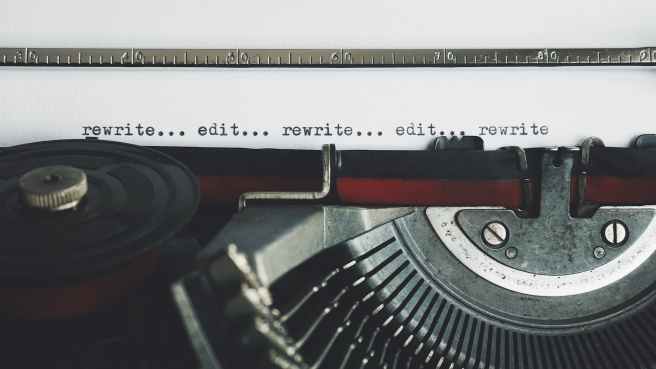
Overcoming Rewriting Paralysis

Photo by Andrea Piacquadio on Pexels.com

Whenever I get to the end of my first draft of whatever novel I’m working on, I’m filled with a range of emotions: joy, relief, satisfaction and pride. After spending weeks and months crafting a story I hope readers will love and creating characters I care about, I’m ready to celebrate.

The celebration is short-lived, however. Because I know there’s more work to do. A LOT more work. Being an intuitive writer, I don’t do much planning beforehand except sketching out the initial scenes. By the end of the drafting phase, my manuscript is a mess. That’s when I come face to face with the monster in the room – the rewrite.

For me, revision and rewriting is a daunting process, much like getting my wisdom teeth pulled. I usually spend hours staring at my pages wondering what to do next.

Recently, I came across a term for this. It’s called rewriting paralysis, defined by a state of being stuck and unable to move forward with a writing project because you’re frozen by the daunting task of revision.

For more information, check out this excellent piece by creativity coach Anne Carley who explains what rewriting paralysis is all about. There are several signs that you’re experiencing rewriting paralysis (sometimes called analysis paralysis because you’re over-analyzing a writing problem).

* You experience brain freeze. Or what others might call writer’s block. After looking at so many scenes, your mind goes numb. You wonder if you’ve covered every aspect of your story. Even if you do sense you’re missing a scene or two, your brain stops working. When you try to finish your story, the words won’t come.

* You feel emotionally spent. You’ve poured so much of your emotional energy into writing the first draft that you have nothing left for the rewrite.

* Your inner critic takes over the creative process. Maybe it berates you for sloppy work or keeps reminding you that you’re wasting your time. The critic’s non-stop chatter discourages you from finishing the rewrite.

* Self-doubt creeps in. Now that you’ve finished the draft, you’ve given the manuscript time and space to breathe. But in that space, the critic’s cousin Self-Doubt makes its presence known.  The more you doubt yourself, the more you wonder if you’re doing the right thing or if you should start over.

* You feel overwhelmed by the task ahead. Paralysis sets in because the project suddenly seems too big and overwhelming to tackle on your own. You’ve created a monster, but now you wonder how to turn it into Cinderella. You’re not sure how or where to begin the rewrite process, so you set aside the manuscript and hope for inspiration.

Fortunately, there are remedies to re-energize your project and push through the rewriting phase. I’ve experimented with some of these with some success. They might help you too.

Strategy 1: If the project seems too big and overwhelming, it might help to attack the rewrite by breaking it down into smaller sections, working through each Act or several scenes at a time. Author and book coach Janice Hardy suggests creating an editorial map that lets you see how your story is progressing. She also recommends creating a revision plan to organize each edit and check them off as you finish them.

Strategy 2: Draft a synopsis of your current work-in-progress. The end of the first draft may be the perfect time to draft a synopsis to make sure the story is progressing the way you imagined. The synopsis can reveal problem areas that need to be fixed. For example, when I drafted a synopsis for my current project, it revealed part of my protagonist’s backstory that explained why she felt so conflicted toward her deceased mother. Up to that point, that backstory had been a mystery to me.

Strategy 3: Review story structure. Paralysis might occur because you haven’t worked out the plot of your story, or it might be missing certain elements. The end of the drafting phase might be a good time to review story structure. There are multiple structure types, and it’s not always easy to choose the best one that fits your story. For information about story structure, check out this guide from Reedsy or this blog series and book, Structuring Your Novel by author K. M. Weiland.

Strategy 4: Study the revision process or take a course in revision. Author and book coach Jessica Brody teaches an online self-study course The Complete Novel Revision course which breaks down the process into three levels: story edits, scene edits and page edits. Whether you follow Brody’s process or use someone else’s, it takes time to review, reassess and rewrite your story to whip it into shape. Be patient with yourself and with the process.

Of course, before starting any rewriting or revising, it’s helpful to set aside the draft for a few weeks or months. Then print out the manuscript and read through it as a reader would. The time away from your story will clear your head and you’ll see the story with fresh eyes.

Armed with these strategies, you can easily overcome rewriting paralysis and create the novel of your dreams.

What Is The Best Format for Your Story Idea: Novel, Novella or Short Story?

Photo by Pixabay on Pexels.com

Imagine that you’ve come up with a great idea for a story. You haven’t seen it published anywhere else, and you’re sure that people would read it. Only question is: should you write it as a short story, a novella or a novel?

“What’s the difference?” you might ask. 

Word counts is the short and easy answer. Depending on the length of your story, it may fall into one of several story categories:

* Novel–70,000 to 100,000 words (although some novels have been less than 70,000 words and others have exceeded the upper limit, depending on genre.)

* Novella–17,500 words to 40,000 words

* Novelette–7,500 words to 17,500 words

* Short story–Less than 7,500 words

With short stories, there’s an economy of words and action. Since you don’t have a lot of space, descriptions, backstory and exposition are limited, and there are no subplots. Full-length novels allow more time and space for exposition and backstory, setting and character development. Short stories are like a weekend getaway while novels are a month-long retreat at a luxury spa. Novellas, which fall in between, are more like your typical one-week vacation.

To learn more about these differences, check out this helpful resource from Reedsy about word counts for different genres.

How do you know where your story idea fits? Should it be a short story, a novella or a novel?.

To answer this question, I recommend fleshing out your story idea as much as you can. Jot down scene ideas, characters, plot points using post-it notes or index cards. The more details you have about your story will determine what type of format you’ll need. 


Once you’ve plotted your scenes and made your character list, consider these questions:

1. What is the main problem the characters are trying to resolve? Is it a complex problem with layers of complications? Or is it fairly simple and straightforward?

2. Are there any subplots? A full-length novel might have one or two subplots while a short story and novella won’t have any.

3. How many characters are featured in your story? If there are a few characters, it’ll most likely be a short story. Longer sagas like historical fiction or science fiction/fantasy will likely have a cast of several dozen, while a short story will be limited to a handful of people. Romance novels are roughly a dozen or less.

4. Are you writing this story in multiple POVs? More likely, it’ll fall into the novel category. You won’t see multiple POVs in a short story. You might find one other POV in a novella.

5. What is your story’s genre? Historical fiction and fantasy tend to run longer, around 100,000 words. Romance novels tend to be between 70,000 to 90,000 words. Understanding your genre will help you determine whether your story should be a novel, novella or short story.

If after answering these questions, you’re still not sure what format your story should take, try this exercise. Write the story first as a short story with one point of view, a few essential characters and limited backstory. Keep to the necessary action. Then set it aside for a few weeks. Come back to it later with a fresh eye or have a friend or writing colleague review it with you. Decide what works and what doesn’t. 

If the story seems complete as is, then it probably works best as a short story. But if you feel there’s more to the story than what you wrote, rewrite your story, this time as a novella (up to 40,000 words). This time add the elements you think are missing, whether that’s world building, setting or characters. Maybe present a second point of view. 

When you’re finished, review it again. Does the story work better? If in doubt, ask a couple of beta readers to review the manuscript and give you feedback. If, based on their feedback, you still want to expand the story, perhaps add a subplot, then you can rewrite it as a full-length novel. 

The point is to start small and work your way up, testing out your story idea at each phase to see which format works best.  

Here’s another exercise to try: Visit your local bookstore or library, or browse your own collection. Note the size and length of certain genres. Some genres simply work better as shorter pieces. Historical fiction and fantasy tend to be longer while romance works well as a novella. .

Throughout this creative process, trust your instinct. More often than not, your gut will tell you what format will work best for your story idea. When you close your eyes and visualize what the story looks like, sometimes you just know what format your story should be. 

Deciding what format your story should be isn’t as difficult as you might think. The magic comes when you begin to see your story come to life on the page.

Helpful Websites and Resources for Writers

Photo by Negative Space on Pexels.com

If you read my blog, you’re likely embarking on a writing journey, whether it’s toward publishing success or simply trying to finish your first draft. Wherever you are on your journey, there’s plenty of help and advice from writing and publishing professionals. We’re all here to learn from one another.

Over the years I’ve followed numerous writers and editors to understand how to navigate the publishing world. Even though I’ve learned a lot since my own journey began, I still turn to the experts for guidance whenever I feel stuck.

I’ve compiled a list of my favorite experts which I follow regularly on social media or subscribe to their newsletters. No doubt you’ve heard of most of them or even already follow them. If you haven’t, feel free to check them out to see what they offer. Every little bit of advice helps, and reminds us that in our solo writing journeys, we’re never completely alone.

Jane Friedman (www.janefriedman.com). Jane is a former editor at Writer’s Digest, so she is well connected in the publishing industry and has a good, strong handle on the latest trends and news. While she writes some of the posts on her blog, most posts are provided by regular contributors such as Tiffany Yates Martin and Allison K. Williams. Best of all, she hosts numerous online workshops at reasonable prices, some as low at $25.

Janice Hardy (www.janicehardy.com). Janice is another writer I follow regularly. She’s an award-winning author of teen fantasy books as well as the Grace Harper urban fantasy series for adults. She has also published several non-fiction books about writing, revising and plotting. Sign up for her newsletter, and you’ll get something in your inbox every day, from writing tips to guest posts. 

K.M. Weiland (https://www.helpingwritersbecomeauthors.com/). If you want a deep dive into plotting, story structure and character arcs, Weiland’s website and newsletter is the place to go. Her specialty is archetypal characters, which may be more detailed that you might need for your own writing projects, but they might be worth a look to see if her insights work for you.

C. Hope Clark (https://chopeclark.com/). Clark is a veteran mystery writer and speaker with a weekly newsletter that is chock full of helpful insights about the writing life. The newsletter also includes resources, such as writing contests, fellowships, freelance opportunities, and publishers. While I have not directly benefited from any of the listings, I do find her insights and support inspirational and uplifting for those times when I feel discouraged.

Kat Boogaard (https://katboogaard.com/). If you’re serious about starting a freelancing business, check out Kat Boggaard, a veteran freelancer who has earned six-figures most of her career. She is incredibly down-to-earth and practical about the business. In her  newsletter, (now distributed monthly) , she is very open about the ups and downs of a freelancing career as well as work-life balance issues while raising a family, which makes her relatable. Check out her website, where she offers numerous forms and checklists that she uses in her own business. Sign up for her newsletter or follow her on LinkedIn.

Brooke Adams Law (https://www.wearewritingbrave.com). Author and host of Writing Brave, Law occasionally hosts a free online summit focused on the emotional aspect of writing, working through fear and self-doubt. It’s a topic that’s rarely touched upon and one that most writers I know deal with frequently. If you’re looking to Write Brave, check out Law’s site.        

Writer Unboxed (https://writerunboxed.com/). This community of writers offers an array of perspectives about the writing business. I especially enjoy the insights of Kathryn Craft and Donald Maass, who are masters of storytelling. Check out the weekly Flog a Pro feature, which highlights the opening page of a current bestseller and asks readers if they would read the book based on the those opening paragraphs. (More often than not, it’s a resounding “no.”) If you’re serious about writing fiction, this is the place to go for valuable tips and motivation.

The Brevity Blog (https://brevity.wordpress.com/). So you say fiction isn’t your thing, but narrative non-fiction is? You should feel right at home at The Brevity Blog. Similar to Writer Unboxed, it’s a community of writers that specialize in writing memoir and narrative non-fiction. Many of the articles, submitted by members of their community, deal with the challenges and triumphs of the writing life. Even if you don’t write literary non-fiction, this site is worth checking out.  

Writer’s Digest (https://www.writersdigest.com/).  WD is the go-to resource for any kind of writing you care to pursue. While they offer numerous online classes and webinars, they can be a bit pricey, and if you sign up for their newsletter, you’ll get a lot of promotional ads for their products. Still, the magazine is top notch and their weekly Monday Motivation is well worth reading.

Reedsy (https://reedsy.com/)  You don’t have to use Reedsy’s online writing app to take advantage of its various publishing resources, such as a weekly writing prompt. Check out their YouTube channel for their backlist of webinars and online discussions about the publishing business. They also lead live write-in sessions, editing sessions and first-line critiques, so even as they assist other writers, you can learn too.   

Writing and Wellness (https://writingandwellness.com/). Writing isn’t just about getting published. Sometimes, it’s also part of a wellness plan, to deal with emotional and mental health. Activities like journaling, writing poetry or personal essays are outlets to deal with anger, grief or sadness. Writing can also help you deal with physical pain, backaches and burnout. Freelance writer and author Colleen Story hosts this site to help writers deal with these issues, and put fear and self-doubt in the rearview mirror.

Hope you find these sites helpful in your own writing journey.

Tips for Re-Setting a Writing Practice

Photo by Lisa Fotios on Pexels.com

It always happens. When the Christmas holidays roll around or client assignments drop in my lap, my writing practice suffers. I haven’t looked at any of my personal writing projects in nearly six weeks, haven’t picked up a pen to draft any new stories or blog content. It frustrates me that I can’t be more productive. But that’s what happens when you’re trying to do too many things at once.

Now that it’s January, it’s time to “get back in the saddle,” as they say. With the decorations put away and assignments completed, I need to get back to work. My work. My writing practice. So how do I reset my routine?

Fortunately, Reedsy offered a timely webinar about productivity, and their experts provides exercises and pro tips that may be helpful in jumpstarting my routine.

Tip 1: Set a year-end goal. Close your eyes and imagine that it’s next Christmas, you’re with your family and friends celebrating some milestone with your writing. Perhaps you finished a draft of a new novel. Or you finally signed on with an agent. How do you feel about what you accomplished? What does the end result look like and feel like? Where do you want to be with your writing? If you can imagine it, you can accomplish it.

Tip 2. Begin with small steps. With the larger year-end goal in mind, think about how to get there. What small step can you take within the next week or month to reach that goal? What small step can you take in February, March, and so on? That small goal might be something like writing for 30 minutes each day, or a word count goal, like 500 words or one page a day. When you put one foot in front of the other, you eventually reach your destination.  

Tip 3: Be consistent with your practice. Make time to write, and write every day if you can. Writing every day sets up a new habit. When I got a batch of assignments in November and December, I neglected that daily habit, and lost momentum. Now it’s a struggle to get back to where I was before the holidays. Don’t let that happen to you. In hindsight, I should have simply scaled back on my writing routine rather than give it up altogether.

Tip 4: Create a ritual before beginning each writing session. The ritual will get you in the proper mindset. It could be something as simple as closing your eyes to imagine the words on the page, saying a short prayer to your creative muse or lighting a candle. However, don’t check emails or the internet before your session, or you will get lost in the mundane details of work and quickly lose your focus.

Tip 5: Be aware of the obstacles and distractions around you. Some obstacles are external and can be easily addressed. Maybe there’s a stack of dishes in the sink or an important phone call you need to make. Reedsy suggests taking 10 minutes to tidy up the kitchen and make that important phone call, otherwise it will bother you enough to prevent you from writing. If the dog needs to go for a walk, maybe have another family member or a neighbor take them out. There are internal distractions too, such as negative self-talk. In those instances, it might be helpful to talk to a friend or write in a journal. Find a way to release those negative thoughts before they poison your writing practice.

Tip 6: Deal with procrastination. This is my own bugaboo problem. Procrastination can kill any brilliant story idea you might have. What is procrastination really but an avoidance tactic? So ask yourself–what are you trying to avoid? Why are you trying to avoid it? Is it the fear that what you write will be horrible (bad news: the first draft usually is). Is it because you have no idea what to write about and you don’t like staring at a blank page? The easy fix for that is writing prompts which can jumpstart your imagination and get ideas flowing again.

I’ve been procrastinating on a novel I’ve been editing/rewriting for the fourth time. It’s been a long slog, and I’m tired of looking at the story. So I’ve been avoiding it because I hate the editing process—of cutting copy and moving scenes around. I’d much rather be writing something fresh and new. My point is procrastination happens to every writer, and it’s usually a sign that you’re avoiding something in your practice that you’d rather not do. Figure out a way to work through what you need to do, then do it.

Tip 7: Change the narrative of your writing life. So what that you may never have been published before. You can be published this year if you work toward that goal. Don’t let past disappointments and failures define who you are as a writer. Focus on your successes and build on them. Focus on the things you can do rather than what you can’t. For example, if all you can do is write 100 words a day, then write 100 words a day. Don’t berate yourself for not writing 1000 words like most other people you might know. You know your circumstances best, so work within those parameters. As Tim Gunn always says, “Make it work!”

Hope these suggestions help you re-set your writing practice. Here’s to a productive and successful 2024. Happy writing!

Tips for Creating a Compelling Opening Chapter

I had planned to write a post about what makes a great opening chapter or first 10 pages, then I realized I had already written a post about it several years ago.. I couldn’t think of any way to improve it, so I am repeating it here. The information is especially helpful for those participating in National Novel Writing Month (NaNoWriMo).

Photo by Suzy Hazelwood on Pexels.com

If you’ve ever read The Nightingale by Kristin Hannah, you probably remember this opening line:

“If I have learned anything in this long life of mine, it is this: In love, we find out who we want to be; in war, we find out who we are.”

I’d be hard pressed to find any opening more poignant than this one. From the very start, readers are taken on an emotional journey that doesn’t end until the final sentence.

Writers are tasked with the challenge to create a similar experience with their readers. The start of any  novel should accomplish several things: create the tone of the story, provide the point of view, reveal character, and show tension and conflict, among other things. Certainly, the opening line from The Nightingale accomplishes most of these objectives. Does your story do the same?

Why is the opening so critical? Because if it doesn’t grab the reader’s interest and keep it for the first few pages, the reader will likely close the book and set it aside, never getting to the end of it. Ask any published author, editor or agent what makes a strong opening, and you’ll hear a number of answers, which are summarized below. And these suggestions don’t just pertain to fiction, but to short stories, memoir and non-fiction works too. Without a compelling start, readers will dismiss your effort.

If you are participating in NaNoWriMo (National Novel Writing Month), keep the following suggestions in mind as you write the opening of your novel.

1. Skip the prologue. There is ongoing debate about the merits of a prologue. Many editors and agents feel they aren’t necessary. I tend to agree with them. I’ve rarely read a prologue that made a difference in my understanding of the plot. The one exception is Caught by Harlan Coben, which provided sufficient background on one of the main characters to make you second guess the outcome. But if you plan your story well and write the opening pages right, there shouldn’t be a need for a prologue.

2. Create a protagonist that readers will care about. The opening is your opportunity to reveal your protagonist’s character. Is he/she rebellious, angry, ambitious or curious? In the above opening from The Nightingale, the character speaking is introspective and perhaps has gained wisdom from life experience. It makes me care about who she is and what else she (and it is a she, btw) might have to say.

3. Ground your reader in the story’s setting. According to the Write Practice blog, let readers see where the story takes place. Establish early on what the setting is for the story – the time period, the location, the season of the year, etc. When the reader feels grounded in the setting, they feel mentally prepared to experience the events as the characters do.

4. Create conflict and tension. Identify what the inciting incident is – that starting point to your story that changes the status quo. Where is the conflict? Is that conflict with another character, with a situation or within themselves? That conflict is needed to create tension, which helps draw readers in and keep them reading to see how the conflict is resolved.  

5. Don’t frontload with dialogue or action. According to Fuse Literary, too much action or dialogue can confuse readers. Sure, you want to start with some sort of action, but an opening chapter heavy on action and dialogue and not enough narrative or backstory can be confusing to readers who may need a point of reference to understand what is happening on the page. You need some action, of course, but balance it with some narrative so you don’t lose readers’ interest.

6. Don’t overload the opening with backstory either. According to recent Reedsy webinar, Crafting a Novel Opening, writers should focus on what the reader needs to know at that moment. There’s plenty of time to reveal backstory and world building as the story progresses, says Shaelin Bishop who led the discussion. Weave in backstory throughout the length of the manuscript, and allow details to breathe between scenes. This approach will help with the pacing too. If readers are overloaded with details up front, they may feel overwhelmed.

7. Hook the reader with an interesting twist. Start where the story gets interesting, which is usually at the point where there’s a change in the status quo. For example, the protagonist gets a letter with good news or bad news, a new person enters the protagonist’s life, or they get into an accident that alters the course of their life.  “Show what is interesting rather than focusing on the mundane. It’s okay to show less of the status quo than you think you need to,” says Shaelin Bishop with Reedsy. This approach avoids overloading your opening chapter with too many details that can bore your reader.

8. Every scene should serve several purposes. For example, one scene can establish the tone of the story, reveal something about the character and hint at future conflict. This sounds complex, but it’s necessary to keep the story moving forward and keep readers interested. Don’t waste your first sentence, or any sentence for that matter. Write every scene with a purpose in mind. If it doesn’t serve  purpose, and if a character doesn’t serve a purpose, cut them out.

To get into the habit of writing stronger openings, try these two exercises.

Exercise 1: Take 10 minutes and create as many opening sentences as you can think of. It could be for a current work in progress or any other story. Experiment with different perspectives. Here are a couple of examples of intriguing openings that made me keep reading:

“You would think it would be impossible to find anything new in the world, creatures no man has ever seen before, one-of-a-kind oddities in which nature has taken a backseat to the coursing pulse of the fantastical and the marvelous. I can tell you with certainty that such things exists ….”
The Museum of Extraordinary Things, Alice Hoffman

“My name is Serena Frome (rhymes with plume) and almost forty years ago I was sent on a secret mission for the British Security Service. I didn’t return safely. Within eighteen months of joining, I was sacked, having disgraced myself and ruined my lover, though he certainly had a hand in his own undoing.”
Sweet Tooth, Ian McEwan

Exercise 2: Select five novels from your collection that you enjoyed reading. Go back and read the first page from each one. What made you turn the page? Why did it grab your interest? Did it reveal anything about the setting, tone or character? Did it create tension and conflict? What can you learn from these first pages that you can adapt to your own work?

Follow these tips to make your opening chapter compelling enough to keep readers engaged to the very end.

 Is Your Story Idea Worth Publishing?

Photo by Pixabay on Pexels.com

Ever have an idea for a story that you thought for sure would become the next Great American Novel only to flame out when you couldn’t write past the third chapter? The truth is, not every story idea that crosses your mind is worth writing about. So how do you know which ones are viable as a novel or short story while others are better left as a stand-alone scene, or worse, dumped in the trash?

In a recent Reedsy webinar, author S. J. Watson spoke about the idea generation process and how writers can determine which ideas are worth developing. .

Watson said the idea generation process can be divided into four segments:
* Finding story ideas and recognizing them when they show up organically
* How to retain those story ideas
* How to determine if an idea has the potential to become a novel
* How to keep the original idea from going off the rails, and what to do if it does.

An idea is “a sense that something is possible,” he said, and they can come from anywhere around you. But he cautions writers to keep them close to the vest.

“Ideas are like hose pipes,” Watson said. “If you overshare an idea too soon with your family and friends, it might poke holes in it.” Once the holes are poked through, the story tends to lose its novelty and impact.

To generate meaningful and relevant story ideas, there are several things writers can do to prime the pump.

  1. Show up at your desk every day, even when you don’t feel like it. Ideas don’t show up automatically. You still have to put in the time and effort before ideas begin to flow.
  2. Observe your surroundings. Look out the window or take a walk. Notice something on the street that you don’t normally see, such as a mobility scooter or a three-legged dog. Then brainstorm different scenarios about what you see. You may surprise yourself by coming up with a viable story idea.
     
  3. Write when you’re half-asleep. The brain isn’t quite awake then and it can amplify the connection between seemingly different ideas. In this half-sleep mode, you’re less likely to censor yourself.

To retain your ideas, keep a notebook. Either carry one in your pocket or purse or use the Notes app on your phone. Any time you notice something in your environment, overhear a conversation, or get sudden inspiration, jot them down. Watson admits he rarely looks at his notes, but the act of writing ideas down helps him to retain those ideas for easy reference later.

Connecting the Dots

Which ideas are worth turning into a full-fledged novel? Watson said ideas begin with the sense that something big could happen, such as winning the lottery or getting into a car accident. They open doors to broader concepts, and they invite random scenes and characters to show up. You may have two seemingly unrelated scene concepts, yet there may be a thread that connects them within a single story.

Also ask yourself several questions about the story’s viability:

  1. Does the story idea stay with you, and do you feel a desperation to work on it? Some ideas come and grab you by the throat, demanding your attention.
  2. Can you visualize the protagonist or antagonist?
  3. Do you see the conflict? Do you know the characters’ goals?
  4. Most important, can the problem in the story be made to feel relatable, such as learning that a family member is terminally ill?

Another possible approach is to take other people’s ideas and remix the elements to make them your own, Watson says. Whatever approach you take, make sure you don’t second guess yourself.

Drifting Story Lines
If the story drifts from the original concept that you envisioned, you may need to make adjustments. If, at the 20,000 word mark, the story seems to be heading in a different direction than what you intended, take a step back and review the work you’ve done so far. If the changes in the story scare you or excite you, then keep going. You may be on the right track even if you don’t have a clear idea where the story is headed.

However, if the new direction of the story isn’t exciting, it may be a sign that the story is too safe. Watson suggests backtracking to the original spine of the story and starting over from there to regain the excitement. “Occasional drifting is okay, especially if it takes you to scary or exciting places,” Watson says. “If you drift too far away from the original intent of the story, it may need to be scrapped. Occasionally returning to the story spine can help you make sure you’re in the right place.”

Story ideas come in all shapes and sizes. Knowing which ones are viable as potential novels, and which ones aren’t can save you a lot of time and needless effort.

You can view the Reedsy webinar here.