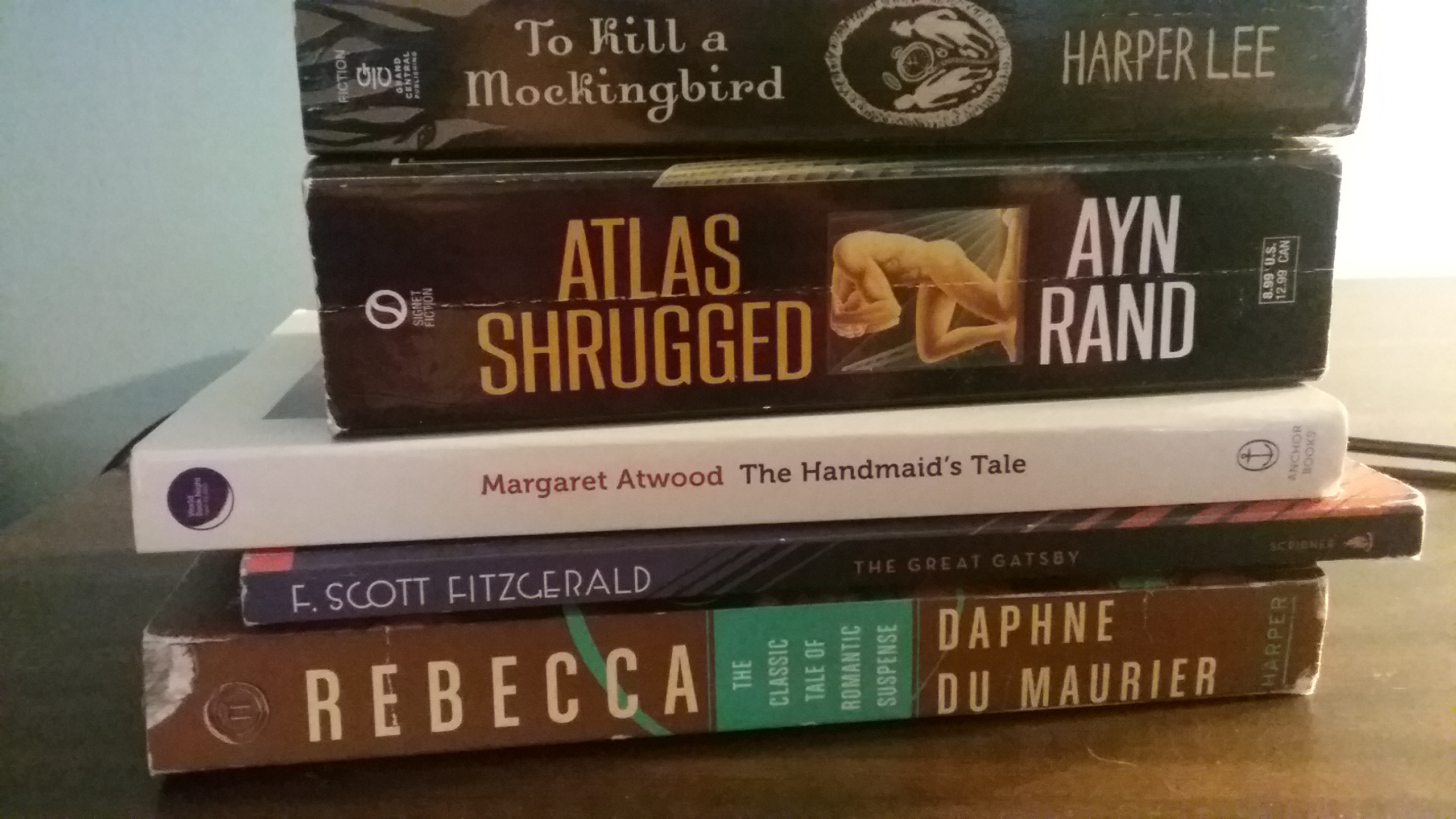
Create a Reading Challenge That Truly Challenges You

It’s usually at the start of every New Year that I look forward to my annual reading challenge. While I aim to read on average 30-34 books, I really try to focus on diversifying my reading interests. I like to challenge myself by reading new authors, different genres that I don’t normally read. By mixing things up, I expose myself to different writing styles which can only make my own writing better.

This year I decided to switch things up by creating a challenge based on monthly themes. I considered each month’s holidays and seasons for potential book themes, then browsed my TBR shelf for books that matched that theme. For example, January is the start of a new year. It has a wintry theme, with cold, snow and wind. It’s hockey season too.

Photo by Mikhail Nilov on Pexels.co

Selecting books from my TBR shelf that fit these themes was fairly easy. I wound up reading The Ice Queen by Alice Hoffman and The Snow Child by Eowyn Ivey. I’m already looking ahead to February with two more novels based on the month’s themes (Valentine’s Day, President’s Day, Mardi Gras and African-American Heritage month), and I only have to look at my TBR shelf to find those selections. Other options are the local library and the Little Free Library in your neighborhood.

This is one way to complete a reading challenge. The beautiful thing about them is that you can create your own challenge based on your own goals and interests and start it at any time. They can last three months, six months or a full year. They can either be focused on diversifying your reading selections or increasing your reading time. It all depends on what goals you set for your reading challenge.

Since there are so many ways to go about completing a reading challenge, it may be difficult to decide the best one for you. If you’re not sure what type of reading challenge you want to do, check out this nifty quiz at MindJoggle.com. The site also has some cool resources you can use to get the most out of your challenge, such as reading journals and book lists.

The first step for any reading challenge is to set a goal. If your reading goal is to squeeze more reading time into your life, there are several ways to approach this:

* Increase the number of pages you want to read every day. For example, if you usually only read 10 pages, see if you can increase that total to 20 or 25.

* Increase the amount of time you spend reading. If you currently read 15 minutes a day, see if you can increase that reading time to 30 minutes a day.

* Set a goal for the number of books you want to read in a given month. If you’re used to reading only one book, challenge yourself to increase it to two.

On the other hand, if your focus is to expand and diversify the types of books you read, there are ways to accomplish that too.

* Focus on monthly themes. For example, during the month of February, you might read a romance novel (Valentine’s Day), a political thriller or presidential biography (President’s Day) or a novel written by an African-American author (African-American Heritage month). Pick one or two to fulfill the February theme, then do the same for March (St. Patrick’s Day, Women’s History month and the start of spring) and the other months that follow.

* Focus on one genre for a short time period. For example, if you’re used to reading the latest bestsellers, you might do a three-month challenge featuring classic novels that you’ve never read before.   

* Using the monthly system, you can select a book for a different genre each month. For example, in January, you might read a fantasy novel, in February a biography, in March a historical fiction novel, etc.

These are just ideas to get you started thinking about your own reading challenge. When you create a  challenge that fits your interests and schedule, you’re more likely to stick with it.

Here are a few other tips to maximize your reading experience:

1. Start by determining your reading goal. Do you want to increase the amount of time you spend reading in a given week? Or would you rather experiment by reading books in different genres?

2. Think short-term mini-challenges. Sometimes all you need is a three-month challenge to kickstart a reading habit or improve the one you already have. With shorter challenges you can do a deeper dive into specific genres, like mysteries or historical fiction that you probably didn’t read before.

3. Create a reading calendar. Whether you commit to a full one-year challenge or a mini-challenge of three months or six months, use a calendar to choose the books you want to read. Create a mix of longer and shorter books so you don’t get bored with books of the same length. When you see the calendar at a glance and know what books you’ll read and when, it will be easier to stick with the schedule and with the challenge.

4. Join a reading community. To keep yourself motivated, it might help to join a reading community where you can share book reviews and reading experiences with other like-minded book lovers. Check the internet for possible online communities, or visit your local library to see if they have a reading community. (Note: Don’t confuse a reading community with a book club. Reading communities focus on the reading experience, no matter what you’re reading, while book clubs read the same book for the purpose of discussion.)

5. Be consistent with your reading. A little bit each day builds a new habit and will keep you motivated to keep reading. Also be flexible with your challenge. If a book isn’t working out for you, skip it and come back to it later. Switch to something you will stick with. It’s okay to change the schedule as you go along.

6. Beat reading slumps by mixing up formats. It never fails that by late autumn, my reading interest lags and I just don’t feel like reading. Experts suggest changing up book formats with shorter pieces that don’t require as much time or energy. Think short stories, an essay collection or a novella.

Remember, reading challenges are meant to help you stretch yourself, learn new things and get out of reading ruts. Most important, have fun with them. That’s what makes them worthwhile.


Tips for Participating in Reading Challenges

woman reading harry potter book
Photo by Dids on Pexels.com

At the start of the year, I wrote a post about my annual reading challenge. The challenge is fairly simple: to read a diverse selection of books up to 26 books, or one book every two weeks. The challenge contains a mix of book choices from genres (romance, mystery, historical fiction) to prompts (a book with a person’s name in the title, a book set in your hometown, a book with a one-word title, etc.).

My goal for the year is 32 books, however, and so far, I have completed 10. I’m well on my way to reaching my numerical goal.

But doing this challenge isn’t about the quantity of books. It’s about expanding my reading knowledge and being accountable for continuing to read throughout the year. No, I do not feel pressure to meet my number goal, and I don’t race through books to check it off my list. If I do race through a book, it’s usually because it’s a fast-paced thriller that is hard to put down.

Opponents of reading challenges say they are too much like homework assignments. I view them more like a game, a scavenger hunt where you’re given clues to find certain items. In this case, book titles that fit a particular description. Others say they don’t want to feel pressure to reach reading goals, even though they can determine what those goals should be.

Search the Internet and you’ll find numerous reading challenges, such as Popsugar, Goodreads or this one at Booklist Queen. If these sites don’t fit your reading goals, you can always create your own. For ideas on how to do that, check out Bookriot’s DIY Reading Challenge. There are different approaches to doing reading challenges that have nothing to do with a set quantity.

Maybe you love mysteries, but want to explore other mystery authors. Choose to read one book each month from a mystery author you’ve never read before. Or choose ten places you’ve never been to before, and choose 10 books that take place in those locations.

You get the idea. That’s the fun part of reading challenges.

If you have done a reading challenge, you know already how it can improve your reading. Here are a few other benefits of doing reading challenges:

— It gets you out of your comfort zone so you’re not reading the same author or genre all the time, and allows you to choose books that you wouldn’t normally read.
— It adds a fun element to reading, much like a scavenger hunt. It’s a game, although there are no set prizes.
— It’s a different way to enjoy reading. It’s really less about the quantity of books and more about enhancing the experience. You can still focus on quality books and you can still take your time reading them. It’s about making a commitment to read more books and read different styles.
— It makes you accountable. A reading challenge gives you a plan for reading more books. Some people perform better if they have a plan in place.
— It gives you a chance to make a dent in your TBR bookshelf.

Meanwhile, opponents of reading challenges cite several objections:
— Having a target goal puts pressure on you to perform at a level you may not ready for or at a faster pace than you’re used to.
— The challenge can seem like a chore, like homework. It’s something you have to do, rather than something you want to do.
— You may find yourself racing through books just to meet your target goal rather than going at a slower pace that allows you to enjoy the book.
— In a challenge with prompts, you may have to do some research to find some of the more obscure titles. It may take time to find a book that takes place in Asia, for instance, or a book published the year you were born. That can be more work than you are willing to put into it.
— Setting reading goals might ruin your enjoyment of the activity.

While some of these objections have some merit, I find that the benefits often outweigh the downsides. In the four years I’ve done this challenge, I can’t tell you how many new authors I’ve discovered, and different genres that I never would have read.

According to an article in Atlantic magazine, people who enjoyed reading challenges the most didn’t seem to care if they finished them or not. They didn’t care if they hit their target of 50 books. If their goal was to read more books and having a target goal helped them achieve that, they were satisfied with the outcome.

If you’re intrigued by reading challenges, here are a few helpful tips for participating in them:

— Set a small goal to start. Maybe choose five books by minority authors, or five nonfiction books if you’re used to reading fiction. Or do a summer reading challenge – one book on a selected topic for June, July and August.
— You don’t have to follow the established reading challenges like Goodreads if it doesn’t fit your reading goals.
— Keep track of your accomplishments. Keep a small notebook or a spreadsheet, and jot down what you read.
— Don’t worry about quantity. If setting a number goal scares you, don’t worry about it. Focus on the diversity or quality of books instead.
— Don’t overthink the challenge. Challenges exist to help you become a better reader. If you set a goal for reading 10 non-fiction books and you only read seven, don’t beat yourself up over it.
— Don’t take it too seriously. Reading challenges are meant to be fun ways to discover new authors and new genres.
— Reward yourself. While most challenges don’t offer prizes, you can always reward yourself when you complete your challenge.

Remember, you are in control of your reading challenge. You determine how many books you want to read, the types of books you want to read and how much time you’re willing to spend reading them. No one is forcing you to finish the challenge. But imagine how good you’ll feel about yourself when you do.

2020 Reading Challenge: How Many Books Can You Read in One Year?


books school stacked closed
Photo by Pixabay on Pexels.com

Looking for a new challenge for 2020? If you love to read and would like to expand your knowledge of genres and writing styles, beyond John Grisham legal thrillers and self-help books that leave you feeling more confused than before, then the 2020 Reading Challenge may be right for you. Here’s how you can participate.

Your challenge, if you choose to accept it, is to read one book from each of the categories listed below up to 26 books. That equates to one book every two weeks.

For an added challenge, see if you can read one book from all 34 categories. If you complete all 34 categories and there’s still time in the year, reward yourself. Either take a break from reading or read anything you want. You’ve earned it!

I won’t be handing out prizes for this challenge. The only prize is the pride of personal achievement, unless you want to reward yourself with a well-earned gift, like a massage or a copy of the latest New York Times bestseller.

I have participated in reading challenges the past three years. 2018 was my most productive year, having read 42 books. Last year was more difficult with only 27 (28 if you count the one I started the last week of December but finished the first week of January).

The experience has been rewarding. Not only have I expanded my book knowledge, I’ve discovered new authors and genres I didn’t think I would like (paranormal romance, anyone?). And I had so much fun and a sense of pride each time I crossed a category off my list.

That’s why I’m sharing this reading challenge with you. If you love books as much as I do, you won’t turn down this challenge.

So for your reading pleasure, here are the categories you can choose from. Remember, the first-level goal is 26 books — one book for every two weeks of the year. Any titles beyond that are bonuses. You can read them in any order you choose.

1. Autobiography or memoir
2. Historical fiction
3. A classic
4. Young adult novel
5. Mystery/thriller
6. Science fiction/fantasy
7. Romance/romantic suspense
8. A non-fiction book or current events
9. True crime
10. A self-help or psychology book
11. A book you read in your childhood
12. A book you read in school
13. A book/novel published within the past year
14. A book/novel published more than 100 years ago
15. A first-time author/debut novel
16. African-American fiction
17. Latin-American fiction
18. A book by an author who is deceased
19. A book made into a movie or TV show
20. A book that someone recommended to you
21. A book set in your hometown
22. A book set in a foreign place
23. A book with a place/location in the title
24. A book with a number in the title
25. A book with a person’s name in the title
26. A book with a color in the title
27. A book with a one-word title
28. A collection of short stories
29. A collection of essays
30. A play
31. A book about sports or an athlete
32. A book that features an animal (Example: Seabiscuit)
33. Paranormal/vampire
34. Current Top 10 best seller

Of course, if you can think of another category for your own reading challenge, you can add it to the selections above. Since I’m getting a late start on this endeavor, the challenge begins now and runs through next January 7, 2021. I will check in periodically to share my progress and perhaps also book titles and authors I found worthwhile.

Have fun! Let the reading begin!

2019 Reading Challenge: How Many Books Can You Read in One Year?


Great American Read

Looking for a way to challenge yourself in 2019? Do you love to read and would like to expand your knowledge of genres and writing styles, beyond John Grisham legal thrillers and self-help books that leave you feeling more confused than before? Then follow along with me on a journey through books.

Announcing the 2019 Reading Challenge. Here’s how you can participate.

Your challenge, if you choose to accept it, is to read one book from 26 of the 40 categories listed below. That equates to one book every two weeks.

For an added challenge, see if you can read one book from all 40 categories. If you complete all 40 categories and there’s still time in the year, reward yourself. Either take a break from reading or read anything you want. You’ve earned it!

I won’t be handing out prizes for this challenge. The only prize is the pride of personal achievement, unless you want to reward yourself with a well-earned gift, like a massage or a copy of the latest New York Times bestseller.

I have participated in reading challenges the past two years. The experience has been rewarding. Not only have I expanded my book knowledge, I’ve discovered new authors and genres I didn’t think I would like (paranormal romance, anyone?). And I had so much fun and a sense of pride each time I crossed a category off my list. As 2018 winds to a close, I’m on Book #42.

That’s why I’m sharing this reading challenge with you. If you love books as much as I do, you won’t turn down this challenge.

So for your reading pleasure, here are the categories. Remember, the first-level challenge is one book from 40 categories, one for every two weeks of the year for 26 total books. You can read them in any order you choose.

1. Autobiography or memoir
2. Historical fiction
3. A classic
4. Young adult novel
5. Mystery/thriller
6. Science fiction/fantasy
7. Romance/romantic suspense
8. A non-fiction book
9. True crime
10. A self-help book
11. An award-winning book (Pulitzer, Edgar Award for mystery, etc.)
12. A book you read in your childhood
13. A book you read in school
14. A book/novel published within the past year
15. A book/novel published more than 100 years ago
16. A book/novel published the year you were born (this will require some research; check Google)
17. A first-time author/debut novel
18. A book by an established author you have always wanted to read but haven’t until now (Example: I’ve never read Stephen King fiction, so he is on my list)
19. African-American fiction
20. Latin fiction
21. Native American fiction
22. A book made into a movie or TV show
23. A book recommended to you by someone
24. A book set in your hometown
25. A book set in a foreign place
26. A book written by someone younger than you
27. A book with a place/location in the title
28. A book with a number in the title
29. A book with a person’s name in the title
30. A book with a color in the title
31. A book with a one-word title
32. A collection of short stories
33. A collection of essays
34. A play
35. A book about sports or an athlete
36. A book that features an animal (Example: Seabiscuit)
37. A holiday-themed book (Christmas, Fourth of July, Valentine’s Day, etc.)
38. A book that can help your health (nutrition, fitness, etc., but no recipe books)
39. A book that can help your career/business
40. A book with more than 500 pages

The challenge begins January 1. Of course, if you want to get a head start, you can start today.

Have fun! Let the reading begin!