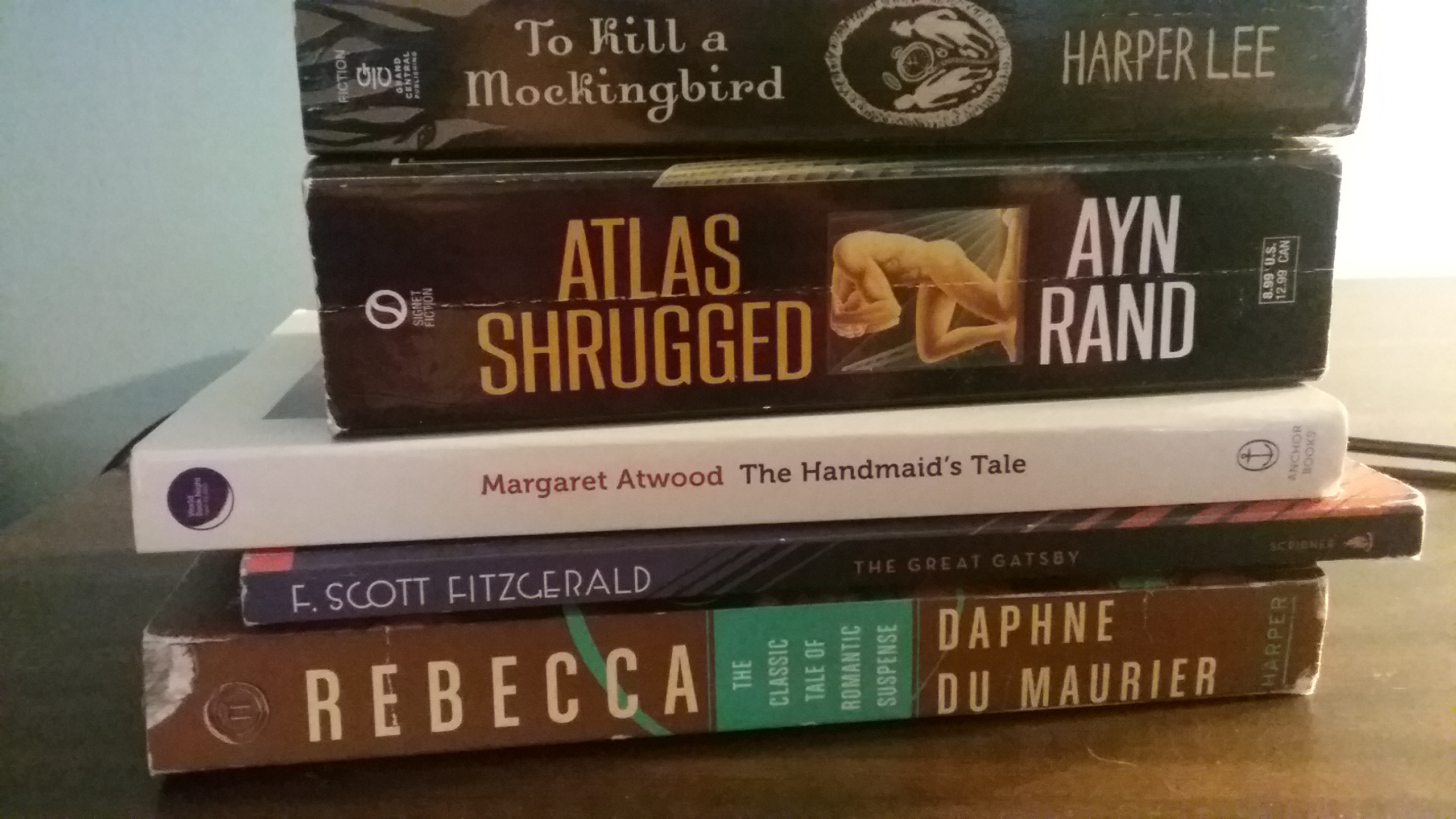
Making an Emotional Impact on Readers

Photo by Suzy Hazelwood on Pexels.com

When I think back to the best books I’ve ever read, the ones that stand out most have made an emotional impact on me. They have made me feel something that I didn’t feel before. It doesn’t happen often, but when it does, it’s magic. And isn’t that what we want to create with our writing? Magic. Wouldn’t it be nice to make readers feel something when they read your work?

That something can be anything—joy, anger, surprise. Some books I’ve read have put a huge smile on my face, like The Messy Lives of Book People by Phaedra Patrick. Others have left me feeling sad but hopeful, like The Book of Ruth by Jane Hamilton and The Nightingale by Kristin Hannah. Yet others leave me feeling introspective, like The Truth about Forever by Sarah Dessen. 

While each of these books represent different genres, the one thing they have in common is the presence of empathy. Some would call that heart. Without heart, without empathy, what kind of story do you have? A story that isn’t memorable.

How do these authors create this literary magic? Why do their books touch my heart and soul when so many others don’t? There are five things that these stories have in common.

They craft an engaging plot. Not only do these best stories begin with a compelling premise, they take me on a journey with more twists and turns than a roller coaster ride.  Note how many twists occurred toward the end of The Nightingale that, at times, shocked and saddened me (and many other readers, I’m sure). Those plot twists were even more dramatic to me because I bought into the story from the very beginning. I had connected with the characters, and I saw what was at stake for them. With rising stakes, the story built momentum toward a dramatic conclusion.

They create relatable main characters. If I can’t connect with the main character, I’m not likely to follow along on their journey. Creating meaningful and relatable characters takes skill. Authors need to understand everything about them—what they look like, what they think, their habits and hobbies. Even if they aren’t the most likeable people, there is something about them that makes me want to root for them, like Ruth in The Book of Ruth, who was smarter and more observant than people in her life gave her credit for. There is usually something they desire, something they feel is lacking in their lives, like love, success, respect, or wealth. Put them into difficult situations with rising stakes, and I can’t help but follow them on their journey. When I can see the complexity of a character’s personality, complete with their strengths, flaws and desires, I can relate to them more easily

They bring us inside the character’s world view. There are moments when the lead character pauses to reflect on the world around them and what they have experienced. Through their thoughts, I’m able to see how the character was changing and growing. Dessen is especially adept at this, often bringing me inside her character’s head so I could see the world through her eyes, often written with an emotional depth and empathy far beyond her character’s teen years.  

They provide vivid sensory details and imagery.  Through vivid sensory details and imagery, these authors created a world for me to experience along with their characters. I saw what they saw, whether that’s the deep blue of the ocean or the various shades of green in the forest. I could taste the crispness of the apple, smell the sweetness of freshly baked cookies just out of the oven, or hear the roar and whistle of the wind during a storm. These details, gave me a sense of place as if I was there with the characters. It’s another way I connected with the characters.

They provide a satisfactory ending. There is nothing more disheartening than to spend hours reading a book that doesn’t resolve all the conflicts to the readers’ satisfaction. When I’ve spent so much time with a story, I want to see the pay off at the end. When it doesn’t come, I feel cheated. In the best books I’ve read, the author tied up loose ends in a way that made sense to the story. It may not have been the happiest of endings, but at least, it provided some hope for the characters’ future. And that makes reading the story worthwhile.

The best books are ones you want to keep reading, even after the story ends. The best ones touch you in some emotional way, and that’s what makes them memorable and shareable.

What about you? What books have left an emotional mark on you? How did the author accomplish that?

Seven Reasons It’s Okay to DNF a Book

Photo by Leah Kelley on Pexels.com

Growing up, I was taught never to quit anything, whether it’s a meal, a work project, a game, or a movie I was watching. That same mindset has carried over into book reading. For years, I pushed through books that I wanted to give up on, except for that little voice inside my head that warned me not to. The voice that told me to “Finish what you start.”

 But lately, I’ve been rethinking that “rule,” especially with regard to reading books. There are simply too many intriguing book titles on the market these days, and so many genres and authors to explore. There aren’t enough hours in the day to read everything I can get my hands on, and my TBR shelf is bulging with volumes. Why would I want to stick with a book that wasn’t holding my interest when there are so many other possibilities?

Then there’s another reason for the rethink. I’m not a very patient person, and I don’t like wasting my time on a story that just isn’t working for me. Time is precious, and I want to make the most of the time I have reading those books that do interest me.

In case you haven’t figured it out by now, DNF means Did Not Finish. You know it may be time to quit a book when the story in your hands drags like a snail on hot pavement. Or you’re constantly eyeing your TBR shelf, wondering what to read next.

A book needs to grab my attention from the opening pages, and keep it going to the very end. Otherwise, I toss it aside, usually for another time. I like to give most books at least three attempts before giving up on it.

So why do I DNF a book? There are a number of reasons.

  • The plot moves too slowly. This is usually the most common reason I quit a book. The premise is fine, but the story doesn’t quite live up to it or, worse, the plot moves too slowly. This is when I start eyeing my TBR shelf for alternatives. Most of the time I can gut it out. Other times, I’ve set the book aside, read another book, then pick up the first one again to finish. If I still can’t get into the story, then it’s time to add it to the DNF pile.

  • The language is too complex or difficult to understand. It’s a rare occurrence that I come across a story with complex language. It could be a detailed explanation of a boat’s features or sailing technique, or it could be the regional dialect of the characters. That’s when I can get stuck on trying to understand the language and can’t enjoy the story. That’s when I get frustrated and have to set the book aside.  

  • Life gets too busy. We’ve all been there. Sometimes, you start reading a book believing you have time to finish it, but then life happens. Your car needs to be repaired or your in-laws have decided to visit. You have the best of intentions when you start reading, but there’s too much going on in your world to give the book the attention it probably deserves.

  • Scenes made me feel uncomfortable. As I get older, I find I have less tolerance for stories with violence, offensive language and graphic sex. They no longer hold any interest for me. Granted some scenes like this can’t be avoided, but all the same, that’s another reason I might DNF a book.

  • The timing wasn’t right. You might start a book, read a chapter and can’t quite get into it. The story may be fine, but maybe the timing isn’t quite right. For example, when the pandemic hit a few years ago and everyone was hunkering down at home, I had started reading Love in the Time of Cholera. After reading 20 pages, I set it aside because the story was too heavy and somber for the times, and seemed too much like what we were all living through at the time. I realized I needed to read something more lighthearted, so I set the book aside. It’s still on my shelf, however, waiting for the right time to jump into it.

  • The author made their point a long time ago. This is especially true when reading memoir or non-fiction. The author may share their premise in the introduction, then again in the first chapter. When it seems that the same point was repeated in following chapters, I’ve put the book away. The author didn’t seem to have anything new to say. If they’ve made their point in chapter one, why would I want to read the next 20 chapters?

  • Too much backstory and not enough action. Some books I’ve read have been so bogged down in details and lacked enough action to keep me reading. This is especially true for some science fiction stories that rely on world building. The author can get so caught up in describing the alternate world that the actual plot gets lost. That’s when I’m eager to quit the alternate universe and return to reality, back to the safety of my TBR shelf..

I generally give a book three tries, usually up to page 50. I figure 50 pages is enough to determine if the story is keeping my interest. Then if it still does not grab me, I give up on it. That’s when I make plans to find a new home for the book or donate it to the nearest Little Free Library..

With so many other literary choices available, there’s no need to feel guilty about DNFing a book. You can always come back to it later or pass it along to someone who might appreciate it more. Have you ever DNF a book? If so, why? What traits does it have to force you to give up on it?

How Reading a Variety of Books Can Improve Your Writing

Photo by Mikhail Nilov on Pexels.com

When I first began my writing journey nearly about five years ago, I was inspired by Stephen King’s book On Writing, in which he encouraged writers to read often and read a variety of book titles. Around that same time, I had started volunteering for a non-profit group that provided books to incarcerated women, and I became familiar with the books they often requested from our library (most of which were donations). So I was reading everything from true crime, prison life and re-entry to African-American and Hispanic fiction.  

Adding fuel to the fire was a blog post I came across about a reading challenge—reading books under certain categories, themes, genres or book titles—no matter how crazy those titles might be. The list included everything from reading a non-fiction book, a book about motherhood, a book turned into a movie or TV series, or a book with a color/number/person’s name in the title. You get the idea. The challenge wasn’t about how many books you could read, but the variety. It simply added another layer of fun to the activity of reading.

Put altogether, reading a variety of books became ingrained in me. So what that I rarely read the current bestseller? I learned as much by reading a classic John Steinbeck novel as anything else on the current bestseller list. I learned that every book you read can teach you something about writing.

More important, reading a variety exposed me to authors I probably would never have read (Toni Morrison, for example) and about different cultures and perspectives (Indian culture through the work of Jhumpa Lahiri, for example). It showed different uses of language and unique and interesting characters and settings (fantasy, for example).

Reading a variety has also shown me the things that don’t always work in storytelling and what does and does not appeal to readers. That knowledge is helping me craft better stories, stronger plots and more interesting characters. (At least I hope it does.}

Reading a variety can nudge you out of your comfort zone and challenge your brain to see things differently. If all you ever read is the same genre, boredom can settle in and you’ll likely see the same plot lines and the same types of characters over and over again. When that happens, it may be time to mix things up a bit. After reading a couple of historical fiction novels, switch it up by reading a memoir or a classic. You can always return to your favorite genre.

Here’s what you can learn about writing by reading outside your favorite genre:

  • Sci Fi/Fantasy – Learn about world building with its own unique population and language. This challenges you to think outside the box.
  • Mystery/thriller – Learn techniques for pacing and creating suspense.
  • Literary – Learn about character-driven plots, character motivation and story arcs.
  • Memoir – Learn about a person’s history, emotions and experiences. What makes them tick? How did they become the person they are now?
  • Non-fiction – Learn to explain technical or complex subjects. Get background information about a subject.
  • Commercial fiction or current bestseller – ask yourself why they are so popular with readers. What is their appeal? Why are people buying this book?
  • The classics – Learn about the use of language from years ago. Important if you’re writing historical fiction.
  • Plays/drama – Pay attention to dialogue. How do the characters speak and relate to one another?
  • Read Latino, African-American, Native-American, Middle Eastern, Asian-American authors – Notice how their culture influences their story telling.

The way I see it, reading is the flip side of writing. Without reading, we would never experience the fine art of storytelling. So read a lot, and read a variety. Your creative writing self will thank you for it.

My Pet Peeves about Books

Photo by Leah Kelley on Pexels.com

For all the joy I get out of reading, I also have a few pet peeves. I’m not alone. Recently, a contributor at Book Riot published a list of annoyances about books and the book world, gleaned from their readers’ comments. Complaints ranged from poorly designed book covers to the competitiveness of reading challenges and the lack of a synopsis on the back cover. Most of these comments are related to book marketing, not the books themselves.

Inspired by Book Riot’s list, I’ve compiled my own list of petty annoyances. But while the Book Riot list focuses on the marketing of books, my list relates more to the story telling.  

Do you agree or disagree with this list? Or do you have other pet peeves about books and/or the book publishing process?

  • Unnecessary prologues – More often than not, prologues aren’t necessary because, in my opinion, they offer few insights into the backstory. The only exceptions might be a mystery or thriller that sets up the murder or science fiction/fantasy to establish world-building that requires some explanation. If the prologue could be read as a first chapter or if the information could be weaved into the main story, you probably don’t need the prologue. I rarely, if ever, have read a prologue that added anything to the story.

  • No summary on the back cover. I’m inclined to agree with the Book Riot reader who suggested the back cover was often wasted on meaningless quotes from celebrities. That’s prime real estate for book summaries. It makes the summary more accessible and easier to read, and much easier to grab a reader’s attention.  

  • Books that don’t live up to its premise. There’s nothing more frustrating that finding a book with an interesting hook that I can’t wait to read, only to find by the end of the story, that it didn’t live up to its hook. Perhaps the story meandered, ran off in tangents. Or the ending didn’t quite make sense. When a book doesn’t live up to its promise, I feel cheated. And when I feel cheated, I’m less likely to pick up another book by that author.

  • Novels that are too long. I think the sweet spot for most novels is 300-350 pages. That’s long enough to develop a strong plot, characters, and suspense to keep readers interested. There are exceptions, of course, such as Harry Potter series and science fiction/fantasy sagas. Others, especially in women’s fiction, have gone for nearly 500 pages—too long by my standard. By page 350 I tend to lose interest. You don’t want to do that to your readers. This leads to my next annoyance….

  • Slow, meandering middles. Ugh! The book might have gotten off to a roaring good start, but by the middle, the story drags or heads off in a different direction. You can tell when an author has struggled to write the middle of the book. Either there’s too much backstory or not enough of a surprise plot twist to push the story forward.

  • Unsatisfactory endings. There’s nothing more frustrating than reading a 400-page novel only to reach an ending that doesn’t make sense or make you feel good. As a reader, when you finish the final chapter, ask yourself, “How did this conclusion make me feel?” Two books that DID resolve the story satisfactorily and made me feel good: The Nightingale by Kristen Hannah and The Messy Lives of Book People by Phaedra Patrick.

  • No surprising plot twists. Some of the best novels I’ve read had a major plot twist that was unexpected and surprising. Without that surprise element, there’s no momentum forward, and there’s nothing to keep the reader interested in the story until the very end. If you want to see successful surprising plot twists, check out Leaving Time by Jodi Picoult or In Five Years by Rebecca Serle (and the aforementioned The Nightingale.)

Even with these petty annoyances, books are still the most wonderful creations on earth. I’m willing to put up with a few clunkers in my reading list to find the best gems.

2019 Reading Challenge: How Many Books Can You Read in One Year?


Great American Read

Looking for a way to challenge yourself in 2019? Do you love to read and would like to expand your knowledge of genres and writing styles, beyond John Grisham legal thrillers and self-help books that leave you feeling more confused than before? Then follow along with me on a journey through books.

Announcing the 2019 Reading Challenge. Here’s how you can participate.

Your challenge, if you choose to accept it, is to read one book from 26 of the 40 categories listed below. That equates to one book every two weeks.

For an added challenge, see if you can read one book from all 40 categories. If you complete all 40 categories and there’s still time in the year, reward yourself. Either take a break from reading or read anything you want. You’ve earned it!

I won’t be handing out prizes for this challenge. The only prize is the pride of personal achievement, unless you want to reward yourself with a well-earned gift, like a massage or a copy of the latest New York Times bestseller.

I have participated in reading challenges the past two years. The experience has been rewarding. Not only have I expanded my book knowledge, I’ve discovered new authors and genres I didn’t think I would like (paranormal romance, anyone?). And I had so much fun and a sense of pride each time I crossed a category off my list. As 2018 winds to a close, I’m on Book #42.

That’s why I’m sharing this reading challenge with you. If you love books as much as I do, you won’t turn down this challenge.

So for your reading pleasure, here are the categories. Remember, the first-level challenge is one book from 40 categories, one for every two weeks of the year for 26 total books. You can read them in any order you choose.

1. Autobiography or memoir
2. Historical fiction
3. A classic
4. Young adult novel
5. Mystery/thriller
6. Science fiction/fantasy
7. Romance/romantic suspense
8. A non-fiction book
9. True crime
10. A self-help book
11. An award-winning book (Pulitzer, Edgar Award for mystery, etc.)
12. A book you read in your childhood
13. A book you read in school
14. A book/novel published within the past year
15. A book/novel published more than 100 years ago
16. A book/novel published the year you were born (this will require some research; check Google)
17. A first-time author/debut novel
18. A book by an established author you have always wanted to read but haven’t until now (Example: I’ve never read Stephen King fiction, so he is on my list)
19. African-American fiction
20. Latin fiction
21. Native American fiction
22. A book made into a movie or TV show
23. A book recommended to you by someone
24. A book set in your hometown
25. A book set in a foreign place
26. A book written by someone younger than you
27. A book with a place/location in the title
28. A book with a number in the title
29. A book with a person’s name in the title
30. A book with a color in the title
31. A book with a one-word title
32. A collection of short stories
33. A collection of essays
34. A play
35. A book about sports or an athlete
36. A book that features an animal (Example: Seabiscuit)
37. A holiday-themed book (Christmas, Fourth of July, Valentine’s Day, etc.)
38. A book that can help your health (nutrition, fitness, etc., but no recipe books)
39. A book that can help your career/business
40. A book with more than 500 pages

The challenge begins January 1. Of course, if you want to get a head start, you can start today.

Have fun! Let the reading begin!