
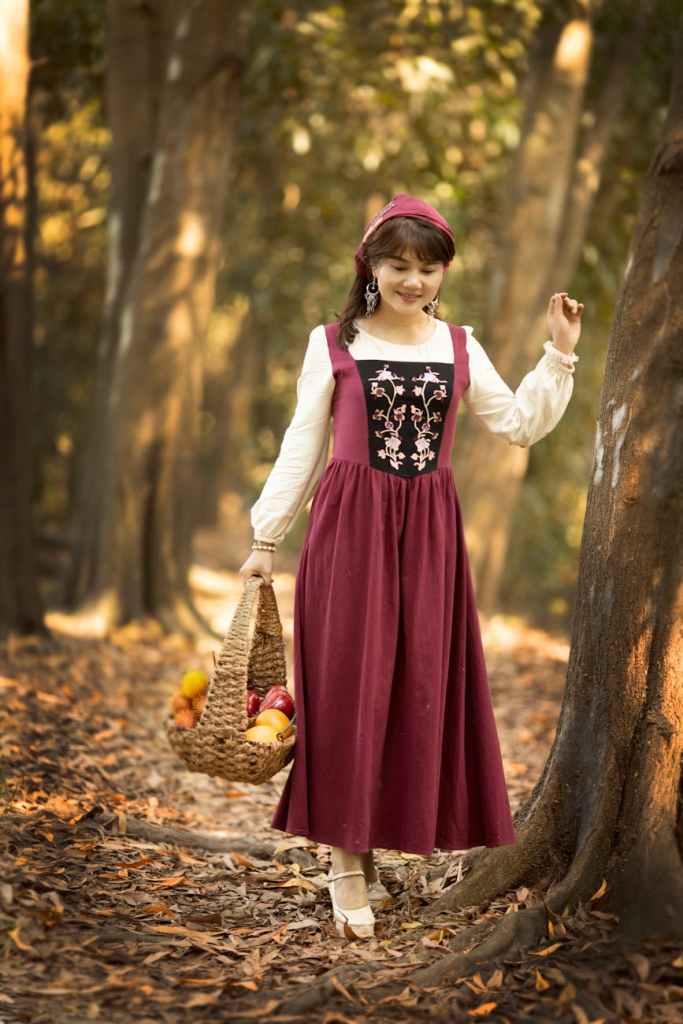
Once upon a time, many years ago I watched a performance of Beauty and the Beast in a small theater-in-the-round. I was about nine or ten years old at the time, and I remember how I fell in love with Belle, her love of books and how she was first captured as a prisoner then fell in love with the Beast who was her captor. I didn’t know it then, but that portrayal of Beauty and the Beast was a modern retelling, and in fact, has been retold countless times over the years.
I had a similar experience when I read Wicked when the book was published. I remember being so intrigued by the premise, which retells the story of The Wizard of Oz from the witch’s perspective. I thought the reimagined premise was unique and compelling, and the story did not disappoint.
There have been many retellings since, either in published book form, on the big screen, even on stage. And the retellings aren’t just based on fairy tales and folk tales. Classic novels have also been retold in countless ways, such Little Women and Pride and Prejudice. Here are a few I’ve come across:
*While Beauty Slept by Elizabeth Blackwell, part historical fiction and part retelling of the fairy tale Sleeping Beauty;
* Ella Enchanted by Gail Carson Levine, based on Cinderella. (And if you really want to be entertained, check out the silent film Ella Cinders, also a retelling starring Colleen Moore);
* The Court of Thorns and Roses by Sarah J. Maas, which adapts parts of Beauty and the Beast, the Norwegian folktale East of the Sun and West of the Moon, and the Scottish legend of Tam Lin.
* On stage, Chicago’s Joffrey Ballet performs a reimagined version of The Nutcracker set in Chicago in the late 1880s in the home of a migrant family that has come to work on the construction for the 1893 World’s Fair.
What makes these retellings so popular and compelling is in the way they bring familiar characters, settings and themes together with unique twists and turns that move the original story in directions we never imagined. It shows once again how one story can be told in different ways.
How does one go about retelling a classic novel, fairy tale or folk tale without damaging the original intent of the story? How do you create something that’s unique and compelling without borrowing too heavily from the original text?
Annie Cardi, author of Red (based on The Scarlet Letter), writes in Writers Digest suggests that you begin by finding key aspects of the original story that call to you. Is there a character that is memorable? Is there a scene that stays with you? Use that aspect as the central piece to create an entirely new story. You don’t have to use every single element of the original either. If there’s part of the plot or a character that doesn’t work for you, leave it out.
Consider, too, how and why your version of the story needs to be told. Are you telling the story from a different character’s point of view, one that readers may not have considered, such as was done in Wicked? Or are you changing the setting to draw on different themes or to describe current social and cultural issues, such as the reimagined choreography for The Nutcracker?
The retelling should be somewhat recognizable to the original, either through a loose retelling or a close retelling, writes Hannah Kate Kelley on the Jane Friedman blog. In a loose retelling, the main plot diverts from the original story, but keeps many of the characters, events and themes. A good example of this is While Beauty Slept by Elizabeth Blackwell, which describes what really happens within the kingdom when Beauty is put to sleep — and why. On the other hand, a close retelling sticks close to the plot but changes out characters, events and even points of view.
Kelley also says that while retellings aren’t considered theft, they should be legally created. Make sure the work you are adapting isn’t violating copyright or intellectual property laws. Check the public domain (or Commons as it is called) to see if the creative work is listed, which means it is no longer protected under intellectual copyright laws. As long as no one owns the copyright, writers and creatives are free to adapt the piece and reproduce it in any way. That’s why folk tales and fairy tales are often used for retellings because no one owns the copyright to them.
Rules differ from country to country, however, so you’ll have to do your due diligence. In fact, before doing any writing, check the Commons to see if the work you want to retell is listed there.
If you do decide to tackle a retelling, Kelley offers several approaches to reimagining the story.
- Tell the same story from a different existing character, or create a new character to tell the story.
- Tell the story from the antagonist’s perspective and turn them into your new protagonist.
- Provide a cultural lens to the retelling by exploring issues of race, class and gender.
- Put the main characters in a new setting or era.
- Switch up genres, like Pride and Prejudice and Zombies, which is retold as a horror story.
Whether bringing a classic novel into the modern era or rewriting a fairy tale from a different character’s point of view, modern retellings and adaptations can open up creative new ways to tell your stories and entertain your readers.
For another look at how to craft a modern retelling, check out this interview with fantasy authors Sarah J. Maas and Heather Lyons.
 The Regal Writer