Recommended Books about Mothers and Motherhood

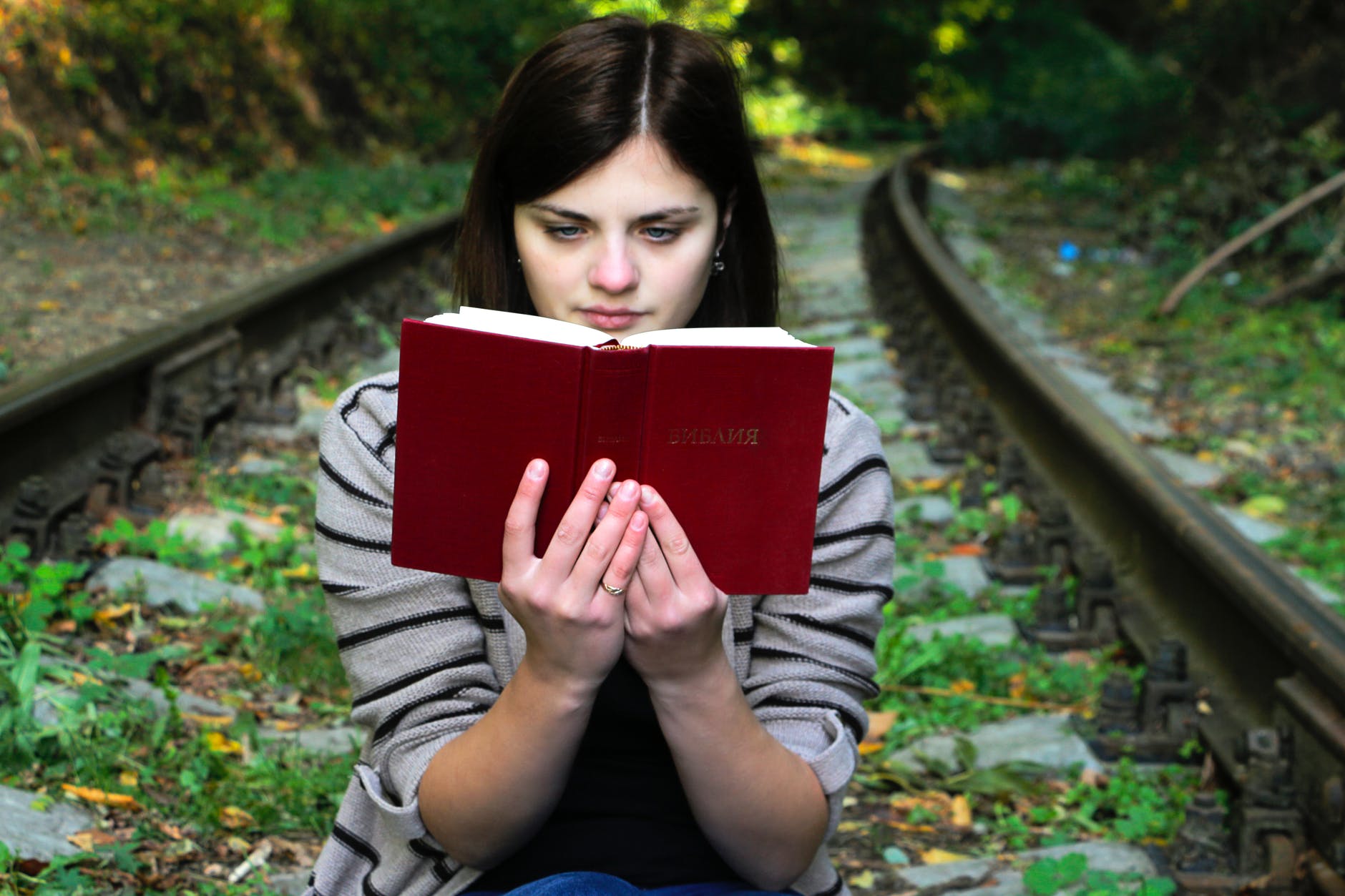
Photo by Jill Wellington on Pexels.com

Since the calendar turned to the month of May, I’ve found myself reading novels where mothers are the key characters and motherhood the main theme. My current read is Two Little Girls in Blue, a suspense novel by legendary author Mary Higgins Clark, a story about the kidnapping of three-year-old twins Kelly and Kathy and their telepathic connection.  

Clark’s story got me thinking about other books I’ve read that explore similar themes of motherhood. With Mother’s Day coming up this weekend, I thought I would pay special tribute to Moms with a list of books that feature mother-child relationships. All types of mothers are included on this list, including birth mothers, adopted mothers and step mothers. Most of these books I’ve read, but I’ve included a few others worth noting.

So if you’re looking to add more to your TBR list, here are a few worth a look:

Look Again by Lisa Scottoline
What would you do if you received a postcard in the mail about missing children, and one of the children on the card looks identical to your adopted son? That is the premise of this suspenseful page turner that asks the question: What would you do if you suspected that your adopted child was kidnapped from another family?

The Last Thing He Told Me by Laura Dave
With clearly drawn characters and crisp writing, this was another book I couldn’t stop reading. Hannah is a new wife and stepmother to 16-year-old Bailey, who wants nothing to do with her. When Hannah’s husband Owen disappears, she receives a note from him with one simple message: “Protect her.” Hannah knows she must protect Bailey, even as she tries to unravel what has happened to her husband.

Leaving Time by Jodi Picoult
With the help of a psychic and a private investigator, a teenaged girl attempts to find out what happened to her mother, an elephant researcher, after a tragic accident at an animal sanctuary. Guided by her mother’s diary that documented the behavior of elephants through death and grief, the girl follows a trail of clues that lead to a very unexpected and surprising ending.

Little Fires Everywhere by Celeste Ng
The motherhood theme plays out in several different scenarios in  this moving novel by Ng. When artist and single mom Mia Warren arrives in the idyllic and carefully planned community of Shaker Heights, her disregard for the status quo upsets some area residents, particularly Elena Richardson, who is suspicious of Mia’s mysterious past. The lives of Mia and her daughter Pearl are intertwined with those of the four Richardson children. When friends of Elena want to adopt a Chinese-American infant, Mia and Elena find themselves on opposing sides of the debate. Elena becomes obsessed with ousting Mia from town with devastating results.

Lost by Joy Fielding
The first time Cindy lost her daughter Julia, her daughter was five years old. The second time was when Julia was 14 and she moved in with her father, which broke Cindy’s heart. But when Julia disappears again at age 21 after a promising audition with a Hollywood director, Cindy begins a frantic search for her. This time, the answers she finds reveals a disturbing truth about her daughter that she realized she never really knew.

Where Are The Children? by Mary Higgins Clark
One of the first novels by Clark, and probably the one that put her on the path to publishing success. Here’s another story about a mother whose two children disappear while playing in the front yard. In Clark’s signature style, the story is told from a variety of perspectives, including that of the kidnapper.

The Joy Luck Club by Amy Tan
It’s been a while since I’ve read this debut novel by Tan, which explores four mother-daughter relationships of Asian-American heritage. The story is told from alternating points of view of each mother and daughter, exploring how the attitudes and behaviors toward love and family are passed through the generations. The film was also quite good.

White Oleander by Janet Fitch
It’s been a long while since I read this book by Fitch. I also remember seeing the movie starring Michelle Pfeiffer. After her mother Ingrid is charged with murder for killing her boyfriend, 12-year-old Astrid is shuffled from foster home to foster home, each time putting her in complicated situations. As Astrid struggles to define herself, she continues a rather tenuous relationship with Ingrid in prison.

The Book of Ruth by Jane Hamilton
At times this was a difficult book to read because of the moments of violence. I give credit to Hamilton for the way she treated each of the main characters. Ruth lives at home with her mother May, who sees her daughter as a disappointment because she isn’t anything like her brilliant brother who graduated from college and works in Boston. Instead, Ruth works at a dry cleaners and falls for a Ruby, a lazy, stubborn scoundrel, who does not mix well with May. Ruby and May come to a violent clash, and only Ruth’s innate goodness and compassion allows her to have hope for her future.

What Alice Forgot by Liane Moriarity.
I love how Moriarity plays with intriguing questions and scenarios, bringing both humor and drama to her stories. In this novel, 29-year-old Alice is pregnant with her first child and is crazy in love with her husband. After falling at the gym, she wakes up in the hospital, only to learn that it is ten years later, she’s 39 with three kids, and she can’t understand why she’s in the midst of a messy divorce and why her sister won’t speak to her. As she puts the pieces of her life together, Alice figures out how to connect with her children and mend fences with her sister who has been on her own journey to become a mother.

Other books often listed with motherhood themes that are currently on my TBR list.

Beloved by Toni Morrison
Big Little Lies by Liane Moriarity
The Snow Child by Eowyn Ivey

What books about mothers and motherhood have left an impression on you? Which books would you recommend?


Take the “40 Reasons Why I Write” Challenge


Happy New Year! I’m pleased to announce the debut of my white paper “Find Motivation to Start Writing — and Keep Writing” which you can find on my website. Also check out the new weekly writing prompt in the sidebar.

“Why do I write?”

Have you ever stopped to ask yourself that question? It’s important to think about the ‘why’ of your writing every so often. Whenever you feel lost in your writing journey, go back to your ‘why.’ It will reconnect you to your mission and set you back on your path.

Recently I came across a new writing challenge: Jot down 40 responses to that very question – “Why do I write?” When you stop to consider how many reasons you have for writing, you will never feel lost.

For a couple of examples, check out these lists from Marisa Mohi and Bryan Hutchinson at the Positive Writer.  After reading the first few reasons though, you’ll want to create your own list.

I did the challenge too, and I was able to do it in one sitting. Then after letting it sit for a day, I came back to it, and added a few more. Not only did I hit the magic number of 40, I surpassed it — by a good 10 items.

So grab a pen and paper, and find a quiet place to contemplate this question. Ask yourself, “Why do I write?” It might help to set it up as a prompt, such as “I write because…”

Then start filling in the blank. Bonus points if you can do this all in one sitting.

Give yourself a day or so to set the list aside before reviewing it. You might tweak it here and there, and maybe you’ll notice that you have a duplicate answer. You might even think of one or two more responses.

When you’re done, put the list somewhere where you can see it every day – a bathroom mirror, by your work space, the refrigerator or wherever. If you want, share it on social media too. Invite others in your circle to participate in the challenge.

So how did I do with this challenge? Here’s what I came up with. “I write because…”

1. I love working with words.
2. I enjoy story telling.
3. My bosses and teachers always complimented me on my writing.
4. I like sharing positive, uplifting messages to my readers.
5. I like escaping into other worlds I create.
6. I express myself better in writing that I do verbally.
7. I’ve always enjoyed reading, so it only made sense that I would write too. The more I read, the more I want to write.
8. I come from a family of teachers, so I use my writing to teach and motivate others.
9. I was inspired to write by some of my favorite authors, especially the late Mary Higgins Clark.
10. I enjoy using my imagination.
11. I like developing different characters, especially strong female protagonists.
12. I like the challenge of experimenting with different genres.
13. I like the challenge of creating different plots that people may not have seen before.
14. It helps me release my negative emotions, like anger and grief.
15. It helps me document my life experiences
16. It helps me heal from old and new wounds
17. Writing relaxes me.
18. I want to leave a lasting legacy of my existence.
19. I like seeing my work published.
20. Writing has no age limit. I can write well into my 80s and 90s if I want to.
21. I tend to live inside my own head so I might as well make good use of the space there. J
22. I write to make people happy, because I like to see them laugh and smile at my stories.
23. I write because I have more story ideas than I know what to do with.
24. Writing gives me the freedom to choose what to write about. There are no limits to subject matter.
25. Writing helps me describe and make sense of the dreams I have during the night.
26. Writing is portable. I can write anywhere and at any time. All I need is a pen and paper.
27. Writing is a great hobby to have.
28. Writing is a great career to have too.
29. I write because my soul calls me to do so.
30. I write because I like getting a byline.
31. I write because it’s an extension of my identity.  It’s who I am.
32. I write because I feel I’m making a valuable contribution to society.
33. I write because it makes me feel whole and authentic.
34. I write because it makes me forget what is happening in the outside world.
35. I write because I like to entertain myself.
36. I sometimes use writing to create an alter ego and pretend to be someone I’m not.
37. I like to dream up whole new worlds (world building).
38. I write to set an example for young, aspiring writers.
39. The more I write, the better my skills become.
40.  I can’t imagine doing anything else.

Bonus answers:
41. I write so I can keep my cat company while he sleeps on my desk. J
42. I write because I believe it’s a misunderstood and underutilized skill in the world (especially in the workplace.)
43. I like getting positive feedback about my work.
44. I write because it forces me away from the refrigerator so I’m not constantly snacking.
45. I write because I can’t think of any other way to earn a living
46. I write to get myself out of boredom.
47. Writing gives me a break from watching TV and forces me to turn it off during the day.
48. Writing makes me feel productive.
49. I like the solitary nature of writing.
50. It makes me feel at peace with myself and gives my life meaning and purpose.

Remembering the Authors and Journalists We Lost in 2020

Photo by rawpixel.com on Pexels.com


Happy New Year! I’m pleased to announce the debut of my white paper “Find Motivation to Start Writing — and Keep Writing” which you can find on my website. Also check out the new weekly writing prompt in the sidebar.

Before getting too deeply into the New Year, let’s look back at the year that was to honor the authors and journalists we lost and the literary legacies they left behind.

Authors
Elizabeth Wurtzel, author of “Prozac Nation,” a memoir about her battle with depression
Mary Higgins Clark, queen of suspense fiction
Clive Cussler, author and adventurer
Winston Groom, author of “Forrest Gump”
Terry Goodkind, master of fantasy fiction
John LeCarre, author of Cold War thrillers
Bette Greene, author of “Summer of My German Soldier”
Joanna Cole, children’s book author best known for “The Magic School Bus”
Rudolfo Anaya, considered the “godfather” of Chicano literature who wrote “Bless Me, Ultima”
Charles Webb, author of “The Graduate” which became a hit movie
Donna Kauffman, romance novelist
Tomie de Paola, children’s book author and illustrator
Diana di Prima, poet of the Beat Generation

Journalists
Gail Sheehy, journalist and author of 17 books, including the breakthrough “Passages” published in 1974
Jim Lehrer, host of PBS NewsHour
Bobbie Battista, one of the first anchors for CNN Headline News
Gerald Slater, founding employee of the Public Broadcasting Service (PBS)
Hugh Downs, longtime TV anchor and host of 20/20 from 1978 to 1999
Tony Elliott, founder of Time Out entertainment magazine

How to Get More Out of Your Reading Experience

young woman sitting on bench in parkPhoto by Inna Lesyk on Pexels.com

March is National Reading Month. It’s a good time to read a book. 

If you’re like me, you have an entire shelf (or two) of books waiting to be read. In fact, at this moment, I probably have about 80 books waiting for my attention. There doesn’t seem to be enough hours in the day to read them all.

Browse the Internet and you’ll find numerous articles how to read more books. That’s an admirable goal. But I prefer to focus on quality. I’d rather take my time to enjoy the process of reading rather than power through each book just to ramp up my numbers.

Add to that the growing number of responsibilities in our lives. It’s difficult to enjoy a book when your mind is distracted by everyday concerns. What should I make for dinner? I need to call a babysitter for Saturday night. How am I going to pay my property tax bill? You get the idea.

If you want to get more out of your reading experience, here are a few tips and tricks you can try.

Set aside a private place for your reading. Is there a corner of your home where you like to curl up with a book? If not, make a space for yourself with a comfortable chair and good lighting away from noise and distractions. Loving pets and favorite beverages are optional.

Avoid speed reading. Reading is not a race or a competition. It’s meant to be savored, like a cup of coffee or a long walk. If you really want to enjoy reading, slow down and take your time to get through your book. When you slow down, you’ll likely notice more details in the story. Speed reading might help you power through more books, but will it help you enjoy what you’re reading?

Browse libraries and bookstore shelves for inspiration. Looking for ideas what to read next? Or do you want to find out what other people are reading? Check out the shelves at the local library or bookstore to find out what’s new and interesting. It’s not necessary to buy anything at that moment. Keep a small notebook with book titles you want to read, or jot the titles down in your smart phone for easy reference later. When you see what else is out there, it can inspire you to keep reading.

While you’re at the library, find a quiet corner and read. It can be from one of the shelves, or your own book that you’ve carried with you. Spending time at the library can inspire anyone to read more.

Participate in reading challenges. If you really want to ramp up your reading game, find a reading challenge to take part of. These challenges give you an opportunity to read different types of authors and genres. It also help you set a goal for yourself. Maybe your goal is to read two or three books a month. That would equate to 24 to 36 books a year. Make sure your goal is reasonable and reachable, however. Check out local libraries, online book clubs and sites like
Goodreads for reading challenges.

Put away electronics. If you really want to enjoy the latest bestseller, turn off the TV and put away your smart phone. You don’t really need them while you read, do you? By eliminating these distractions, you won’t be tempted to engage in non-essential activities and your mind can focus on the book in your lap rather than what’s on the screen.

Set a dedicated reading time. Find a time of day that works best for you, according to Inc. magazine. What time of day works best for you to read? For some, reading before bedtime helps them relax and sleep better. For others, reading a good book over their lunch hour is more convenient. Sometimes, getting up in the wee hours of the morning or when insomnia strikes in the middle of the night provides an opportunity to catch up on some reading. Reading for 30 minutes during that quiet time before the sun rises can help you fall back to sleep.

Read out loud or take notes. If non-fiction is your thing, sometimes it helps to read the book out loud or take notes to get the most out of your reading experience. Taking notes or reading out loud can help you understand the author’s message, develop new conclusions or increase your focus or concentration. You can get more out of your reading in shorter period of time.

Allow yourself a DNF. Every so often, you start reading a book that is simply not grabbing your attention. In that case, give yourself permission to stop reading it, writes a contributor at BookRiot. There’s no rule that says you have to finish every book you’ve started (although I do try to finish everything I read because you never know when the story might get better toward the end). Life is too short to be spent reading a boring book, especially when there are so many other amazing works out there. So go ahead and allow yourself a “Did Not Finish.”

Re-read old favorites. If you need a break from reading newer releases, go back and re-read a title that you read long ago. It feels self-indulgent to cozy up with a book you loved once upon a time.

Recently, I finished reading A Stranger is Watching by Mary Higgins Clark. The book had been sitting on my shelf after I grabbed it from a Little Free Library, but when I learned Clark had died, I knew it was my next selection. I had read it more than 25 years ago and couldn’t remember the plot. Because so much time has passed, I was able to read it again with fresh eyes and a fresh perspective.

Remember, it’s not the number of books you read that matters or how quickly you get through them. It’s the quality time you spend doing what you love. Follow these tips to enjoy reading more.


Remembering the Queen of Suspense, Mary Higgins Clark

MHC autographSeveral weeks ago, we lost an icon in the literary world. Author Mary Higgins Clark passed away at the age of 92 and her loss will be deeply felt among generations of her loyal readers.

Clark authored 56 books in a career that spanned more than 40 years, which is amazing considering she didn’t get published until she was 43. It took hard work, dedication and persistence to keep writing and keep revising — a lesson for all aspiring authors. In a lovely open letter on Clark’s website, Carolyn K. Reidy, the CEO of Simon & Schuster, Clark’s publisher, writes of Mary’s work ethic and her generosity with her readers.

Clark was one of the first authors whose books I routinely sought out in bookstores or at the library because I always knew they were well written and kept me turning the pages until its satisfying conclusion. I always looked forward to the new releases from her with great anticipation, not unlike the Harry Potter series two decades later.

Clark was also one of the few authors I met during a meet-and-greet at a bookstore near my office many years ago. I remember walking into the bookstore and noting with surprise that there weren’t many people in line to meet her, maybe three or four. Mind you, this was 1991, long before there was social media and cell phones and selfies. They didn’t exist back then, so there was little pre-event publicity other than an ad in the newspaper.

I waited eagerly as she chatted with the gentleman in front of me. She actually took the time to talk and answer his questions. When my turn came, I excitedly told her I loved her stories and wanted to be a writer myself. I can’t remember what we talked about after that, but she patiently signed my book (Loves Music, Loves to Dance) with the line “Happy reading and happy writing” followed by her signature and the date. (See image above.)

It’s hard to believe I have had that book all this time. I never had the heart to donate it or give it away because, well, it was a signed copy and it had my name in it. That made it special to me.

When I heard the news of Clark’s passing, I pulled out the book from my collection and looked at what Mary wrote inside. It warmed my heart all over again. Even better, it inspired me to keep writing and keep working toward my publishing goal. Stopping my work now would be like betraying an old friend.

I think many writers can point to one or two authors who have inspired them to be the writer they wanted to be. For me, it was Mary Higgins Clark as well as suspense writer Joy Fielding, who signed a book copy for me in 1995.

JF autograph 2

If there is a moral to this story, it would be to seek out the advice of other writers who have traveled the road you’re on, especially if they are writers whose works you admire. Ask them questions about their craft, no matter how dumb they may sound. These days, most authors have a website and are on social media, so it’s easier to follow them and keep tabs on what they are doing professionally. Check in with them every so often, but don’t hound them. Check their calendar, if they have one, to find out when they’ll be visiting your town. Then make a point to stop by and say hello. You never know what that meeting might lead you toward.

What about you? Do you have a favorite author that inspired you to become a writer? Have you ever met them in person? Share your story in the comments below.

Seven Questions to Ask Yourself Before Starting a Writing Practice

pexels-photo-356079.jpeg

Some months ago, I attended a writing workshop on a Saturday morning sponsored by a local writers group. Over one of the breaks, I chatted with the man next to me, an attorney who had recently married. I asked him what kind of writing he did. His answer? “I don’t have time to write. I have a busy law practice and I just got married,” he said rather sheepishly.

It wasn’t until later that I realized the inconsistency of his remark. He claimed not to have time for writing, yet managed to find time from his supposed busy schedule to attend a three-hour writing workshop on a Saturday morning. What’s wrong with that picture?

For many of us, it is far easier to think about, read about and talk about writing than to actually sit down and write. We’d much rather make excuses about why we don’t write than to examine the reasons why we don’t.

A writing practice, as I define it, is a regular, consistent routine of putting pen or pencil to paper (though some people prefer to use a computer). The amount of time devoted to the practice differs from person to person. But whether you spend two hours a day or fifteen minutes a day, the key is consistency. A little bit of writing every day slowly and gradually builds up your practice. And the more you practice, the more comfortable and confident you will feel about your writing. The more you practice, the more progress you will see which gives you more momentum and motivation to keep writing.

Not everyone is mentally or emotionally prepared to begin a writing practice, however. They may have questions about starting a writing practice – lots of them. And they may have self-doubts and fears, either about the writing practice itself or about their own abilities as a writer. As a former colleague once told me years ago, “Fear and self-doubt will kill every opportunity that comes your way.”

So before you embark on this writing journey, ask yourself the following questions. The answers will help you to ‘get real’ about your writing practice.

1. Why do you want to begin a writing practice? Why is a writing practice important to you at this point in your life? Answering this question determines how strong a desire you have to write. If you’re still unsure of your response, answer this question: On a scale of 1 to 10 (1 being not important at all and 10 being very important), how important is writing to you?

2. What do you want to achieve with your writing? To eventually get published? To pass along family lore and legends? Or just have fun?

3. What does your writing practice look like to you? What notions, if any, do you have about how much time you should spend on your writing, or where you write? Many of you may have preconceived ideas about what your writing life looks like – about how much time you should spend each day or how many words you should write, what your office space looks like, etc. However, the reality often looks different from the fantasy.

4. What obstacles, excuses or conditions hold you back from starting and maintaining a writing practice? For most people, time management is an issue. Let’s face it, we all lead busy lives. But some people are more willing to adjust their schedules so they have more time to write. Remember, it’s not about having the time to write, but about making the time to write. Those with the greatest desire to write will make the time to write.

Suspense author Mary Higgins Clark was a widow living in New York with five children to support. She had to work to support her family, so she got a job writing radio scripts. Still her desire to write was so strong that she made time in her busy schedule to write her first novel. For two hours every morning from 5 a.m. to 7 a.m., she set her typewriter on the kitchen table and wrote. Clark could easily have made excuses for not writing. She didn’t, and she went on to a very successful career.

5. Do you have a dedicated space for writing? If coffee shops are your thing, more power to you. Or like me, do you prefer quieter places, like the library, so you can think, plan and create?

6. Do you have a support system? Are there people in your life who not only provide encouragement and input about your writing, but also respect the time and space you need for writing?

7. How much time are you reasonably willing and able to devote to your practice? If you were to keep a log of your activities for three consecutive days, I bet you would find gaps in your schedule where you could sneak in a writing session. We’re not nearly as busy as we think we are.

The more you understand your motivations and desire to write, the more prepared you will be to begin writing. If the motivation and desire to write isn’t strong to begin with, no amount of encouragement from others will get you started on your practice.

A healthy mindset is also important. If you are not in a good place mentally or emotionally, it will be more difficult to begin a writing practice. When you are in a good place, the stories seem to flow more naturally and organically. You won’t have to ask, “What do I write about?”

Over the coming weeks, I will continue to explore some of these concepts in greater detail. If you have any questions about how to start a writing practice, feel free to post a comment below.