Favorite Reads of 2024

Photo by Leah Kelley on Pexels.com

Before we get too far into 2025, I’d like to take one final look back at the year that was and the books I most enjoyed reading. Below were my favorite reads of 2024 as well as a list of honorable mentions.

Have you read any of the following books? What were your favorite reads from 2024?

The Snow Child by Eowyn Ivey (magic realism). Imagine leaving behind the world you know  and making your home in the isolated wilderness of Alaska in the 1920s to explore new opportunities and make a fresh start. Jack and Mabel don’t know what awaits them when they make the move across country. Childless, they struggle as homesteaders. After making a snow child from freshly fallen snow, they awake the following morning to find the snowman gone, but a young girl running around their property. Faina is the child they wish they had, except when the winter snows end and it gets warm, she disappears into the woods. I thought I would be bored by the lengthy descriptions of snow and ice in the Alaskan wilderness, but Ivey does a great job keeping reader interest as the story unfolds and we’re brought into Jack and Mabel’s life.

The Truth about Forever by Sarah Dessen (YA romance). I think I found a new favorite author in Sarah Dessen. While this book is written for young adults, I didn’t find it juvenile in any way. Written in first person POV, I was immediately drawn into Macy’s world and the way she experiences the changes in her life. Macy’s internal dialogue is especially poignant at times, revealing a maturity far behind her teenage years. All the characters were drawn with depth and thoughtfulness. They were fun and interesting, especially when they interacted with each other as a group. I’m looking forward to reading more of Dessen’s books.

The Flight Girls by Noelle Salazar (historical fiction). This story is about a group of women pilots who became involved in the war effort during World War II. Known as the Flight Girls, their role was to support the U.S. military by delivering supplies and personnel across the U.S. One of the most intense scenes was the day that Pearl Harbor was attacked as our primary character gets caught in the middle of a mid-air battle with the Japanese fighter plane. It’s a fascinating look at a little known conclave of brave women who risked their lives with very little reward and recognition.

The Diamond Eye by Kate Quinn (historical fiction). While Quinn is better known for her earlier work The Alice Network, I thought The Diamond Eye was a more compelling story based on the real life of Mila Pavlichenko, a bookish history student from Kyiv turned deadly sniper in World War II. It’s well-written and well researched, providing a fascinating character study into the life, love and military career of a single mother who became Lady Death. The extensive author’s note provides some additional backstory that gives an added layer to the story.

Handle with Care by Jodi Picoult (women’s fiction). I can always count on Picoult to write a story that challenges my heart and soul. This one is no different about a mother who goes to great lengths to protect her youngest daughter who is diagnosed with a rare condition called osteogenesis imperfecta, sometimes known as brittle bone disease, in which the girl’s bones break easily. I always appreciate how Picoult looks at the conflict from multiple perspectives so readers see the complexity of the story.

Carrie Soto Is Back by Taylor Jenkins Reid (upmarket fiction). I wasn’t a huge fan of Malibu Rising, an earlier work of Reid’s. But as a tennis fan, I was intrigued by this story. In an interview with Reid, she admitted that she knew nothing about tennis when she wrote this book about a self-absorbed fast-rising tennis star. But as a former amateur player, I think she did a fine job capturing the details of the game. Carrie Soto isn’t an easy character to like, but underneath her harsh, brittle exterior was a vulnerable human being who didn’t understand how to connect with others. That’s what makes this story so appealing to me. It’s a great character study.

The Sugar Queen by Sarah Addison-Allen (magic realism/YA)
I read Addison-Allen’s debut Garden Spells several years ago, and I was immediately captivated by her imagination and storytelling. The Sugar Queen is a charming tale about 27-year-old Josey who still lives at home with her mother and feels she’s destined to live a life of disappointment and limitation in her mother’s household. Josey compensates by hiding out in her closet to eat sweets and read paperback romances. Until she meets tough-talking Della Lee who takes over the closet and the secret stash of sweets. Della Lee acts as both nemesis and fairy godmother to guide Josey out of the closet and into the real world.

Almost Home by Joan Bauer (young adult). Like The Truth about Forever, this young adult story reveals an emotional depth far beyond the young protagonist’s years. In this story, after her grandfather dies and her gambling father takes off again, 12-year-old Sugar and her mother must abandon their home in Missouri. They make their way to Chicago to make a new life and make new friends. As she learns to navigate her new world, she still harbors hope that she and her mother will return to their home in Missouri.

The Secret Lives of Dresses, Erin McKean (literary fiction). This surprising read is a coming-of-age story about Dora who has a job she hates but sticks around because she’s in love with a man who barely notices her. When her grandmother has a stroke, Dora returns to the small town where she grew up and helps out in the family’s vintage clothing shop. There, she discovers notes written by her grandmother describing the legacy and history of some of the dresses. A fun and entertaining read with interesting characters.

Honorable Mentions:
Every Note Played, Lisa Genova
One Italian Summer, Rebecca Serle
Open House, Elizabeth Berg
The Library of Lost and Found, Phaedra Patrick 
Stealing Home, Sherryl Woods
The Beach at Painter’s Cove, Shelley Noble
Protagonists Behaving Badly

Photo by Mihai Stefan Photography on Pexels.com

Remember to check out the latest writing prompt on my website!

I’ve noticed an interesting trend in the books I’ve been reading lately. More and more, I’m reading stories with protagonists who aren’t the most likeable people on earth.

I’m not sure if it’s the types of books I’m reading, or that my self-study of writing has made me more aware of characters behaving badly. Perhaps I’m letting my moral compass dictate which characters I should and should not like. In any case, over the past year and a half, I’ve come across numerous protagonists with questionable habits and decision-making capabilities. Some of them I wouldn’t want to hang out with, let alone share a glass of wine.

I don’t necessarily like the term “unlikeable” in this sense. It implies that the character has no redeeming qualities, which is often not true. In you’re familiar with the Save the Cat storytelling method, writers are encouraged to give even the most awful villains some positive trait to balance out their personality. For example, after your character robs a bank and stabs a bank teller, he might come home and play with his two German Shepherds, a scene that shows his softer side.

Writing an unlikeable or unreliable protagonist isn’t necessarily a bad thing. Their flawed personalities might create chaos for the people around them and for themselves. Without their flaws, you wouldn’t have a story arc, an interesting, well-founded protagonist or conflict and tension that can keep readers reading.

Unlikeable protagonists can still be people we root for in the end. They can still earn our respect, even our compassion. It’s not always easy, but it can be done.

By my count, there are at least seven types of unlikeable protagonists (known in publishing as the anti-hero, which conjures up the song by Taylor Swift.) These characters simply get in their own way. I’ve listed them below along with a corresponding example.

1. Protagonists who don’t act their own age. These Immature characters act more like bratty teenagers than the mature adult they should be. Their behavior and decision making sets them up for trouble.

Example: The Girl I Was by Geneva Rose

2. A clingy protagonist or one involved in a co-dependent relationship. These individuals are so closely intertwined with another person that they lose sight of who they are and who the other person is. They’re so afraid of the future that they cling to the other person. Yet, they don’t recognize how the relationship has stifled their own existence.

Example: One Italian Summer by Rebecca Serle.

3. Protagonists with an addiction. Characters with an addiction to drugs and/or alcohol can find themselves in all sorts of trouble because their addition often clouds their perceptions and judgment. At their harshest moments, it can be difficult to feel anything for them. But of course, that is the basis of their conflict. Can they begin to resolve their conflicts despite the impact of their addictions?

Example: The Woman in Cabin 10 by Ruth Ware.

4. Protagonists who are unwilling to change their ways despite the truths they have faced. In a typical character arc, the character should experience some growth from point A to point F. But sometimes, the character doesn’t change much, no matter what they have learned or experienced in the story. Rather than embrace the changes that the plot begs them to accept, there is some aspect that scares them so much that they run and return to their old way of life.  

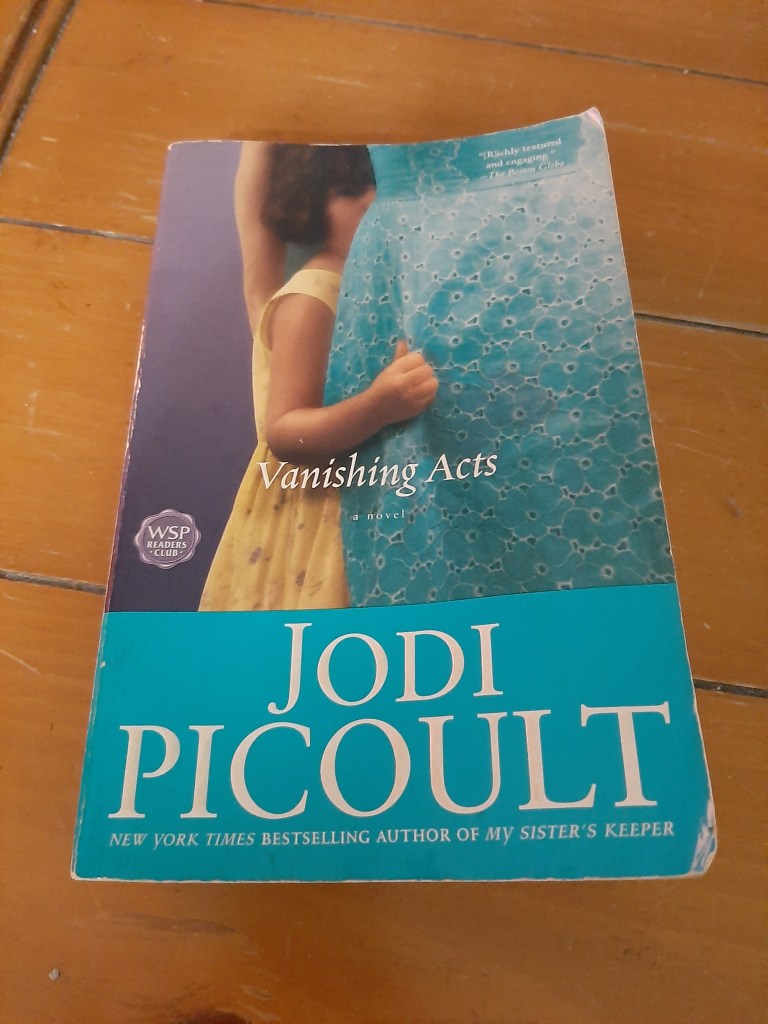
Example: Vanishing Acts by Jodi Picoult

5. A protagonist with an obsessive personality. After tragedy strikes or a personal crisis, the protagonist focuses all their time and attention on fighting a cause or in caring for another person. But when that character becomes so obsessed with that they lose sight of their own needs or the needs of other people in their lives, it can create unbreakable bonds. Only when a crisis occurs with other characters do they realize that their life is out of balance.

Example: Handle with Care by Jodi Picoult

6. A protagonist who treats others with disdain and arrogance. It’s hard to like someone who treats others like they’re dirt. At first glance, they may not have any redeeming qualities. Yet, if you look more closely, they usually do, and it’s usually buried under a veneer of anger or sadness or loneliness. Take, for example, Carrie Soto might be standoffish and arrogant around her competitors, but you have to admire her work ethic, her single-minded determination to win every tournament, and most important, her devotion to her father.

Example: Carrie Soto is Back by Taylor Jenkins-Reid

7. A character who takes advantage of the good, kind nature of a friend or loved one. These individuals have learned to live off of others, whether it’s because they grew up in poverty and never had enough growing up, or they believe they’re entitled to other people’s possessions. In other cases, they are starved for love and affection and believe they can get it by needing the help of others. Their neediness and manipulation can cause a lot of strife between characters. Sometimes the friendship survives.

Example: Best Friends Forever by Jennifer Weiner

By observing these characters’ struggles, we learn to empathize with these flawed characters. After all, we all have our own demons to slay. Why shouldn’t your own protagonists have them too? Let them reflect the people you meet in the real world, people who have their own private struggles, whether it’s dealing with grief, an addiction, job loss, a divorce, or a health crisis. That’s what makes these unlikeable characters a little more likeable—their relatability.

Writing experts offer a few suggestions for making these characters work well in your stories, despite their flaws.

1. Make them relatable. Give them problems to overcome, with their flaws acting as barriers to their resolution.

2. Give them redeemable qualities. Allow their humanity to show through. Give them a quality people will respect. For example, the playground bully who goes home every day and plays with his dog.

3. Show how they became flawed. Whether it’s through backstory or it’s a part of the novel’s set up, show how your protagonist became the person they are.

4. Sometimes, it’ not about the character’s personality but about their decision making process. It may be that you don’t agree with the decisions they make, whether they’re right or wrong.

Writing and reading about an unlikeable character can be both fun and enlightening. Just don’t take them too seriously; they are only fictionalized people, after all. Remember that all characters are flawed in one sense or another. As readers, we can learn to empathize with their struggles, no matter how likeable they may be.

Ten Recommended Books about Fathers and Fatherhood

Photo by Ksenia Chernaya on Pexels.com

A few weeks ago, I shared my list of recommended books about mothers and motherhood. This week, to commemorate Father’s Day, I’ve created a similar list of great reads about fathers.

Like my Moms’ list, Dads come in all shapes and sizes and bring all sorts of drama and emotional nuance to these stories. In some instances, Dads were a minor character or a deceased one that still left a major influence on an adult child, sometimes many years later (Shoeless Joe), while others are the main character of the novel trying to make their way in the world while providing a good life for their children (The Shipping News). I’ve also included one memoir, a positive reflection on a father’s love of sports that was passed on to his daughter (The Best Seat in the House). 

In almost every book, the father character brings intrigue and conflict. You can’t ignore the impact a father has on their child—for good, bad or indifferent.

By the way, most of these are also films, so if you don’t feel like reading, you can always watch the story unfold on the screen.

Without further delay, here are my best book recommendations with strong father figure characters. You may have your own list, of course. What books have you read that featured a strong father figure character?

To Kill a Mockingbird by Harper Lee
Told from the point of view of six-year-old Scout Finch, readers not only learn about life in the South during the Great Depression, but about Scout’s relationship with her father, Atticus, a widower and a lawyer who wants justice to be served and to bring up his children right.

Bee Season by Myla Goldberg

As Eliza attempts to win the national spelling bee, her father becomes obsessed with her success. As she gets deeper and deeper into her “training” under her father’s tutelage, the family’s connections begin to unravel. Readers see how controlling her father becomes, which impacts all his familial relationships.

The Namesake by Jhumpa Lahiri
Not everyone appreciates the name they’re given at birth. Gogol is haunted by his name, given to him by his father who named him after an author he had always admired but who came with a lot of baggage. The unease that Gogol feels about his name fuels many of the conflicts in his life, especially those with his father.

The Secret Life of Bees by Sue Monk Kidd
Set in 1964, this is a coming-of-age story about 14-year-old Lily who runs away from home with the family housekeeper in search for the truth about her mother. I included this book on this list for the impact Lily’s father had on her life and the final showdown she has with him in an attempt to claim her independence.  

Disgrace by J. M. Coetze
After being accused of sexual misconduct by a student, English professor David Lurie leaves the university “disgraced” and moves to South Africa where his daughter Lucy lives. There he attempts to mend the broken pieces of their relationship.

Vanishing Acts by Jodi Picoult
Life isn’t always the way we believe it to be. Delia’s life is turned upside down when she learns that she was kidnapped by her father when she was four, an incident she has little memory of. As events unfold, Delia is forced to confront some hard truths about her father (and mother), though she stays loyal to him in the end.

Shoeless Joe by W. P. Kinsella
The movie Field of Dreams is based on this novel by W.P. Kinsella. Farmer Ray Kinsella heeds the call to build a baseball field in the middle of his Iowa cornfield. As he follows a trail of clues, he ponders his life without his long deceased father who had longed to be a baseball player. Each step takes him closer to his ultimate reward—reuniting briefly with his father.  

The Shipping News by L Annie Prouix
When Quoyle loses both his parents to suicide and his wife leaves him for a younger lover, he moves with his children to Newfoundland to a house that was in his family for generations. What struck me most about this story was Quoyle’s dedication to his children and his willingness to uproot their lives and start over in an part of the world to protect them from the pain and grief he has suffered through.

The Hundred Foot Journey by Richard C. Morais
One of my favorite books and a pretty decent film. After their restaurant in India is destroyed by fire, killing their mother, an Indian family moves to London, then to Paris where young son Hassain begins to find his way in the culinary world against his father’s wishes who wants him to remain true to his Indian roots. Despite his gruff manner, Hassain’s father truly loves his family, and readers see determined he is to keep the family together as they struggle to adapt to life in a new country.

The Best Seat in the House by Christine Brennan
If you read USA Today, you no doubt have read some of Brennan’s stories. She’s covered sports for several decades at a time when few women covered the sports beat. In this memoir, Brennan pays homage to her father, an avid baseball and football fan who followed the Detroit Tigers, Toledo Mud Hens (the Tigers minor league team) and Notre Dame. It’s a fun read to learn how father and daughter can bond over sports. These are all great reads, by the way, no matter what time of year. And you don’t have to be a father yourself to enjoy them.

Recommended Books about Mothers and Motherhood

Photo by Jill Wellington on Pexels.com

Since the calendar turned to the month of May, I’ve found myself reading novels where mothers are the key characters and motherhood the main theme. My current read is Two Little Girls in Blue, a suspense novel by legendary author Mary Higgins Clark, a story about the kidnapping of three-year-old twins Kelly and Kathy and their telepathic connection.  

Clark’s story got me thinking about other books I’ve read that explore similar themes of motherhood. With Mother’s Day coming up this weekend, I thought I would pay special tribute to Moms with a list of books that feature mother-child relationships. All types of mothers are included on this list, including birth mothers, adopted mothers and step mothers. Most of these books I’ve read, but I’ve included a few others worth noting.

So if you’re looking to add more to your TBR list, here are a few worth a look:

Look Again by Lisa Scottoline
What would you do if you received a postcard in the mail about missing children, and one of the children on the card looks identical to your adopted son? That is the premise of this suspenseful page turner that asks the question: What would you do if you suspected that your adopted child was kidnapped from another family?

The Last Thing He Told Me by Laura Dave
With clearly drawn characters and crisp writing, this was another book I couldn’t stop reading. Hannah is a new wife and stepmother to 16-year-old Bailey, who wants nothing to do with her. When Hannah’s husband Owen disappears, she receives a note from him with one simple message: “Protect her.” Hannah knows she must protect Bailey, even as she tries to unravel what has happened to her husband.

Leaving Time by Jodi Picoult
With the help of a psychic and a private investigator, a teenaged girl attempts to find out what happened to her mother, an elephant researcher, after a tragic accident at an animal sanctuary. Guided by her mother’s diary that documented the behavior of elephants through death and grief, the girl follows a trail of clues that lead to a very unexpected and surprising ending.

Little Fires Everywhere by Celeste Ng
The motherhood theme plays out in several different scenarios in  this moving novel by Ng. When artist and single mom Mia Warren arrives in the idyllic and carefully planned community of Shaker Heights, her disregard for the status quo upsets some area residents, particularly Elena Richardson, who is suspicious of Mia’s mysterious past. The lives of Mia and her daughter Pearl are intertwined with those of the four Richardson children. When friends of Elena want to adopt a Chinese-American infant, Mia and Elena find themselves on opposing sides of the debate. Elena becomes obsessed with ousting Mia from town with devastating results.

Lost by Joy Fielding
The first time Cindy lost her daughter Julia, her daughter was five years old. The second time was when Julia was 14 and she moved in with her father, which broke Cindy’s heart. But when Julia disappears again at age 21 after a promising audition with a Hollywood director, Cindy begins a frantic search for her. This time, the answers she finds reveals a disturbing truth about her daughter that she realized she never really knew.

Where Are The Children? by Mary Higgins Clark
One of the first novels by Clark, and probably the one that put her on the path to publishing success. Here’s another story about a mother whose two children disappear while playing in the front yard. In Clark’s signature style, the story is told from a variety of perspectives, including that of the kidnapper.

The Joy Luck Club by Amy Tan
It’s been a while since I’ve read this debut novel by Tan, which explores four mother-daughter relationships of Asian-American heritage. The story is told from alternating points of view of each mother and daughter, exploring how the attitudes and behaviors toward love and family are passed through the generations. The film was also quite good.

White Oleander by Janet Fitch
It’s been a long while since I read this book by Fitch. I also remember seeing the movie starring Michelle Pfeiffer. After her mother Ingrid is charged with murder for killing her boyfriend, 12-year-old Astrid is shuffled from foster home to foster home, each time putting her in complicated situations. As Astrid struggles to define herself, she continues a rather tenuous relationship with Ingrid in prison.

The Book of Ruth by Jane Hamilton
At times this was a difficult book to read because of the moments of violence. I give credit to Hamilton for the way she treated each of the main characters. Ruth lives at home with her mother May, who sees her daughter as a disappointment because she isn’t anything like her brilliant brother who graduated from college and works in Boston. Instead, Ruth works at a dry cleaners and falls for a Ruby, a lazy, stubborn scoundrel, who does not mix well with May. Ruby and May come to a violent clash, and only Ruth’s innate goodness and compassion allows her to have hope for her future.

What Alice Forgot by Liane Moriarity.
I love how Moriarity plays with intriguing questions and scenarios, bringing both humor and drama to her stories. In this novel, 29-year-old Alice is pregnant with her first child and is crazy in love with her husband. After falling at the gym, she wakes up in the hospital, only to learn that it is ten years later, she’s 39 with three kids, and she can’t understand why she’s in the midst of a messy divorce and why her sister won’t speak to her. As she puts the pieces of her life together, Alice figures out how to connect with her children and mend fences with her sister who has been on her own journey to become a mother.

Other books often listed with motherhood themes that are currently on my TBR list.

Beloved by Toni Morrison
Big Little Lies by Liane Moriarity
The Snow Child by Eowyn Ivey

What books about mothers and motherhood have left an impression on you? Which books would you recommend?

Favorite Books of 2022

Photo by Alissa Nabiullina on Pexels.com

As 2022 comes to a close, I like to review what I’ve accomplished over the past year, especially what I’ve written and what I’ve read. I began the year with a target of reading 32 books. I’m proud to say that I have met that goal. I’m looking forward to matching or surpassing the same goal of 32 books in 2023. I’m well stocked on books and ready to go.

But first, I’d like to share my favorite reads of 2022. My list consists of a few favorite authors, and a few new names that I’ve always wanted to read. They are presented in no particular order.

My criteria for favorites is fairly simple and straightforward: tell me a good story. Keep me turning the pages. Start with a strong, enticing premise. Give me complex characters that I can sympathize with (most of the time). Give me a satisfactory ending. It doesn’t necessarily have to be a happy one (although I prefer that best) but one that makes sense and ties up all the loose ends to my satisfaction.

What about you? What books landed on your favorites list?

The Husband’s Secret by Liane Moriarty
Is it ever okay to keep secrets from your spouse or family? What would you do if you found a letter from your spouse to be read upon their death, only to find out a terrible, dark secret when you finally do read it many years later while they are still alive? That is the premise for The Husband’s Secret. It’s not one of Moriarty’s more popular novels, but it is one of her better ones. While it takes an impossibly long time for the contents of the letter to be revealed, what follows is an emotional journey showing how the letter impacts different characters in the story.

One By One by Ruth Ware
This is the first novel by Ware that I’ve read, and it likely won’t be the last. From page one, Ware took me on a fast-paced thrill ride up and down the slopes of the mountains in the French Alps. It reminded me a lot of Agatha Christie’s classic mystery And Then There Were None. The short chapters with alternating points of view kept me glued to the story, but there were times when I couldn’t sleep at night.

Vanishing Acts by Jodi Picoult
Picoult has a reputation for tackling some tough social issues in her books, which I appreciate. In Vanishing Acts, one of Picoult’s early novels, a woman’s life is turned upside down when she learns that she may have been kidnapped by her own father when she was a child. The story raises some interesting questions about the passage of time and how time can influence what we remember about key events from childhood. The ending with its quickly developing twists leaves the reader wondering what really happened so long ago, long after the story has ended.

The German Midwife by Mandy Robotham
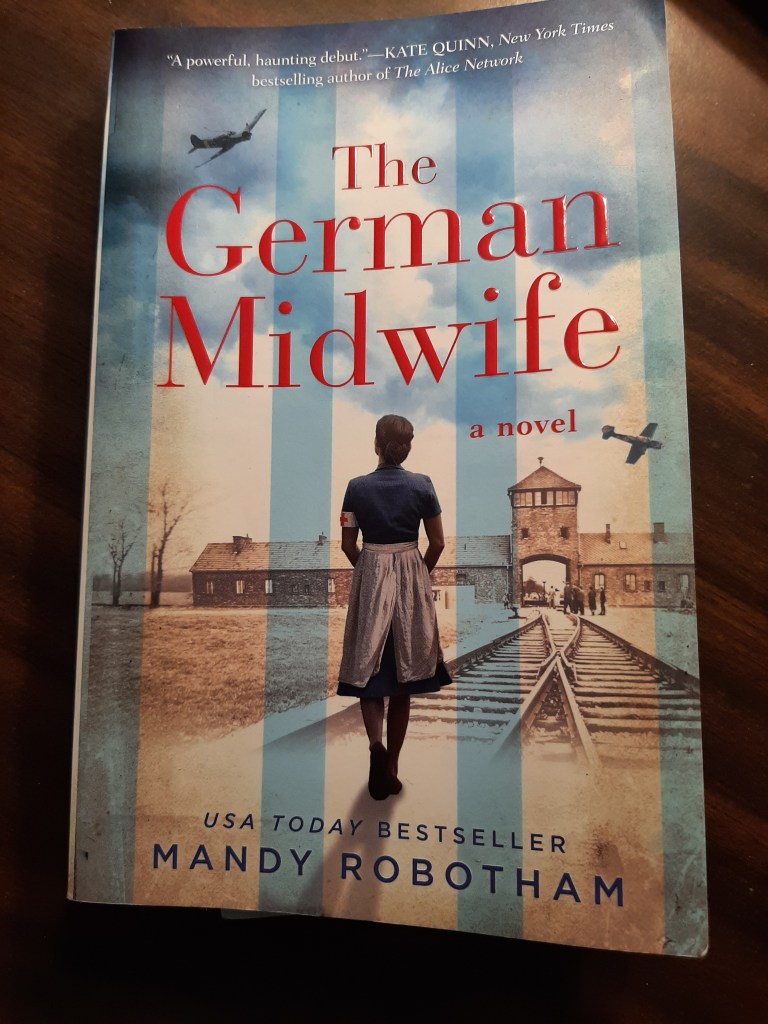
Set during World War II in Nazi Germany, The German Midwife is a historical fiction novel about a Holocaust prisoner and midwife who is assigned a dangerous task: to serve as the midwife for Hitler’s pregnant mistress. Every day the midwife confronts her own prejudices toward the mistress and her unborn child, but in the end relies on her own common sense and medical training to protect the young mother and infant while risking her own life.

The Family Plot by Megan Collins
In this third book by Collins, a dysfunctional family with a weird fascination for true crime is at the heart of this story. When younger brother Andy is found murdered on their secluded island, his twin sister Dahlia is quick to blame his death on the serial killer that has terrorized residents for years. As it turns out, her eccentric family and the mansion they live in all hold the key to solving the mystery of Andy’s death. Written in first person from Dahlia’s POV brought me into the story along with her.

The Night Circus by Erin Morgenstern
If you’re a fan of magic and magic realism, then The Night Circus is a must read. The circus arrives in town without notice and is open only at night. Underneath the black-and-white striped tents is a unique experience full of amazing sights and smells. Behind the scenes is a fierce competition between two young magicians who have been trained for this purpose. Only problem is they fall in love with each other and that sets in motion a chain of events that threatens the lives of the circus performers and the circus itself.

The Messy Lives of Book People by Phaedra Patrick
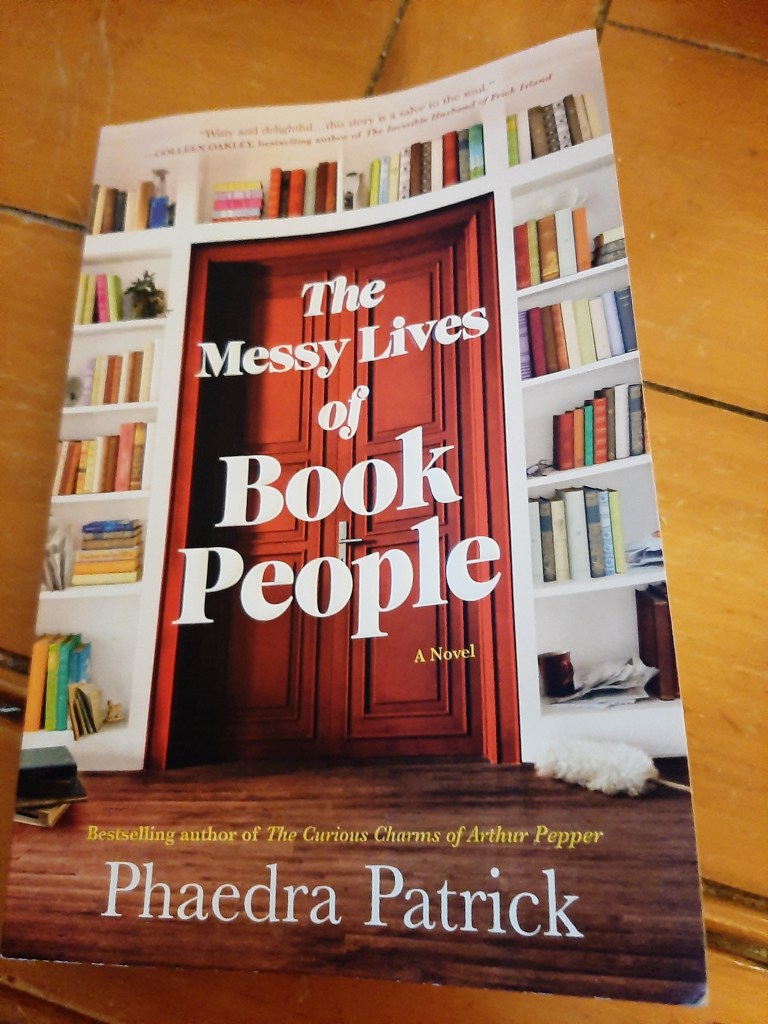
This is the first book by Patrick that I’ve read, and I will definitely read others by her. I’m a sucker for any novel involving authors, books or bookstores, and this one did not disappoint. A house cleaner of a famous, reclusive author must carry out her employer’s last wish: to complete the author’s latest novel before her death can be formally announced to her adoring fans. I loved the way Patrick handled the conflicts in the story, and happily resolved all loose ends in a way that made sense and was satisfying.

The Mistletoe Inn and The Mistletoe Promise, both by Richard Paul Evans
Evans has made a career of writing heartwarming Christmas stories. I added both of these to my favorites list because they are also among by favorite Hallmark Christmas movies, although the books include some darker back stories. All the same they are both fast, easy reads that will warm your heart any time of the year.

Honorable mentions: The following titles didn’t make my favorites list, but they were quite good anyway and are worth reading.

Sanctuary by Nora Roberts
Virgin River by Robyn Carr
Drenched in Light by Lisa Wingate
Winter in Paradise by Elin Hildenbrand
Life is Sweet by Elizabeth Bass
Three Wishes by Barbara Delinsky

Thank you for reading my posts this past year. I look forward to continuing to share my insights about writing and reading in 2023. Until then, have a happy new year, and may all your publishing wishes come true!

What Does Bob Dylan’s Nobel Peace Prize Mean for Other Songwriters?

brown and black cut away acoustic guitar
Photo by Jessica Lewis on Pexels.com

Since Bob Dylan was awarded the Nobel Peace Prize in Literature last week, there’s been a debate among literary artists whether songwriters should be considered for such a high honor. After all, critics say, the prize is for the best works of literature, not songwriting.

Jodi Picoult, author of several novels including My Sister’s Keeper, tweeted “I’m happy for Bob Dylan, but #ButDoesThisMeanICanWinaGrammy?” Critics argue that giving the award to a songwriter weakens the meaningfulness of the award, according to the New York Times.

Meanwhile, other best-selling authors such as Joyce Carol Oates and Stephen King praised the move.

That begs the question: can song lyrics be considered poetry or literature in the same vein as, say, T.S. Eliot? Yes, when those lyrics can stand alone without music, say supporters.

Clearly, Dylan’s body of work falls into that category, like this section from Mr. Tambourine Man. (“Take me disappearing through the smoke rings of my mind/Down the foggy ruins of time/Far past the frozen leaves/The haunted frightened trees/Out to the windy bench/Far from the twisted reach of crazy sorrow). Certainly, Dylan’s lyrics in protest songs like “The Times They Are A-Changin” and “Blowin’ in the Wind” have struck a chord with the American public.

By naming Bob Dylan the winner of the Nobel Peace Prize, does that open the door for other songwriters to be considered for this honor? If Dylan can receive the Nobel Peace Prize, why not Paul Simon, Bruce Springsteen, Arlo Guthrie or Joan Baez?

Perhaps it is time for the Swedish Academy, which awards the Nobel Peace Prize every year, to begin awarding a prize for the arts, to honor the best works in theater, dance, art and music. What a radical idea, almost as radical as Bob Dylan himself.