
Six Scary Good Books and Why They Still Haunt Me

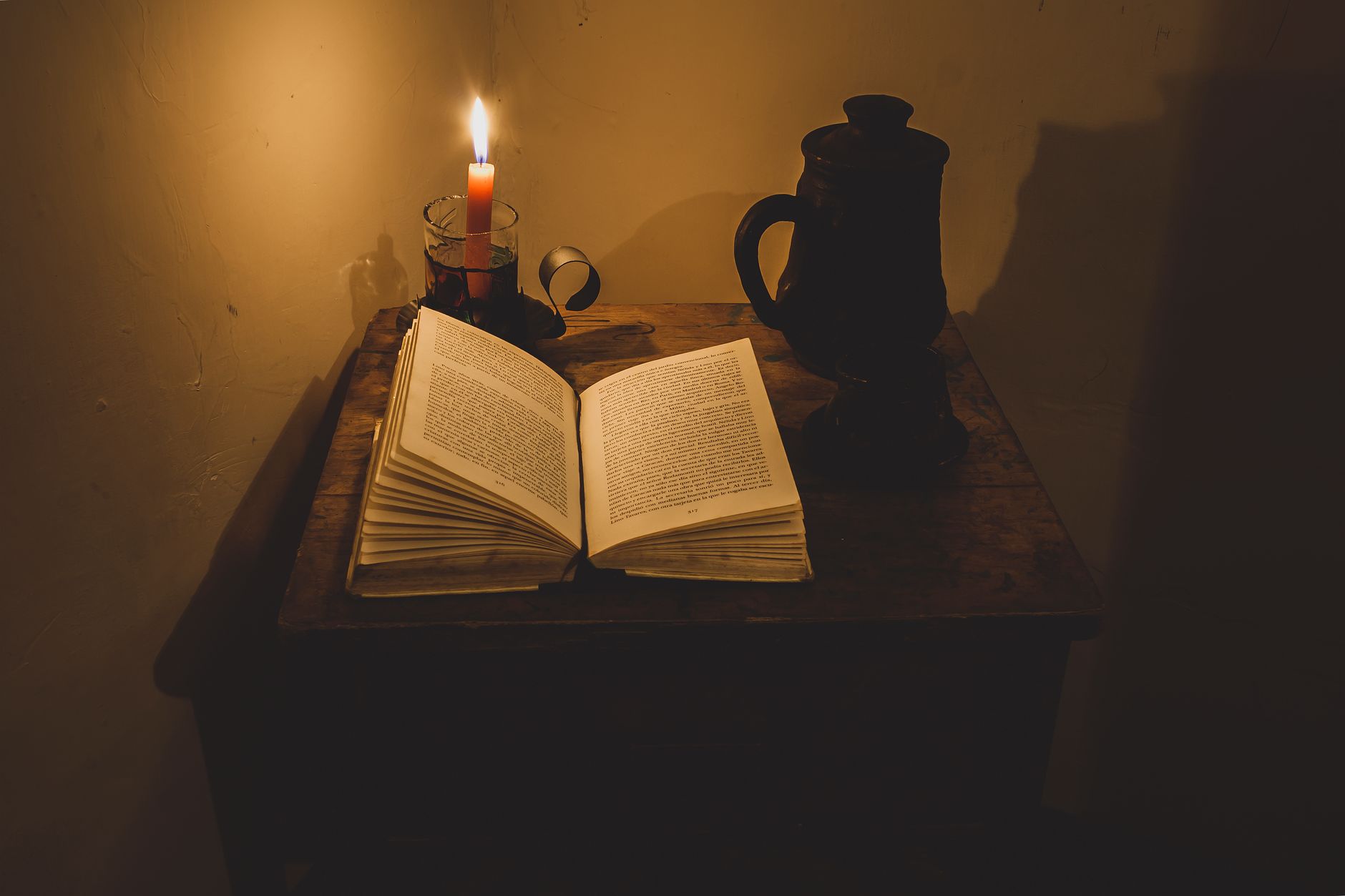
Photo by Arturo A on Pexels.com

With all the reading I do (roughly 30 books per year), I occasionally come across titles that give me the chills and haunt me long after I finish reading them. I’m not talking about horror stories either, which I don’t read anyway as a rule. I get scared easily. It doesn’t take much for me to go from being a chilled-out baby boomer to an anxious insomniac. The smallest gruesome details, even in the most literary of published words, can leave an indelible mark on my imagination.

While I try to avoid reading those types of stories with some element of horror, every now and then, I do read one with a difficult-to-read scene (The Book of Ruth) or I challenge myself to read out of my comfort zone (In Cold Blood). Other times, a book I’m reading has kept me awake at night, the suspense so great I was afraid to sleep.

I’ve scoured my reading lists from the past few years to curate a list of the best, most haunting reads, just in time for Halloween season. These books haunted me in ways I didn’t expect and left a lasting impression.

Why did these titles make my “scary” list?

  • They might have contained a gruesome scene of brutal violence that I could not unsee in my imagination. 
  • Some scenes only hinted at violence, just enough to feed my own fears and prod my imagination to fill in the blanks.
  • Some stories contained scenes that kept playing over and over in my head, preventing me from falling asleep at night.
  • The story presented a sad, dark view of our future that felt real and viable.

Here is my short list of books that have haunted me over the years. Your own list of scary or haunting books may be different. What is the same is the way these stories make you feel and the lasting impressions they make on your psyche.

In Cold Blood by Truman Capote
I don’t usually read true crime, but I had heard so much about ICB that I challenged myself to read it. This is considered the premiere example of true crime, and Capote does it with tremendous empathy for the villains. The story doesn’t feel exploitative or flashy either, and the facts are presented in a way that helps you understand the mindset of the murderers and the events that led up to their crime. That is what made this book so haunting, helping readers understand that there’s more to a crime than meets the eye.

Mexican Gothic by Silvia Morena-Garcia
This title is the closest thing to horror that I’ve ever read. I had heard a lot about it and I was curious about what the story was about. Morena-Garcia gives a Mexican spin on traditional gothic horror. Well-written with a likeable main character who behaved with greater maturity than her 21 years. The story was packed with a lot of gruesome and paranormal details that were both fascinating and horrifying at the same time.

The Book of Ruth by Jane Hamilton
I still cannot stop thinking about The Book of Ruth, which I read about five years ago.
Though this book is a work of fiction and not horror or true crime, it could easily have been one of them because of the way Hamilton presented the sequence of events. She also included back stories for the two people the main character Ruth was closest to – her mother and her husband. As the story progressed, the reader could see the growing tension and animosity between those two characters up until their final confrontation. This book haunted me in two ways: the brutal violence Ruth witnesses and her capacity to forgive in the end.

A Deadly Game of Magic by Joan Lowery Nixon
Nixon was a popular young adult novelist of the 1970s and 1980s, and I remember reading a few of her stories when I was younger. While the set-up for A Deadly Game wasn’t original – four teens seek shelter in an apparent abandoned house during a storm – Nixon turned their experience into a gripping, spine-tingling page turner around an evil magician who may or may not still be alive. There was no clear sign of violence, no actual blood and gore. But Nixon leaves enough clues, including a guillotine set that the magician had used for his tricks, to make readers use their imagination to fill in the  blanks. Sometimes that can be more scary than seeing the horror on the page. This one gave me a few sleepless nights.

One By One by Ruth Ware
This was the first of Ware’s psychological thrillers I read, and what an introduction it was. The story centers around a group of work colleagues who are trapped in an isolated chalet in the Swiss Alps, and one by one, they keep disappearing. The pacing and multiple points of view kept me guessing about what would happen next. The tension was so fraught that I had difficulty sleeping at night. Casual readers of suspense or Ware fans might say that I’m overreacting, that this was not one of her best works. But for me, there was something about the way she weaved in the story elements and tension that kept me looking over my shoulder.

Never Let Me Go by Kazuo Ishiguro
I shake my head every time I see this title described as magic realism. Sure there is a “special school,” but the specialness has nothing to do with magic. I would describe this story as dystopian much like the Handmaid’s Tale. The story centers around an imagined society that raises orphaned children for a very dark purpose – to be sacrificed to help other people live. As readers see these children grow up and knowing what their future holds, leaves me feeling haunted in ways traditional crime novels do not. 

What do you think? Are there any books that have haunted you? What types of stories scare you?  

Haunt Your Readers with These Six Scary Elements of Suspense

Photo by Inna Lesyk on Pexels.com

“How do you tell interesting stories? You puncture through reality and you let magic and weird stuff and ghosts bleed back through.”  Carmen Maria Machado

Imagine reading the following story:

A man has just finished washing dishes in his kitchen one night. As he is about to leave the sink, he notices a spider crawl up the drain into the sink. The man shakes his head in disbelief, then turns on the faucet to drown the spider. Seconds later, the spider returns, this time a little larger than before. The man can’t believe his eyes, even as he turns on the faucet again to push the spider back down the drain. The spider returns, larger than before. Each time, the man turns on the faucet to drawn the spider and each time, the spider crawls back up. The man’s eyes grow large, panicked at seeing the growing spider. He begins to sweat, fear overtakes him. Finally, the spider is so large, it has overtaken the man who screams in sheer horror at the beast. The viewer is left to wonder — did the spider kill the man — or did his fear of it kill him?

This was a vignette I saw many years ago on one of those horror TV shows that was popular back then, either The Twilight Zone or Night Gallery. Though I saw this episode several decades ago, that story haunts me today. Not that I’m scared of spiders – not really — but the story created a lasting impression. Why? It fed on the man’s fear and the viewer’s imagination. Logically, we know it’s not physically possible for a spider to grow so much so fast, yet we see it happen before our very eyes. The image of the ever growing spider leaves an indelible mark on our imaginations. We leave understanding what can happen when we let our fear overtake our common sense.

I believe that is the power and appeal of a truly scary story.

Writing scary stories – whether of ghostly hauntings, the paranormal, or brain-eating zombies – can be a challenge. While you must still follow the elements of writing a novel or short story, like plot structure, character arc and dialogue, but you have the task of creating scenes that send chills down your readers’ spines. Fortunately, there are ways to create that spine-tingling response.

1. Use your own fear. Horror goddess Shirley Jackson believes tapping into your deepest fear can make a good scary story. Just think about all the things that you were ever afraid of as a child, or fear now. Most people admit to being afraid of snakes or spiders. Other people may fear drowning, suffocation, or thunderstorms, dark spaces or the woods. Any of these things can be the basis for your scary story.

2. Get inside the narrator’s head. Author R.L. Stine likes writing his stories from first person point of view because it allows readers to view the action through the protagonist’s eyes. When the protagonist and her best friends explore an abandoned warehouse late at night, you see what she sees, hear what she hears and feels the fear like she does.     
                                                       
3. Create a good (hidden) monster. According to Dictionary.com, sometimes the best monsters aren’t creepy-looking at all, but someone who looks like you and me. It can be the boy next door, a teacher at school or the family pet. They seem innocent on the surface, but maybe they have some magic power or an evil streak that they hide. Even more compelling, the evil being never dies, no matter how often your protagonist tries to kill them – like the poor homeowner who tried to kill the spider. One of the creepiest ways to end a story is by hinting that the monster is still alive and well and prepared to kill again.

4. Write about your obsessions. Is there an experience you can’t quite forget? A relationship you can’t get over? A person who betrayed you long ago? We all have our obsessions, things we can’t let go of. We all have those dark places within us, where anger, jealousy and greed reside. Use those obsessive dark places to create your scary stories.

5. Make the story relevant to the reader. According to Dictionary.com, your story becomes scarier when readers can relate to the scene where the story takes place. A haunted house is nice, but maybe opt for a location your readers are more familiar with, such as a library, the public park or the local coffee shop. Add modern elements too, such as cell phones or social media. There’s nothing more terrifying than getting a threatening text message from a scary monster.

6. Take your ghostly, weird creations seriously. Not everyone will appreciate the scary beings you create, but that’s okay as long as you do. Ray Bradbury says the strangest, weirdest beings you create represent fear in some form. Further writers should be selective about whose criticisms they believe. Bradbury says, “I have never listened to anyone who criticized my taste in space travel, sideshows or gorillas. When this occurs, I pack up my dinosaurs and leave the room.”

The scariest stories aren’t always about blood and gore. Sometimes a mere hint of something mysterious or creepy can be scary. Anything that draws on the reader’s personal fears and overactive imagination will scare the heck out of them.

Most important, embrace your inner monster. We all have it inside us. When you tap into your internal weirdness, magical and mysterious things can happen with your writing.