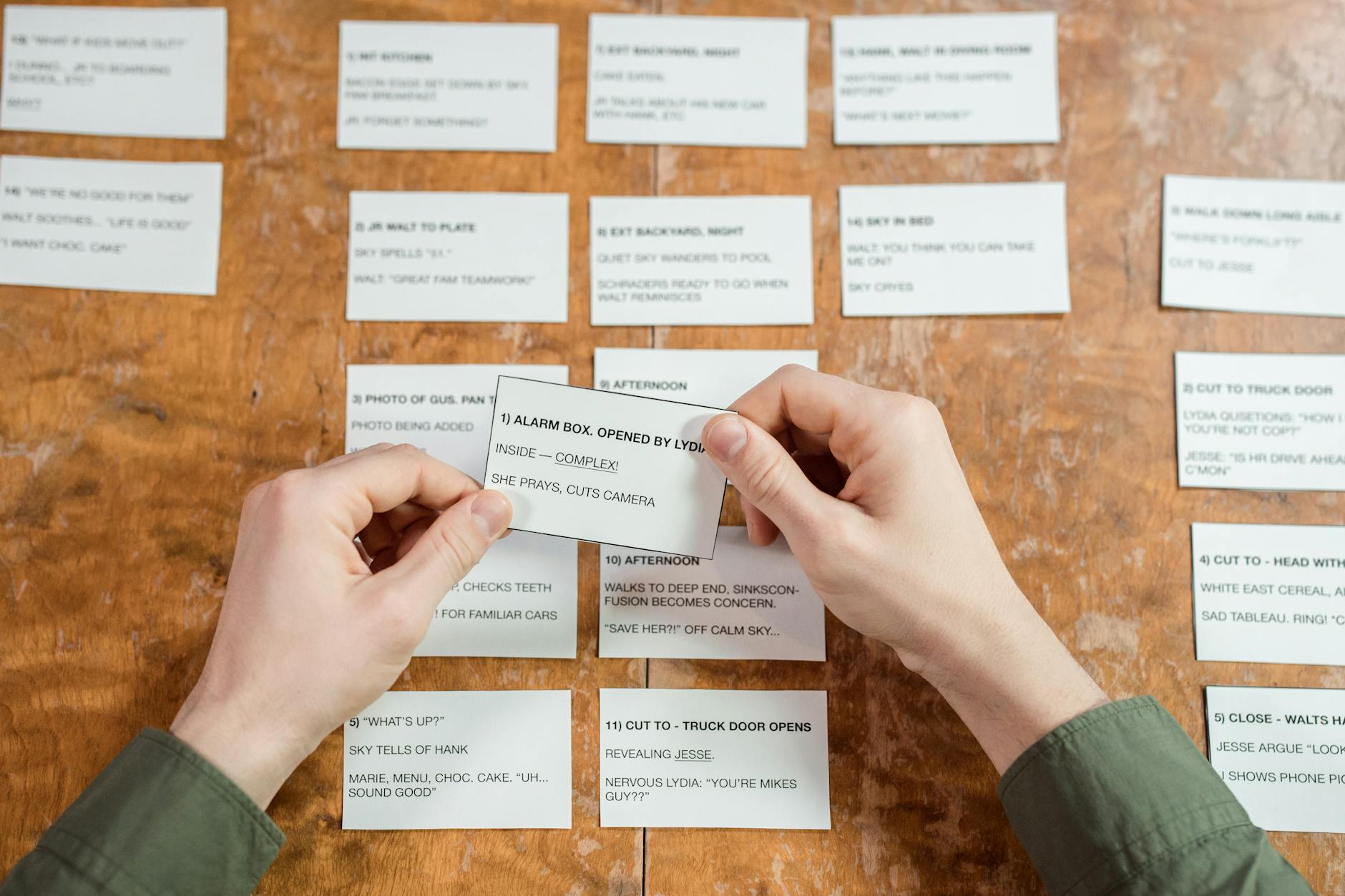
Conquering the Scariest Fears about Writing

Photo by Suzy Hazelwood on Pexels.com

Happy Halloween! In honor of this occasion, I’m reposting this story from a few years ago. It’s my treat to you.

If you’re like most people, you’ve probably made a myriad of excuses for not getting any writing done – lack of time, fear of failure, too busy, no privacy, nothing to write about, etc.

Below are the seven most common excuses I’ve heard from people (and sometimes I’ve used them myself) for not writing. I call them the Seven Deadly Excuses because they can kill a person’s writing practice before it has a chance to blossom. Many of these excuses are influenced by negative messages and assumptions you’ve heard since childhood. By reframing these messages and taking positive action, those fears could diminish over time.

Excuse 1: “I don’t have time to write.”
A lack of time is the most common excuse people make about not writing. If this is your biggest fear, chances are your writing practice has never gotten off the ground, or you write in fits and starts. You always talk about wanting to write, but you never do anything about it.

The problem isn’t that you don’t have time to write, but the expectation of how much time is needed for writing. If you expect a writing practice to take up two, three or four hours every day, that is unrealistic. No one has that kind of time, unless you are a professional full-time writer. With outside jobs, clients to manage, families to care for,  and other important responsibilities, there’s little time left over for writing.

The truth is, you don’t need hours at a time to write. When you’re just starting a writing practice, only ten or fifteen minutes a day will suffice. For example, while working as an attorney, A Time to Kill author John Grisham set a goal of writing one page per day, roughly 200 words. Grisham shows it is possible to fit writing into your schedule.

Excuse #2: “I’m too busy.” 
When people say they’re too busy to write, what they might actually mean is that writing isn’t a top priority compared to other responsibilities. Work, school, taking care of family and a household take up more of your time. Why begin a writing practice when these other priorities compete for your attention?

Perhaps you learned in childhood that school work and household chores came first before you could entertain yourself by reading and writing stories. Naturally, that attitude and habit carried over into adulthood. It’s no wonder writing hasn’t become priority.  

When you make writing a priority, you’ll find it’s easier to begin a regular writing practice. Remember, you only need 15 minutes! If you can make room for 15 minutes in your schedule for writing, that’s time well spent, no matter how busy you are.

Excuse 3: “My writing isn’t good enough.”
From the first moment you put pen to paper, your writing probably won’t be very good.
That’s normal for most beginning writers. But it’s true for experienced ones too. Kristin Hannah, author of The Nightingale, writes as many as 10 drafts of each novel because she knows the first draft isn’t her best or final work. It’s simply the starting point that she can build on.

If you continually tell yourself that your writing is not good enough, ask yourself why you feel that way. What is your writing not good enough for? Publication? For other people to see?

Instead of berating yourself for not writing well, make a plan to keep improving. Read authors whose work you admire, so you can learn from them. When you write something, ask for feedback. Constructive criticism can help you spot recurring errors. Most important, write, write, write. That’s really the best way to improve your craft.

Excuse 4: “I don’t know what to write about!”
Do you suffer from blank page syndrome – the act of staring at a blank page or computer screen with no idea what to write about?  Or when you do come up with a story ideas, do you dismiss them as uninteresting?

When faced with a blank page, you may be overlooking the best source of story ideas: personal experience. You have plenty of life experience to draw from, so explore those events from your past and turn them into stories, either as narrative non-fiction or as fiction.

One way to access this reservoir of life experience is with writing prompts. You can find hundreds of prompts on sites such as Writer’s Digest.

Excuse 5: “I don’t have a private space to write.”
If you share a home with a spouse, three children, a dog and two cats, it may be difficult to find a quiet, private space to write. Others believe that without ideal circumstances, such as a desk and comfortable chair, their favorite coffee mug and favorite pen, they’re just not able to write.

You need to ask yourself if the problem is an actual lack of space, or the expectation that you need a lot of space to write. I’ve drafted blog posts on breaks at work, on buses and trains or while waiting for doctor appointments. If you wish you had ideal surroundings and your current environment is far from ideal, you may be waiting forever to start writing. The truth is, your environment does not need to be perfect to begin writing. Look around you. I bet you can find a space to call your own that is perfect for creating stories.

Excuse 6:  “I might fail.”
Another common excuse writers make is “What if I fail?“  The answer depends on how you define failure. What does failure look like to you? Not getting published? Not finishing your current work-in-progress? Not having anyone read your work? Not having anyone take your writing as seriously as you do? Everybody has their own definition of failure, but in reality, there is only one true failure: not writing at all.

To remove that fear of failure, it might be helpful to start small and work your way toward bigger projects. Start with 100 words, then increase it to 200 words, and so on. Every week or so, add to your daily word count. When you reach these smaller goals, you gain confidence in yourself and you achieve small successes that you can build on.

Excuse 7: “What if I’m successful?”
While fear of failure is common among writers, others suffer from a different malaise:  fear of success. “How can anyone be afraid to succeed?” you ask. You’d be surprised at how many people fear success, myself included.

Fear of success might manifest as an unfinished project – or two, or three or ten. You have several projects in various stages of completion but never seem to finish any of them. In your mind, finishing one of them means you’ve achieved success. Then you worry about what happens when you finish that project. Perhaps you edit your piece over and over again, never fully satisfied with what you’ve written – a useful delay tactic preventing you from finishing your work.

If you fear success, then you may need to rethink what success means to you. What does it look like? It may look and feel differently to you than to your spouse or your best friend. Are you defining success on your terms or someone else’s?

For some people, success means getting published, while for others, it simply means sitting down for a half hour every day to create stories with no thought of publication. There is no right or wrong answer. Write according to your definition of success, whatever that means to you.

When you manage your expectations to conquer your fears, the writing life won’t seem so scary.


Lost Your Creative Flow? Here’s How to Find It Again–and Keep It Going

Photo credit: The Regal Writer

Be sure to visit my website for the latest writing prompt.

We’ve all been there before. Staring at a blank page in a freeze, unsure where or how to start writing. Or you’ve taken a break from your writing and lost momentum in your work-in-progress. Even just starting a routine writing session can feel like a sludge through mud.

In those moments, you realize you’ve lost your creative flow and you wonder if you can ever get it back.

Call it a creative mojo or being in the zone or having a zen moment, creative flow occurs when you enter a state of total immersion, when all outside stimuli fade into the background, and all that’s left is you and your creative work. It’s that moment when you feel most productive and innovative. It’s when you become most in tune with your essence and where you feel most alive.

Like all good things, creative flow can come to a crashing halt. When that happens, you can feel lost, unsure how to get it back.  

When you lose your creative flow, think about why it’s happening. Maybe you’re feeling stressed about the project you’re working on, which can make you feel blocked and unproductive. Do you have too many distractions and interruptions in your daily routine? Then it’s time to do something about them to limit their impact on your creativity.

Whenever I lose that flowing feeling, I try one of the following techniques to find it again. While they may not work for everyone, they’re worth a try.

1. Turn off your electronic devices. Shut off the TV or radio. Close out any apps you use, and put your phone away. Just sit alone with your story idea and let your imagination work with it. Then when you’re ready, begin to write. I prefer writing longhand with a pen and paper because the ideas seem to flow more easily from my brain to my hand and onto the page.

2. Do a brief warm-up exercise. Just like singers warm up their vocal chords before a live performance or an athlete runs sprints or rides a stationary bicycle to loosen their muscles before a game, writers need to warm up their writing muscles too. Writing is a different kind of performance. The page or screen is our stage. Working with a prompt, freewriting one whole page, or writing in your journal are ways to warm up your creative muscles. Once you’re warmed up, you might find your creative energy flowing.

3. Seek a quiet, secluded place to write. To be at my best, I need a quiet place to work, to think and to create. I try to limit distractions as much as possible, though I will answer only the most urgent emails, phone calls or texts. Similarly, I remove any clutter from my desk because I believe a messy desk clutters my creative thinking. If you’re used to working in a busy coffee shop (good for you), but you’re not finding your flow, try writing in a quieter environment and limiting distractions.

4. Write in short bursts. Any people seem to believe that you need several hours to get into your creative flow. But sometimes less is more. When you know you’ve only got 20 free minutes, sometimes you can get more done in that short time than if you had an entire morning. With a longer session of two or three hours, there’s a tendency to stare at the page, take more breaks, answer messages or do research. Sometimes it can seem that you get less done in longer writing sessions because of the constant switching up of tasks. It’s easy to get restless and bored too. Start with a 20-minute session, then if you’re flowing well you can always extend your writing time.

5.  Seek support from fellow writers. Every creative person loses their flow at some point. Just ask any writer, artist or musician. They’ve all figured out how to get it back too. So ask friends and fellow writers how to get back into the creative flow. We can all learn from each other.

6. Read what you’ve written before. The writing could be from your previous session to get you caught up to date, or it could be something you published previously. Reading your work can put you in a success mindset and inspire you to keep writing. Sure, you might be tempted to make some edits in your work-in-progress, but that’s a sign that your brain is kicking into high gear. It’s revving the creative engine. When that happens, you’ll be ready to start writing.

7. Use pen and paper. I’ve mentioned this technique in Tip #1. I find writing longhand with pen and paper to be the fastest, easiest route to connecting with your creative self. When I write on a screen, I’m more tempted to stop to read what I’ve written, to make corrections or to look up some important detail on the internet—all deterrents to creative flow.

Here are a few tips from other writers:

8. From Copy Posse, identify your most creative time of day. When do you feel most productive? Is it early morning? Late afternoon? Before bedtime? We all sense when we feel our best, physically and mentally. If it’s possible for your schedule, block out that creative time of day and put it in your calendar. Then make time during those periods to take advantage of your natural creative flow.

9. From The Young Writer blog, practice self-care. That means getting enough exercise, eating right and getting proper sleep. When you feel well physically, you’re able to tap into your creative flow more quickly because it flows more naturally. You won’t have to work as hard to get it back, and you’re less likely to lose it at all.

10. Also from The Young Writer and perhaps most important of all, have fun. Avoid overthinking your writing. Simply relax and enjoy the process of creating. When it stops being fun, then you need to consider whether it’s time to stop writing (but hopefully, you won’t).

Remember creative flow is an ideal experience that we’d all like to achieve the moment we sit down to write. But truthfully, it’s not realistic to expect it to happen at a moment’s notice. Sometimes you have to work at it, and hopefully, these tips will help you.

Creative flow occurs in fits and starts; that’s the nature of it. When it comes, savor the feeling it gives you and use its energy to your advantage.

Writing the Hidden Identity Trope

Photo by Anete Lusina on Pexels.com

Last week, I posted this story about writing fish-out-of-water stories—stories about people who find themselves in unfamiliar surroundings and circumstances and struggle to fit in. Another trope I enjoy reading is the hidden identity, in which the protagonist hides some aspect of themselves to achieve a certain goal. I’ve always liked the suspense that builds as the character strives to keep their secret self hidden from others.

These characters lead double lives, with one foot in one setting and the other foot in another. They choose to conceal their true identities to protect themselves or the ones they love.

You probably recognize the secret identity trope from popular culture.

  • In adventure and superhero stories, our hero often poses as a regular guy or gal on the street. Think of Superman’s Clark Kent who works for the local newspaper and meets his love interest, Lois Lane.
  • In mystery novels and spy thrillers, the hero goes undercover to investigate a crime. This might be especially true for amateur sleuths who often disguise themselves to get close to their target.
  • In fantasy and science fiction, the hero must often hide an aspect of themselves to protect themselves from a terrible, untimely demise. Harry Potter, for instance, must hide his magic powers when he returns home to his muggle parents, though they make it difficult for him to do so.
  • In romance, the protagonist hides some aspect of themselves that they perceive interferes with their ability to find true love. For example, a prince or princess lives among commoners to escape their royal duties, or an heiress who hides her wealthy upbringing to seem more normal and attract someone who will love her for who she is not for her money.    
  • In literary fiction, a character may adopt a new persona to hide from danger. The Nightingale by Kristin Hannah comes to mind. Protagonist Isabelle becomes an underground messenger known by her code name The Nightingale to support the Allies during World War II.

According to First Draft Pro blog, the hidden identity trope explores themes of privacy, nature of self, duality and the consequences of leading a double life. There is often the conflict between the public face presented to others versus the personal self that those closest to you know best.

Like fish-out-of-water stories, hidden identity tropes resonate with the human experience. After all, who hasn’t presented a different persona in public settings while keeping their personal identity hidden? Why else would Halloween be such a popular holiday? Because it allows people to disguise their true selves and adopt a new persona that may be truly different from who they really are.

So how should you write these hidden identity stories? There are different approaches you can take that can build suspense while making your character relatable.

Approach 1: The Surprise Reveal
In this scenario, when the character’s true identity is revealed toward the end of the story, it usually surprises other characters and readers. It makes for a great plot twist. Jodi Picoult’s Leaving Time has one of the best and most surprising plot twists when readers discover the true identity of one of the main characters. It moves the story in an entirely new direction.

Approach 2:  Going Along for the Ride
Readers know the true identity of the protagonist early on, even though other characters haven’t learned about it yet. Readers are taken along for the ride as the protagonist fights to keep his identity hidden. Superhero stories are constructed this way. In Superman, we know who Clark Kent is long before Lois Lane does.  

Approach 3: Everybody’s in the Act
In this scenario, each of the main characters is hiding some aspect of themselves or guarding a secret. One by one, each of their secret identities is revealed. In Hallmark Channel’s The Christmas Train, for example, during a long cross country train ride, we learn about the cast of characters which include several actors hired by a scheming director to push the two romantic leads together. Other characters not involved in the plot have their own secret identities, including one woman who is actually a private investigator trying to uncover a string of thefts on the train.

When done well, the hidden identity trope can create suspense and keep your readers guessing about what secret the character is hiding and who your character really is.

To learn more about the hidden identity trope in romance stories, check out this post by Seacrow Books.

Finding Your Creative Writing Niche

Photo by Suzy Hazelwood on Pexels.com

Editor’s note: I’m tied up with assignments this week, so please enjoy this reposted article from 2021.

When I first embarked on my writing journey, it was a challenge to shift from writing magazine features and website content to creative writing. It was a far cry from the business world, where the criteria was set by employers and clients. I had to shift from writing for business to creating whole new worlds in fiction.

Part of the challenge of being a creative writer is finding a niche. It’s deciding what kind of creative writing I wanted to do and what I was best suited for. Did I want to focus only on novels, or were short stories more my thing? Maybe I was drawn to the soul-baring essence of creative non-fiction, or the challenge of tackling a 100,000-word novel. Or would I be better suited for flash fiction where stories rarely exceed 1000 words? When I first dove into the creative writing pool, I thought I knew what I was doing. After all, I’d already had magazine features published and had received positive feedback about my writing from teachers and editors.

But I quickly realized there was a lot I didn’t understand. It was necessary for me to start from the beginning – to take classes, read up on story telling technique, and most important, to practice, practice, practice. I experimented with different writing styles. I attempted several novels as well as short stories and, more recently, novellas. I’ve submitted essays to competitions and sought feedback from writer’s groups. It’s all been part of a learning, growing process.

I’m still working toward finishing my current novel in the hopes it will one day be published. But I also understand that it takes more than talent to get there. It takes grit and determination and perseverance. It takes a consistent writing practice.

Here’s how you can find your own creative writing niche.

1. It’s important to read a lot, and to read a variety. In his book, On Writing, Stephen King says the best way to learn about writing is to read and to read widely. That’s how you learn how to craft stories, develop plot and character, create suspense and satisfy readers. By reading, you naturally absorb authors’ writing styles and adapt to your own. By reading, you also notice what works well in storytelling, and what doesn’t. Reading other authors’ works is a must to advance your own writing aspirations.

2. Know who you are as a writer and what you stand for. Julie Anne England of the Self-Publishing School says it’s important to assess yourself – your interests, your strengths and weaknesses, and your writing goals. That means understanding what you can tolerate in the world at large and what you can’t. Maybe writing critique groups aren’t your thing. Not everyone is cut out for them. Maybe you feel more inspired by writing in a semi-public place where there are other people nearby so you don’t feel so alone while you write. Or maybe you prefer to write at home alone. England advises writers to “be true to who you are. Trying to be someone you’re not will only impede your progress.”

3. Pay attention to the feedback you receive. Whether you get feedback from a writing buddy, a coach, a boss, or your website audience, pay attention to what they tell you. Do they like the way you describe a scene or the way you draw your characters? Conversely, are they confused by your plot structure or is your protagonist flat, lacking in emotion and personality? Then use their feedback to improve your work.

4. Learn as much as you can about the writing craft. Whether you’re just beginning your writing journey or you’ve traveled this road for some time, it’s important to keep learning. Readers’ tastes and publishers’ needs constantly change, so what was popular a year ago may be obsolete in another year or two. You need to stay on top of the publishing trends. Further, by keeping up with your professional development, you keep your skills fresh and learn new story telling techniques. You show agents and editors that you are willing to do whatever it takes to produce the best story possible.

5. Don’t be afraid to experiment with different genres and writing styles. Maybe you’ve been writing narrative non-fiction, but you’d like to experiment with writing short stories. Don’t be shy about taking a workshop about short story writing. You may decide after completing one or two stories that it just isn’t right for you. That’s okay. At least you tried, and there may be some things you learned about the writing process that can be carried over to your essays. Don’t be afraid to experiment to see what works best for you.

6. Be flexible and open-minded. Don’t get locked into your niche or specialty because it will likely change over time, writes Shaunta Grimes at The Write Brain blog. For example, when I started my blog in 2016, I wrote about a variety of writing and communications topics because that was my professional background. As time went on and I gravitated toward more personal writing and less business communications, my blog reflected that shift. Now I focus almost exclusively on essays about the writing life with some posts about fiction writing thrown in. Allow your personal interests to dictate your path.

If you want to know more about what kind of writer archetype you are, check out this quiz at The Write Brain blog. (Note: You will need to create an account to read the article on Medium.) Find out if you are a Hesitater, a Skipper, a Spiller, a Teacher or an Artist. It will help you learn what you write and why. (Btw, I’m a teacher, which should be obvious from my blog.)

The beauty of creative writing is that there are multiple paths to choose from, and it’s not uncommon for writers to specialize in more than one genre or writing style. Finding that niche, however, depends on knowing who you are and what you have to offer readers. 

Career Planning Tips for Aspiring Authors

Photo by Sora Shimazaki on Pexels.com

I jumped into my fiction writing journey with hope in my heart and my fingers crossed. I didn’t have a clear idea where I wanted to go once I started writing though. But even if I did know, I didn’t have a map or a compass that told me how to get there. I simply jumped into the deep end of the pool and hoped something would come of it.

When I started writing in earnest, I didn’t know whether it was a new career path or a hobby to keep me entertained while I looked for work. It’s one thing to say “I’ve always wanted to be a writer.” It’s quite another to actually formulate a plan for getting there.

Some writers do plan their writing careers. Others, like me, slip into it gradually, more as an experiment rather than a conscious career choice.

Most professional writers will tell you that it’s a good idea to have a plan, something concrete to guide you along your writing journey. A plan helps you visualize your writing goals so you have a picture in your mind of what you want to accomplish. Without it, you might as well spin your wheels.

So that begs the question. Should aspiring authors have a career plan? If so, what does that plan include? How do you know what you want to accomplish, and how long you expect it to take? These are all questions you need to ask yourself before embarking on your writing journey.

Do you have a plan for your writing career? Have you mapped out what you want to accomplish and how to get there? Would you do anything differently?

If you think a career plan is right for you, here’s what you might include.

A vision of success. Take a few moments to visualize what you want your writing career to look like. What do you want to accomplish? What does success look like to you? What does it mean to be a successful author? Try to be as detailed as possible. You have to know what the end game looks like in order to get there.

Your goals. If your vision is the end game, your goals are the wheels to help you get there. Be specific. For example, don’t just say you’ll write every day. Instead, say that you’ll write 1000 words a day six days a week, which is more specific and more achievable. Focus on things you can control, such as your output and time spent on writing activities.

Your timeline. Some career experts suggest having a five-year plan, no matter what career you choose. Then working backward from your end goal (or vision) at the five-year mark, set goals at intermediate points, such as annual or every six months. Put goals in the order of how you want to achieve them. For example, completing a fiction writing course might occur earlier in your timeline than publishing a short story.Having a timeline can help you determine if you’re on track to meet those goals, or if you have to reset the timeline.

The road map. How do you plan to achieve your goals? What steps do you need to take to move forward? For example, do you need to brush up on your writing skills? Do you need to build a network of fellow writers? Do you need to find out how to craft a work of fiction?

Fantasy author Holly Lisle suggests finding a model author to follow. Read every one of their books, and study them for how their writing progressed over time. Learn all about their work methods. See if any of them will work for you. 

Find a support network. Writers might work alone, but they need the support of family, friends and colleagues too. Make sure that your spouse, kids, roommates are on board with your new career plan. Make sure they give you the space and time you need to do your writing.

Starting a writing practice isn’t always easy, especially over the long haul. Here are some additional tips for planning your writing career. .

* Pace yourself. Burnout is very real, writes Heather Webb at Writer Unboxed blog. Meeting deadlines, especially those enforced from outside yourself, like an agent, editor or client, can zap you of your energy. “When writing begins to feel like a chore, it’s time for a time out to regroup. Writing will come back. Your love of storytelling won’t go anywhere,” says Webb.

* Be flexible. Real life can get in the way of your writing. Webb advises writers to be flexible in all aspects of the writing business—your schedule, with story ideas and with your career path. Don’t be afraid to pivot when you need to. If one genre doesn’t seem to be working for you, switch to another.

* Define what success means to you. If you were a successful author today, what would it feel like? How would you behave? Dress? Treat others? Treat your work? Success won’t look or feel the same way to everyone. Define success on your terms.

* Don’t let your negative inner voice or ego become the loudest voice. Drown it out with your own positive energy. Similarly, avoid author envy. It’s tempting to compare yourself with other writers, especially those whose work you admire, but that serves no useful purpose. Focus on becoming the writer you are meant to be.

* Most important, be sure to write as often as possible. You learn most about the craft by actually sitting down and writing. Once you start, you won’t want to stop.

Having a career plan isn’t mandatory for success. But it can help you clarify your goals and map out a path for achieving what you want. It’s one more tool to add to your writer’s toolkit.

Fiction in a Flash: The Basics of Writing Flash Fiction

There seems to be two types of writers in this world. One enjoys taking their time telling their story, introducing characters, unveiling the plot, creating tension until they arrive at a (hopefully) satisfying ending. The second takes the shorter route, where there are minimal characters and backstory, words used thoughtfully and expediently, and an ending that is often unexpected and profound..

As you may have guessed, the first type is a novelist, while the second excels at flash fiction. While their approaches to storytelling are wildly different, they both try to accomplish the same thing—entertain readers.

According to Writers.com, flash fiction “delivers a complete narrative with plot, characters and setting, in fewer than 1,500 words. It relies on efficient use of language and storytelling without inhibiting the story’s flow and impact.”

Writing flash fiction is the equivalent of writing one scene from a novel. But even that one scene must be complete with an inciting incident, conflict and resolution.

There are several types of flash fiction, depending on the length of the story. Traditional flash fiction is a maximum of 1,500 words while the shortest type is a six-word story. There are other types and lengths in between.  

Some writers might be put off by the idea of writing a story in less than 1500 words, believing that it can’t possibly be done—or be done well. Much like other writers are overwhelmed by the idea of writing a 90,000-word novel. If you have a short attention span or dread the thought of spending weeks or months writing a full-length novel, flash fiction might be worth experimenting with. It can also provide another creative outlet to complement your other writing projects.

What makes flash fiction unique and challenging is the restrictive nature of storytelling. Since you are limited by the length, you don’t have the luxury of expounding on details or characters. You really have to think carefully about how to develop your plot and the role of your characters. The key to writing flash fiction, suggest writing experts, is to plan your plot first to create the skeleton of your story, then fill in with the most critical descriptive details.  

Jericho Writers offers the following tips for writing flash fiction:

* Limit the number of characters to one or two people (sometimes three). Again, you don’t have the luxury of length and space to introduce a myriad of characters. If you’re used to writing novels, think of the flash fiction as the same length as a single scene that contains only a few characters.

* Deal with a single conflict. Focusing on one single conflict moves the story along at a brisker pace without going off on different tangents.

* Focus on one genre. Because you’re working with a limited word count, stick to one genre that will be easier to write a story that readers will be able to follow.

* Limit world building and scene setting. In a 1,500-word story, you may only have one or two scenes where the story takes place. Likewise, you won’t have time or space to have heavy descriptions of your world. You may have to limit the world-building to a couple of sentences.

* Make every word and sentence count. Avoid passive voice, which tends to add unnecessary words. Be succinct, and choose the best words that tell your story. Use descriptive, concise language.

* Start in the middle of the story. You won’t have the luxury of a long, introductory narrative filled with backstory, detailed setting and interior narration of your protagonist.

That seems like an awful lot to think about for a simple, 1500-word story, but as you can see, flash fiction is deceptively complex. Writers.com offers several more tips for writing flash fiction.

  1. Begin by plotting the story first. That creates the spine of the story. Then go back and fill in with description and figurative language to make the story more complete.
  2. End the story with a bang. Conclude with an unexpected and surprising ending that makes the reader think about the story long after they’ve finished reading it.
  3. Be a ruthless editor. Start with a draft, just as you would with any manuscript, then go back and cut, cut, and cut some more. Don’t be shy about axing entire paragraphs that read well but don’t move the story along.

Writing flash fiction can be more challenging with its numerous restrictions, but all that planning, plotting and editing you have to do can help you become a better writer when you’re ready to tackle larger projects.

For more information about flash fiction, check out these other sources:

Flash Fiction magazine
Flash Fiction Online
Writing flash fiction: a complete guide, Jericho Writers
The Benefits of Writing Flash Fiction, Jane Friedman.com

When You’re Stuck in the Middle of Your Story, Here’s How to Dig out

Photo by Patrick Case on Pexels.com

Ever watch a golf tournament when a player hits the ball into a sand trap, or worse, in a deep ravine or thick weeds? The player then has to figure out how to dig the ball out with his club so it lands back onto the fairway.

I understand exactly how that player feels. I’ve been editing my tennis-themed sports romance (for the fourth or fifth time), and I keep getting stuck in the same middle chapters. Each time I edit them, I feel like I’m making the story worse. I wonder if they make any sense or even if they fit properly in the story any more. Part of it is my perfectionist nature, my need to get things “just right.” It’s my version of a writer’s sand trap, and now I’m trying to figure out how to dig myself out of it.

In fiction, publishing experts often talk about the muddling or sagging middle, that dark and dreary place that writers occasionally get lost in. My initial instinct is to rework and revise the scenes to find the “magic” of the story again—and it’s just not happening the way I see it in my head. So now I’m muddling through the middle chapters. And it always seems to be the same chapters, the same scenes that don’t seem to work the way I envision.

Perhaps you’ve had similar experiences with your own writing where you go over the same terrain over and over with nothing to show for your efforts. Even if you haven’t gone through this dark and lonely place in your writing, you might one day.

So I thought I would share with you some of the tactics I’ve tried to dig out of this rut. I’m hoping one of them will eventually work for me—and for you as well. Here are my tips for getting yourself “out of the weeds.”

  • Write the same scene from a different point of view. You could try writing it from another character’s perspective or switch from third person to first person. For example, in my romance novel, I alternate between the female and male characters. I’ve rewritten the scene from both perspectives to see which one works best. Writing from a different point of view can sometimes open you up to a new way of writing that scene that you hadn’t considered.

  • Skip over the scene and work on the next one. This is especially useful if you’ve already written the first draft. Since I was working on a completed draft, I had other chapters I could edit. This made it easier for me to skip the one I was struggling with and move ahead in the story. Working on those subsequent scenes might help you see where there are plotting or character arc issues.

  • Go to the end of the manuscript and work on the final chapters. Work backward from the last chapter until you get back to the middle scenes. This tactic worked for a few chapters until I got stuck and overwhelmed again, so I went back to editing the middle chapter. Again, by working on a later chapter, you might see something in the plot or character that needs to be fixed.

  • Work on something else entirely different. Sometimes switching gears and working on a different project can clear your mind of the problem. It can help you relax and get your creative mojo back. When you’re ready to tackle the weeds again, you can go back with a clearer mindset and more confidence. Sometimes taking a step back allows you to see the problem in a new light.

  • Abandon the project altogether. I have not reached this point yet, but the thought has crossed my mind that the story, as written, is simply not working and it might be better to stuff it back in a desk drawer and forget about it. But I don’t want to quit on this story. I’ve spent too much time on it, nearly three years, and I still believe in it. I also want to feel that sense of accomplishment when I get to The End. That said, abandoning a story after getting stuck in the middle is an option too, but not one I would recommend.

These are the tactics I’ve tried, with mixed results, but there are other alternatives you can try.

  • Interview your protagonists or have a discussion with them. This exercise entails putting on a journalist’s hat and interviewing your main characters. Ask them what is bothering them, where they’re headed in the story, etc. Get inside their head for a moment. Caroline Leavitt of the Center for Fiction blog says she uses this approach every time she gets stuck in her story. You might not be able to use all of what the characters tell you, but you might find a nugget or two that may be useful.  They might even provide some solutions you hadn’t considered.

  • Print out the sections that you’re stuck with and read them out loud. Make notes about what isn’t working. Or print them out in a different font, Leavitt suggests. Sometimes seeing the scene in a different font can open up new ideas you didn’t see before.

  • Focus on the supporting characters. According to NY Book Editors blog, sometimes we focus so much on our lead characters that we forget about the minor ones that might have a significant detail to contribute or an undeveloped backstory that can re-shape your plot.

  • Refer to your outline. Or if you never created an outline for your novel, take the time to do it before you progress much further in your editing. The outline can give you an idea of where your plot points should be hitting, and if you are hitting them in the right time and place.

Getting stuck in the middle of your story, whether writing the first draft or editing it for the fourth time, can be frustrating. But it’s a normal part of the creative process. There are ways to dig out of those ruts. You might have to experiment with a few of these review methods before you find one that works for you.

Measuring Your Progress as a Writer

Photo by Pixabay on Pexels.com

A writer-friend recently asked “How do you know you’re making progress as a writer?”

I’m somewhat baffled by this question because I’ve never stopped to ask myself that same question. I’ve never thought about my own “progress.” I simply assumed that writing is about continuous improvement, that the more you write the better you’ll get.

But I don’t think there’s a clear cut answer to my friend’s question. It’s difficult to answer.  After all, what does progress really mean?

Progress can mean different things to different people. For some, progress means how their writing is improving. Writing progress is subjective, which makes it harder to measure. What is good writing for one person may not be that way for someone else.

For others, progress means how close they are to reaching some end goal, like finishing a manuscript. That’s easier to measure because it’s an actual, tangible result.

Here are a few questions to ask yourself regarding your writing progress:

* Am I writing every day, or at least on a regular basis?
* Do I have a clear idea of my end goal for my work-in-progress? Can I visualize what it will look like?
* How does your current writing compare to earlier efforts?
* Are you satisfied with the results so far? What would you like to do differently?

With these responses in mind, If you’re as baffled as I am by this question, here are a few suggestions for gauging your progress as a writer.

  1. Define what you mean by progress. What does it look like to you? Are you trying to reach a certain goal with your writing, such as a work count per day or complete an essay within a week? Or are you trying to measure the improved quality of your writing?
  2. Visualize the end result. What does your end goal look like? Visualize what you want to achieve. If you want, create a visual to inspire you. Sketch a picture or make a collage. Then put those pictures on a bulletin board or somewhere where you can see it every day. Let the picture inspire you to keep working toward your goal.
  3. Create a timeline. On that timeline, mark the starting date of your writing, whether that’s for a particular project or your overall practice. Also mark the ending date of that project. In between, mark periodic points which can designate review point. For example, you might have a timeline from January to December with each month marked off in between. Each month, you can compare where you are currently on your project with where you were the previous month.
  4. Mark the milestones. Celebrate every small victory. Whether that’s completing a chapter in your latest work-in-progress, finishing a writing course, or meeting your daily writing goals for an entire month, do something to commemorate the occasion.

For example, if you’re trying to monitor how often you write, use a calendar and put a star on each day that you complete a writing session. By the end of one month, see how many stars you’ve earned. If there are stars on only half of those days, then you know you have work to do.

When you take the time to assess where you are now and how far you’ve come, you’ll know what steps to take next.

Measuring the quality of your writing is a different animal. Quality is more subjective. What reads well for one person may not work for another. Likewise, writers are a notorious difficult bunch, often judging their work too harshly. However, if you’re truly concerned about the quality of your work and whether you’re getting better at expressing your ideas, there are several things you can do to gauge your progress.

1. Compare current and previous drafts. If you’re working on a piece with several drafts, you can read the current version and compare it to the first and rough draft of it. That will tell you if the story is developing the way you envisioned. Or read a recent work and compare it to something you wrote when you first began writing, say five or eight years ago. See how it has changed over time. Is it more descriptive? Does it have the right amount of narrative and dialogue? Is there too much emotion, or not enough?

2. Read your work out loud. By reading it out loud, you’ll notice words or phrases that don’t seem to fit or you’ll stumble over long sentences and tricky phrases. The mistakes will become more obvious. Then go back and revise.

3. Get feedback from an objective party. Hire a professional editor, recruit beta readers or work with a writing coach who can provide insights about the quality of your writing and provide suggestions for improving it.

4. Take a writing class. With an instructor to guide you and classmates to read your work, you’ll get plenty of feedback that can help you refine your writing.

5. Read widely. That means reading a variety of genres and authors which will expose you to different writing styles. You learn to write by reading as much as you can.

If you’re focused on improving the quality of your writing, progress will be difficult to measure. Each project is different, and you may tackle it at different points of your life and bring to it different experiences. So you may write beautifully one day while you might lost your creative mojo the next.

Whether you want to improve the quality of your writing or you want to create a tangible product, one thing remains true: progress occurs when you write as often and as consistently as possible.

So to truly make progress as a writer, keep writing!

Find your writing superpower

Photo by Roy Reyna on Pexels.com

On your writing journey, you’ll develop a full range of editorial skills from writing dialogue to creating an imaginary world for your characters. Conversely, those newly-developed skills may be more on the administrative side, such as managing tasks and making the best use of your time.

Some skills must be learned, while others seem to be born within us. I call those natural abilities superpowers. A writer’s superpower is that one aspect of writing that they are better at than any other skill.

If you’ve been writing consistently for a while, you may notice that you have a knack for doing certain things, almost by instinct. Those skills emerge organically from within. That superpower comes about with consistent practice.

And if you don’t think you have a writing superpower? Don’t worry. It’s there somewhere. You just haven’t discovered it yet.

Allison Tait, who writes children’s’ books, has this advice for developing writing superpowers in kids, but I think her advice works just as well for adults. She writes: “I encourage kids to identify one superpower and use it to give them confidence to keep writing. Because when you’re confident that you’ve got at least one thing going really well, then it’s much easier to take risks with writing and to try different things.”

Writing is a risk, but to be successful at writing, you have to experiment to see what works for you. Writing forces you to dig deep within yourself and release all the old, stagnant feelings you have buried there. It’s about exposing yourself to others, who may not like the person you reveal yourself to be. It takes courage to write, especially when you know how high the stakes may be and that readers may not like what you create. But still you continue to write—because you love to write.

How do you find your own superpower? By being consistent with your writing practice. Write as often as you can. That’s how you discover your special skills, your superpowers.  

There are other ways to find your superpower, such as: 

  • Being curious about the world and the people you encounter every day.  
  • Reading widely in all genres, even non-fiction.
  • Experimenting with different writing styles.
  • Immersing yourself in creative environments and in nature.
  • Learning about your craft by taking classes and attending webinars.

    There are numerous possible superpowers you could discover. Here are a few that I’ve recognized in myself and in other writers. You may discover different superpowers of your own.

Idea Generator. Some writers can come up with plot lines almost at will, while others knock their heads against a brick wall looking for inspiration. For these idea generators, writer’s block is a foreign concept.  They have notebooks with story ideas and notes for the next work-in-progress. No sooner have they completed one story that they’re ready to write the next one.  

Task Master. Most writers have numerous unfinished manuscripts sitting in a desk drawer collecting dust. Not the Task Finisher, who manages to finish every project they begin. They seem to have a clear idea how their story will end, and even if they don’t, they keep working at it until they do. This is one superpower I wish I had.

Time Manager. Some people love routine and schedules; others don’t. The Time Manager can set a schedule and follow it to a T. They just know how to make the best use of their time to meet deadlines and get the most work done within a certain time frame.

Writing Warrior. It takes courage to write. A writing warrior isn’t afraid to get words down on the page and doesn’t second-guess themselves about how the story will unfold. The warrior trusts that whatever comes out on the page is the story they are meant to tell.

World-building Visionary. With a vivid imagination, world-building visionaries can see an entire new world in their mind and then describe it in rich detail. This is what makes science fiction and fantasy writers so unique. If J.K. Rowling wasn’t a world-building visionary herself, would any of us be able to experience Hogwarts the way Harry Potter did?

Conversation Analyst. An ear for dialogue and the audacity to listen in on other people’s conversations without guilt can turn an average writer into a conversation analyst. They can detect the emotional undertones, the wording choices, vocal accents and mannerisms that make the conversation real, and then emulate those details in a carefully crafted dialogue.

Technical Translator. Some people have a knack for understanding technical lingo. They can read a technical manual then “translate” the instructions into plain English that others can understand. This superpower is especially helpful when writing non-fiction, but you might use it for describing scenes involving a scientific or technological method.

Sensory wizard. Though we are all born with five senses—taste, touch, smell, hearing, and seeing, only  a blessed few have the ability to write descriptive prose involving those senses so that readers feel and see and taste it too.

Emotional Caretaker. Few writers have ever been able to touch my heart and soul with their words. I’m not talking about descriptive writing, but emotional writing. The simplest words can be filled with so much emotion and drama that they make readers feel something within themselves, make them cry, or send chills down their spine.

Self-editing Guru. Writing the first rough draft is the easy part. Editing is where the hard work begins. The self-editing guru can edit their initial draft and rewrite scenes without second guessing themselves. By the end of the second or third draft, they have a publishable book, while other writers are still slaving away on a fourth or fifth round of edits because they question whether the story is good enough.

So which superpower do you have? Which one do you wish you could develop further? Or do you have a superpower that’s not on this list? Share with me in the comments.

The Burden of the Unfinished Story

Photo by Suzy Hazelwood on Pexels.com

How many unfinished manuscripts do you have lying around the house? I have so many, I’ve lost count. That’s because I always get excited about a fresh, new story idea, and I take time to sketch out the plot and characters. Next thing I know, I’ve drafted the first four chapters – and left my current work in progress collecting dust.

But there are certain consequences to leaving a story unfinished, writes author Colleen Story at her blog Writing and Wellness (although the article appeared in her newsletter). Unfinished stories can be detrimental to your physical and mental well-being.

She cites research by a Lithuanian psychologist in the 1920s that found that people are more likely to remember the tasks that they had left undone than the tasks they had finished. The feeling of unfinished business stays with you—until you decide to do something about it. It can feel like a weight around your shoulders, dragging you down.

Unfinished stories can also affect your mood too, Story says. It can cause stress and anxiety, fatigue and creative exhaustion, and sleep issues. They take up valuable mental and creative space in your brain, so that you can’t think or work on anything else.

Conversely, when you do finish a task, whether it’s a writing assignment for a client or a novel you’d been slaving away over for the past two years, you feel lighter and freer. That burden of unfinished business has been lifted off your shoulders. You can live and breathe again. It energizes you, boosts your self-confidence, and gives you pride of accomplishment. That feeling of euphoria can be addictive too, carrying you into your next creative project.

If you have a mini-library worth of unfinished stories, it’s time to make an important decision. You have several options:

  • Continue to keep the story hidden in your desk drawer and make yourself sick over the unfinished story.
  • Pull it out, look it over with a fresh eye and decide if it’s worth working on again. If it is, then get back to work.
  • Look at it again, decide it isn’t worth your time and let it go—literally and figuratively. Letting go of it is a release too. Some stories are meant to be finished, let alone published. Call them practice stories.

If you still need more evidence to finish that unfinished story, consider the example of author Laura Dave, whose book The Last Thing He Told Me became a national bestseller and was turned into a mini-series (and a whale of a book too!). In a recent panel discussion, she admitted that it took her 12 years to finally finish the manuscript that had been sitting in her desk. She tried working on it several times because she was sure it held some worthwhile nugget there. Only after an astute agent looked at it and provided suggestions was Dave able to finish the book.

Moral of the story: don’t give up. If the story is worth telling, if there’s a nugget of truth you want to share, then keep working on it. If your heart is no longer in it though, don’t waste your time on it. If time is the problem that you can’t get back to writing it, then you need to figure out how to make the time in your schedule. Writing should be a joy, not a burden. If an unfinished story is still a burden for you, then it’s time to ether let it go or get back to work on it. Not finishing what you started can be detrimental to your health and peace of mind, while finishing your story will be a cause for celebration—and give you another reason to keep writing.