
Want to Improve Your Own Writing? Read Poorly Written Books

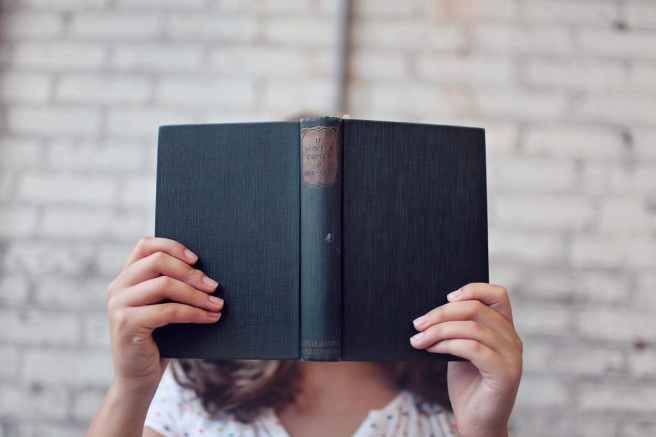
blur book girl hands
Photo by Leah Kelley on Pexels.com

In his book On Writing, (which I highly recommend), author Stephen King suggests that if you want to be a better writer, all you have to do is read. Read a lot. And read a variety of stories.

Of course, that might mean exposing yourself to less than stellar writing. But that’s okay.  Even the less-than-stellar samples can show writers a thing or two about crafting stories – the right way.

Perhaps I should begin by defining what I mean by ‘bad writing.’ It isn’t just about a lack of proper grammar and punctuation, although that’s part of it. It has more to do with the development of the story. Think stilted dialogue, implausible plot lines and poorly drawn characters. It isn’t the writing that’s poorly done as much as the storytelling.

As British author Toby Litt writes in The Guardian, bad writing is boring writing. Bad writing are stories you can’t wait to finish because they are dreadfully boring, or one that you don’t finish at all. On the other hand, a well-crafted, well-written book is one that keeps your attention all the way through. It makes you want to turn the page, and the next page and the next page, and so on.

In my opinion, a good book may not be the highest quality writing. It may not even be a best-seller. But what it does well is keep the reader involved in the story and with the characters, especially the protagonist. If you have a hard time putting a book down, it means the author has successfully designed the story to satisfy your interest. You want to read more to find out what’s going to happen next.

After you’ve read enough stories of different genres, your brain begins to notice differences in the way authors develop their plots and characters, or the way dialogue and narration are presented. When you’ve read enough books, you recognize contrived plot lines and inconsistent behavior from characters. You can decide, as the reader, what is believable and what isn’t. By reading bad writing, you are, hopefully, aware enough of your own skill not to commit the same mistakes.

I recently finished reading a romance novel by an author whose work I had read before and enjoyed. I looked forward to a light, easy read. It was anything but. The plot was not believable, the female protagonist behaved in ways that was not consistent with her character, and the overall experience of reading the book was unpleasant. I felt disappointed and cheated.

You don’t want to do that to your readers.

I doubt I will read anything else by this particular author ever again, although I will pick up another romance novel. They can be fun reads on their own — when they’re written well.

Lesson learned from that reading experience: Make sure the plot is plausible and believable and your protagonist behaves in ways that are true to their personality.

Bad writing can appear in any genre, and sometimes in best-sellers. If in doubt about what ‘bad writing’ is, check out Goodreads’ list of ‘poorly written’ books. Among the Fifty Shades of Gray and Twilight collections is The Da Vinci Code. I once tried to read it many years ago and couldn’t get through it. The language was overly descriptive and heavy, moving the narrative along at a snail’s pace. I kept wanting the author to pick up the pace. Naturally, I never made it to the end.

Lesson from that reading experience: Don’t get so bogged down in details that the story slows to a crawl. Keep moving the story along and you will maintain your readers’ interest. Keep that in mind when you do your own writing.

On the upside, reading bad writing can put your own writing into perspective. You can say to yourself, “Hey, I can write better than this. If this trash is being published, maybe there’s hope for me yet in this business.”

The more you read, the more you can learn from the mistakes other writers have made. So even if you have to trudge through a few bad apples along the way, you can still gain from the experience and improve your writing at the same time.

Related Reading about ‘Bad Writing’:
https://bookriot.com/2013/06/27/the-case-for-reading-bad-books/

https://joshcraigwrites.wordpress.com/2012/08/16/about-reading-poorly-written-books/
For Some Writers, The Pen IS Mightier Than the Keyboard


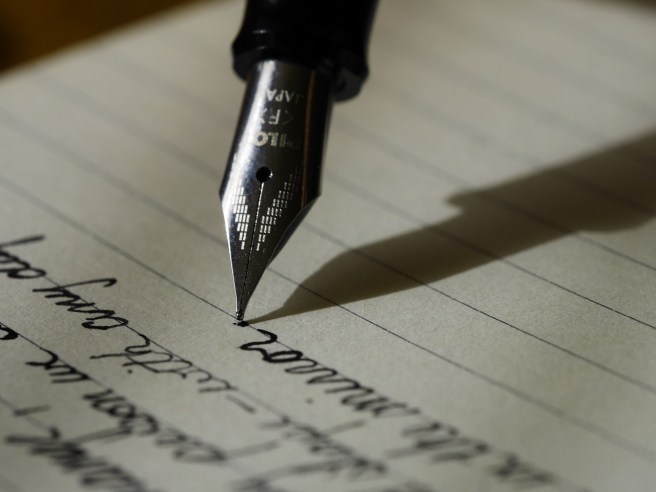
writing-1209121_1280
Why Longhand Writing May Be Beneficial for Your Writing

Stephen King does it. So does Kristen Hannah. So do Amy Tan, Joyce Carol Oates, Joshua Ferris and Andre Dubus III.

They are all writers who write their first drafts in longhand with pen and paper.

Whether you are writing a novel, short story, essay or even a business writing project, like a report or white paper, it may seem counterintuitive to write the first draft longhand rather than use a computer. Writing longhand is too time consuming, you might say. Who has the patience for that?

Lots of writers have weighed in on this topic. You can find links to some of their opinions at the bottom of this post.

Funny thing is, writers who previously wrote their stories on their laptop and experimented with writing longhand say they are sold. There is something about that physical process that helped them be more productive and access their imagination more readily. Some writers claim that there’s a stronger hand-to-heart connection that helps them access deeply held emotions which comes across in their writing.

The process of writing longhand can be liberating. By writing my stories longhand, I’m able to focus on the story development process. Writing longhand seems to open up a pathway to the brain where the core of creativity lies. Amazing things have happened as I write. Characters began showing up that hadn’t been part of the story before, and scenes went off into different unanticipated directions. That’s the fun part of writing.

Writing longhand provides physical proof of your progress. Every notebook or legal pad you write on shows the results of your daily efforts. Seeing your work in black and white can make you feel good about your progress and you’ll want to keep writing. It’s a great motivator to your writing practice. If consistency (or lack thereof) has been a problem for you, try writing longhand and see how it affects your writing practice.

When choosing between the mighty pen and laptop, also think about your typing skills. How fast do you type? If you aren’t fast or accurate, writing longhand might also be a better option for you. Writing might seem slower than typing, but ideas may begin to flow at a rate you can keep up with.

When I first tried writing stories on the computer, I didn’t get very far. I was too busy editing as I was writing. Or I would go back to correct misspelled words. The process you think would be faster and easier was actually slower because I was trying to do both writing and editing at the same time, which means I was using both sides of the brain.

Multi-tasking might be fine, but not when your brain is engaged. Now I use a pen and notebook for writing while I reserve the laptop for typing my stories from the page and editing them. Yes, that might seem like an extra step. But maybe it isn’t. I am editing as I’m transferring my words during that process so it now becomes my second draft. I feel I have gotten more done because I am focused on one activity at a time and I’m not overloading my brain.

Another problem with doing your writing on the computer is the temptation to check details via the Internet, which is obviously more accessible. If you stop writing to check a piece of information, chances are you won’t get back to your writing for another three hours because you got lost in the World Wide Web. You won’t have that temptation if you write longhand.

Here are a few other ways writing longhand can improve your writing:

* Writing longhand may help undo writer’s block. The next time you feel blocked, try writing longhand. Experts say the process of writing has a cognitive benefit. It is directly connected to the part of the brain that governs creativity. By writing longhand, you are actually getting in touch with your creativity.

* It forces you to focus on one activity at a time – writing — which is actually more productive than trying to write and edit at the same time, which uses both sides of the brain. That kind of multi-tasking might actually be counterproductive.

* Brain dumping is easier when writing longhand. Let’s face it. The first draft is always a mess. So what if you write it by hand? You give yourself permission to write crappy copy from the start. With a pen it’s easier to cross out, add, write in the margins, or make notes about what to look up later. Yes, it will look messy, but that’s your brain at work.

* Pen and paper are more portable and lightweight. These writing tools travel easily anywhere you go, whether it’s your front porch, your bedroom, the local coffee shop or the library. You don’t have to worry about missing cords or recharging batteries. It’s just your pen, paper and your ideas. That’s what I call traveling light.

* Pen and paper isn’t hard on your eyesight the way a computer screen is. Sitting in front of computer screen for hours each day is hard on your eyesight. Is it a wonder so many of us wear eyeglasses? And the rays from the screen can affect our ability to sleep at night. Paper and pen don’t have the same impact.

Before you dismiss the idea of writing your stories longhand, give it a try. See how it affects your writing.  Are you more productive? Are you more focused on your story and less distracted by the Internet of things? The computer has its place in the writing process. But when it comes to launching your first draft, pen and paper may be the best way to get you to “The End.”

ALA Banned Books Week 2018 Calls for Reader Activism to End Censorship

blur book girl hands
Photo by Leah Kelley on Pexels.com

Anyone who loves books and loves reading will appreciate the advocacy effort being led by the American Library Association’s Office for Intellectual Freedom this week.

Banned Books Week (Sept 23-29) is an initiative that began in 1982 that brings together entire book communities – librarians, journalists, editors, teachers, writers and publishers, and of course, readers – to show support or the freedom to seek and express ideas.

This year, Banned Books Week focuses on author and reader activism. Readers are encouraged to get involved in one or several programs to fight censorship, particularly of the books that are frequently targeted with removal or restricted access in libraries and schools. Banned Books Week draws national attention to the harms of censorship and the benefits of unrestricted reading.

Here are a few ways you can get involved:

Dear Banned Author Campaign
This letter-writing campaign encourages readers to write to, tweet or email authors whose works have been banned or challenged and share with them how their stories have affected them. Dear Banned Author attempts to raise awareness of books that are threatened with censorship and generates discussions about the essential access to library materials. Readers are invited to share their stories online and join the conversation using the hashtags #DearBannedAuthor and #BannedBooksWeek.

Virtual Banned Read-Out
Since the inception of Banned Books Week in 1982, libraries and bookstores across the country have hosted local read-outs – continuous readings of banned and challenged books. Banned authors have also participated, including Judy Blume among others.

Readers can participate by posting a video of themselves on YouTube reading from a banned book or talking about censorship. To submit a read-out video on YouTube, visit the ALA website. If you’re a bit camera shy, choose one of the books from the banned lists and read it this week on your own – without cameras. Some previously banned and challenged books include The Color Purple by Alice Walker, Catcher in the Rye by J.D. Salinger and more recently George by Alex Gino and The Kite Runner by Khaled Hosseini. The ALA has lists of banned and challenged books on their website, http://www.ala.org/advocacy/bbooks.

There are other ways to show your support. Check out ALA’s Banned Books Week website to learn more.

As readers, writers and communicators, this is an issue we all need to get behind.