

Writers come from all walks of life. Many have had previous careers, such as lawyers, doctors and journalists. No matter our background, we have one thing in common: a desire to tell stories. However, the journey to get published isn’t the same. In fact, it’s a struggle for most. That shouldn’t stop us from trying however.
I came from a professional background in association publishing. I knew how to string together complete sentences to present clear ideas. But how that would translate into a fiction writing career remained to be seen.
For me, writing an 85,000-word novel was a huge challenge. But did I have the patience and determination to see it through? That was the question. One I was itching to find out.
I started on this writing journey for several reasons.
* To determine the next chapter in my career. I was at a crossroads and wasn’t sure what was next for me. I had just left a full-time job after eight years and I wanted to take time out to consider other options. One thing I knew for sure was that writing was the core of my being, and it would play a significant role in my career in some shape or form.
* To fulfill a fantasy. I had toyed with the idea of writing a novel earlier in my life, but did nothing with it, likely because I didn’t know what I was doing. I knew nothing about story structure or scene development back then, nor were there the amazing number of sources available to help a newbie like me to learn the ropes.
* To meet my accountant’s challenge. While getting my taxes done about 10 years ago, I updated my accountant on my job search woes. I confided that I wasn’t sure what to do next in my career. Her response? “I think you should write a book.” The challenge was on. My dear accountant has since retired, but I still hear her words of encouragement in my head.
* To sow the creative seeds that were sprouting in my brain. I don’t know if it was all the free time I had after I left my job or the writing classes I took, but my creative muse started working in earnest, spitting out story ideas like a factory. I had no choice but to work with them. I started to see story ideas everywhere, and there were too many to ignore. I saw them as a sign to take my dabbling to the next level.
Even though I wanted to take my writing to the next level and explore different genres, I knew there was plenty of work I needed to do. How did I move from corporate writer to aspiring novelist?
* I signed up for writing workshops and classes. It was at a local writing studio that I was able to unleash my creative writing juices. Being around other writers and getting their feedback helped me to hone my craft.
* I subscribed to Writer’s Digest. Each issue is chock full of articles about the writing process, author interviews, agent profiles, news about the publishing industry, and tips for new writers. It also explores different genres, and gives a clear-eyed view of the writing life. There are other similar publications, like The Writer, Poets & Writers, Publishers Weekly (about the publishing industry) and Script Magazine (about script writing).
* I ramped up my novel reading. Since I had more time on my hands, I dove into my favorite hobby in earnest. I had forgotten how much I enjoyed reading. The more I learned about the writing process, the more I started paying attention to how the stories played out in the books I read. Reading was part of the self-education process.
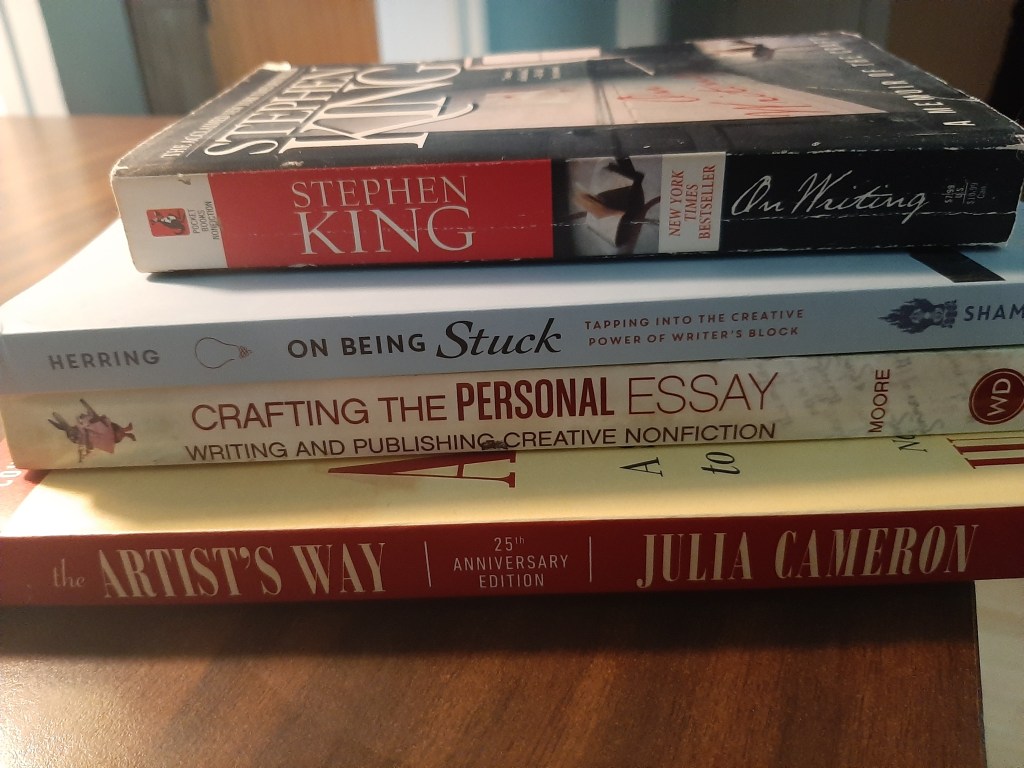
* I started reading books about writing. The two best I’ve come across are by Stephen King (On Writing) and Anne Lamott (Bird by Bird). Though there were two very different approaches to writing, both provided the inspiration and motivation to support my writing goals.
* I started following authors, editors and publishing pros via newsletters and social media. I especially enjoy the insights shared by Jane Friedman, a former editor of Writer’s Digest, and book coach Janice Hardy. There are plenty of blogs and writing communities online covering the publishing business too.
* I joined a writer’s group. Though our group is small, only three people, we meet monthly to share best practices and motivate each other. The group is more about accountability and socializing than anything else. Still, it’s fun to talk shop with people who share my interests.
Though I started this journey in 2014, I’m still learning and growing. The more I have learned about writing fiction, the more I realize I need to learn and the more it feeds my determination to succeed. I hope one day to become published, and while I have accomplished a lot, that first completed novel to show editors and agents remains elusive.
For my readers and fellow writers who are in the midst of their own transitions or are considering one, here are a few tips based on my experience:
* Learn about creative writing and story structure as much as you can. No matter how much you think you know, there will always be something new to learn.
* Read as much as you can in your preferred genre. Notice how those authors crafted their stories and learn from their writing styles. It also helps you see what people are reading in that genre.
* Be patient with yourself. Learning about the writing process takes time and you will certainly make missteps along the way. Don’t beat yourself up when that happens. Instead, take a deep breath and start over. But don’t give up.
* Ask for help and support when you need it. Find a support group, not necessarily a writer’s group, but one or two people who will listen to your writing woes and be your biggest cheerleaders.
* Be consistent with your writing practice. That way you won’t lose momentum. Take breaks when you need it or when you feel stuck. Most importantly, have fun.
For more about this topic, check out these articles:
Navigating the Road from Journalist to Novelist
From Astrophysicist to Author: Tips for Making the Transition to Career Author
15 Tips for Starting Your Writing Career Later in Life
I’ll leave you with this wonderful tidbit of wisdom from science fiction author Mark Alpert: “Don’t worry about how long it takes to reach your dream. The long road just gives you more life experiences to enrich your fiction.”

 The Regal Writer