
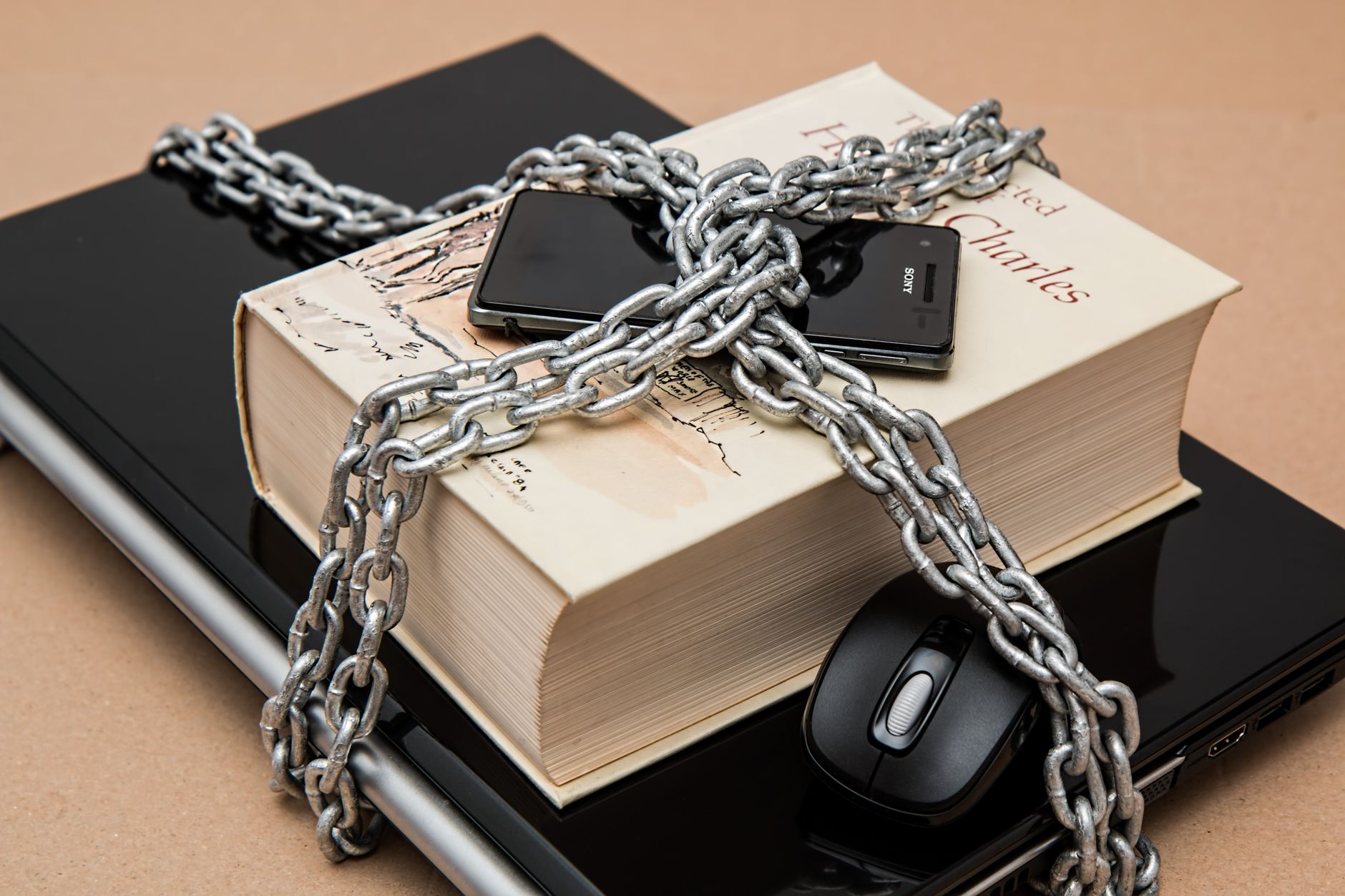
This week is Banned Books Week, an initiative devoted to creating greater awareness about censorship and book banning initiatives and to remind the reading public to fight for the freedom to read.
As an avid reader and aspiring novelist, this issue is personal. I hate the thought that someone I don’t know can dictate what is not available for me to read. No author wants their books banned or restricted from access.
“It’s not a badge of honor to have books banned,” says author Jodi Picoult in an interview with the BBC. Picoult has had several of her books banned, most notably Nineteen Minutes, a story about a school shooting. Although it’s not the content of that story that was behind the ban, she says. It was a single word that appeared on one single page in the book. You can read more about her experience here.
Stephen Chbosky, who wrote The Perks of Being a Wallflower, which frequently lands on the banned books list, describes it this way: “Banning books gives us silence when we need speech. It closes our ears when we need to listen. It makes us blind when we need sight.”
Books are banned for several reasons:
- Representation of LGBTQ+
- Racial diversity
- Religious views
- Violence
- Sexual content
The American Library Association’s Office of Intellectual Freedom (OIF) publishes data about book censorship efforts in the U.S. In 2025, OIF documented the second highest level of book censorship attempts. It also noted that most attempts are “organized efforts to systematically suppress voices and ideas.”
Here are a few other things they’ve documented:
* There were 4,235 unique titles that were challenged in 2025, of which 39% were titles that represented LGBTQ+ and people of color.
* 92% of censorship campaigns were initiated by pressure groups and the decision makers and board administrators that were swayed by their efforts. That’s a 20% increase over 2024.
* Less than 3% of censorship attempts were initiated by parents or individuals.
* OIF tracked 713 censorship incidents targeting library materials and services in 2025. Roughly 68% were books and graphic novels.
* Most book challenges occurred at public libraries (51%) followed by school libraries (37%) and school curricula (8%).
* During the 2024-2025 school year, PEN America, which advocates against book bans, documented bans in 87 public school districts and 23 states.
* Florida, Texas and Tennessee led all states with instances of book challenges. Florida had 2,304 instances in 33 districts; Texas had 1,781 instances in 7 districts, and Tennessee had
1,622 cases in 8 districts.
However, a more recent report by PEN America cites an increase of book bans in Texas from under 2,000 last year to 8,193 in 2026. I suspect much of that increase is due to the use of AI in generating a list of terms to search for.
Why should we be concerned? Because attempts at censorship and book bans have been increasing at an alarming rate over the past five years. While 4,235 unique titles had been challenged by pressure groups in 2025, the annual average of challenges was only 273 between 2001 and 2020. The number of challenges has grown exponentially since then.
So what can you do to stem the tide? Here are a few suggestions from OIF and PEN America:
* Read a banned book or add it to your TBR list. I recently read Looking for Alaska by John Green (which I recommend) and a couple others are on my TBR shelf, including Picoult’s Nineteen Minutes and Chbosky’s The Perks of Being a Wallflower.
* Share a banned book with a friend or fellow reader, or contribute it to a local Little Free Library so neighbors have access to it.
* Join organizations whose mission is to fight censorship and book bans, such as Unite Against Book Bans, Freedom to Read Foundation and PEN America.
* Support authors whose works have been banned. Attend their author readings, or buy or borrow their books. Even better, follow them on social media or send them a thank you note to support their work.
* Vote in local school board elections. Attend school board meetings and town halls, and ask candidates if they will defend the freedom to read.
* Report a book ban to either PEN America or ALA OIF. They track these challenges and can advise on what to do next.
* Share your story on social media about how a banned book changed your perspective.
You’ll find plenty more suggestions on PEN America’s website. I also recommend watching the film “The Librarians” if it comes to your town or if you find it on the PBS website. It recounts the efforts of several librarians to fight censorship campaigns in their communities.
Book bans and challenges affect all of us. Whether you write a thank you note to your local librarian, read a banned book, or get involved with your school board, there’s something we can all do to protect the freedom to read.

