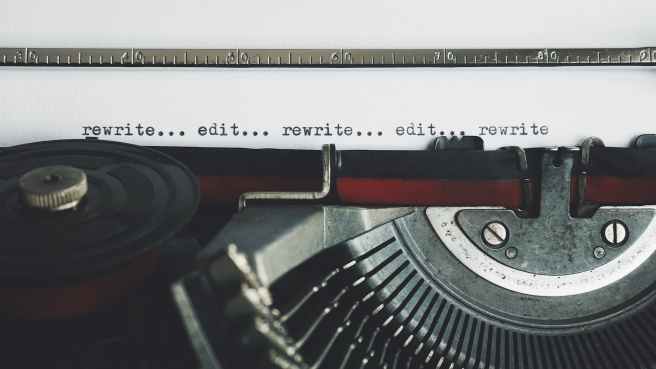

Writing Advice from Agents and Published Authors

Photo by Suzy Hazelwood on Pexels.com

It’s the dog days of summer, and I’ve gotten a bit lazy. The last thing I want to do this week is research and write a new and lengthy blog post.

Still, there is so much valuable insights and advice to share about the writing process. So this week, I’ve compiled some of the best tips from literary agents and published authors as they shared with the editors of Writers Digest magazine. After all, we can all use a little bit of help, no matter where we are in the writing process.

Enjoy! And have a safe holiday weekend.

Advice from published authors:

“….. write the thing that you feel urgently compelled to write. Write the thing that you feel drawn to write, and write it in a way that only you can do it and trust your instincts.
Brandon Taylor, author, The Late Americans

“There’s no need to plan everything out beforehand. Part of the fun is setting up high stakes without knowing the outcome. This way you’ll be right there with your protagonist, struggling to come up with solutions, even as the walls close in deliciously around you.”
Julia Bartz, novelist, The Writing Retreat

“But self-doubt is incredibly valuable. If you didn’t ever doubt yourself, you’d be a psychopath. Sometimes doubt is what helps me as a writer say, ‘This isn’t working right.’”
Chuck Wendig, author, Gentle Writing Advice: How to Be a Writer Without Destroying Yourself

“One thing I value about writing and publishing is that it’s not as ageist as some other industries. It’s hard to become a movie star maybe at 50…. It [publishing] is something you can break through at any time. There is room for reinvention, whether that means emotional reinvention, new opportunity, or just room for growth.”
Steven Rowley, author, The Guncle Abroad

“…find as many writer friends as you can because these are the people who will completely, 100 percent understand how difficult it is to break into publishing…Reach out and find your community.”
Jesse Q Sutano, author, Dial A for Aunties

“Understand that your book is a product that needs to garner broad support… Make sure you have a core group of diverse test readers who will give you honest feedback. It doesn’t mean they’re always right, but if half of our test readers think the beginning of your book is slow, you probably need to revise it.”
Pamela Samuels Young, author, Anybody’s Daughter

“…when people ask me my advice about these things, I say, write a novella, write a short story. Be wild and free and be able to accept failure by your own terms before you commit to spending three or four or five years on something that might fail.”
Ian McEwan, author, Atonement

“You need to give yourself permission to be bad when you are drafting… This is where you need to embrace the suck. Let yourself be bad. It’s okay. Everybody’s first drafts are bad. My first drafts are terrible, but once you have a bad first draft down, you can fix it. You can edit it, you can polish it up….”
Kate Quinn, author, The Diamond Eye

“There are so many things you can worry about when you’re writing that are all irrelevant… The important thing is a book that you write is your book and it’s you, and you put yourself into it and don’t listen to any of the interference from anywhere else in the world.”
Lisa Jewell, author, The Night She Disappeared

“I’m a big believer in being in a workshop or class, working with other writers, which is not to say to just take anybody’s advice. When you’re in a classroom or a seminar, it makes you write because you know you’re going to go there Thursday. It kind of forces you to do the work.”
Alice Hoffman, author, Practical Magic

“But the thing I always say to writers is that you never should forget the lame that made you want to write this. It is better to have a strangely proportioned beast that burns and is alive and stalks across the page than a perfection proportioned corpse on the page. That is what you run into the danger of. It’s possible from too much feedback [and] too much confusion that you wind up taking out whatever is at the heart of your work.”
Jean Kwok, author, Girl in Translation

“Find a way to make your writing process a discipline in the way that musicians practice their instrument.”
Tommy Orange, author, There There

“Characters live in the moments of quiet we often rush to yell over, so take some time to let them be heard.”
Mazey Eddings, author, A Brush with Love

“If you want to make a living as a writer, approach it like a business from the start. You wouldn’t open a corner store without a business plan—don’t just wing it for your author business!”
Jessie Kwak, author, Ghost Pirate Gambit

“The biggest thing is to read a lot so you can innately understand story structure. This even comes from watching movies and TV, and thinking about why it was great and what points did it hit and what aspects of it resonated with you….”
Alyssa Cole, author, One of Us Knows

Advice from literary agents:

“Share your work with multiple readers. Consider their feedback, especially their questions. Heed only the advice that resonates. Save a few readers for subsequent drafts so they can have fresh eyes to catch anything you or your regular readers might miss.”
Jennifer March Soloway, Andrea Brown Literary Agency

“As an agent, I want to fall under your spell. I want to read past my bedtime, be haunted by your work, be captivated, lifted, [and] spirited away by your story. If your work can deliver this magic, it makes me envision all of the opportunities we can conjure together to make the ultimate connection to the readers.”
Rachel Letofsky, CookeMcDermid Agnecy

“Remember you are interviewing the agent as much as (if not more than) they ae interviewing you. Bring a list of questions and don’t be afraid to ask tough ones.”
Kesia Lupo, The Bindery Agency.

“A rejection does not mean that your writing sucks. It simply means it’s not a good fit for that particular agent. You need to find your match, someone who clicks with your book in a unique way that’s not unlike dating.”
Rachel Beck, Liza Dawson Associates

“Know what kind of writer you are: a sprinter or a marathoner, and let yourself be that kind of writer. Don’t be afraid you’ll forget your great idea. If it’s a great idea, it’ll stick to your ribs no matter how much you try to shake it off.”
Liz Parker, Verve Talent and Literary

“The key to success is being delusional enough to think that what you write is necessary, but humble enough to listen to informed feedback.”
Michael W. Bourret, Dystel, Goderich & Bourret, LLC

“Remember that ideas are cheap! You are more than one project, and there is inspiration everywhere if you look for it.”
Molly Ketcheson, Wolfson Literary Agency

“Being able to say what your novel is about in one or two sentences really helps. It’s not a question about what ‘happens’ in a novel, but it’s a question about what the heart of the novel is.”
Catherine Cho, Paper Literary

“Writing should be fun. If you’re getting to a place where it’s not anymore, take a break and let yourself fall in love with your writing again.”
Saffron Dodd, Ash Literary

Tips for Designing a Compelling Book Cover for Your Novel

Photo by Dids on Pexels.com

Have you ever bought a book solely because you were drawn to its cover? Or are you planning to self-publish and are struggling to find the right balance of imagery and text?

Let’s face it. Some book covers are more interesting than others. But just because it looks good doesn’t mean it will do what it’s supposed to do, which is to sell books.

When produced well, the cover design should not only grab readers’ attention, it should communicate several things to readers, such as:

* show an intriguing focal point
* provide a subtle preview of the plot
* introduce the protagonist
* establish the book’s genre and tone

I’ll tackle each one of these in detail.

An intriguing focal point
When you first look at a book cover, where does your eye automatically go? It might to an image, like the drawing on the cover of Lessons in Chemistry. If the author is well-known, their name might appear larger than the book title. In many cases, it might be the book title itself that in larger print to draw your attention. This may be especially true for newer writers who haven’t earned the name cache of a Stephen King or a Nora Roberts. Comb your shelves for examples. Notice the ones that stand out and which ones don’t. Then experiment by replicating a focal point suitable for your work in progress.

A subtle preview of the plot
The combination of imagery and title should hint at the plot. For example, the cover of The Messy Lives of Book People by Phaedra Patrick features a background image of a closed door surrounded by shelves of books, hinting at the story of a house cleaner tasked with finishing her employer’s last novel behind closed doors. Think about the key point of your story, then select images that present the clearest representation of that point.

An introduction to the protagonist
In addition to hinting at the plot, the cover design should also hint at the protagonist in some way. The image could reflect the person’s face, such as the ghostly image of Coralie Sardie whose story is at the heart of The Museum of Extraordinary Things by Alice Hoffman. It could also hint at their occupation or where they live. In The Hundred-Foot Journey by Richard C. Morais, for example, the image of someone slicing the skin off a piece of fruit with the silhouette of the Eiffel Tower behind it hints at a young man’s journey as a chef in Paris. As with the plot, think of your protagonist’s character and their journey, then choose an image that reflects their story.

The book’s genre and tone

Make sure the cover design is suitable for the book’s genre and establish the right tone. You want readers to recognize the type of story it is at first glance. For a light-hearted rom-com, for example, you might use lighter colors or pastels for the background with some humorous or playful image. On the other hand, mysteries and thrillers are likely to have darker backgrounds with equally darker images, like dripping blood or a bottle of poison.

More tips for book cover designs

1. Keep it simple, almost minimalistic. Covers that are overly complicated and cluttered have difficulty reaching readers. Give the cover some space to allow any images and text to breathe. “Using space wisely draws attention to the elements that you want potential readers to focus on, writes Jessica Bell at Jane Friedman.com.

2. Be unique and distinctive. You don’t want your book to look like every other one on display. Referring to Lessons in Chemistry again, the cover is simple with a single image and bright orange-salmon color that captures the eye. The color stands out because you rarely see it on book covers. If the cover’s goal is to sell the book, think of ways to make the cover stand out while still staying true to the story.

3. Create strong composition. The experts at Self-Publishing School suggests following the rule of thirds. Imagine breaking up the cover into three sections, allowing enough space for the book title, author name and image. Again, check your book shelf for examples. Add patterns and texture in subtle ways so they don’t distract readers.

4. Don’t overlook the back cover or spine. According to the design experts at Ingram Spark, the back cover usually includes a brief book summary, book reviews, an author bio, the ISBN number and bar code. Make sure the book title is clearly marked on the spine so readers can see it when standing upright on a shelf.

Whether you design the cover yourself or work with a professional designer, it’s helpful to keep these tips in mind. When conceived and designed well, your book cover can go far to market your book.

My Pet Peeves about Books

Photo by Leah Kelley on Pexels.com

For all the joy I get out of reading, I also have a few pet peeves. I’m not alone. Recently, a contributor at Book Riot published a list of annoyances about books and the book world, gleaned from their readers’ comments. Complaints ranged from poorly designed book covers to the competitiveness of reading challenges and the lack of a synopsis on the back cover. Most of these comments are related to book marketing, not the books themselves.

Inspired by Book Riot’s list, I’ve compiled my own list of petty annoyances. But while the Book Riot list focuses on the marketing of books, my list relates more to the story telling.  

Do you agree or disagree with this list? Or do you have other pet peeves about books and/or the book publishing process?

  • Unnecessary prologues – More often than not, prologues aren’t necessary because, in my opinion, they offer few insights into the backstory. The only exceptions might be a mystery or thriller that sets up the murder or science fiction/fantasy to establish world-building that requires some explanation. If the prologue could be read as a first chapter or if the information could be weaved into the main story, you probably don’t need the prologue. I rarely, if ever, have read a prologue that added anything to the story.

  • No summary on the back cover. I’m inclined to agree with the Book Riot reader who suggested the back cover was often wasted on meaningless quotes from celebrities. That’s prime real estate for book summaries. It makes the summary more accessible and easier to read, and much easier to grab a reader’s attention.  

  • Books that don’t live up to its premise. There’s nothing more frustrating that finding a book with an interesting hook that I can’t wait to read, only to find by the end of the story, that it didn’t live up to its hook. Perhaps the story meandered, ran off in tangents. Or the ending didn’t quite make sense. When a book doesn’t live up to its promise, I feel cheated. And when I feel cheated, I’m less likely to pick up another book by that author.

  • Novels that are too long. I think the sweet spot for most novels is 300-350 pages. That’s long enough to develop a strong plot, characters, and suspense to keep readers interested. There are exceptions, of course, such as Harry Potter series and science fiction/fantasy sagas. Others, especially in women’s fiction, have gone for nearly 500 pages—too long by my standard. By page 350 I tend to lose interest. You don’t want to do that to your readers. This leads to my next annoyance….

  • Slow, meandering middles. Ugh! The book might have gotten off to a roaring good start, but by the middle, the story drags or heads off in a different direction. You can tell when an author has struggled to write the middle of the book. Either there’s too much backstory or not enough of a surprise plot twist to push the story forward.

  • Unsatisfactory endings. There’s nothing more frustrating than reading a 400-page novel only to reach an ending that doesn’t make sense or make you feel good. As a reader, when you finish the final chapter, ask yourself, “How did this conclusion make me feel?” Two books that DID resolve the story satisfactorily and made me feel good: The Nightingale by Kristen Hannah and The Messy Lives of Book People by Phaedra Patrick.

  • No surprising plot twists. Some of the best novels I’ve read had a major plot twist that was unexpected and surprising. Without that surprise element, there’s no momentum forward, and there’s nothing to keep the reader interested in the story until the very end. If you want to see successful surprising plot twists, check out Leaving Time by Jodi Picoult or In Five Years by Rebecca Serle (and the aforementioned The Nightingale.)

Even with these petty annoyances, books are still the most wonderful creations on earth. I’m willing to put up with a few clunkers in my reading list to find the best gems.

 Is Your Story Idea Worth Publishing?

Photo by Pixabay on Pexels.com

Ever have an idea for a story that you thought for sure would become the next Great American Novel only to flame out when you couldn’t write past the third chapter? The truth is, not every story idea that crosses your mind is worth writing about. So how do you know which ones are viable as a novel or short story while others are better left as a stand-alone scene, or worse, dumped in the trash?

In a recent Reedsy webinar, author S. J. Watson spoke about the idea generation process and how writers can determine which ideas are worth developing. .

Watson said the idea generation process can be divided into four segments:
* Finding story ideas and recognizing them when they show up organically
* How to retain those story ideas
* How to determine if an idea has the potential to become a novel
* How to keep the original idea from going off the rails, and what to do if it does.

An idea is “a sense that something is possible,” he said, and they can come from anywhere around you. But he cautions writers to keep them close to the vest.

“Ideas are like hose pipes,” Watson said. “If you overshare an idea too soon with your family and friends, it might poke holes in it.” Once the holes are poked through, the story tends to lose its novelty and impact.

To generate meaningful and relevant story ideas, there are several things writers can do to prime the pump.

  1. Show up at your desk every day, even when you don’t feel like it. Ideas don’t show up automatically. You still have to put in the time and effort before ideas begin to flow.
  2. Observe your surroundings. Look out the window or take a walk. Notice something on the street that you don’t normally see, such as a mobility scooter or a three-legged dog. Then brainstorm different scenarios about what you see. You may surprise yourself by coming up with a viable story idea.
     
  3. Write when you’re half-asleep. The brain isn’t quite awake then and it can amplify the connection between seemingly different ideas. In this half-sleep mode, you’re less likely to censor yourself.

To retain your ideas, keep a notebook. Either carry one in your pocket or purse or use the Notes app on your phone. Any time you notice something in your environment, overhear a conversation, or get sudden inspiration, jot them down. Watson admits he rarely looks at his notes, but the act of writing ideas down helps him to retain those ideas for easy reference later.

Connecting the Dots

Which ideas are worth turning into a full-fledged novel? Watson said ideas begin with the sense that something big could happen, such as winning the lottery or getting into a car accident. They open doors to broader concepts, and they invite random scenes and characters to show up. You may have two seemingly unrelated scene concepts, yet there may be a thread that connects them within a single story.

Also ask yourself several questions about the story’s viability:

  1. Does the story idea stay with you, and do you feel a desperation to work on it? Some ideas come and grab you by the throat, demanding your attention.
  2. Can you visualize the protagonist or antagonist?
  3. Do you see the conflict? Do you know the characters’ goals?
  4. Most important, can the problem in the story be made to feel relatable, such as learning that a family member is terminally ill?

Another possible approach is to take other people’s ideas and remix the elements to make them your own, Watson says. Whatever approach you take, make sure you don’t second guess yourself.

Drifting Story Lines
If the story drifts from the original concept that you envisioned, you may need to make adjustments. If, at the 20,000 word mark, the story seems to be heading in a different direction than what you intended, take a step back and review the work you’ve done so far. If the changes in the story scare you or excite you, then keep going. You may be on the right track even if you don’t have a clear idea where the story is headed.

However, if the new direction of the story isn’t exciting, it may be a sign that the story is too safe. Watson suggests backtracking to the original spine of the story and starting over from there to regain the excitement. “Occasional drifting is okay, especially if it takes you to scary or exciting places,” Watson says. “If you drift too far away from the original intent of the story, it may need to be scrapped. Occasionally returning to the story spine can help you make sure you’re in the right place.”

Story ideas come in all shapes and sizes. Knowing which ones are viable as potential novels, and which ones aren’t can save you a lot of time and needless effort.

You can view the Reedsy webinar here.

Tips for Developing Suspense in Your Novel

Photo by Anete Lusina on Pexels.com

When you read a book, what is the one element that keeps you turning the page? Most likely, it is suspense.

Everyone has their own definition of suspense. Some dictionaries describe it as a state of excitement, anxiety or mental uncertainty. For works of fiction, book coach Samantha Skal defines suspense as “the question asked.”

It’s an odd definition, to be sure. But think about the myriad of questions you ask yourself, however subtly or subconsciously, as you read a story.

* Will the hero stop the bomb in time or will it explode?
* Will the couple get together at the end, or won’t they?
* Will she keep her baby or give it up for adoption?
* What will they do next?

“Suspense is the engine that keeps the story going,” says Skal who spoke at a recent Pro Writing Aid Romance Week event. “It increases reader engagement, reader satisfaction and improves pacing of the story.”

There are different types of suspense. There’s the big, scary kind where the serial killer terrorizes the town. Romantic suspense teases readers with the promise of two people getting together. There’s emotional tension, too, when the main character is battling internal demons, such as guilt or resentment. Finally there’s goal tension when readers wonder whether the character will finally earn that promotion or new job.

The simplest way to achieve suspense is to put obstacles in the way of the characters. Whether you’re writing a thriller, science fiction or a romance, several techniques can be used to add suspense to your story.

  1. Reveal inner thoughts and reactions of the main character. This is especially true if you’re writing in first person or third person close. By revealing the main character’s thoughts and perspective. In this way, readers are able to see the action in the same way and at the same time as the main character. So when the character feels tension makes an assumption about another character or misinterprets what they see or hear, readers witness that experience too. That moment when the character experiences a crisis creates tension that the readers feel.   

  2. Use hanging questions. Ending chapters with a hanging question often leaves audiences wondering what will happen next. For example, the character may ask themselves how they got themselves into such a mess, which may make readers wonder how they will get out of it. Hanging question keeps the action going, and keeps readers turning the page to find out what really does happen next. Make sure you answer the hanging questions right away, preferably in the next chapter. A word of caution though. If you have too many hanging questions in consecutive chapters, it can appear redundant. In other words, boring.

  3. Ramp up tension gradually. Skal suggests establishing tension as close to the action as possible. Then gradually ramp up the intensity with each chapter. At the halfway point of the story, something in the story changes, moving it in a new direction. At the resolution, wrap up all loose ends. But just to be sure you haven’t lost readers’ interest, add another twist or surprise revelation at the 95% mark.

  4. Emotionally manipulate your readers. Skal says it’s okay to do that since most readers expect certain things to happen at certain times in the story. In mysteries, for example, readers look for the mystery to be solved. In thrillers and suspense stories, they want to feel a low-grade fear the whole time, and they want to feel their heart racing.

  5. Be intentional about what you reveal – and when. Details about a character’s backstory, family history, and personality should be sprinkled throughout the story, when it makes sense to a particular scene. If you reveal everything at one time, it can be overwhelming for the readers. Also remember that if you mention a detail early in the story, it should have a purpose later on. For example, if your character notices a clock that has stopped early in the story, that detail should come into play later on.

Without suspense, your story won’t keep readers interested until the very end. By paying attention to these techniques, you can create stories that will keep readers turning the page.

Is a Fear of Being Published Preventing You from Writing?

Photo by Suzy Hazelwood on Pexels.com

Many writers are plagued by fear. Whether it’s a fear of not being good enough, a fear of criticism or a fear of success, some writers can be so haunted by fear that they can’t write a single word.

Add one more fear to that list: a fear of being published.

It’s ironic considering that most writers I know strive to get published. That is the ultimate goal of writing, isn’t it?

But I can see why some writers would be afraid to have their work published, and the reasons they give are similar to the list of fears I mentioned above.

* Fear of exposure. Your work might reveal some deep, dark family secrets, or more likely, show off aspects of yourself that you’ve keep hidden. Getting published means putting yourself out there, and that can be scary. What if someone somewhere sees you for who you really are?  

* Fear of criticism. Once you’re published, people will read what you wrote. That’s a good thing, right? The thing is, they may either love it — or hate it. Many writers focus on the negative reviews rather than the positive ones, even though there may only be one negative review compared to one hundred positive ones. It’s the thought of the naysayers that can scare you away.  Getting published means the you risk getting negative reviews.

* Fear of success. Because, after all, getting published is a sure sign that you are a successful writer. But along with publication comes responsibility. Once you publish one novel, readers expect you to publish more. What if you can’t come up with a suitable follow up?

* Fear of a new identity. Once you become published, you shift from being an aspiring writer to a published author. The new identity means you have to live up to new standards and expectations for your writing. It may mean a new lifestyle, complete with travel, public appearances and author readings – things you may not be prepared to deal with.

* Fear of being found out. What if you believe the published work isn’t good at all, no matter how many positive reviews you get? People might find out that you’re a fraud or a phony, and your novel was published through sheer luck, not talent. You might as well give up writing, or so you think.

For many writers, getting published is scarier than writing. Writing is safe because you can do that in the privacy of your home. You can work in isolation, and it’s just you and your story ideas. You can hide behind your laptop screen and play with words and stories all you want. You don’t have to risk anything.

But once you become published, all that changes. You have to take your writing more seriously than before. It’s no longer a hobby but a business. You have to treat your writing as a product.

Once you are published, you might have to view yourself differently. You are now a business person with creative talent and a product to offer readers. To continue that success, however, you have to keep writing and you have to keep putting your work out there for people to see.

No wonder writers are afraid of being published.

Thankfully, there are some things writers can do to assuage those fears.

1. Hire a good editor. A professional editor might cost money, but it’s money well spent if they can catch miscues, provide meaningful feedback and suggest improvements to your work. A good editor can help you create a product you can be proud to publish.

2. Join a writers’ group. If you aren’t part of a writers’ group, form one of your own. Getting support from other writers can help you through the rough patches of the writing process. When you finish that first draft or finally get published, they can help you celebrate your successes.

3. Take criticism in stride. This might be easier said than done since most writers tend to remember the negative feedback more than the positive. It doesn’t matter if those critical voices come from within or from outside yourself (such as readers and editors). There will be times when you should shut it out. The only exception is when working with an editor or agent who may offer suggestions for improving your work. Their feedback should be taken to heart. The rest can be dumped in the garbage along with your rough drafts.

4. Remember why you write. If you feel overburdened by criticism or fear the unknown as a newly minted published author, remember why you decided to write in the first place. It might help to put things in perspective.

Remember that not everyone will appreciate your writing. Just because one person bashed it doesn’t mean it wasn’t a well-written book. It simply means it wasn’t their cup of tea.

Focus on the people who do care about your success. Even if only one person comments that they enjoyed your work, hold onto that. Don’t let a fear of publishing hold you back from doing what you truly love: writing.

Why Writers Need an Editor

Photo by Jess Bailey Designs on Pexels.com

Many writers say getting a novel’s first draft down on the page is the easy part. It’s the rewriting and editing afterward that presents the biggest challenge, especially for beginning writers. Even after rewriting and editing it several, you may feel there’s something lacking in your manuscript. Most editors agree it’s at this point that writers may need to hire a professional editor.

Recently I attended a webinar called “Maybe It’s Not Your Plot” presented by author and book coach Susan DeFreitas. She says the problem with most manuscripts isn’t about what happens (the plot) but about WHY it happens, which is tied to character arc. She explains the role of character arc best on her blog.

DeFreitas outlines the six steps of a character arc, which I have shared below:

  • The protagonist has an internal issue to overcome, a mistaken belief about their world that will be challenged as the story unfolds.
  • Connected to this internal issue is the protagonist’s backstory, which explains how the misbelief originated.
  • There are conflicts and challenges that push the protagonist to view their misbelief in a different light.
  • The protagonist resists making necessary behavioral changes that fit the new belief. They want to go back to the way things were when the story began.
  • Change occurs incrementally to show how the protagonist fights against themselves.
  • The moment of truth occurs around the climax. The protagonist must face a hard truth, discover what’s been missing or didn’t understand.

Character arc is what drives the story and provides the emotional quotient that readers want to experience. But it’s also where most writers struggle with their story. This is when they tend to reach out to professional editors for advice on how to move forward.

According to DeFreitas, writers might need to hire an editor because:

  • The story is overwritten. There are too many words. A well-crafted novel should contain roughly 80,000 to 100,000 words. Romance novels require less than that while some science fiction or fantasy novels can run more than 100,000. Generally speaking, if your novel is too long, you’ll need to cut word count and scenes. Since you might be reluctant to do the cutting yourself, an editor can help you sort through the extra copy to determine what to keep and what to discard.

  • You have a million drafts. Perhaps after working a story multiple times, it still has not jelled the way you imagined. Or you have so many drafts that the story no longer resembles the one you started out writing.

  • You’ve gotten lost in world building. This is especially true for speculative fiction and sci-fi novels where alternate world is key to the story. You can get so caught up in the details of this other world that you lose sight of the plot and character development.

  • You have no clear idea how to end the story. You may have started off strong with your writing but by the middle of the story, you have no idea how to get to the end. I’ve found it helpful to write the ending before I begin writing the beginning so I know how the story will proceed. An editor can provide tips on how to visualize the ending of your story.

  • You can’t figure out how to revise your manuscript. This is especially true for pantsers who write their story organically with no initial planning. Once the scenes from inside your head are written, you may realize that the story heads off in different directions. You feel stuck on how to fix things. An editor can help you scale back your ideas and formulate a revision plan moving forward.

  • You received lukewarm response from beta readers. The good news is you’ve completed your manuscript. The not-so-good news is that your beta readers gave it a lukewarm reception. They politely offered feedback, which you gladly accepted. But you want more than that from them. You want them to feel enthusiastic for your work. A lukewarm response is a warning sign that something is off about your manuscript.

  • You’re not getting responses from publishers or agents. If you’ve reached this step, congratulations. You’re much further along than most aspiring novelists. Only problem is editors and agents aren’t responding to your novel at all. That should tell you that they either have not gotten around to reading it yet, or that it wasn’t worth their time to respond to you. You want to create excitement for your manuscript, and when a book editor or agent is excited about your novel, they’re more likely to get behind it.

 Editing your own manuscript is never easy. But working with a professional book editor can give you a better understanding of the revision process.

Self-publishing vs. traditional publishing (and everything in between)

At a recent meeting of my writer’s group, we were talking about how we planned to publish the books we were working on. The vote was split between self-publishing and traditional publishing.

When I researched options, however, I learned that there’s more than those two paths. Thankfully, the publishing industry provides numerous options for aspiring writers, nor do you have to aim for the Big Five to be successful. Many small presses can provide the same benefits as the larger ones, and hybrid publishers can give writers more control over the final product, though it comes at a price.

Which path you choose depends on a number of factors, such as the type of product you’re creating, how much time and money you want to invest in it, and what you hope to gain. As new technologies emerge that impact the publishing business, authors have more options to choose from than ever before. It helps to understand what they are, and to ask yourself several questions to clarify your goals.

There are three primary publishing options: traditional, self-publishing, and hybrid. Each is explained below. For an even more detailed overview of publishing options, Jane Friedman has published this fabulously informative chart that describes and compares each option more fully.

Traditional publishing. Traditional is as it sounds, the conventional path to publishing where an author signs a contract allowing a publisher to produce and deliver a book that the author has written. The defining characteristic is the signing of a contract. Authors have few expenses to worry about in this option, but they share in the profits. Many traditional firms offer an advance against royalties. Authors usually need an agent to get their foot in the door and should have a completed manuscript to submit.

The traditional path is dominated by the Big Five publishing firms: Penguin Random House, Hachette, HarperCollins, Simon & Schuster, and Macmillan. Each has dozens of imprints.

Then there are numerous small and medium sized firms that provide the same benefits to authors. These traditional firms have marketing teams that can help promote the finished product, although they may also request an author’s involvement in the marketing process, such as promoting on your social media and website, doing live readings at libraries and appearing at book signings.

However, there are some downsides. For example, this may not be the most profitable option for authors. Once the publisher and agent get their cut of the profits, there’s less available to the writer.

Self-publishing. With this option, authors publish their works on their own and at their own expense. It helps to have strong business acumen to understand both the creative and business aspects of publishing process. While self-publishing provides greater creative freedom to write what you want to write and publish, you absorb all the expenses. It may require more work and more time than you’re able to give it.

Authors oversee all aspects of development from editing and formatting to book cover design and distribution, which is great if you like to get your hands dirty and be involved in all aspects of production. Writers are also responsible for doing their own marketing to make sure the book gets noticed in the marketplace. If you’re not skilled at certain things, like book design or editing, be prepared to hire designers and editors to help develop the book the way you envision it. That means paying for those services too. It’s why self-publishing is not for everyone. That said, the profits are all yours because nothing is going to a publishing house.

Hybrid publishing. As the name implies, this option combines the benefits and flaws of both self-publishing and traditional publishing. Many of today’s authors opt for this approach because it gives them more creative freedom and control in the process. As Barbara Lynn Probst explains on Jane Friedman’s blog, hybrid publishing:

“resembles self-publishing because the author carries the cost and financial risk; thus it involves an investment of your own capital. It resembles traditional publishing because professionals, not you, carry out the tasks required to transform a Word document from your laptop into an object called a book that people can buy and read.”

As you can see, there are advantages and disadvantages to each option. When choosing the best option for you, it may be helpful to ask yourself a few questions.

  1. What type of product are you publishing? Is it a non-fiction book, a novel or an e-book? Smaller products like novellas or business e-books might be better suited for self-publishing while larger works might be better suited for the hybrid or traditional model.
  2. Do you have an agent? Most large publishing houses don’t accept manuscripts from unagented writers. If you’re a first-time author, you might be better off at a small press or hybrid.
  3. How much time are you willing to spend on the production and promotion processes? Some paths require significant time on your part while other paths require less. How involved do you want to be? If you have a full time job, you’ll likely want the path with less time involvement. Either way, be prepared to put in some time and effort to make your publishing dream come true.
  4. How much of a risk taker are you? How much risk are you willing to take on? Self-publishing requires more time, money and energy on your part, but the rewards are greater too.
  5. Are you a DIY-er? Do you like do-it-yourself projects? If so, self-publishing will allow you to get your hands dirty and get you involved in all aspects of the publishing process.
  6. How much control and creative freedom do you want? If control and creative freedom is important to you, then self-publishing is your best option. If you’re willing to give up some of those factors, the hybrid or traditional path will work best.
  7. How involved do you want to be? Some people like being involved in every phase of the publishing process, while others are only interested in writing. Knowing how involved you want to be will determine the best option for you.
  8. How much money are you willing to invest? Publishing costs money, and some of it may come from you. Depending on which path you choose and what size publishing house you work with, be prepared to invest some money on production and marketing. Most beginning authors don’t have a lot of money to invest. My advice is to set aside some cash to cover costs.

No matter which publishing path you choose, be sure to know your writing goals and be prepared to wear several hats.

Use Your Writing to Build Authority

Photo by Magda Ehlers on Pexels.com

Be sure to check out this week’s writing prompt: Write a story about a childhood memory related to food (learning to cook, family barbecue, tasting something for the first time, etc.)

When you’re just starting a writing career, you naturally want to be taken seriously by your readers. This is especially true if you’re writing non-fiction or starting a blog, or anything based on factual content as opposed to fiction writing.

It can be difficult to establish your authoritative voice in a sea of experts on the internet. How do you set yourself apart from them? How do you establish your own authority? How do you make your voice stand out from the rest?

This is especially important if you’re a beginning blogger. Many beginning bloggers are unsure what to write about, so they write about everything. Unfortunately, this gives the impression of being scattered, so scattered that it’s hard to know what their specialty is. Even publishing expert Jane Friedman has admitted that she did not have a niche when she began her blog. But that’s okay. Sometimes your niche or book concept can grow over time as you post consistently and readers respond to your posts.

So how do you establish your authority? How do you reveal your expertise? Here are some steps you can take to help build authority with your writing.

1. Take stock of your experience. What are you good at doing? What professional work have you done (bookkeeping, legal, marketing, etc.)? Do you have any hobbies or special interests you’d love to tell people about? Most important, what are you passionate about? Perhaps you’re an expert knitter, love animals or play golf? Make a list of all your hobbies, special interests, and work experience, then rank them according to how passionate you feel about them.

2. Focus on a single niche. Once you’ve done your self-assessment from step one, you’ll have a good idea what you’re an expert at – and what expertise you want to promote about yourself. If you’re figuring out an angle for your blog, this step is imperative. A blog focused on one topic shows more authority than a blog that covers multiple topics. A good example is The Art of Blogging (all about blogging).

3. Do your research. Even if you have particular experience about something, there will be times when you need to do some research to supplement your knowledge. Adding quotes from experts or sharing the latest research can put you in good stead with your readers. Adding one or two statistics can bring more meaning to your piece. For example, for the magazine features I write for my client, I usually include one or two statistics to demonstrate key points. When you use data from recognized experts in your industry, it adds to your authoritative presence.

4. Know your audience. Think about who you are writing for. What do they want to know? What types of questions do they ask? Use their questions as a guide for future blog posts or an e-book. By providing readers with answers to their questions, you establish yourself as someone they trust and will come back to for more information.

5. Surround yourself with outside experts. While you may focus on one niche, there may be times when you want to cover a topic that is related to your niche but goes beyond your expertise. Then you’ll want to refer to subject matter experts. Ask them questions to fill in the blanks of your own knowledge and experience. Know who you can go to when you don’t have all the answers. Be sure to provide proper attribution when you quote them. Sometimes being an authority means recognizing that there are some things you don’t know. To find an SME, check associations, booksellers, universities and think tanks for possible leads.  

6. Provide real value. Once you understand your audience’s needs, you can offer meaningful and helpful content for your readers. Avoid writing fluff content that only fills space. It might help to think of one takeaway you can include in each blog post you write. Or if writing a non-fiction book or e-book, think of takeaways for every section or chapter. What can readers learn from you that they can’t get from anyone else? Readers want information that is readily adaptable to their own needs. When you provide meaningful, practical information, readers will begin to see you as an authority.

7. Be consistent. If writing a blog, be consistent with your posting. Whether you post a story every day or once a week, make sure it’s posted around the same time or on the same day of the week. Readers who follow you will begin to look for your story at that time.

I once produced a bi-monthly residential newsletter for an apartment high-rise community. Every other month, the newsletter would be slipped under their doors. If by the first of the month, the newsletter didn’t appear, the management office would receive calls from residents asking where it was. They knew when to expect the newsletter because we were consistent with the schedule. When you’re consistent with your schedule, readers are more likely to trust you.

8. Limit attributions. It’s not necessary to attribute every piece of information in your blog post or work of non-fiction. After all, your stories reflect everything you’ve ever learned by the VIPs, teachers and parents in your life. However, attributions are necessary if you are using a direct quote or sharing a principle that someone else formalized. While you still need to give credit where credit is due, if you include too many attributions, people will wonder how much of the writing is coming from you. If it isn’t original, it isn’t authoritative.

9. Use a variety of media to share your expertise. Once you establish you’re authority, you may want to broaden your reach. If you love social media, use it to establish a following. Write e-books, guest posts for other blogs, magazine features or opinion pieces for local publications. Alternately, you can establish your own YouTube channel, produce a weekly podcast, or appear on local radio shows. If the media isn’t your thing, you can teach workshops or make presentations.

Keep in mind that building authority with your writing takes time. If you find you lose interest in your chosen topic, it’s okay to switch gears. But you’ll have to go through this process all over again, and perhaps find a new audience.

With consistent practice and patience, you can begin to garner a loyal following of readers who see you as a trusted authority on your chosen niche.