
Story Telling with a French Twist

(Image generated by AI).

Ever since I took French in high school, I’ve been in love with the French culture. During those four years under two different teachers, I learned about France through its music, art, literature and food. I learned to love the French Impressionists artists, like Renoir, Cezanne and Monet. We listened to classic ballads by Edith Piaf and Charles Aznavour.  As a class, we read The Little Prince (or should I say Le Petit Prince) by Antoine De Saint-Exupery. En francais, of course.

My high school experience culminated in a trip to Paris my senior year with my French teacher and classmates. We visited Montmarte, where a young artist drew my portrait. We toured Notre Dame and the Louvre, and we visited several chateaus outside Paris. And of course, there was always the Eiffel Tower and the Arc de Triomph in the background wherever we went. It was a memorable time.

That French influence is still with me several decades later. As an adult, I gravitate toward stories that take place in Paris or have a French theme. Kristin Hannah’s The Nightingale and The Little Paris Bookshop by Nina George are among my favorites. Some of the classics like Gustav Flaubert’s Madame Bovary and The Little Prince by Antoine de Saint-Exupery (this time in English) aren’t so bad either.

With the Summer Olympics well underway in Paris, it seems fitting to devote this week’s post to the novels that have been inspired by that beautiful city. My lists only scratch the surface, however. There are hundreds of novels set in France, which you can find on Goodreads or at your local bookstore or library.

Without further ado, here are my book lists featuring the City of Lights.

Contemporary novels that I’ve read and recommend to my fellow readers::
The Nightingale by Kristin Hannah
The Little Paris Bookshop by Nina George
The Little French Bistro by Nina George
The Hundred-Foot Journey by Richard C. Marais
The Alice Network by Kate Quinn
Sarah’s Key by Tatiana de Rosnay

I’m currently reading Suite Francaise by Irene Nemirovsky, a French Jew who was captured by the Nazis and sent to Auschwitz, where she later died. This novel was hidden and unknown for 64 years.

Contemporary novels set in France that are either currently on my shelf or on my wish list:
All the Light We Cannot See – Anthony Doerr
The Paris Apartment – Lucy Foley
The Paris Orphan – Natasha Lester
A Caribbean Princess in Paris – Adriana Herrera

Of course, we cannot forget the classics:

Victor Hugo, Hunchback of Notre Dame and Les Miserables
Alexander Dumas, The Three Muskateers, The Count of Monte Cristo.
Jules Verne, Around the World in 80 Days, 20,000 Leagues Under the Sea.
Charles Perrault. You may not have heard his name, but you know his fairy tales—Cinderella, Sleeping Beauty, Puss in Boots and Little Red Riding Hood.
Gustav Flaubert. Madame Bovary
Beauty & the Beast originally written by Gabrielle Suzanne Barbot de Villeneuve.

(Forget the Disney version. In the original version, Belle has three brothers and two sisters. There’s no Gaston, no magic and no curses on the palace staff.  Still it is an enduring story. Check out this film version released in 2014.)

While France resonates so much with me, you might have your own city or country that you gravitate toward with your reading choices. London? Greece? Italy? Asia? What is your favorite city or country to read about?
Movie Review: La La Land Straddles the Line Between Fantasy and Reality

Highly-touted film is creativity in motion.

It’s being billed as a top contender for the Academy Award for Best Picture, earned numerous SAG and Golden Globe nominations and has already garnered Critics Choice awards for Best Picture and Best Director. La La Land, (http://www.lalaland.movie/) directed by Damien Chazelle (who also directed Whiplash), takes us on a musical adventure in the city of big dreams, Los Angeles. From the opening dance sequence on a southern California freeway to a duet while floating among the stars, the entertainment never stops.

La La Land tells the story of two aspiring young artists who cross paths while stuck in a freeway traffic jam. Emma Stone plays a budding actress who has confidence issues, and Ryan Gosling is a struggling jazz musician who stubbornly refuses to sell out on his dream of owning his own jazz club. As their lives cross paths, the audience is taken along on their journey, with every joy and heartache the characters experience along the way.

The film is defined best by its dance sequences, which are both entertaining and magical, and the special effects add a fantasy-like charm. Stone and Gosling prove to be surprisingly good singers. If you enjoy the musicals from the golden age of the 1950s and 1960s, La La Land is certain to please you. I don’t want to spoil all the fun but you can watch the trailer here.

As Stone and Gosling’s goals begin to conflict with one another and their paths diverge, reality begins to settle in. Each came to LA with a vision for their career, which altered with each failed audition or as new opportunities arose. When confronted with each challenge, their characters re-assessed and questioned their paths. Just like in the real world

In one scene, for example, Gosling is approached by an old musical acquaintance (played by John Legend) who invites him to join his band. Gosling hesitates at first, but later changes his mind. As he stands up on stage playing music that runs counter to his jazz background, Stone and the movie audience is left wondering if he sold out on his dream. Or did he catch a glimpse of his own reality, that he would never open his own jazz club without a cash cow to support him? In relaxing his own stubborn stance on jazz, he opened up to an opportunity – as distasteful as it was — that gave him a path toward his dream.

Sound familiar? How many of us as struggling artists or disgruntled business owners have found ourselves hitting the pavement in search of more steady, secure work. There is something to be said for security, especially when you come from nothing and are barely making ends meet. At those times, realism sets in; the fantasy has to be set aside for the time being.

And that message may be both a strength and a weakness of La La Land. This film does such a wonderful job building the fantasy, creating dream sequences that transport us to an alternate reality, that it can be difficult to accept the harsh truth of reality when we come face to face with it. Many people may find the film’s ending a bit disappointing, a letdown after the joyous highs of the film. The truth is, it ended the only way it could.

Stone and Gosling do live happily ever after – just not in the way we expect. Reality can be difficult to accept when you’ve been living in La La Land.

What Does Bob Dylan’s Nobel Peace Prize Mean for Other Songwriters?

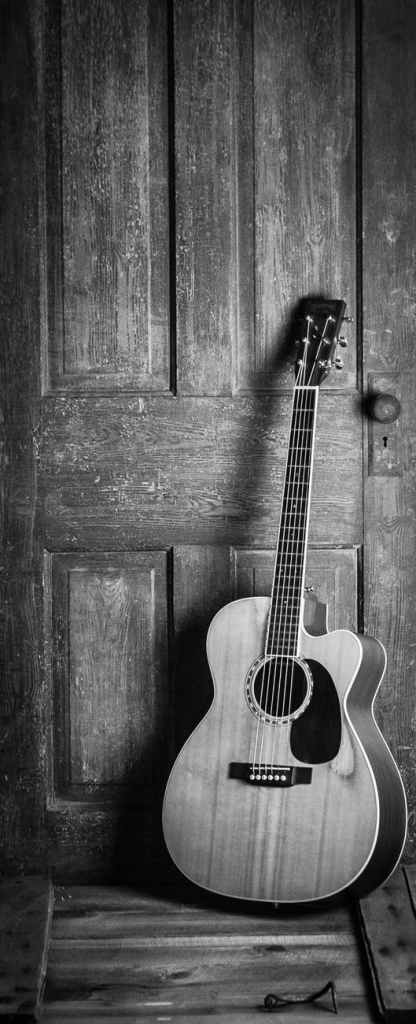
brown and black cut away acoustic guitar
Photo by Jessica Lewis on Pexels.com

Since Bob Dylan was awarded the Nobel Peace Prize in Literature last week, there’s been a debate among literary artists whether songwriters should be considered for such a high honor. After all, critics say, the prize is for the best works of literature, not songwriting.

Jodi Picoult, author of several novels including My Sister’s Keeper, tweeted “I’m happy for Bob Dylan, but #ButDoesThisMeanICanWinaGrammy?” Critics argue that giving the award to a songwriter weakens the meaningfulness of the award, according to the New York Times.

Meanwhile, other best-selling authors such as Joyce Carol Oates and Stephen King praised the move.

That begs the question: can song lyrics be considered poetry or literature in the same vein as, say, T.S. Eliot? Yes, when those lyrics can stand alone without music, say supporters.

Clearly, Dylan’s body of work falls into that category, like this section from Mr. Tambourine Man. (“Take me disappearing through the smoke rings of my mind/Down the foggy ruins of time/Far past the frozen leaves/The haunted frightened trees/Out to the windy bench/Far from the twisted reach of crazy sorrow). Certainly, Dylan’s lyrics in protest songs like “The Times They Are A-Changin” and “Blowin’ in the Wind” have struck a chord with the American public.

By naming Bob Dylan the winner of the Nobel Peace Prize, does that open the door for other songwriters to be considered for this honor? If Dylan can receive the Nobel Peace Prize, why not Paul Simon, Bruce Springsteen, Arlo Guthrie or Joan Baez?

Perhaps it is time for the Swedish Academy, which awards the Nobel Peace Prize every year, to begin awarding a prize for the arts, to honor the best works in theater, dance, art and music. What a radical idea, almost as radical as Bob Dylan himself.