
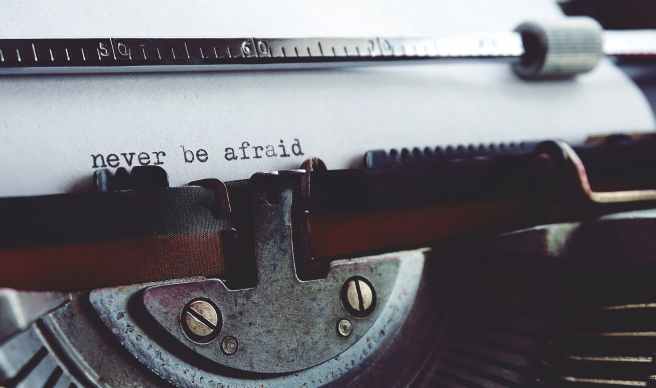
When I first started writing fiction in earnest several years ago, I would call myself an “aspiring writer.” I still occasionally call myself an “aspiring novelist.” Only after hearing a published author suggest dropping the qualifier “aspiring” and simply say “I am a writer” did I feel brave enough to do that. When I did, something funny happened. I felt liberated and empowered, like I had grown wings and could fly whenever I wanted to.
Adding a qualifying term like “aspiring” to your writing title is like riding a bike with training wheels. Those wheels might help you learn to ride the bike, but at some point, you have to take them off and start pedaling.
“Adding ‘aspiring’ may feel small and inconsequential, but it’s not,” writes Lisa Fellinger, author of Write with Confidence: Shatter Self-Limiting Beliefs and Finish Your Book, at the Jane Friedman blog. “It reinforces the belief that you’re not quite there yet, that you haven’t earned the title. Every time you call yourself an aspiring writer, you’re feeding the imposter syndrome that keeps you stuck.”
It doesn’t matter how much experience you have with writing either. Published authors struggle with this as much as novice writers. For example, at the KillZoneBlog, thriller writer James Scott Bell admits that he struggled to call himself a writer even after he had several published books under his belt.
So why are so many writers reluctant to call themselves a writer? Fellinger hinted at one reason: imposter syndrome. But I can think of several other possible reasons for this avoidance tactic.
- I haven’t published anything yet.”
Maybe your current project is a work-in-progress. Never mind that you’ve been working on it for the past five years or longer, and you have nothing published to show for your hard work. You believe that only published writers are worthy of the title. But the reality is as long as you show up and put in the effort, you’ve already earned the title of writer. So don’t shy away from it. - “I don’t get paid for my writing; it’s volunteer work.”
Many writers believe that they haven’t truly arrived as a writer until they’ve been paid for their work. Payment legitimizes their writing, and by extension, legitimizes the title of writer. Again, it’s about showing up and making the effort, not the final product or the reward. For many writers, writing is the reward. - “My writing is a hobby, nothing more.”
Maybe you already have a full-time job that pays the bills, such as accounting, teaching or fixing cars. That’s how you identify yourself. Writing may only be a hobby and you have no desire or expectation of publishing success. Perhaps you write for fun and relaxation. The belief is you can’t truly call yourself a writer if you’re only writing as a hobby. But in life, we wear many hats. Who’s to say that you can’t identify with several personas–a teacher, a mother and a writer? It’s okay to call yourself a writer, even if it is a hobby or side hustle. It’s the effort that matters. - “No one knows I’m writing. This is a secret passion and I haven’t told anyone.”
If no one knows that you’re writing, then you don’t have to explain yourself to anyone and you don’t have to openly call yourself a writer. Perhaps you believe no one will understand this strange compulsion to write. But the truth is that as long as you’re putting in the work–even in secret–you’re still a writer. What you’re lacking is confidence. If this sounds like you, try this experiment. Stand in front of the mirror and tell yourself, “I am a writer.” Keep saying it until you feel comfortable. Then reach out to your closest friend or family member, someone you know and trust, and speak those words to them too. With repetition and practice, you may eventually believe you are a writer. - “I’m not a very good writer.”
An inability to call yourself a writer may stem from a belief that your writing isn’t good. The belief is that only the best writers deserve to be called writers. The truth is that no writer starts out their careers at the top of their game. In fact, many of them aren’t very good at all. But they became successful by working at their craft. Most writers produce really bad first drafts (sometimes even second and third drafts). That doesn’t make them any less of a writer. Through persistent, hard work, their writing improved. So will yours. It’s the effort that counts. - “I’m afraid that once I call myself a writer, I will have to take this writing habit of mine more seriously.”
Yes, that is likely true. Calling yourself a writer means making a stronger commitment to the writing journey and becoming the best writer you can be. It means doing the things that will improve your craft. Saying “I am a writer” shows confidence in your talents, even if you don’t necessarily feel that way inside. Sometimes you have to fake it to make it. Start calling yourself a writer and see what follows. - “I was told when I was younger that writing is not a suitable, respectable or legitimate career path.”
Sadly, many writers have heard this criticism. If someone has convinced you that writing is a waste of time, you’ve got some work to do. Thanks to this brainwashing (because that’s what this is), you’ve avoided calling yourself a writer to prove to critics that you’re toeing the line. Worse, you’ve probably avoided writing at all. But deep down, that urge to write is still strong. I say, write anyway. What matters more is how you feel about writing. So the next time you take a shower, prepare dinner or lie in bed before sleeping, tell yourself “I am a writer.” Keep repeating it like an affirmation. Before long, the words will sink in
Many writers have overcome these mental obstacles to create satisfying, respectable and legitimate writing careers. Think about your own excuses for not calling yourself a writer. What’s holding you back? What can you do to change your mindset and proudly say, “I am a writer?”





 The Regal Writer