
Six Writing Causes You Should Support on Giving Tuesday

art art materials artistic blue
Photo by Pixabay on Pexels.com

As the Christmas holiday season approaches, take a moment to think about the organizations that do a lot a good in your community. As writers and communicators, the nonprofit groups that specialize in promoting literacy and the creative arts should be topmost in our minds. Without the written word, without music or art or dance, where would we all be?

In support of Giving Tuesday, think about how you support literacy and creative arts in your own community. Don’t just think with your purse or wallet either. Think of your time, energy and creative ideas that you can give. How can you better support these organizations? Remember, your volunteer hours mean as much as donated goods or cash.

Below are a few types of nonprofit groups worthy of support on this Giving Tuesday. Remember, giving happens not just today, but every day throughout the year.

Adult Literacy programs
Literacy is for life. If you know how to read and write, it is assumed that those skills can take you far in life. But many U.S. adults fall far behind in literacy.

An April 2017 study by the U.S. Department of Education found that 32 million adults, or 14 percent of the U.S. population, cannot read. About 21 percent of adults read below the fifth grade level, and 19 percent of high school graduates can’t read (which begs the question: How are they graduating from high school if they can’t read?)

Enter literacy organizations, which aid adults, children and entire families in building their reading and writing skills. Check out 826 National and the National Literacy Directory for a literacy organization near you.

Libraries
Specialty libraries with rare collections often have difficulty acquiring additional reading materials and frequently have difficulty publicizing the work they do. Think of places like the Newberry Library in Chicago with its emphasis on history and research.

Many libraries don’t have the resources to purchase new books either. For example, check out the American Library Association’s guide to book donation programs, which lists libraries that need books to fill their shelves.

Other nonprofit groups accept book donations for resale purposes. From the proceeds of the sale of these donated books, they can fund reading and writing education programs in underserved communities. Check out organizations such as Turning the Page/Carpe Librum Bookstore and Open Books, which serve these purposes in the Chicago area. Similar organizations may be located near you.

Nonprofit writing centers
According to a recent article at Bustle, not everyone is cut out for a university MFA program. But if you want to learn to write and write well, but not necessarily want to earn a MFA, where do you go? The answer is a non-profit writing center, such as Grub Street in Boston or Story Studio in Chicago. For poets, there’s also the Poetry Center at the University of Arizona.

But these organizations can’t operate on their own. That’s where you come in. Donations are needed to purchase classroom materials, cover operating costs and assist with program planning. Not only are these organizations great places to develop your writing skills, they are terrific places for networking and community building. They are worthy of your support in more ways than one.

Museums
Without museums, our connection to our history and culture would be lost, no matter where we come from. Whether it’s a museum of art (The Art Institute of Chicago), writing (American Writers Museum), or science (Shedd Aquarium), museums give us a place to explore, to honor our history while imagining possibilities for the future.

Reading and writing groups for Incarcerated Individuals
Men and women who are serving time often do not have access to books or writing materials, often due to limited resources and funds in the prison system. Non-profit groups like Chicago Books to Women in Prison (which I have volunteered with for the past two years) and the Women’s Book Project in Minneapolis, provide free access to everything from fiction and nonfiction books of all genres, GED study materials, blank composition books, dictionaries, Bibles and career development materials.  There are numerous other organizations dedicated to helping the incarcerated connect with books and writing materials. Pen America is another organization worth checking out for writing programs for the incarcerated.

Arts foundations
Think beyond just books and writing programs. Thinks of the arts too. Consider donations to specialty organizations, such as groups that keep alive the history and legacy of silent films such as the Silent Film Society of Chicago. There are numerous local theater groups, dance companies and music schools that can benefit from your volunteer time. Because they all support the development of artists in various fields, you’re also supporting the development of story tellers in different artistic fields.

By giving to any one of these organizations, you are helping numerous individuals achieve their dreams – to read, to write, to share stories and to communicate with others. And those are causes worthy of your contributions.
On Being Thankful for Being a Writer

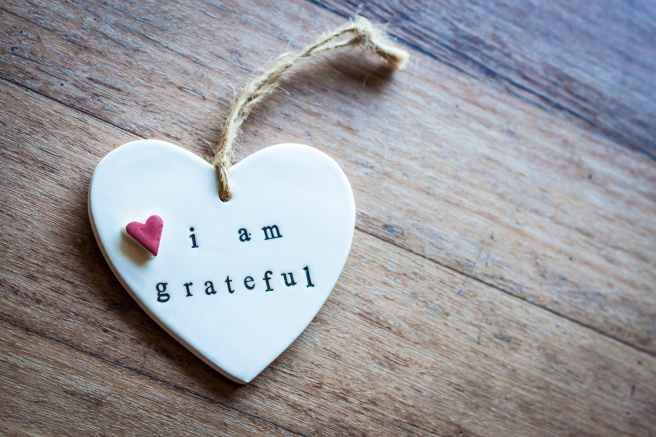
affection appreciation decoration design
Photo by Carl Attard on Pexels.com

As you gather with your families and friends this Thanksgiving holiday, think about what you are most grateful for, especially as it pertains to your writing. Perhaps you are grateful to have a mentor to guide you through difficult lessons, or maybe you are grateful for Daniel Webster for publishing a dictionary.

I was inspired by a post by Laura Stigler, President of the Independent Writers of Chicago, “On Being Thankful We Can Write,” to create my own list of things I’m thankful for.

* A mother who loved to read and instilled that love of reading in me. When you see a parent reading a book, I believe it encourages kids to become readers too.

* Former teachers who recognized my skill from as early as seventh grade and encouraged me to participate in writing contests. Each compliment and kind word of support made me want to keep writing. There’s nothing like a personal cheering section to keep you motivated.

* Former bosses who appreciated the fact that I could find the best words to explain a process or write a letter to an important client. Other times their tough love approach to critiquing my work only strengthened my resolve to improve.

* Friends who have shared a love of books and reading and who don’t mind talking about the latest book that they liked or didn’t like.

* The authors whose work I have enjoyed over the years, from Louisa May Alcott’s “Little Women” to Carolyn Keene’s Nancy Drew mysteries when I was young girl to the early works of romantic suspense authors Mary Higgins Clark and Joy Fielding that I enjoyed in my twenties and thirties to more recent favorites, such as Alice Hoffman and Sue Monk Kidd.

* Libraries and librarians, book stores and book discussion groups, who all keep the love of books and reading alive and makes sure there is always a potential audience for the stories writers write.

* For my blog followers, thank you for reading my posts, sharing comments and showing your support.

Most important, I am grateful that I have the talent (or gift, as some writers suggest) for writing and the desire to use it in personal and professional ways. In fact, I think I enjoy the world of books, reading and writing more now than I ever have.

As you spend Thanksgiving with family and friends, remember it’s a time for bonding over shared experiences and swapping stories. And as you share old family legends and tales for the umpteenth time, don’t forget to create new ones to share next year.

Happy Thanksgiving!

The Great American Read Reveals Viewers’ Most Beloved Books

Great American Read

PBS completed its five-month series, The Great American Read, which examined Americans’ most favorite novels. The program was hosted by former Today Show host Meredith Viera. I missed the program, unfortunately, but here is a wrap up of the top 25 most beloved novels, as selected by program viewers.

Topping the list at number one is To Kill a Mockingbird by Harper Lee. It hit the number one spot since day one and held it all the way through. Written and published in 1960, To Kill a Mockingbird is a coming-of-age story of a young girl in the South who tries to make sense of the cruelty she sees within their community as her father – a local, crusading attorney – defends a black man unjustly accused of a terrible crime. The story has as much significance today as it did when it was published, which is why it seems to resonate with many readers and PBS viewers.

Rounding out the top five is the Outlander series, the Harry Potter series by J.K. Rowling, Pride and Prejudice by Jane Austen and the Lord of the Rings series by J.R.R. Tolkien. The top 25 is listed below, followed by a few of my observations, but you can find the entire list of the top 100 on the PBS website.

The Great American Read — Top 25 Most Beloved Books

1. To Kill a Mockingbird — Harper Lee
2. The Outlander (series) — Diana Gabaldon
3. Harry Potter (series) — J.K. Rowling
4. Pride and Prejudice — Jane Austen
5. Lord of the Rings — J.R.R. Tolkien
6. Gone with the Wind – Margaret Mitchell
7. Charlotte’s Web – E.B. White
8. Little Women – Louisa May Alcott
9. The Chronicles of Narnia – C.S. Lewis
10. Jane Eyre – Charlotte Bronte
11. Anne of Green Gables – Lucy Maud Montgomery
12. The Grapes of Wrath – John Steinbeck
13. A Tree Grows in Brooklyn – Betty Smith
14. The Book Thief – Markus Zusak
15. The Great Gatsby – F. Scott Fitzgerald
16. The Help – Kathryn Stockett
17. The Adventures of Tom Sawyer – Mark Twain
18. 1984 – George Orwell
19. And Then There Were None – Agatha Christie
20. Atlas Shrugged – Ayn Rand
21. Wuthering Heights – Emily Bronte
22. Lonesome Dove – Larry McMurtry
23. The Pillars of the Earth – Ken Follett
24. The Stand – Stephen King
25. Rebecca – Daphne de Maurier

A few observations/assessments:

1. The Outlander series at number two is higher than I expected, even higher than Lord of the Rings and the Chronicles of Narnia series which have been around longer and have had a loyal readership.

2. The Book Thief, which I thoroughly enjoyed, placed number 14, higher than I expected. Meanwhile, The Handmaid’s Tale, behind the strength of its streaming series, was lower than I expected at number 34. I thought Handmaid would be in the top 20.

Of the books listed in the top 25, I’ve read 10 of them. I suppose that’s a good sign, considering I’ve read 18 of the entire top 100. Many of the remaining top 25 are books already sitting on my shelf waiting to be read while others I have heard about and would like to read. Still, I have a lot of reading to catch up on.

What about you? As you review this list, what jumps out at you? Are there any books that are missing from the top 100? Are there any titles that were higher or lower than you expected? I’d love to hear your thoughts.

One thing about programs and surveys like this, it generates a lot of discussion and debate. But one thing we all can agree on, America’ love of books and reading is alive and well.

Want to Improve Your Own Writing? Read Poorly Written Books

blur book girl hands
Photo by Leah Kelley on Pexels.com

In his book On Writing, (which I highly recommend), author Stephen King suggests that if you want to be a better writer, all you have to do is read. Read a lot. And read a variety of stories.

Of course, that might mean exposing yourself to less than stellar writing. But that’s okay.  Even the less-than-stellar samples can show writers a thing or two about crafting stories – the right way.

Perhaps I should begin by defining what I mean by ‘bad writing.’ It isn’t just about a lack of proper grammar and punctuation, although that’s part of it. It has more to do with the development of the story. Think stilted dialogue, implausible plot lines and poorly drawn characters. It isn’t the writing that’s poorly done as much as the storytelling.

As British author Toby Litt writes in The Guardian, bad writing is boring writing. Bad writing are stories you can’t wait to finish because they are dreadfully boring, or one that you don’t finish at all. On the other hand, a well-crafted, well-written book is one that keeps your attention all the way through. It makes you want to turn the page, and the next page and the next page, and so on.

In my opinion, a good book may not be the highest quality writing. It may not even be a best-seller. But what it does well is keep the reader involved in the story and with the characters, especially the protagonist. If you have a hard time putting a book down, it means the author has successfully designed the story to satisfy your interest. You want to read more to find out what’s going to happen next.

After you’ve read enough stories of different genres, your brain begins to notice differences in the way authors develop their plots and characters, or the way dialogue and narration are presented. When you’ve read enough books, you recognize contrived plot lines and inconsistent behavior from characters. You can decide, as the reader, what is believable and what isn’t. By reading bad writing, you are, hopefully, aware enough of your own skill not to commit the same mistakes.

I recently finished reading a romance novel by an author whose work I had read before and enjoyed. I looked forward to a light, easy read. It was anything but. The plot was not believable, the female protagonist behaved in ways that was not consistent with her character, and the overall experience of reading the book was unpleasant. I felt disappointed and cheated.

You don’t want to do that to your readers.

I doubt I will read anything else by this particular author ever again, although I will pick up another romance novel. They can be fun reads on their own — when they’re written well.

Lesson learned from that reading experience: Make sure the plot is plausible and believable and your protagonist behaves in ways that are true to their personality.

Bad writing can appear in any genre, and sometimes in best-sellers. If in doubt about what ‘bad writing’ is, check out Goodreads’ list of ‘poorly written’ books. Among the Fifty Shades of Gray and Twilight collections is The Da Vinci Code. I once tried to read it many years ago and couldn’t get through it. The language was overly descriptive and heavy, moving the narrative along at a snail’s pace. I kept wanting the author to pick up the pace. Naturally, I never made it to the end.

Lesson from that reading experience: Don’t get so bogged down in details that the story slows to a crawl. Keep moving the story along and you will maintain your readers’ interest. Keep that in mind when you do your own writing.

On the upside, reading bad writing can put your own writing into perspective. You can say to yourself, “Hey, I can write better than this. If this trash is being published, maybe there’s hope for me yet in this business.”

The more you read, the more you can learn from the mistakes other writers have made. So even if you have to trudge through a few bad apples along the way, you can still gain from the experience and improve your writing at the same time.

Related Reading about ‘Bad Writing’:
https://bookriot.com/2013/06/27/the-case-for-reading-bad-books/

https://joshcraigwrites.wordpress.com/2012/08/16/about-reading-poorly-written-books/

ALA Banned Books Week 2018 Calls for Reader Activism to End Censorship

blur book girl hands
Photo by Leah Kelley on Pexels.com

Anyone who loves books and loves reading will appreciate the advocacy effort being led by the American Library Association’s Office for Intellectual Freedom this week.

Banned Books Week (Sept 23-29) is an initiative that began in 1982 that brings together entire book communities – librarians, journalists, editors, teachers, writers and publishers, and of course, readers – to show support or the freedom to seek and express ideas.

This year, Banned Books Week focuses on author and reader activism. Readers are encouraged to get involved in one or several programs to fight censorship, particularly of the books that are frequently targeted with removal or restricted access in libraries and schools. Banned Books Week draws national attention to the harms of censorship and the benefits of unrestricted reading.

Here are a few ways you can get involved:

Dear Banned Author Campaign
This letter-writing campaign encourages readers to write to, tweet or email authors whose works have been banned or challenged and share with them how their stories have affected them. Dear Banned Author attempts to raise awareness of books that are threatened with censorship and generates discussions about the essential access to library materials. Readers are invited to share their stories online and join the conversation using the hashtags #DearBannedAuthor and #BannedBooksWeek.

Virtual Banned Read-Out
Since the inception of Banned Books Week in 1982, libraries and bookstores across the country have hosted local read-outs – continuous readings of banned and challenged books. Banned authors have also participated, including Judy Blume among others.

Readers can participate by posting a video of themselves on YouTube reading from a banned book or talking about censorship. To submit a read-out video on YouTube, visit the ALA website. If you’re a bit camera shy, choose one of the books from the banned lists and read it this week on your own – without cameras. Some previously banned and challenged books include The Color Purple by Alice Walker, Catcher in the Rye by J.D. Salinger and more recently George by Alex Gino and The Kite Runner by Khaled Hosseini. The ALA has lists of banned and challenged books on their website, http://www.ala.org/advocacy/bbooks.

There are other ways to show your support. Check out ALA’s Banned Books Week website to learn more.

As readers, writers and communicators, this is an issue we all need to get behind.