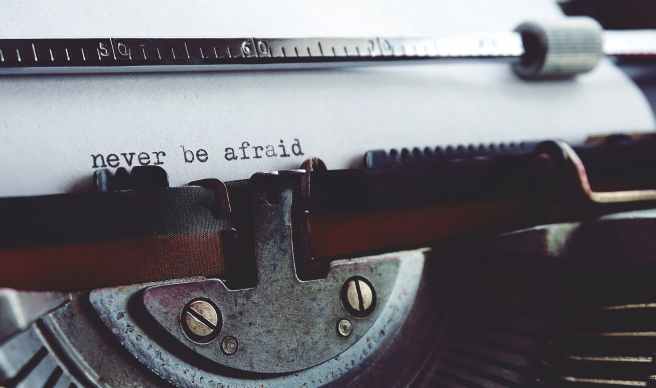
Amid Chaos, Stories Matter Even More

Photo by Suzy Hazelwood on Pexels.com

Imagine if we lived in a world where there were no stories–no stories to write, to tell, to read, to enjoy, to make us laugh and to make us cry. Where would we as humans be? How could we live? What would we know and understand about our lives?

Writing stories matters. But for those stories to matter, they need to be conceived and written.  That’s where writers and creatives come in. The world–as chaotic and uncertain as it may be–needs us.

If you’ve ever stopped to wonder why you’re putting yourself through the emotional and physical turmoil of writing stories, think about all the good you’re doing for the world, for your audience, and most importantly, for yourself.

Tiffany Yates Martin said it best in the latest issue of Writer’s Digest (print version, so no link is available to the article.) We may feel overwhelmed by the chaos happening around us to the point that we can’t find the motivation to write. Yet that is exactly when writing stories matters the most. 

Yates Martin outlined five reasons that stories matter through turbulent times:

  • Stories offer solace and hope. Stories offer comfort, especially during times of unrest. They not only offer an escape from our troubles and worries, Martine writes, they remind us of what’s important and what’s worth fighting for.
  • Stories connect us in a divided world. Because stories provide insight into the human condition through alternative perspectives, we can learn to understand the universal longings and struggles that others experience. We might understand what motivates people we might disagree with, and perhaps see them as just as complex, flawed and wounded as we are.
  • Stories make sense of the senseless. Our world is often messy and complex. Stories can help us make sense of the chaos by offering logic and cohesion. It may offer a big-picture view that we may not have considered.
  • Stories give a voice to the voiceless. Stories can highlight the injustices and oppression that others might experience, and thus heighten our awareness of it. Consider The Diary of Anne Frank which put a human face on the plight of Jews during the Nazi regime.
  • Stories can change the world. Stories can broaden and impact people’s views, which in turn can spark needed change. For example, Uncle Tom’s Cabin fueled the abolitionist movement that ended slavery. While our own writing won’t necessarily change society on a grand scale, it might change individuals in some way by providing inspiration and insight that they might not have had before.

While Yates Martin speaks about the collective reasons for writing stories, there are personal ones too. We all have our personal reasons for writing and telling stories. I’ve compiled my own list of reasons below:

  • Writing stories presents a new challenge to my skillset. I’ve always been a competent business writer, but writing fiction is a totally different animal. It wasn’t enough to be a good writer and string a series of sentences to create a cohesive thought. The question I wanted to answer for myself was: Could I become a good storyteller? Storytelling requires a different skillset than business journalism. Learning how to tell a good, compelling fiction story was a new challenge.
  • Writing stories calms me and keeps me grounded. With so much turmoil and uncertainty in the world, writing stories gives me a safe space away from all that. When I can put those disruptive news stories out of my mind, I can focus on what really matters to me–my writing.
  • Writing stories is one thing I can control. With everything happening around us–from weather-related disasters to social and political strife–it can feel like the world is out of control or that we have no control over our environment. And in many cases, we can’t. I may not have control over the unsettling changes taking place in our world, but I do have control over the stories I write. I can control the direction of the plot, the narration, the dialogue, the way the characters may grow and change. I can control how the story ends–usually in a peaceful, happy way.
  • Writing stories allows me to give free rein to my imagination. Otherwise, those brilliant ideas dancing in my brain will only remain trapped there. By writing them down, I’m bringing them to life.
  • Writing stories enables me to communicate a message to others. This is usually through the story’s theme or a character’s words of wisdom. I might be too afraid to speak for myself, so through stories, I can let a character do the talking for me.

The next time you feel tempted to walk away from your desk and give up on your story, or if you have trouble finding the motivation to write, think about why you do this. Why do you write stories? Why are you writing this particular story? Because writing stories not only can change the world, it can change you. 

Seven Signs That You’re Sabotaging Your Writing Practice

Photo by ThisIsEngineering on Pexels.com

Hi readers, I was about to do a story about self-sabotage. Then I realized I already posted about this topic several years ago. Here’s a repost of that article for those of us who struggle with self-sabotage tendencies. Enjoy.

A writing practice is only as successful as your level of commitment to it. The more committed you are to a regular writing practice, the more consistent your output. Makes sense, right?

But what happens when you get oh-so-close to finishing your manuscript, but never seem to get around to finishing it? What happens when you do finish a story, but never seem to get around to submitting it to editors for possible publication? What if, instead of finishing your manuscript, you suddenly find other more pressing things to do, like clean the garage or spend more time with your mother-in-law? Is it really a matter of changing priorities? Or is something else going on?

I’m certainly guilty of these behaviors as I’m sure many other writers are. Psychology experts suggest that these patterns of behavior – procrastination and self-sabotage – are inbred in us. No one is immune to them. Even the most successful published authors have admitted that they have utilized these sabotage tactics.

It’s tempting to blame your tendency for self-sabotage on external factors, such as a demanding family life or a faulty computer. But unfortunately, blaming outside factors is a waste of time and energy. The only thing that is standing in the way of your own success is you. It’s time to get out of your own way.

From my experience, I’ve noted seven signs that you may be sabotaging your writing practice.

1. You stop writing indefinitely. You could be coasting along with your writing practice, meeting your daily writing goals and making steady progress on your story. You feel confident about your accomplishment. But then you stop writing. Why? What went wrong?

Maybe you got a negative review of your latest work that stops you in your tracks. Maybe you look at your life and question whether anyone else would find stories of your childhood interesting. Maybe you’ve read so much about writing that you feel overwhelmed and feel unsure how to begin your next project.

Giving up on your craft is not the answer. Letting your ideas fade into the distant past and collect dust isn’t the answer either. If you stop writing, but you still want to write, you need to figure out why. Give yourself a deadline of, say three days, to regroup and contemplate why you have stopped writing. Maybe it is a need for a mental break. If so, then when you are sufficiently rested, get back to work. The important thing is to keep writing. Ironically, it may be the very act of writing that breaks you out of your malaise.

2. You focus on the negative. You overanalyze your own writing and decide it’s simply not good enough – You’re not good enough. You constantly look for what’s wrong with your technique than with what’s right. All this focus on the negative qualities of your writing can undermine your confidence. Too much analysis can freeze you in place. The next time this happens, have one or two people review your work and give you positive feedback – something to keep you motivated so you keep writing.

3. You take criticism too personally. It can be disheartening to hear negative feedback about a piece you’ve been working on for weeks. Don’t let it paralyze you. Some critique is necessary. See the feedback as an opportunity to improve your writing. Most important, don’t take it personally.

4. You constantly compare your work with others. So what if other writers have more experience than you do or they’ve had more stories published. You need to remember that they started at the beginning at some point. Stop comparing yourself at the beginning of your career to someone else who is further along. That’s like comparing apples to bananas. You will never get ahead that way. If possible, try to stay in your own lane.

In this situation, you might also need to re-evaluate your goals and expectations. Have you set them too high? Are they unrealistic? It may be time for a rethink of your expectations to make them more manageable.

5. You don’t believe you have anything worthwhile to write about. Everyone has stories to share. Just because you think you don’t have anything interesting to write about doesn’t mean you don’t have anything interesting to write about. It’s all perception. When you feel your work is not worth reading, it can be tempting to stop writing. Again, keep writing until you find a story worth telling others. If needed, ask someone to read your work.

Every experience in life counts for something. Every experience is worth writing about. The story is your perception of events as they unfolded and how they impacted your life. Believe that there’s a story everywhere you look. Believe that you do have something worthwhile to share – then start writing about it.

6. You focus too much on the past. We’ve all suffered failures in our lives. We’ve all made mistakes. We’ve all had situations that did not work out. Understandably, we don’t want to repeat those mistakes. Learn from those mistakes, then move on. Just because you made them once before does not mean you will make them again. Stop focusing on the past and stay focused on the present.

7. You focus too much on the future. Perhaps you dream of earning your own byline in a high-profile magazine or you are determined to get your manuscript published. But those goals are meaningless if you haven’t written a single word. It’s easy to get way ahead of ourselves, but just as in point #6 above, it’s imperative to stay in the present moment.

You can’t change the past and you can’t control the future. So you might as well stay in the present and make the most of it – by writing.

What Is The Best Format for Your Story Idea: Novel, Novella or Short Story?

Photo by Pixabay on Pexels.com

Imagine that you’ve come up with a great idea for a story. You haven’t seen it published anywhere else, and you’re sure that people would read it. Only question is: should you write it as a short story, a novella or a novel?

“What’s the difference?” you might ask. 

Word counts is the short and easy answer. Depending on the length of your story, it may fall into one of several story categories:

* Novel–70,000 to 100,000 words (although some novels have been less than 70,000 words and others have exceeded the upper limit, depending on genre.)

* Novella–17,500 words to 40,000 words

* Novelette–7,500 words to 17,500 words

* Short story–Less than 7,500 words

With short stories, there’s an economy of words and action. Since you don’t have a lot of space, descriptions, backstory and exposition are limited, and there are no subplots. Full-length novels allow more time and space for exposition and backstory, setting and character development. Short stories are like a weekend getaway while novels are a month-long retreat at a luxury spa. Novellas, which fall in between, are more like your typical one-week vacation.

To learn more about these differences, check out this helpful resource from Reedsy about word counts for different genres.

How do you know where your story idea fits? Should it be a short story, a novella or a novel?.

To answer this question, I recommend fleshing out your story idea as much as you can. Jot down scene ideas, characters, plot points using post-it notes or index cards. The more details you have about your story will determine what type of format you’ll need. 


Once you’ve plotted your scenes and made your character list, consider these questions:

1. What is the main problem the characters are trying to resolve? Is it a complex problem with layers of complications? Or is it fairly simple and straightforward?

2. Are there any subplots? A full-length novel might have one or two subplots while a short story and novella won’t have any.

3. How many characters are featured in your story? If there are a few characters, it’ll most likely be a short story. Longer sagas like historical fiction or science fiction/fantasy will likely have a cast of several dozen, while a short story will be limited to a handful of people. Romance novels are roughly a dozen or less.

4. Are you writing this story in multiple POVs? More likely, it’ll fall into the novel category. You won’t see multiple POVs in a short story. You might find one other POV in a novella.

5. What is your story’s genre? Historical fiction and fantasy tend to run longer, around 100,000 words. Romance novels tend to be between 70,000 to 90,000 words. Understanding your genre will help you determine whether your story should be a novel, novella or short story.

If after answering these questions, you’re still not sure what format your story should take, try this exercise. Write the story first as a short story with one point of view, a few essential characters and limited backstory. Keep to the necessary action. Then set it aside for a few weeks. Come back to it later with a fresh eye or have a friend or writing colleague review it with you. Decide what works and what doesn’t. 

If the story seems complete as is, then it probably works best as a short story. But if you feel there’s more to the story than what you wrote, rewrite your story, this time as a novella (up to 40,000 words). This time add the elements you think are missing, whether that’s world building, setting or characters. Maybe present a second point of view. 

When you’re finished, review it again. Does the story work better? If in doubt, ask a couple of beta readers to review the manuscript and give you feedback. If, based on their feedback, you still want to expand the story, perhaps add a subplot, then you can rewrite it as a full-length novel. 

The point is to start small and work your way up, testing out your story idea at each phase to see which format works best.  

Here’s another exercise to try: Visit your local bookstore or library, or browse your own collection. Note the size and length of certain genres. Some genres simply work better as shorter pieces. Historical fiction and fantasy tend to be longer while romance works well as a novella. .

Throughout this creative process, trust your instinct. More often than not, your gut will tell you what format will work best for your story idea. When you close your eyes and visualize what the story looks like, sometimes you just know what format your story should be. 

Deciding what format your story should be isn’t as difficult as you might think. The magic comes when you begin to see your story come to life on the page.

Heeding The Desire to Create

Editor’s note: I am taking next week off to celebrate the Fourth of July holiday. I’ll be back the following week with a new post about the writing life. Until then, be safe and keep writing.

Yes, Virginia, the desire to create is real.

Many years ago, I watched the movie “Enchanted April,” a story about four women at various stages of their lives who spend the month of April at a secluded castle in Italy. Set at a time and place where there were no cell phones or computers and no access to a radio or TV, these women were forced to entertain themselves in other ways, whether it was taking long walks, having conversations with each other, or preparing meals together.

After a week or so, one of the women, an older widowed aristocrat, (played by the legendary British actress Joan Plowright) felt restless and felt the urge to do something constructive. What did she do? She began drawing. The simple act of drawing helped calm her and center her, and to no viewer’s surprise, made her less cranky to be around.

Mind you, she was not an artist to begin with. She was an aristocrat, used to hosting parties and entertaining guests. She wasn’t used to spending a lot of alone time with her thoughts and imaginings. But being out in nature with few people around, she gravitated toward this unfamiliar yearning. A yearning to create.

Dieter F. Uchtdorf, a German aviator, airline executive and religious leader once said, “The desire to create is one of the deepest yearnings of the human soul.”

It’s my belief that we are all born with an innate desire to create, and to create beauty that will be appreciated by others. It’s as real and natural to us as breathing and walking. 

Except not all of us recognize this desire or believe we have creative talents. But this isn’t about natural ability or talent. It’s not about excellence and achievement. It’s about desire. It’s about the need to produce something of beauty that will leave a lasting legacy.

As the movie example above showed, the creative need can show up in your life at the most unexpected time, usually when you’ve spent a lot of time alone and immersed in nature. But that’s not the only way. This creative need can manifest in your life in different ways. 

  • You might be moved by witnessing something beautiful, like a song, nature or artwork.
  • Events in your life might inspire you to start a journal so you can write down all your thoughts and musings.
  • You might have seen an exhibit at an art show or museum that prompts you to experiment with drawing, sketching or painting. 
  • You might have heard a piece of music that moved you or made you want to learn to play an instrument or pick it up again. 
  • A friend may have encouraged you to join them in a new crafting hobby, like knitting or weaving.

When you see how others have brought their creative vision into reality, it makes you want to do the same. But how do you access this creative self-expression yourself? What can you do to satisfy this desire to create, especially if you believe you have no creative abilities?

  • Spend time alone without distractions. This will be hard to do, considering all the devices at our disposal these days. Imagine spending time in a private villa with no access to computers, TV or radio. With only your thoughts for company, and perhaps a friend or two for occasional conversation, you may feel the need to do something with yourself, just like our aristocrat from the movie. Listen for inspiration. You don’t have to go to a private castle to do that. Find any place that offers a peaceful respite from your busy life.
  • Spend time in nature. Going for long walks, whether in the local forest preserve, in the mountains or on the beach, immerses you in nature. Being around nature or any green things can be calming to the frazzled mind. It can also inspire you to create (or re-create) the beauty you see around you.
  • Experiment with different tools and techniques. Thai is especially important if you believe you were born without creative abilities. What are you most drawn to? Drawing? Writing poetry? Journaling? Taking photos? Cooking? (Yes, cooking is a form of creation too). I once tried a sketching class. Because I’m used to writing as a form of creation, drawing objects was a new challenge for me that forced me to use a different part of my brain. I enjoyed the class. I occasionally take out my sketchbook to take a break from writing.
  • Listen to beautiful music, ideally instrumental. What images come to mind when you hear the music? How does the music make you feel? Does the music inspire you to do something creative, such as writing poetry or drawing or wreath-making?
  • Practice meditation and/or yoga. Both activities will calm your mind. And a calm mind is a creative one. Many writers I know use meditation and yoga when they’re stuck in a work-in-progress as a way to get unstuck. By taking time to check in with yourself, your inner guide will help you find the creative solutions you’re seeking for any problems you’re grappling with. 
  • Visit an art museum. Note the different methods that the artists used to create their pieces. Is there a particular artist whose works resonate with you. Or inspire you to try your hand at painting or drawing?

As humans, we have an abundance of needs–physiological, emotional, connection and relationships, esteem and self-actualization to quote from Maslow. Somewhere in that hierarchy is the need to create.  

Experts at Creativelyllc.com offer these guiding questions to help you source out your desire to create.

1. Do you enjoy the experience of creating? If you enjoy something, you’ll be more likely to stick with it.

2. Don’t judge yourself too harshly when you create something that doesn’t live up to your vision. Set up a judgment-free creativity zone in your home where you can create anything just for the sake of creating.

3. Experiment with different outlets. Try music, acting, dancing, poetry, or crocheting. There’s bound to be one or two of them that resonate with you.

4. Does creating feel like work or play? If it feels like play, you’re on the right track. Creating is supposed to be fun.

5. What drives you to create? How does creation help you fulfill your purpose in life or showcase your individuality?

The next time you feel a yearning to create, don’t dismiss it. Give in to that desire and see where it takes you.

Seven Excuses Writers Make to Avoid Calling Themselves a Writer

Photo by Suzy Hazelwood on Pexels.com

When I first started writing fiction in earnest several years ago, I would call myself an “aspiring writer.” I still occasionally call myself an “aspiring novelist.” Only after hearing a published author suggest dropping the qualifier “aspiring” and simply say “I am a writer” did I feel brave enough to do that. When I did, something funny happened. I felt liberated and empowered, like I had grown wings and could fly whenever I wanted to.

Adding a qualifying term like “aspiring” to your writing title is like riding a bike with training wheels. Those wheels might help you learn to ride the bike, but at some point, you have to take them off and start pedaling.

“Adding ‘aspiring’ may feel small and inconsequential, but it’s not,” writes Lisa Fellinger, author of Write with Confidence: Shatter Self-Limiting Beliefs and Finish Your Book, at the Jane Friedman blog.  “It reinforces the belief that you’re not quite there yet, that you haven’t earned the title. Every time you call yourself an aspiring writer, you’re feeding the imposter syndrome that keeps you stuck.”

It doesn’t matter how much experience you have with writing either. Published authors struggle with this as much as novice writers. For example, at the KillZoneBlog, thriller writer James Scott Bell admits that he struggled to call himself a writer even after he had several published books under his belt. 

So why are so many writers reluctant to call themselves a writer? Fellinger hinted at one reason: imposter syndrome. But I can think of several other possible reasons for this avoidance tactic. 

  1. I haven’t published anything yet.”

    Maybe your current project is a work-in-progress. Never mind that you’ve been working on it for the past five years or longer, and you have nothing published to show for your  hard work. You believe that only published writers are worthy of the title. But the reality is as long as you show up and put in the effort, you’ve already earned the title of writer. So don’t shy away from it.

  2. “I don’t get paid for my writing; it’s volunteer work.”

    Many writers believe that they haven’t truly arrived as a writer until they’ve been paid for their work. Payment legitimizes their writing, and by extension, legitimizes the title of writer. Again, it’s about showing up and making the effort, not the final product or the reward. For many writers, writing is the reward.

  3. “My writing is a hobby, nothing more.”

    Maybe you already have a full-time job that pays the bills, such as accounting, teaching or fixing cars. That’s how you identify yourself. Writing may only be a hobby and you have no desire or expectation of publishing success. Perhaps you write for fun and relaxation. The belief is you can’t truly call yourself a writer if you’re only writing as a hobby. But in life, we wear many hats. Who’s to say that you can’t identify with several personas–a teacher, a mother and a writer? It’s okay to call yourself a writer, even if it is a hobby or side hustle. It’s the effort that matters.

  4. “No one knows I’m writing. This is a secret passion and I haven’t told anyone.”

    If no one knows that you’re writing, then you don’t have to explain yourself to anyone and you don’t have to openly call yourself a writer. Perhaps you believe no one will understand this strange compulsion to write. But the truth is that as long as you’re putting in the work–even in secret–you’re still a writer. What you’re lacking is confidence. If this sounds like you, try this experiment. Stand in front of the mirror and tell yourself, “I am a writer.” Keep saying it until you feel comfortable. Then reach out to your closest friend or family member, someone you know and trust, and speak those words to them too. With repetition and practice, you may eventually believe you are a writer.

  5. “I’m not a very good writer.”

    An inability to call yourself a writer may stem from a belief that your writing isn’t good.  The belief is that only the best writers deserve to be called writers. The truth is that no writer starts out their careers at the top of their game. In fact, many of them aren’t very good at all. But they became successful by working at their craft. Most writers produce really bad first drafts (sometimes even second and third drafts). That doesn’t make them any less of a writer. Through persistent, hard work, their writing improved. So will yours. It’s the effort that counts.

  6. “I’m afraid that once I call myself a writer, I will have to take this writing habit of mine more seriously.”

    Yes, that is likely true. Calling yourself a writer means making a stronger commitment to the writing journey and becoming the best writer you can be. It means doing the things that will improve your craft. Saying “I am a writer” shows confidence in your talents, even if you don’t necessarily feel that way inside. Sometimes you have to fake it to make it. Start calling yourself a writer and see what follows.

  7. “I was told when I was younger that writing is not a suitable, respectable or legitimate career path.”

    Sadly, many writers have heard this criticism. If someone has convinced you that writing  is a waste of time, you’ve got some work to do. Thanks to this brainwashing (because that’s what this is), you’ve avoided calling yourself a writer to prove to critics that you’re toeing the line. Worse, you’ve probably avoided writing at all. But deep down, that urge to write is still strong. I say, write anyway. What matters more is how you feel about writing. So the next time you take a shower, prepare dinner or lie in bed before sleeping, tell yourself “I am a writer.” Keep repeating it like an affirmation. Before long, the words will sink in

Many writers have overcome these mental obstacles to create satisfying, respectable and legitimate writing careers. Think about your own excuses for not calling yourself a writer. What’s holding you back? What can you do to change your mindset and proudly say, “I am a writer?”

What a Critique Partner Can Do for Your Writing

Photo by Ron Lach on Pexels.com

Lately I’ve been thinking a lot about finding a critique partner. 

Before you cringe at the word critique, let me explain. Critique isn’t necessarily a bad thing if it’s done well. As harsh as the word sounds to more sensitive ears, critiques perform some good in the world, especially for creatives who want to improve their craft.

Whether it’s provided by a professional editor or a close writer friend, a critique can provide insights about your writing–about what you’re doing well and what needs improvement. According to Writer’s Digest, “a good critique partner offers constructive criticism that elevates your story. They do this while lifting you up and never tearing you down.”

Think of a critique partner as a step up from a writing buddy. There are differences between the two. For one, writing buddies may not write in the same genre as you and perhaps may not have the same level of experience. A critique partner is a closer and more balanced relationship. More likely, they’re writing in the same genre and may already be published, so they bring that added level of expertise when reviewing your work. I also believe critique partners are more invested in your success than a writing buddy might be. 

Most important, critique partners bring respect to the relationship. They’re not trying to tear you down or make you feel bad about yourself. They’re there to help you become a better writer. Likewise, as a critique partner for someone else, it’s important to be respectful of them.

That said, there are some ground rules for joining with a critique partner–for both you and your partner. Here are a few suggestions from WritingMastery.com.

  1. Set expectations for the partnership. What type of feedback do you each need? Developmental edits or notes on story structure? Grammar and punctuation? It’s often helpful to provide a few questions that the critique partner can answer. For example, did any parts of the story lag? Their responses can point to problem areas that need to be fixed.
  2. Provide context for the submitted material. Is it only the first chapter you want them to review? Or maybe it’s 50 pages from the middle section. (Because we all know how troublesome that middle section can be.) If possible, set a deadline for their review so the manuscript pages don’t sit on the backburner for too long.
  3. Be positive in your critique. Avoid being too heavy handed with your feedback. Try sandwiching any negative feedback between positive comments. Start with a compliment, followed by critique, then conclude with another compliment. It can often soften the blow. Be specific with your feedback too. For example, if a section or story was boring, don’t just say it was boring. Explain why you think the story lagged so you lost interest. If the story isn’t your cup of tea, don’t be afraid to say so.
  4. Accept feedback gracefully. If you’re the one receiving the feedback, keep an open mind and don’t overreact if you hear negative comments. It might help to come back to the critique a few days later after you’ve had a chance to calm down. The comments may  make more sense by then. That approach has often worked for me. You also have the option, as the original creator, to nix any of your partner’s suggestions. They may not totally understand the basis for your story.
  5. Provide resources to your critique partner. If the other writer is struggling with dialogue, they might appreciate receiving resources that can help them improve that aspect of their craft. But always ask if they want those resources; don’t assume they will accept them with grace.
  6. Always respect your partner, and expect the same in return. Any relationship is based on mutual respect. If there are any differences, talk them out to clear the air. That’s why it’s important to set expectations up front so there are no misunderstandings later on. Of course, if the partnership no longer works for either of you or if the mutual respect is lacking, it may be time to move on.

    When you’re feeling stuck on a story and need an objective opinion, a critique partner can help you move past the problem areas so you become the best writer you can be. 

Do’s and Don’ts of Maintaining a Writing Practice

Photo by Suzy Hazelwood on Pexels.com

Starting a writing practice can be difficult to start and maintain. There’s always the potential for distractions, like a child or pet wanting you to play with them. But with every milestone achieved, whether it’s finishing 1000 words or completing the first short story or essay, there is a sense of accomplishment. 

No matter what type of writer you are–or want to be–having a consistent writing practice is key to making progress. Inspired by this article on Writer’s Digest website recently about the do’s and don’ts of writing, I’ve created my own list based on my own experience on this writing journey. Because while writing is a solo activity, we can all learn from each other.

Do’s:

  • Do maintain a consistent practice. Whether that’s 500 words per day for six days or only one morning on the weekend for three hours, the schedule is up to you. The important thing is to be consistent about it. It may not seem like you’re not making much progress with your manuscript, but by the end of several months, you’ll have a completed story.
  • Do read and learn as much as you can about the publishing industry, particularly about the different paths to publication. There are numerous resources, magazines, industry blogs, and workshops that can help you understand what’s at stake. The more you know about the various paths to publication–whether traditional, hybrid or self-publishing–the better prepared you will be to decide which path is right for you.
  • Do read often and widely. Most writers I know are voracious readers. Reading different genres and authors exposes you to various writing styles. It’s just as important to read in your chosen genre so you know what readers are buying in the current marketplace. Reading widely can help you to develop your own narrative writing voice.
  • Do learn about story structure (if you’re writing fiction). When I started writing, I didn’t know anything about story structure, character arcs and creating tension. I know a lot more than I used to, but I’m still learning. I probably will always be learning because I’m a bit of a perfectionist and I want to write the best story I can. So do your homework. Once you understand the rules of story structure, you can break them later.
  • Do develop a professional support system. Surround yourself with people who can provide encouragement and support when you need it, like when you get your first rejection notice or when you feel stuck on your work-in-progress. Other writers can provide insights about your process, and friends who are avid readers can tell you what’s working and what isn’t. You don’t have to go through the writing process alone. Reach out to others when you need a lift.
  • Do keep writing. This is probably the most important to-do of all. There are times when you will feel like quitting, times when the motivation just isn’t there. That’s when it might be tempting to walk away from the desk or give up altogether. If you need to take a day off to clear your head of storylines and characters, that’s okay. But walking away from your writing will feel like you’ve given up on yourself. So even when you’re having a rough day at your desk, do keep writing.

Don’ts:

  • Don’t worry about the first draft (or even the second). It will always be garbage, a jumbled mess of ideas. This is a normal part of the story development process. Think of the first draft as the brainstorming phase in which you throw out all your ideas, no matter if they make sense or not. See which ones stick. The real writing begins with the revision phase.
  • Don’t let the revision process overwhelm you. I can’t tell you how many times I’ve stopped my own progress because the revision process overwhelmed me. Was I doing it right? Did I really need that scene? (If you have to ask that question, you probably don’t.) It’s okay to take baby steps with revision, and it’s also okay to ask for insights from a critique partner. Take one chapter at a time and review it to see if it aligns with your overall story. Does the scene push the story forward? Does it align with the story arc? Only you can answer those questions. Revision isn’t a race, more like a rough sludge through mud. But with a slow, consistent pace, you will get to the finish line.
  • Don’t wait for inspiration to strike. If you wait for the lightning bolt of an idea to strike you before writing a word, you may be waiting an awfully long time. Even if you don’t know what to write about, sit down and write anyway. So what if it’s all garbage to start with.  Inspiration will come. It usually does. You sort of have to knock on the door of inspiration first. The door will open and let you in.
  • Don’t deny your creative needs. We go through life taking care of our various needs, such as the physical need for nutrition and proper sleep and the emotional need for connection with others or giving back to the community. Most of us don’t think about the other basic need–the need to express ourselves creatively. Creative needs are as critical to our well-being as proper nutrition and self-care. They’re also as natural as breathing and sleeping. So don’t neglect your creative needs, and find ways to express yourself through your writing or other creative outlet.
  • Don’t be afraid to share your work with others. While you may prefer to keep your writing to yourself or wait until the story is absolutely perfect (guilty as charged), keeping your writing a secret serves no useful purpose. Some things are better when it’s shared. 

You probably have your own list of do’s and don’ts about writing. What’s at the top of your list? Is there anything here you agree or disagree with?

Do You Have the Right Mindset to Be a Writer?

Photo courtesy of Pexels.

If you’ve ever struggled to write consistently–and what writer hasn’t–the problem may not necessarily be lack of time or lack of motivation. It may be because you lack the proper writer’s mindset.

Yes, there is such a thing as a writer’s mindset. The best description of the writer’s mindset comes from the Derbyshire Writing School:

* A writing mindset is about developing a way of thinking that supports our creativity, productivity and persistence within our written work.

* It’s about reframing our thinking and challenging negative patterns of behavior and automatic thinking.

* It’s about harnessing your attitude and self-belief to power through blocks to write.

In my mind, the writing mindset is about being in the right headspace to write. It’s learning to banish negative thought patterns that might interfere with your creativity and productivity. It’s about refraining from making excuses about why you don’t write. 

Whether you’re just starting out on your writing journey or you’ve been writing for some time, there will be periods when you doubt your abilities as writers and wonder if you should keep pursuing your writing dream or give up on it.

Don’t give up on it just yet. To know if you need to adjust your mindset about writing, ask yourself the following questions.

1. Is writing fun or is it a chore?

When you look at writing as one more thing to add to your to-do list or it’s become a chore that you don’t look forward to doing, like washing dishes or cleaning the bathroom, then you’re not in the proper mindset. Writing should be fun. The fun is in finding the right words to convey your thoughts and emotions and seeing your stories come alive on the page. If it stops feeling like fun, think of how it can be fun again.

2. Do you believe in your writing talents?

Try this exercise: On a scale of 1 to 10, how much belief do you have in your abilities? If you have little faith in your talents and abilities, writing will seem harder, storytelling will be like trudging through quicksand. It’s not always easy to block out the voice of the inner critic. The key, I think, is to surround yourself with people who DO believe in your talents. Allow them to buoy you so you can float past the times when self-doubt tries to sink your best efforts.

3. Are you taking care of your creative needs?

We can get so caught up in our everyday responsibilities that we neglect our personal needs–whether that’s emotional, mental, or physical. Our creative needs are just as important, but we tend to forget this aspect of our existence. I believe our need to express ourselves becomes more pronounced as we get older. We need to heed the call to create, whether it’s painting, dancing or writing. Taking care of our creative needs is good for our well-being–and it’s good for our writing.

4. Do you believe in the story you’re currently working on?

If you don’t care about the subject matter or if the story doesn’t feel quite right, that can make you feel that you’re wasting your time. Not everything you write will be quality work. In fact, much of it will be junk. Don’t let that stop you from keeping at it. With practice, comes excellence. Writing is a process of self-discovery, which is never time wasted. So keep writing, and keep discovering. If you’re still not satisfied with the story or don’t believe in it, it may be time to switch things up.  

5. Are you constantly comparing yourself to other writers?

Comparing yourself to other writers is a trap. Don’t fall for it. When you compare yourself to others, you will always fall short, which can kill your writing career before it ever starts. The truth is you don’t know how long they’ve been writing, or what obstacles they’ve had to overcome to achieve success. You don’t know what their journey has been like. But you do know about your own journey. It’s okay to learn from the success of others. Just avoid comparisons because it will stop you in your tracks.

6. Do you wait for inspiration to strike before you write?

If you’re always waiting for inspiration, you may be waiting an awfully long time. Inspiration doesn’t come at the snap of the fingers. Since starting my own writing journey, I’ve found that the more I sit down to write, the more stories come to me. Now I have more stories in my head than I have time to write them! That’s never a bad problem to have. So even if you don’t feel like writing, even if you think you have nothing to write about, sit down and put words down on the page. The door to inspiration will open eventually.

7. Are you focused on the process or the outcome?

When you write, are you more concerned about what the end game looks like, such as landing that first contract, or is the writing process more important? Many successful writers say they didn’t set out to be famous but to write their story. The fame and success came later after they had made a commitment to sit down and write. Focus on the process of writing. Tell your story. As a colleague once told me years ago, “Success comes before work only in the dictionary.”

8. What does success mean to you?

Being a successful writer means different things to different people. For some, success means self-publishing their first novel. For others, it’s simply getting through the first draft and getting the words down on the page. Yet others believe success comes with signing a contact with a publishing house. Think about what success means to you. Then take steps to achieve it. 

Having the proper writing mindset is no guarantee of success (whatever that means to you). The only true measure of success is sitting down to write. Think of the writing mindset as one more tool in your toolbox.

How to Hook Readers into Your Story

Photo by Mu00fccahit inci on Pexels.com

If you’ve ever gone fishing (I admit I have not), you usually need something to lure your catch, such as a worm. You need to do the same for readers (minus the worm). Author K.M. Weiland describes it best:

“Unless you hook readers into your story from the very first chapter, they won’t swim in deep enough to experience the rest of your rousing adventure, no matter how amazing it is.”

Hooks are used to get reactions from readers and entice them to ask questions about what’s happening on the page. There’s some suspense connected with hooks too because they hint at the action to come, prompting readers to keep reading.  

A recent webinar by Contemporary Romance Writers outlined the most common types of hooks. I’ve described a few of them below.

1. Show some action – The easiest way to hook readers is by engaging characters in some type of action. That doesn’t mean it has to be violent or mysterious, like a car chase. But something should be happening on the page. Maybe someone is cleaning out the attic and finds an old diary. Or the character is baking a cake to prepare for a wedding. Or someone else is in the middle of a presentation to their work colleagues. Avoid cliches such as waking up from a dream or a description of the weather because frankly, they’re overused and boring, and do nothing to engage readers. And that’s the ultimate goal of a hook.

2. Introduce a unique character – Introduce a character with unique characteristics. It typically is the protagonist but not always. Show how that person is different. Do they have a unique job or hobby, or unique skills, like seeing dead people? Do they have an odd habit, like being perpetually late for appointments. Or maybe your character is like John Singer, the deaf-mute man featured in The Heart is a Lonely Hunter by Carson McCullers, who befriends the lonely people in a small town while struggling with his own feelings of loneliness.

3. Form an emotional connection – Try reading the opening pages from several of your favorite books. Do they make you feel any specific emotion, such as sadness, anger or guilt? Does the action make you feel anxious for the character because they might be in danger? Establishing an emotional connection with readers will ensure that readers stay engaged and will follow along on the character’s journey.

4. Pose a question – Sometimes the hook may come in the form of a formally asked question: “Why did I think I could get away from this?” (That’s not a real opening hook; I just made that one up.) Readers will want to know who the narrator is and what they were trying to get away with. The most important question readers will have though is something they ask themselves:  “What happens next?” As long as they keep asking that question, they’ll keep reading to get the answer.

5. Share a surprising or shocking dialogue – Opening scenes may feature a conversation between people, but the subject or tone may be shocking. For example, in Nutshell by Ian McEwan, a married pregnant woman and her lover discuss plans to murder her husband, and every word is overheard by the woman’s unborn child, who narrates the story. Who wouldn’t want to keep reading to know more about what happens next?

6. Include humor – Making readers laugh from your opening scene is another great way to hook them into your story. Humor can be found in the way a character behaves or in a witty exchange. In the opening scene of The Love of My Afterlife by Kristy Greenwood, the young protagonist chokes on a piece of bread and is convinced she is about to die. Her mind goes into overdrive with assorted worries and fears, some quite irrational, but Greenwood does it in such a way that makes you laugh out loud. When done well, adding humor can suffuse any tension. 

7. Foreshadowing – The hook may hint at some sort of conflict or action that will take place  later. For example, in the opening prologue in The Diamond Eye by Kate Quinn, a mysterious stranger looks on from a distance as Eleanor Roosevelt welcomes a Russian sniper to the White House. The stranger is clearly angry, and readers sense that a confrontation will occur at some point between him and the sniper, which entices them to keep reading.

8. Describe a surprising situation – One thing all these hooks I’ve discussed have in common is the element of surprise. Something surprising or unexpected occurs in the opening scene from the overheard dialogue to someone choking on a cheap hamburger. Its impact is to jolt readers to attention, and ask the question, “What happens next?”

I’ll add one more hook to this list, courtesy of the experts at Master Class. The title of your story serves is the earliest opportunity to grab readers’ attention. It serves as a “mini-hook” using “emotionally loaded language or surprising combinations of words to hint at the story within its pages.” Harry Potter and the Chamber of Secrets offers a clear hook. You know right away from the title who the story is about and what they’ll be looking for. 

Hooking readers doesn’t end with the opening scene. You need to keep hooking them throughout the novel. Thriller authors are adept at doing this. One technique often used is to introduce a new question every time the previous one is answered. Also try opening each chapter with a teaser – some action, dialogue, an intriguing new character – much like you do to start your story. That keeps readers engaged until the end. 

Your story and its genre will dictate what kind of hook will work best. Experiment and see what works. As long as you keep the action moving, readers will ride along on the journey until they get to The End.

Building Your Story From First Line to First Draft

Photo by Magda Ehlers on Pexels.com

No doubt you’ve heard about the importance of the firsts in writing—the first line, the first paragraph, the first page, the first scene, the first draft. Each “first” has its own role to perform. It must contain certain elements for the story to work, just like pieces of a giant puzzle. Every element must fit together.

Why are they important? How can you make them as compelling as possible so your manuscript doesn’t end up in the editor’s slush pile? Here’s what you need to know about each of these “firsts” to readers, agents and editors won’t stop reading.

The first line

There is some debate about the importance of the opening sentence. Some say it has to grab the reader from the get-go and hint at the conflict to come. Others say it’s more important to focus on the first paragraph which gives readers more information about what’s to come.  

“The first sentence alone doesn’t give readers enough information or the writer enough room. The paragraph gives enough room and direction to write your book,” says John Matthew Fox in a guest post on JaneFriedman.com.

I’m inclined to agree with Fox. I’ve read a few doozies of opening lines for some wonderful stories, but most of the time, opening lines are rather lackluster. I still kept reading anyway, and the stories were just as readable.

I see the first sentence as the first blow of a balloon. You won’t see much result from your effort of blowing, but with sustained effort, that first line serves as the starting point for something bigger.

The first paragraph

The first paragraph should make a strong first impression, stronger even than the first line. It should give readers enough information about the story to decide if they want to keep reading.

John Matthew Fox says opening paragraphs contain four critical elements:

  • Characterization – Readers need to learn something about the main character. It could be a dilemma they’re grappling with, some deep emotion they’re feeling or some puzzle they’re trying to solve. Readers need to know something about them that makes them relate to the character, or makes them want to root for them in the story.
  • Energy/tone – The first paragraph should bring a certain energy to the story. A rom-com, for example, will be written with a light-hearted tone, while a horror story might have a darker, creepier tone
  • Mystery or conflict – The opening paragraph should hint at some question or conflict that needs to be resolved. For example, why a complete stranger is watching someone else from a distance.
  • Emotion – Finally, the first paragraph should exude some emotion to hook the reader, whether that’s fear, grief or disappointment.  


The first page

At an average length of 250 to 300 words, the opening page has to do a lot of things in a short amount of time to kick the story into high gear. It’s the heavy lifter of all the firsts.

In a recent weekly newsletter, Karyn Fischer of Story & Prose outlines the common elements of the first page.

* Character and desire – What does the character want? The first paragraph might have hinted at this, but the opening page goes into more depth.
* Conflict and stakes – What or who opposes the main character in getting what they want?  * Voice – Fischer says it’s often difficult to pinpoint voice, but you might detect it through the way they speak or think. Does their voice sound true to life?
*Setting and world-building – The first page should give readers a sense of where they are in the story. Perhaps it’s a birthday party in someone’s home, the site of a car accident or a courtroom. Don’t overload the story with setting details, but sprinkle them throughout to give a sense of time and place.
* Action – Make sure the character is doing something, whether it’s baking a cake or being chased by thieves.
* Genre – Depending on the genre, the opening page should hint at the type of story people are reading. In historical fiction, for example, the first page might have visual cues that show time and place.

First scene/first chapter

I’ve combined the first scene and chapter into one section for a couple of reasons. First, they consist of the same elements and strive to accomplish the same goals. Second, a chapter may consist of a single scene, or several.

While the first page does a lot of work to prepare readers for what’s next in the story, the first scene or chapter ramps up the effort. In addition to doing what the first page does, the first scene or chapter does more, such as:

* Introduce other compelling characters that will either support or antagonize the main character.
* It grounds the reader into the story, providing more details about what the protagonist is dealing with.
* It continues to build on the tone established in the first page.
* It provides the hook that will keep readers turning the page.
* Depending on the story, the first chapter (not necessarily the first scene) should contain the inciting incident, the situation that gets the story moving.

By the end of the first scene or chapter, readers should know enough about the main character and their plight to determine if they like the character and empathize with their situation. If readers don’t find anything to like about the character, it’s likely they’ll give up on the story.

First 50 pages

The first 50 pages are important because it’s those pages that many editors and agents will review to determine if it’s worth reading—and publishing. It’s also a litmus test for readers. If the story loses its steam, readers will lose interest before they get to that 50-page mark. More specifically, the first 50 pages:

* Give readers, agents and editors an impression of your writing style.
* Includes the inciting incident and shows the raising of the stakes
* Shows the initial progress in the protagonist’s character arc. How will they grow or progress as the story moves forward?

First draft

When you finish writing your first draft, you might think your work is done. But it’s only just starting. The editing and rewriting process is where the real creativity begins, experts suggest.

The first draft, in all its messy glory, should contain the spine of the story—namely the who, what, when, where, why and how. It has three main goals:

* Helps you get all your ideas down on paper, from characters and their backstory to setting and dialogue.
* It helps you lay out the major plot points.
* It provides a road map for how to proceed during the revision process.  

If all goes well at each of these “first” elements, then it’s only a matter of time before you enjoy the next first in your professional writing life—publishing your first book.