
Nine Lessons I’ve Learned on My Writing Journey

Image courtesy of the Regal Writer

After a brief hiatus, I’m back to writing for The Regal Writer. The time away has cleared my head. I’ve been writing this blog since 2016, and I found that I was running out of story ideas. I’ve had a lot of time to think about my writing journey, and I wanted to share what I’ve learned with you. Hopefully, my lessons will resonate with you.

Lesson 1: It’s never too late to begin your writing journey.

I’ve dreamed of writing a novel since I was in my 20s when I dabbled with a few story ideas. But nothing concrete ever took shape. Once I got to my 50s, well, it seemed all the more pressing to begin the process. So I took a few classes to learn about the writing process and experimented with different storytelling techniques. I realized early in this journey that I was not alone. I’ve met several new writing friends along the way with similar goals. I also learned that numerous other authors were late bloomers. Laura Ingalls Wilder wrote Little House on the Prairie and its series at age 65, Bram Stoker wrote Dracula at 50 and Raymond Chandler penned his first novel The Big Sleep at 51. I figured if they could find success, so could I.

Lesson 2: Read widely in different genres.

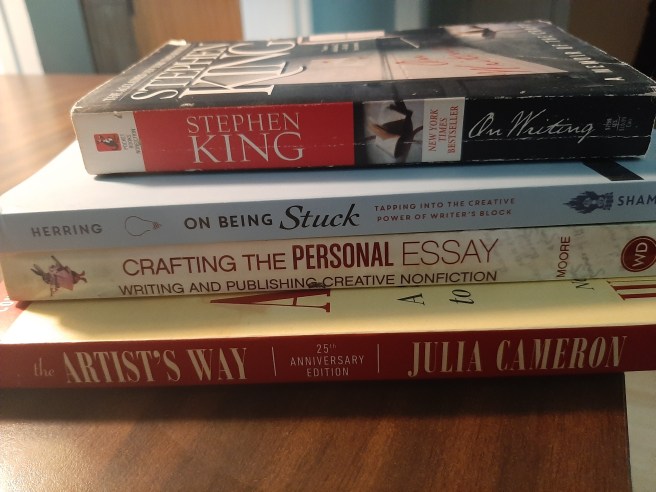
One of the first books I read about the writing life was On Writing by Stephen King, which I highly recommend. The book freed me to start this writing journey and to take chances with my writing. One piece of wisdom he shared was to read and to read widely, not just my chosen genre but others, because reading is the best way to learn about crafting stories. My library is stocked with everything from non-fiction, romance, literary and the classics. There is something to learn from each one.

Lesson 3: Keep learning – and growing.

Much like reading books of different genres, it’s important to keep up with your education about writing. It seemed that the more classes I took and the more articles I read, the more there was to know and understand about writing. I’m still learning and growing, and I expect I will continue for as long as I call myself a writer. I have also learned that the best education was the actual process of writing. The more I experiment with ideas and characters and plot lines, the more I’m learning about the craft of storytelling. You learn best by doing.

Lesson 4:  Fiction writing is very different than writing for the business world.

I’ve enjoyed a successful career as an editor and communications professional. I’ve seen my work published in association publications and earned a byline. But I quickly learned on this journey that writing fiction is a very different animal. Like other newbies, I had to start at the bottom and learn how to craft a story, how to create the plot, develop characters with depth, and how to create suspense that will satisfy readers. It’s been a long, arduous process, and I’m still working on it. That said, writing fiction is more fun.

Lesson 5: Don’t be afraid to experiment with different writing styles.

When I began this journey, I had yet to settle on novel writing. The first classes I took focused on essays of about 1,000 words. The hardest part of this experience was revealing personal details of myself, which made me uncomfortable at times. I wondered if essays were the best avenue for me. I experimented with other styles – short stories, novellas, and eventually worked my way up to a full novel. I’ve dabbled with writing suspense, romance and women’s fiction, because I enjoy reading all those types of books. Experimenting with the different genres and lengths helped me determine that women’s fiction is probably the best outlet for my talents.

Lesson 6: Don’t be afraid to fail.

I once heard those words of advice from someone interviewing me for a job some years ago, and they’ve stuck with me ever since. In writing, it’s easy to fall into the mind trap that I’ve failed just because I never finished a manuscript or an editor rejected your latest piece. But no writing effort is ever a true failure. There’s always something to be salvaged from the manuscript – a piece of dialogue or a character with a unique perspective – that you can adapt to another piece of work. In writing, the only true sign of failure is giving up. Which leads to lesson 7.

Lesson 7: Never give up on your writing dreams.

I’ve had this dream of being a writer since I was in my teens. I’ve had teachers who encouraged me along the way. While I didn’t write a word for a couple of decades while I focused on my career, built a home life and enjoyed a social life, I was still compiling life experience. When I was ready to write again, I had plenty of fodder to draw from. So if you’re grappling with how to fit writing into your life, all I can say is there are ways to make it happen if you want it badly enough.

Lesson 8: Finishing the first draft is easy; it’s the revision process that is most challenging.

With several manuscripts in various stages of completion, I can honestly say that drafting stories is so much fun. I may sketch out the first few chapters, then begin writing. That’s when my imagination takes over. Characters show up that I never envisioned and plots develop in unexpected ways. It’s when I get to revising, shaping it into a marketable piece, that the hard work begins. That’s when I need to arm myself with patience to get through the often slow, painstaking revision process.

Lesson 9: It’s not the destination; it’s the journey. Enjoy the ride.

As I mentioned above, once I begin writing, I allow my creative muse to take over. My hands on the pen or keyboard are only the conduit for the words that come. It’s that part of the process that I enjoy most. I rarely think about what the end goal is. Maybe I’ll get my work published, more likely I won’t. But I relax and enjoy the process all the same. Don’t worry about what the end looks like, just enjoy the ride. Hope these lessons inspire you to keep writing.

On Being Thankful for Being a Writer

affection appreciation decoration design
Photo by Carl Attard on Pexels.com

Hello readers,
The article below was originally posted in 2018, but I wanted to share it again. It never grows old. I am truly grateful for sharing my thoughts and insights with you, and I am grateful to have you as my loyal readers. I’m putting my blog on hiatus at least through January 2022. Between freelance writing assignments and a new part time job that requires a lot of my energy, I find I don’t have as much time for my blog. Plus it will give me a chance to refuel for new content in the coming year. You are always welcome to return and read what I’ve posted previously, and I will try to keep the weekly writing prompt going as well. Enjoy, and have a safe and wonderful holidays. Regina 

As you gather with your families and friends this Thanksgiving holiday, think about what you are most grateful for, especially as it pertains to your writing. Perhaps you are grateful to have a mentor to guide you through difficult lessons, or maybe you are grateful for Daniel Webster for publishing a dictionary.

I was inspired by a post by Laura Stigler, President of the Independent Writers of Chicago, “On Being Thankful We Can Write,” to create my own list of things I’m thankful for.

* A mother who loved to read and instilled that love of reading in me. When you see a parent reading a book, I believe it encourages kids to become readers too.

* Former teachers who recognized my skill from as early as seventh grade and encouraged me to participate in writing contests. Each compliment and kind word of support made me want to keep writing. There’s nothing like a personal cheering section to keep you motivated.

* Former bosses who appreciated the fact that I could find the best words to explain a process or write a letter to an important client. Other times their tough love approach to critiquing my work only strengthened my resolve to improve.

* Friends who have shared a love of books and reading and who don’t mind talking about the latest book that they liked or didn’t like.

* The authors whose work I have enjoyed over the years, from Louisa May Alcott’s “Little Women” to Carolyn Keene’s Nancy Drew mysteries when I was young girl to the early works of romantic suspense authors Mary Higgins Clark and Joy Fielding that I enjoyed in my twenties and thirties to more recent favorites, such as Alice Hoffman and Sue Monk Kidd.

* Libraries and librarians, book stores and book discussion groups, who all keep the love of books and reading alive and makes sure there is always a potential audience for the stories writers write.

* For my blog followers, thank you for reading my posts, sharing comments and showing your support.

Most important, I am grateful that I have the talent (or gift, as some writers suggest) for writing and the desire to use it in personal and professional ways. In fact, I think I enjoy the world of books, reading and writing more now than I ever have.

As you spend Thanksgiving with family and friends, remember it’s a time for bonding over shared experiences and swapping stories. And as you share old family legends and tales for the umpteenth time, don’t forget to create new ones to share next year.

Happy Thanksgiving!

How many drafts do writers need to complete their story?

Photo by Lisa Fotios on Pexels.com

No, that is not a trick question.

That very question was posed recently by author Samantha Hoffman at the Chicago Writers Association blog. It got me thinking about my own writing journey and the multiple manuscripts that lie in my desk drawer. The ones I’ve begun but never quite finished. It should make you think about your own writing process too.

I’m impressed by people who can knock out a 90,000-word novel in three drafts. I figure they’re either doing something right, or their stuff is still needs significant editing and they don’t realize it yet.

As the calendar flips over to November and National Novel Writing Month begins, it’s a question that may run in the back of your mind too. How many drafts do I need before my story is truly polished and ready for publication?

That all depends on who you ask, of course. Hoffman has her own response: “Finish draft one, then keep going until it’s the best it can be, keeping in mind you’re not looking for perfection because perfection is a myth. Make it the best it can be at the time. Or keep going until you’re simply sick of it.”

Tegan Atkins at Writers’ Edit blog writes that the answer depends on the type of writer you are as well as several other factors:

* Genre – Fantasy authors may go through more drafts of their story than someone penning a memoir because they’re creating an entire new world from their imaginations. That creative process can take more time to iron out all the details.

* Writing experience – Newer writers are likely to go through more drafts of their story than someone who has published previously, although that’s not always the case. Kristin Hannah, who has published 24 books in her career, has been known to go through 10 drafts of her novels before they’re published, according to her website. Newbies are still conquering the nuances of fiction writing, such as plot development and character arcs. Because they’re working their way through the creative process, it will likely take them longer for them to be truly finished with their manuscript. In many situations, Sabre says, new writers never finish.

* Hobby vs. career – Career writers are more used to the writing process and have developed their systems for getting the manuscript done. Hobbyists may approach the effort more leisurely and may not be as nit-picky in their self-editing process. For their work to be taken seriously, career writers may hire a professional editor to critique their manuscript while hobbyists may bypass the services of a professional editor. Hobbyists’ goal may be to write a collection of stories for their family while career writers are more serious about getting their writing published to the masses.

In the end, the number of drafts you need depends on you – your goal for the story, how complex the story line is and how much of a planner and perfectionist you are with regards to your writing. I’ve heard that the industry standard is five to seven drafts to get a story in shape. As I finish the second draft of my work-in-progress, I can take comfort in knowing I’m on track.

So as we enter the month of November and National Novel Writing Month, remember that you can’t begin to think about multiple drafts until you get the first one down on paper. The real answer to the question “How many drafts are needed to complete my manuscript?” is this:

However many it takes to make you feel satisfied that you’ve done everything you can to make it the best it can be.

Or at least until you’re sick of looking at it.

10 Ways to Fund Your Creative Writing Projects

Photo by cottonbro on Pexels.com

Managing a writing career is tough. It’s even tougher when you’re worried about money and how you’ll pay bills every month. Not everyone who begins a writing project or business will have the financial wherewithal to support themselves – at least not at first. Most writers, including yours truly, have had to find ways to support themselves while keeping alive their creative passion.

Below are 10 possible avenues that you can pursue to fund your writing career or a specific project. Granted, it might mean less free time to work on your masterpiece, but it will also give you some peace of mind, knowing that you can make ends meet.

  1. Personal savings. If you’ve been in the work force awhile, or were lucky enough to have had a previous career that offered a savings plan, such as a 401K, those funds can act as a cushion for when you’re transitioning to your writing lifestyle. Experts suggest having at least six months of savings in case of emergencies, and with the current economic climate, I’d recommend more than that. Things always cost more than you think. Be sure to budget yourself and refrain from overspending on non-essential items. That will stretch out your savings even further.
  2. Part-time jobs. There is such a thing as scaling back on your schedule to allow more time to do what you love. As with your personal savings, budgeting will be key to success because you won’t have as much of an income to live off of. But at least a part-time gig will give you some cash flow to cover basic expenses while freeing up valuable time in your schedule for writing.
  3. Freelance and contract gigs. Most writers I know choose this option because it gives them the freedom to set their own schedule. On the other hand, you may spend more time marketing yourself and searching for well-paying assignments than actually working on your own writing projects. Many clients don’t pay enough to cover your basic expenses, so you have to pile on lots of small assignments for any reasonable income, which can cut into your personal writing projects. You’re better off with three or four steady gigs that pay well rather than 10 or 12 that pay pennies.
  4. Temporary assignments. Temping can provide some stability and a somewhat steady income whenever you need it. But the days when temp agencies automatically offered assignments is long gone. These days you need to apply for assignments as if they were regular full-time jobs, which means you may be competing for work against other candidates. On the positive side, you can choose to work a few days at a time or longer assignments that last more than a year.  You can opt for part-time or full-time assignments too. Even with its somewhat inconsistent nature, temp work can provide financial support when you need it.
  5. Internships. If you’re starting out with little or no experience, internships can help you gain valuable real-world experience that looks good on your resume and helps you build a portfolio of samples that you can show to future clients and employers. Some internships pay, others do not. But you gain in real-world experience while on the job. Find internships on job sites like Indeed or Internships.com.
  6. Grants and fellowships. If you don’t mind working for the experience and earning living expenses while you do so, then grants and fellowships may be right for you. Grants are an outlay of cash that doesn’t have to be paid back. They may require a certain expertise or writing focus such as writing about social justice issues or being of Native American descent. Read the grant application requirements carefully.

    Fellowships are usually offered through a university and allow you to earn money while you contribute in some way to the writing department. You may be required to teach classes, manage the writing lab and attend workshops in exchange for a stipend. Fellowships give you a chance to work on a specific project and get feedback on your work from fellow students in the program and instructors. Some fellowships can be done at a distance while others require in-person sessions. Study the application carefully to make sure you understand the requirements. To find grants and fellowships near you and to learn more about them, check out Profellow.com.
    .
  7. Home equity. Tapping into your home’s equity can be a practical choice, especially if you’ve lived in your home long enough to earn significant amount of equity. If you’re uncomfortable tapping in your home’s equity, author and artist Cassandra Gaisford suggests another option. Instead, ask the bank for a mortgage holiday of two or three months. Then use the savings to finance a business startup or live off of it while you focus on your writing project.
  8. Crowdfunding. If you have a specific project you’re working on, try setting up a crowd funding page on one of the crowdfunding platforms. Some have categories for publishing and other creative projects. Crowdfunding can help you test your book idea with potential readers and gain financial support from them if they like your idea, especially if you plan to self-publish. Check out Indiegogo, Kickstarter and Unbound.
  9. Sponsorships. Is there a local business you support that could help you in return? Perhaps a coffee house you frequent where you’ve been drafting your novel? Or some other place that knows of your efforts to get published? Ask them to sponsor your work-in-progress. Even a small amount of cash can help you defray publishing expenses. In return, off something that can help them, such as offering a free banner ad for their business on your website or plug their business via social media.
  10. Seek investors. Don’t be shy about asking friends and family members for their financial support, which can help you get the project or business off the ground. Just be sure to put all expectations and financial requirements in writing so all parties know what’s at stake. Be clear about what your needs are and whether and when you’ll be able to pay them back.

Starting a writing project can be both exciting and daunting. There’s no cost to you to begin your writing project, just a steady supply of paper and pens will suffice. But when you’re ready to publish the manuscript, produce a play or design a website, that’s when costs can become apparent. Still, if you plan your time well and stick to a budget, you can make your writing dream a reality.

12 Tips to Survive – and Thrive – National Novel Writing Month (NaNoWriMo)

Logo courtesy of NaNoWriMo

This article is reposted from October 2020.

Have you always wanted to write a novel but wasn’t sure how to start writing it? Maybe you’ve had a story idea swirling inside your brain for the past decade and just never made the time to write it. With November right around the corner, here’s your chance.

National Novel Writing Month is an annual creative writing challenge that takes place every November in which participants aim to write 50,000 words in 30 days toward a completed novel. The event is hosted NaNoWriMo, a nonprofit organization that encourages writing fluency and education for all ages. According to its website, the NaNoWriMo group believes in “the transformational power of creativity.”

Participation in this annual event has escalated from a mere 21 people in 1999 to 306,230 in 2017, according to the Novel Factory. You don’t have to sign up on their website to participate. You can do this in the comfort of your home, which is what I plan to do. While the goal is 50,000 words for the entire month, that is only the goal. If you can only achieve 30,000 words – or 1,000 words a day – that’s fine too. This is a personal challenge to motivate writers to write every day and work toward a larger goal.

Whether this is the first time you take part in the event or the tenth, here are some helpful tips for surviving this 30-day writing challenge. You can find other helpful tips here too.

Photo by Negative Space on Pexels.com

Outline and research your story ahead of time. Since you’ll be spending your November days writing, you’ll need to know what you’ll be writing about. Plan ahead. Plot your outline in advance. The Novel Factory has some awesome free downloadable tools to help you plan your story.

The same goes for research. If you’re writing historical fiction, do your research ahead of time. If you get to a place in your story where you need to do more research, make a note of what you need to do and come back to that place during the revision phase. Don’t get distracted by the desire to look up something or you will never get back to your writing.

Plan your schedule. With a hefty 50,000 word goal, you’ll need to plan how you will achieve it. That’s roughly 1,667 words a day with no days off, or 2,000 words a day with one day off each week. Those daily word goals can be daunting. So it’s important to plan how much you’ll be able to write. It might mean getting up an hour early each day to write, or doing mini sessions throughout the day. Remember, you don’t have to write in one huge chunk of time.

Try something new. Many writers use NaNoWriMo to experiment with their writing. It might be re-writing a current work-in-progress from an alternate point of view, or trying their hand at writing a different genre – science fiction when they normally write psychological suspense. This approach can be applied to your writing schedule too. For example, try getting up an hour earlier in the morning to start writing rather than waiting until the evening when you may be too tired.

Participate in live write-ins. If you’re looking to stay motivated throughout the month, check out a live write-in in your area. If you sign up at the NaNoWriMo website, you’ll be given locations of write-ins near you. With the pandemic, I imagine there might be virtual write-ins too. 

Work with a writing buddy. When you participate with a friend, you can motivate each other and help you through the rough spots. If you’re both competitive, set up your own contest to see who can write more words each day. Try putting a giant thermometer on your wall. As you complete your daily word count, fill in the thermometer with red to see your progress. Then compare your progress with that of your friend’s.

Be prepared to put some activities on the backburner. That may mean less time hanging out on social media, less time watching Netflix or Hulu or shutting off the TV. It could also mean spending less time socializing with your friends and fewer Zoom meetings. You’ll have to decide what you can live without for the short term while you work on your masterpiece.

Silence your inner critic/editor. As you write, turn off the internal critic who tells you that your work isn’t good. It’s easy to get sidetracked by negative thoughts. First drafts usually aren’t very good, so relax and just tell your story without judgment and self-criticism. The whole point of NaNoWriMo is to challenge yourself to write your story. There will always be time for editing later.

Avoid going back to the beginning. If you are ever tempted to read what you’ve already written or rewrite it, don’t. You may decide that your work is terrible and give up. Or you may want to start editing it, which only wastes time. If necessary, read the last page or two that you wrote to remember where you left off, but otherwise, keep a forward focus.

Find your writing rhythm. You may find one week into NaNoWriMo that you’ve hit your stride. That’s great news. If you get to the end of your 2,000 word goal and you still feel motivated to keep going, then by all means, keep writing. That’s one way to build up your word count early on in the challenge so if you feel a bit sluggish by the end of the month, you can slow down without harming your end goal.

Reward yourself when you reach milestones. When you get to the 5,000 word mark, for example, treat yourself to your favorite snack or watch a favorite movie. Set another reward at 10,000 words, 20,000 words and so on. Occasional rewards serve as great motivational tools to keep you writing.

Don’t beat yourself up if you don’t meet your writing goals. So you only wrote 30,000 words. Congratulate yourself for your accomplishment. That’s better than not writing at all. Remember the purpose of this event is to challenge yourself to make quick, steady progress.

Make time for exercise and fresh air. All work and no play can stifle your creativity. Make sure you get outside if the weather is nice, and go for a walk or a bike ride. It’ll help clear the cobwebs from your brain and you can return to your desk with a fresh perspective.

Most important, have fun with NaNoWriMo. Yes, there will be plenty of hard work involved, but stay positive. Look at how much you will learn and grow as a writer. No matter how many words you eventually put down on the page, you can be proud of your accomplishment as you see your story develop.

For more great tips to survive NaNoWriMo, check out this article from Reedsy.

How to produce webinars: A guide for writers and bloggers

Photo by samer daboul on Pexels.com

Webinars have been around for several decades, but it’s only seen a huge resurgence in popularity since the start of the pandemic in 2020. According to On24 Webinar Benchmark Report 2021, webinars grew by 162% and attendance grew to more than 60 million people last year.

Needless to say there are ample opportunities for writers, bloggers and marketers to join the ranks of webinar producers. What makes it more enticing is the fact that most webinar platforms are fairly affordable and easy to use.

Granted, producing webinars isn’t for everyone. It takes someone with tremendous courage to sit in front of their computer screen and talk into a microphone. But for those who have the will and the curiosity to engage with their audience, show their expertise and/or promote a book or product, well, then this might be one more tool to add to your marketing mix.

How do you get started producing webinars? What do you need to know? Most important, what key decisions do you need to make? Because you’re not going to be able to jump right in without thinking about certain aspects. Such as:

What is your goal for the webinar program? Why do you want to produce your own webinars? Is it to promote a new book or a product? Discuss a unique idea or process you’ve created? Or build an audience for your blog or business?

Who is your audience? Consider who your audience is, their age, location, level of expertise, etc. Are they seniors interested in compiling family histories for a memoir, or a group of aspiring bloggers? Knowing who your audience is and what their interests are can help you determine the topics you’ll present.

Also consider the size of your audience. Are you content doing a webinar for 20 people, or would you like to push the limit to several hundred? Keep in mind that roughly 45-50% of those who register for your live events may actually show up.

What topics will you present? This will depend on your goals and your audience’s educational interests. Consider what your audience wants to know. What types of questions do they typically ask? When you see the same questions being asked over and over again, that’s usually a clue what might be a meaningful topic.

How many webinars do you plan to do? Don’t count on doing just one. Think ongoing series. Think long term. Perhaps you can do a series geared toward a targeted audience, such unpublished nonfiction authors, or a series about a subtopic, like a focus on common side hustles. Also consider how you can repurpose the webinar content into other formats, such as podcast episodes or a white paper.

Where do you want to host the webinars? Do you want to show it exclusively on Zoom, or do you want to broaden your reach by showing it live across different channels, such as YouTube, Facebook Live and LinkedIn? Some webinar platforms will allow you to share simultaneously across multiple platforms and record it for later posting.

Research the different platforms. Sites like GotoWebinar, Webinar Jam and Webinar Ninja are a few that are easy to use, according to The Book Designer blog. Or check out sites like Webinarsoftware.org  or Capterra for reviews of the best software platforms.

If you’re looking for free and cheap options, there’s always Zoom. With a personal Zoom account, you can reach up to 100 participants for up to 40 minutes. Or try Google Meet.

What you decide to use will depend on how you plan to host the event and what your specific marketing needs are. For example, you might want to capture leads from the registrants. Experts suggest making sure you have systems in place for following up on leads. Otherwise, doing webinars would be pointless.

Make sure to promote the events. Email campaigns and social media may be the best ways to invite people to attend your webinar. Individual host sites will also promote the events to their platform users. Check the webinar platform to see if they send out calendar reminders or if you have to set them up yourself.

Do a run-through of your program. It is recommended to do several run-throughs of your presentation. That can help you find the rough spots so you can fix them before you go live. It also helps to arrive early to test the equipment and sound. You don’t want to have to deal with technical issues at the start of the event.

Allow time at the end for a Q&A. By the end of the session, which should not run longer than 60 minutes, people will likely have questions. Allow time to answer them, say 10 minutes or so. Be sure to thank people for participating, and be sure to include ways to contact you or follow you on social media.

Don’t use a script. Know your subject inside and out. If necessary, create an agenda for the program that you can follow and a few note cards to remind you of your key points. But go as unscripted as possible, otherwise your presentation will seem stiff and formal. You want to appear natural and conversational.

Measure your results. After the webinar has been posted, follow up with registrants. Send them a survey to get feedback on the program, and ask for suggestions for future events. Also check to see what your conversion rate is. How many people who had signed up for the event actually listened in? You might want to offer a free download for replay later, especially for those who could not attend at the last minute.

For more tips about doing webinars, check out this article on Smart Blogger.

While producing webinars isn’t for everyone, once you have systems and strategy in place, they can help showcase your expertise in a unique and engaging way.

How to Instill a Love of Creative Writing in Kids

Photo by Ksenia Chernaya on Pexels.com

I’m not a parent or a teacher, but I care about kids and education, especially when it comes to writing and reading – the pillars of lifelong learning. If you can read and write well – and more important, if you enjoy doing them – I believe you’re set for life.

Even if you don’t have kids of your own, you can still encourage a love of the written word in others. For starters, become an avid reader and writer yourself. When other people see you engrossed in a book, it might make them curious about what you’re reading and why. Even better, that book in your hand can make an interesting conversation starter.

But there are a surprising number of ways you can instill a love of reading and writing in kids – and kids at heart. Below are a few of them.

1. Fill your life with stories. Read to your child every day. If they’re in middle school, for example, choose a title that is slightly above their reading ability or take turns reading pages from a book of their choice. While waiting in the doctor’s office or in the park, tell your child stories. When they hear stories from you, they’ll learn to be storytellers too.

2. Subscribe to kids’ writing magazines. When that magazine arrives in your mailbox every month, it provides numerous stories that kids can look forward to enjoying, whether they read it themselves or you read it to them. It can entice them to become better writers too, says book editor John Fox. Some accept submissions from children. Imagine seeing your kid’s work published in a national magazine. There are numerous publications to choose from depending on the age group. Try Highlights, which I grew up reading. Or Humpty Dumpty, Jack and Jill or Cricket media.

3. Take your children to see plays. When they see a play, they’re seeing storytelling in action. It makes the characters come alive, and the live action can interest your child in creating their own stories and put on plays at home.

4. Bring them to the library or bookstore. When they see you browsing the shelves, you’re setting an example. This is another way to demonstrate your own love of reading. When you shop for yourself, be to shop for them. Browse the children’s section and see what they gravitate toward. The library or bookstore may also have readings from children’s authors too.

5. Set up a designated space for writing. I encourage writers to have their own writing space separate from other areas of the home. People just need that space to create without disruptions from the TV or other family members. If possible, set up a designated space for writing for your child. It could be a corner of their bedroom, a corner of your home office, or the attic. The important thing is that it’s quiet so they can think, dream and play with words.

6. Provide a variety of writing tools when they write. The Measured Mom suggests providing a variety of writing tools that kids can play with to engage their imagination. Try crayons, markers, chalk, colored pencils, ink pens or even charcoal or paint. As they write a story, they can draw pictures or write the words down in different colors. It can make a perceived boring activity like writing seem more fun.

7. Have them start their own journal. Either purchase one or better yet, create their own journal. Get some lined paper, staple one side to create a booklet. Add a blank cover sheet that they can design and color to their heart’s content. Creating their own journal instills a pride of ownership.

8. Use props to inspire writing. Sadie Phillips at Teachwire.net suggests providing props to inspire a child’s writing habit. It could be a shoe, a photograph, or a piece of jewelry you wear. Ask them to write a story about that prop. Where did it come from? Does it have a voice to speak, or ears to hear? It’s one more technique to prompt your child’s creativity.

9. Provide writing prompts. Just as writing prompts can be helpful in jump starting ideas for adult writers, kids can benefit from writing prompts too. Try a fill in the blank, like “Sandy the Clown baked a cake for the school bake sale. What kind of cake did she bake?” Prompts can stir their imagination in different ways.

10, Visit the neighborhood. Phillips suggests taking your child on short trips in the area. It could be the post office, the park, a candy shop, or a pet supply store. When you get home, suggest they write about their trip. What did they see, hear, smell, and touch that they remember. Writing it all down commits the visit to their memory.

11. Engage with authors and storytellers.
Phillips suggests connecting with favorite authors and storytellers via social media. Follow their Facebook pages, or those of your child’s favorite authors. Ask them questions about their writing, and share their answers with your child. Create a dialogue so you and your child can learn about the writing process.

12. Praise children’s writing the right way. Editor John Fox suggests giving your kids encouragement when they finish writing a story. When they show you their work, don’t be vague and give general feedback. Don’t just tell them, “I like your story.” That’s not enough to encourage them to keep writing. Instead, you might say, “I like the way you described the red car,” or “What happened to the evil witch at the end?” When you ask questions about the child’s story, they become curious about the story too.

As you glance over these suggestions, you’ll notice that they’re not quite different than those for adult writers. After all, it’s just as important for adult writers to engage with other storytellers, use writing prompts, visit unusual places, set up a designated writing space and write with different writing tools. To truly inspire the children in our lives to be creative writers, we need to share our best creative habits.

Rediscovering the Local Library for Lifelong Learning

books-4

It’s been a busy week and I haven’t had time to write a fresh post. So in light of my focus on education and training, here’s a repost of a story I did back in 2016. Enjoy. I’ll be back next week with a fresh new post and a new writing prompt. As always, thanks for reading. RL

Have you visited your local library lately? When was the last time you did?

It had been a long time since I visited a library, but a few weeks ago I decided to go to the one in my neighborhood to escape the heat. Once inside the glass doors, I was quickly reminded how much I loved the hushed atmosphere. People spoke is low voices amidst the rustling of newspapers and the hum of laptops as people worked. I love that low-level noise, just enough to know that other people are around, but not loud enough to interfere with a person’s studying or reading activity.

As I wander the aisles, I imagine myself getting smarter just being there in the presence of so many books. I feel like my body absorbs their creative energy, the ideas, the discussions, and the desire for learning. No wonder there is a hushed reverence as soon as I walk through its doors. Knowledge is at work among those who visit.

In an era where Google rules the Internet, local public libraries have been a mainstay in many communities. New research by Pew Research Center finds that libraries still play a vital role in our local communities. Where would we be without these places of learning? Like print books, they’re not going away any time soon. And that’s great news for self-described lifelong learners like me.

But like many people, I tend to forget that the library is there, ready to welcome readers and students of all ages and education levels to browse its shelves and delve into subjects to expand their understanding of the world. Most Americans believe that libraries do a good job of providing a safe place to hang out, according to a study by the Pew Research Center. Consider these additional statistics:

* 77 percent say public libraries provide them with the resources they need.

* 58 percent of respondents believe libraries help open up educational opportunities for people of all ages.

* 49 percent think libraries contribute “a lot” to their communities in terms of helping spark creativity among young people.

* 47 percent said libraries provide a trusted place for people to learn about new technologies.

We may occasionally forget that the library exists, but thank goodness they still play a vital role in our communities. While most people may prefer to use the Internet initially for learning new things, it’s nice to know that libraries are still a viable place for reading, research and studying.

How Writers Can Create Their Own Self-Study Course

Photo courtesy of The Regal Writer.

This is part of my series on training and education for writers.

Several months ago, I wrote about MFA programs and how to tell if they’re right for you. This week, I’m focusing on self-study options.

An MFA is not for everyone, and some experts believe that it does not guarantee that you’ll be published. What it does do is provide an intensive training opportunity to learn everything about the writing craft. You’ve got a built-in network of fellow writers who are going through the same program and you learn from each other.

Self-study offers its own advantages. Students have more control over the content and direction of their training. You control what you study, when and for how long.

Whatever your preference – MFA or self-study – will depend on your studying style.

If you prefer to immerse yourself in a structured program where you learn everything about the craft of writing in a concentrated period of time, then an MFA is probably best for you.

However, if you don’t have the money or the time to concentrate on an intensive program like an MFA, self-study is the better option. In this route, you can pick up knowledge as you go along by taking workshops and classes on your own time and on your own schedule and reading every blog, magazine article and book about some aspect of writing.

For those who like aspects of both, you might appreciate the hybrid model. The hybrid is a do-it-yourself program that combines the independent learning of self-study with the intensive focus of the MFA. Whereas the typical self-study route can be haphazard in its approach, the hybrid is focused on mastering areas of competence in a given time, usually about a year.

Author James Scott Bell calls these areas of competence “critical success factors” or CSFs. Bell has identified seven CSFs that he recommends writers should master: plot, structure, characters, scene, dialogue, voice and meaning (theme).

(Personally, I would add three more to this list: pacing, setting and revision. However, in a hybrid self-learning model, I suppose you can create as many or as few CSFs as you want. It’s your self-study program.)

Bell’s idea is based on the work and writings of Benjamin Franklin. In his autobiography, Franklin described his desire to master 13 moral virtues. He tracked his progress using a chart with the seven days of the week. He focused on improving one moral virtue each week. Writers, Bell says, can use a similar checklist for each of the CSFs he described.  

By concentrating on one CSF over seven weeks, Bell believes you will have covered all seven within one year with three weeks to spare. Of course, if you add others to your list, that time frame will be extended. Count on spending eight weeks – comparable to a college semester – learning about one CSF. By the end of one year or longer, you will have completed your own self-study program.

Bell also offers suggested readings for each CSF. You can find them on his website. Other helpful resources can be found on DIY MFA and Writer’s Digest magazine.

Of course, there are no formal hybrid educational models offered for writers. So you may have to create your own self-study course, says writing coach Ann Kroeker. “In this way, any of us can identify an area to improve in and find instruction pertaining to that exact skill or technique.”

Kroeker adds that this self-study approach isn’t limited to fiction writers, but to poets, essayists and non-fiction writers too.

It’s an interesting concept, and one I wished I had come upon when I embarked on my writing career. No matter how far along you are in your development, you can always test out Bell’s self-study concept.

Self-study tips

If you decide to go the self-study route to learn more about the writing craft, here are a few tips to get the most out of the experience, according to the Learning Agency Lab.

  1. Set goals for yourself. Decide what you want to learn and the measurements for mastering them.
  2. Schedule your self-study time. Self-study takes time, perhaps not as much as a formal MFA, but time that you could be doing other things. With busy schedules, you’ll need to set aside time each day for self-study, whether that’s reading, taking a class or completing writing exercises.
  3. Make sure you complete the exercises you learn in workshops or in the texts you read. This gives you valuable practice on technique. You may not use them all after the training ends, but some will likely stick.
  4. Don’t be shy about marking up articles and books. You’ll likely find key points you want to remember, so grab that marker and highlight it. Better yet, use a post-it note to mark the page so you can refer to it easily later.
  5. Celebrate milestones. For each CSF you master after seven or eight weeks, do something special to mark the occasion.
  6. Apply your skills. As you gain experience with each CSF, look for ways to expand your skills. For example, once you’ve mastered character, begin to apply those lessons to your own writing. Look at your own characters to see if they measure up.
  7. Find a study buddy. (This is my personal suggestion, btw.) Self-study, especially about writing, means you’re working on your own. By finding a study buddy, you can go through the self-study process together.
  8. Reflect on your learning. When you’ve completed each phase, reflect on what you’ve learned. Is there more you need to learn?

Writers are lifelong learners. No matter where you are in your development as a writer, there are always resources to help you improve your craft.

The Best Fall Education Conferences for Creative Writers, Freelancers and Content Marketers

Photo by Daria Shevtsova on Pexels.com

With the turn of the calendar to September and cooler weather approaching, my thoughts often shift to school at this time of year. Continuous learning is the name of the game for many professional writers and content marketers. Even attending one conference or training course each year can help you stay abreast of the latest trends in your industry.

As part of this education theme, over the next few weeks, I’ll be covering different ways to boost your education. Last week, I shared tips about how to build your vocabulary. In case you missed it, you can find it here.

This week, I’m sharing a list of upcoming conferences taking place this fall. The early bird registration may have passed on some of these events, but all the same, they may be worth exploring.

Some events are higher in costs than others, mainly because they’re in-person. But even if you walk away from the event learning one or two new things you didn’t know before, it’s worth your while. And because we’re still experiencing a pandemic, most of these conferences are being presented virtually, which means you can attend a conference in New York City without leaving your home in Texas.

So whether you want to publish a novel, begin a freelance writing business, or learn about content marketing, there are plenty of conferences to get you going.

Editor’s note: Most conferences occur in the spring and summer, so look for an updated schedule in January.

Writers’ Conferences

Genre-LA Creative Writers Conference
Los Angeles
October 1-3, 2021   (hybrid/virtual/in-person event)

Women Writing the West Conference
October 7-9, 2021 (virtual)

2021 Online Agent Fest
Midwest Writers Workshop
October 13-16, 2021

Gotham Writers Conference (virtual)
October 15-17, 2021

Writer’s Digest Novel Writing Conference
Pasadena, California
October 21-24, 2021  (in person)

National Black Book Festival
October 21-23, 2021 (virtual)

F. Scott Fitzgerald Literary Festival
October 30, 2021 (virtual)

Genre Writing Conferences

Fall in Love New England Where Authors Meet Readers
Boxborough, Massachusetts
October 15-16, 2021

World Fantasy Convention 2021
Montreal, Quebec Canada
November 4-7, 2021

New England Crime Bake Mystery Conference
Boston, MA (in person)
November 12-14, 2021

DisCon World Science Fiction Convention
Washington, DC (in person)
December 15-19, 2021

Freelance Writing

Society of American Travel Writers Convention
Milwaukee, Wisconsin
October 3-7, 2021

FreeCon, Freelancers Conference (virtual) (Registration opens Sept. 15)
November 1-2, 2021

Medical Writing and Communications Conference
American Medical Writers Association
October 27-30, 2021 (virtual)

Content Marketing

Content Marketing World Conference & Expo
Cleveland, Ohio and virtual
September 28 – October 1, 2021

CopyCon Copywriting Conference
International Festival of Copywriting
October 8, 2021 (virtual)

Marketing Profs B2B Forum (virtual)
October 13-14, 2021LavaCon Content Strategy Conference
October 24-27, 2021 (virtual)

Digital Summit Chicago (in person)
Chicago, Illinois
October 27-28, 2021

As writers, freelancers and content professionals, these events not only keep you updated on the latest trends and practices in your niche, it gives you a chance to network with your peers, perhaps meet agents and editors who can help your career.

What about you? Do you attend conferences or workshops in your area? What is your favorite part about attending them?.