
Why I Don’t Read Book Reviews

Photo by freestocks.org on Pexels.com

I’ve never understood the appeal of book reviews, or any kind of review for that matter. Why does it matter if someone else believes a published book, movie or TV series isn’t worth reading or seeing?

Everybody has their own interests and tastes. So if one person says they don’t like a certain author or movie, it doesn’t mean that others may not like it. I prefer to make my own judgment rather than someone else tell me what I should or shouldn’t like.

Over the years, I’ve learned to rely more on my personal tastes and sensibilities to decide what books I will buy. I’ve taken enough writing classes to understand what makes a good story. I know what kinds of stories appeal to me, what makes my pulse race and what makes my imagination soar. I have enough literary interests to keep my book shelves well stocked—all the time.

If you already know what types of books you enjoy, reading book reviews seems like a waste of time. What background can they give you that you can’t already find on the inside flap or back cover?

Instead of relying on book reviews, there are other things you can do to determine what to read next.

  • Read the online description. Many book review sites provide a detailed summary of the story. Some also give readers a chance to “Look Inside” to read the first few pages. That might be enough to pique someone’s interest before they buy.

  • Read the book summary on the back cover or inside flap. If shopping in person, skim the summary on the back cover or inside flap. Much like the online review site, there’s enough detail in the book description to help me decide if I want to purchase the book.  

  • Read the first page (or two or three). If the summary piqued my interest, I’ll move on to reading the first couple of pages. This gives me a sense of what the writing is like. Does the story grab me from the start? Is the protagonist likeable or can I relate to them? Is the story written in first person or third person? (I like first person because it helps me get inside the protagonist’s head.)

  • Get referrals from other avid readers. The best book recommendations I’ve received over the years were from friends who gushed about a novel they had read. If someone likes a book enough to mention it to me, I take it as a sign that I need to add it to my TBR list. This approach extends to strangers you meet too. I once received a book recommendation from a fellow passenger on an airplane. She saw me reading a novel by Lisa Genova, tapped me on the shoulder and suggested I read another one of Genova’s novels. It turned out to be an excellent recommendation too!

  • Avoid reading professional critiques or reader reviews, if at all possible. I avoid reading user reviews and professional critiques because I don’t want to be influenced by outside opinions. Like I mentioned, I trust my own literary judgment, and I’m familiar enough with different authors and genres to know what I already like. Reading reader reviews or professional critiques won’t add anything to my foundation of knowledge.

    One word of warning: Beware of review bombs. While negative reviews happen, review bombs can be insidious, and sadly, they’re happening with greater frequency.

    Review bombing is an internet phenomenon in which large numbers of people flood a review site with negative reviews of a book (or movie, TV show or computer game) for the purpose of hurting sales or viewership. The reviews often have nothing to do with the book. Instead, reviewers express disapproval of the author or publisher based on some political or cultural issue. In some cases, the onslaught of negative reviews has resulted in the author delaying publication, which is sad considering how much time they’ve spent on creating their art.

    You can read more about review bombing at The Conversation and at Slate.

    That’s another reason why I avoid reading reviews. You never know who is writing those reviews, or why. Relying too much on book reviews can take the joy out of discovering new books and new authors for yourself.
Seven Reasons It’s Okay to DNF a Book

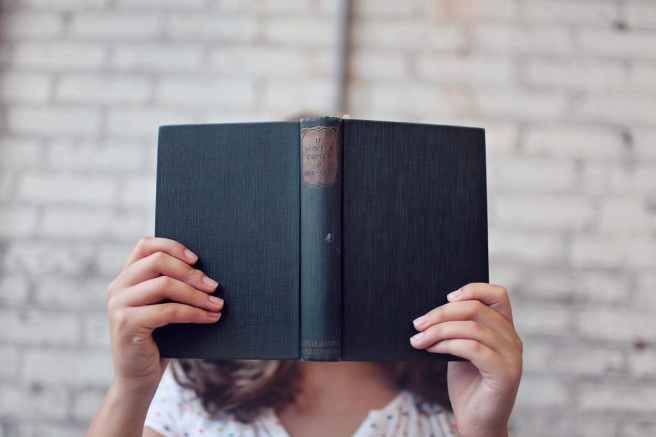
Photo by Leah Kelley on Pexels.com

Growing up, I was taught never to quit anything, whether it’s a meal, a work project, a game, or a movie I was watching. That same mindset has carried over into book reading. For years, I pushed through books that I wanted to give up on, except for that little voice inside my head that warned me not to. The voice that told me to “Finish what you start.”

 But lately, I’ve been rethinking that “rule,” especially with regard to reading books. There are simply too many intriguing book titles on the market these days, and so many genres and authors to explore. There aren’t enough hours in the day to read everything I can get my hands on, and my TBR shelf is bulging with volumes. Why would I want to stick with a book that wasn’t holding my interest when there are so many other possibilities?

Then there’s another reason for the rethink. I’m not a very patient person, and I don’t like wasting my time on a story that just isn’t working for me. Time is precious, and I want to make the most of the time I have reading those books that do interest me.

In case you haven’t figured it out by now, DNF means Did Not Finish. You know it may be time to quit a book when the story in your hands drags like a snail on hot pavement. Or you’re constantly eyeing your TBR shelf, wondering what to read next.

A book needs to grab my attention from the opening pages, and keep it going to the very end. Otherwise, I toss it aside, usually for another time. I like to give most books at least three attempts before giving up on it.

So why do I DNF a book? There are a number of reasons.

  • The plot moves too slowly. This is usually the most common reason I quit a book. The premise is fine, but the story doesn’t quite live up to it or, worse, the plot moves too slowly. This is when I start eyeing my TBR shelf for alternatives. Most of the time I can gut it out. Other times, I’ve set the book aside, read another book, then pick up the first one again to finish. If I still can’t get into the story, then it’s time to add it to the DNF pile.

  • The language is too complex or difficult to understand. It’s a rare occurrence that I come across a story with complex language. It could be a detailed explanation of a boat’s features or sailing technique, or it could be the regional dialect of the characters. That’s when I can get stuck on trying to understand the language and can’t enjoy the story. That’s when I get frustrated and have to set the book aside.  

  • Life gets too busy. We’ve all been there. Sometimes, you start reading a book believing you have time to finish it, but then life happens. Your car needs to be repaired or your in-laws have decided to visit. You have the best of intentions when you start reading, but there’s too much going on in your world to give the book the attention it probably deserves.

  • Scenes made me feel uncomfortable. As I get older, I find I have less tolerance for stories with violence, offensive language and graphic sex. They no longer hold any interest for me. Granted some scenes like this can’t be avoided, but all the same, that’s another reason I might DNF a book.

  • The timing wasn’t right. You might start a book, read a chapter and can’t quite get into it. The story may be fine, but maybe the timing isn’t quite right. For example, when the pandemic hit a few years ago and everyone was hunkering down at home, I had started reading Love in the Time of Cholera. After reading 20 pages, I set it aside because the story was too heavy and somber for the times, and seemed too much like what we were all living through at the time. I realized I needed to read something more lighthearted, so I set the book aside. It’s still on my shelf, however, waiting for the right time to jump into it.

  • The author made their point a long time ago. This is especially true when reading memoir or non-fiction. The author may share their premise in the introduction, then again in the first chapter. When it seems that the same point was repeated in following chapters, I’ve put the book away. The author didn’t seem to have anything new to say. If they’ve made their point in chapter one, why would I want to read the next 20 chapters?

  • Too much backstory and not enough action. Some books I’ve read have been so bogged down in details and lacked enough action to keep me reading. This is especially true for some science fiction stories that rely on world building. The author can get so caught up in describing the alternate world that the actual plot gets lost. That’s when I’m eager to quit the alternate universe and return to reality, back to the safety of my TBR shelf..

I generally give a book three tries, usually up to page 50. I figure 50 pages is enough to determine if the story is keeping my interest. Then if it still does not grab me, I give up on it. That’s when I make plans to find a new home for the book or donate it to the nearest Little Free Library..

With so many other literary choices available, there’s no need to feel guilty about DNFing a book. You can always come back to it later or pass it along to someone who might appreciate it more. Have you ever DNF a book? If so, why? What traits does it have to force you to give up on it?

Take a Literary Tour of Chicago

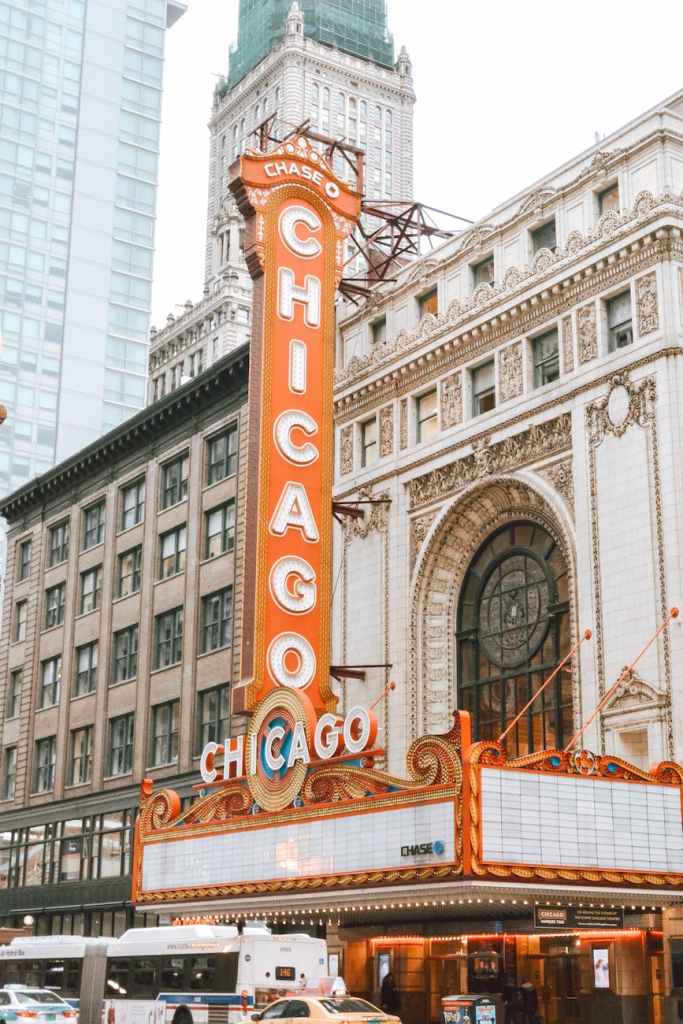
Photo by Amy Burry on Pexels.com

A few weeks ago, I wrote about ways to enjoy a book-themed vacation. Ideas ranged from a reading staycation with lots of beach reads to reading in a different location in your hometown. Another idea was literary tourism, either in your own town or in another location well-known for its literary history. Think London, Paris or San Francisco.

I’m fortunate to have grown up in Chicago, which has its own literary history. It’s the birthplace of numerous famous authors, such as Ray Bradbury (in suburban Waukegan), Sandra Cisneros, Gwendolyn Brooks, Richard Wright and mystery writer Sara Paretsky, among others. It’s also provided the backdrop for numerous books, films and TV shows.. With so much literary history, there’s much to see and do.

Here’s a quick rundown of what you can experience if you decide to make Chicago a literary vacation destination.

Museums, libraries and landmarks:

American Writers Museum – One of my favorite places to hang out, the American Writers Museum provides exhibits, workshops and author discussions, all dedicated to the art and craft of writing.

Newberry Library – Not only home to the world’s largest three-day book sale, but a great place to go to learn about genealogy. It’s also the backdrop for numerous scenes from Clark and Division, Naomi Hirahara’s historical fiction/mystery novel set in the late 1940s.  

Museum of Science and Industry. If you’re a fan of Erik Larsen’s Devil in the White City, check out the MSI, which is the only remaining structure left from the 1893 World’s Fair

Poetry Foundation – For those interested in poetry, this modern building is a beautiful setting that can inspire any poetic soul. With more than 30,000 volumes of poetry, the foundation’s library is the only one in the Midwest dedicated to poetry.

The Sulzer Library – Housed in a historic building on the northwest side of Chicago. Compare that to the modern setting of the main Harold Washington Library. Take a tour of local libraries, some housed in beautiful old buildings, like the one I frequented when I was a child.

Monandock building – Located in the South Loop among many other older office buildings, the Monandock building is where Sara Paretsky’s private investigator V.I. Warshawsky had her office. In fact, if you’re a fan of Paretsky’s work, you can visit all the locales mentioned in her books, courtesy of Chicago Bike Adventures.  

The Understudy Coffee and Books – When you’re ready to take a break from all the sightseeing, visit the Understudy, a theater-themed coffee shop and bookstore. Located in Andersonville on the north side of the city, you can browse books about set design, acting technique and plays.

Author homes in the city:

Interested in finding out where some Chicago authors were born and raised? Check out this map from the Chicago Literary Hall of Fame, which pinpoints key literary locations in and around the city. You can find out amazing details about some of the most prominent authors from our fine city, including:

L. Frank Baum, author of The Wizard of Oz, who grew up in a house at 1667 N. Humboldt Blvd. The home has received a Chicago Tribute Marker of Distinction. (Number 8 on the map)

Sandra Cisneros’ house, similar to the one that she described in The House on Mango Street. (No. 17)

Saul Bellow’s childhood home on Augusta Boulevard, which was given the honorary status of “Saul Bellow Way. (No. 11)

Nelson Algren fountain and his favorite saloon (No. 4 and 5)

Richard Wright’s home where he lived with his extended family from 1929 to 1932 (No. 33)

Outside Chicago:

Earnest Hemingway Birthplace and Museum – Hemingway may have made his home in the Florida Keys, but did you know he was born and spent his early life in Oak Park, outside of Chicago? Visit the old Queen Anne home where he was born, and check out the numerous artifacts from his childhood in the museum.
 
Ray Bradbury – Sadly the Ray Bradbury Experience Museum in his birthplace of Waukegan, closed in May 2023. However, you can still find memorabilia of his life and career at the Waukegan Public Library, such as his typewriter and a statue of him outside. His personal collection of books and artifacts will be on display at the Waukegan History Museum at the Carnegie, which is under construction as of this writing.

Carl Sandburg Historic Association Site in Galesburg – Born in Galesburg, Illinois is 1878, Sandburg was a Pulitzer Prize winning author of poetry and history. He also wrote biographies, fiction and newspaper articles, and was a lecturer and folk singer. With the help of the association’s driving tour brochure, you can visit all of the Sandburg historic sites in Galesburg. 

I’m sure there are plenty more literary themed sites to visit throughout the state that I have not mentioned. Wherever you go, keep it educational, literary and fun.