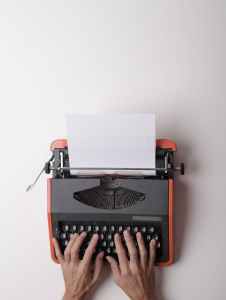
14 Holiday Gift Ideas for Writers (and Yourself)

Photo by rawpixel.com on Pexels.com

The following article was originally published in 2018. It has been revised with new gift suggestions for 2020.

Happy holidays, and ‘tis the season for gift giving. I’m taking a break from my usual posts about writing to indulge in a little brainstorming for holiday gifts for the writers in your life. Or even for yourself.   

Here are a few ideas to get you started on your gift list.

1. Books about writing. Naturally, books will fall on any writer’s wish list, especially books about writing, reading or creativity. What writer wouldn’t want to add to their library? There are plenty of books available about becoming a better writer, improving your habits, overcoming writer’s block and more. Check out some of these book suggestions. There are more suggestions here and here.

2. Writer’s tools of the trade. Every writer needs a current dictionary, thesaurus, AP Stylebook and/or University of Chicago Manual of Style to complete their library. Add The Elements of Style and a basic grammar book, and your library is complete. Even if you have a dictionary on your shelf, they are updated fairly often, so it might be beneficial to get a more current version.

3. Caffeine containers (also known as coffee mugs). No writer should be without their daily supply of caffeine. Check out this collection of humorous coffee mugs from Café Press that are sure to put a smile on your face.

4. A really, really nice pen set. Many writers I know write their stories longhand, so they need plenty of writing instruments to get the job done. Consider getting them (or yourself) a supply of really nice pens (within budgetary reasons, of course), or a stock of their favorite pen, if they have one. Working with a stylish pen can put you in a more serious frame of mind when you write.

5. Professional development. Instead of a physical item, consider the gift of experience or education. Continuous learning is important to most writers to stay on top of publishing trends. Writers are constantly searching for ways to improve their own craft and become better writers. Consider a gift of a Writer’s Digest subscription or an online course through Mediabistro.

6. Writing exercises and word puzzles. Exercise your brain and jumpstart your creativity with a magnetic word game. Each magnet contains a word, and with 100 or so word magnets, you can create some pretty imaginative poems. Put them on your refrigerator, and let the family create their own mini-short stories as they grab the milk.

Another option is the Writer’s Toolbox, described as “more exercises and games to inspire ‘the write side of the brain.’  Get the family involved with a Once Upon a Time storytelling card game. One person begins telling a story using the elements described on their cards, guiding the plot toward their Ending Card. But other players can interrupt the Storyteller with their own elements and the right to take over as the new Storyteller.

7. Jigsaw puzzles. Speaking of puzzles, jigsaws are ever popular. Not only does it give you a needed beak from writing, it’s a way to relax and unwind. If you’re stuck in a writing rut or you’re facing a tough plotting dilemma, taking time out to work on a jigsaw puzzle may be just the distraction you need to get your mind off of your writing problems.

8. A book of writing prompts
. Occasionally writers need help generating story ideas. To get the creative juices flowing, they might appreciate a book of writing prompts. Before you know it, the writer in your life (or even the writer in you) will be off and running on their next story.

9. Do Not Disturb signs. Some years ago, I once saw a sign that read “Do Not Disturb. Genius at Work.” I laughed at the time, but I think it succinctly describes the sentiment most writers feel when they are at work. Writers are creative geniuses who need privacy and quiet, uninterrupted time to plot, daydream, and craft their stories. Let people know that once that sign is on the door, it’s time to get down to work.

10. Music for your ears. Some writers enjoy a little background music while they work, so a few new tunes might put you in the mood to be creative. Even if you don’t listen to music while you work, music can calm you when you’re not working or make you feel like dancing when you’ve met a deadline.

11. Membership dues to a professional organization. If you have ever wanted to join a writers’ association, now might be an opportune time to give yourself a gift of membership. Some organizations charge only $25 or $30 annual fee to join, and if you’re lucky they may pro-rate it or give a holiday discount.

12. An inspirational poster. Looking for motivation? A framed print or poster with an inspirational quote can help you stay positive during those long stretches of writing time.

13. An ergonomic desk chair. With all the sitting writers do, it helps to have a good chair to sit on so you don’t suffer any back pain. How old is the chair you currently have and how often do you use it? Does it have enough cushion to support you? Does it allow you to plant your feet firmly on the floor? There are plenty of ergonomic chairs on the market that are designed to align your spine properly. They might cost a little more, but your backside will thank you.

14. Desk lamp. If you plan to spring for a new chair, why not add some new lighting to brighten your work space? Sometimes the right lamp can improve the lighting of your desk space while improving your mood.

At this time of year, it’s easy to become more focused on finding gifts for the people in your life. But don’t be shy about giving something to yourself. Self-care is important too, especially after the year we’ve all gone through. Remember to treat yourself well. The more you invest in yourself, the more you improve your writing life.

Happy shopping and happy holidays.
20 Best-Selling Authors Share Their Best Advice about Writing

Photo by Marta Wave on Pexels.com

In the U.S., we celebrate Thanksgiving this week, a time to give thanks to the many blessings we enjoy in our lives. At this time of year, I am always grateful for the writing talent I’ve been given, as well as the abundance of story ideas I receive and the courage to share my writing experience with others. I’m also grateful for my readers. Thank you for reading my blog and commenting on posts; it keeps me grounded and motivated to keep writing.

During this Thanksgiving week, I thought I’d share a compilation of the best advice from the world’s most celebrated published authors. Let these words of wisdom serve as motivation for your own work, whether it be a novel, memoir or short story collection.

It’s comforting to know that other writers have gone through the trials and triumphs of a writing journey, like I’m going through now. It’s also worth remembering that though we might each live/work in isolation, we are all part of one interconnected community of writers.

Be grateful for your writing talents, dedicate yourself to learning your craft, and share your stories with pride. Happy Thanksgiving wherever you are celebrating this year. Enjoy!

———————————————————————————————————————————-

“Writing a book is a horrible, exhausting struggle, like a long bout with some painful illness. One would never undertake such a thing if one were not driven on by some demon whom one can neither resist nor understand.”   — George Orwell

“The only way you can write the truth is to assume that what you set down will never be read. Not by any other person, and not even by yourself at some later date. Otherwise, you begin excusing yourself. You must see the writing as emerging like a long scroll of ink from the index finger of our right hand; you must see your left hand erasing it.”   — Margaret Atwood

“Show up, show up, show up, and after a while, the muse shows up too.”  — Isabel Allende

“If you don’t have time to read, you don’t have the time – or the tools – to write.”  — Stephen King

“Nothing will happen unless you produce at least one page per day.”  — John Grisham

“You take people, you put them on a journey, you give them peril, and you find out who they really are.”  — Joss Whedon

“A short story must have a single mood, and every sentence must build towards it.”  — Edgar Allen Poe

“Every sentence must do one of two things: reveal character or advance the action.”  — Kurt Vonnegut

“When you’re stuck and sure you’ve written absolute garbage, force yourself to finish and then decide to fix or scrap it – or you will never know if you can.”  — Jodi Picoult

“Read, read, read. Read everything – trash, classics, good and bad, and see how they do it. Just like a carpenter who works as an apprentice and studies the master. Read! You’ll absorb it. Then write. If it’s good, you’ll find out. If it’s not, throw it out the window.”  — William Faulkner

“Run your own race. Don’t worry about how fast someone else writes, how much another author makes, how many followers another author has. Write what makes you excited, and the enthusiasm will come through on the page.”  — Christina Lauren

“I think success requires a lot of hours learning the craft through books and workshops from talented teachers, to the point where you have enough confidence and instinct to sit down and say, “I’m now going to perform.” Where you can apply it to your past projects and drafts and understand what didn’t work, as well as what did.”  Robert Dugoni, author of My Sister’s Grave

“It’s freeing to actually write the thing that you want to write, because everybody when they start out tries to be the authors that they loved. I was able to explore all of these different voices, but every author has to come up with their own individual voice. It takes a while.”  — Jenny Lawson, author of Let’s Pretend This Never Happened

“Finish the book and don’t let the success of others make you feel less.”  — Beverly Jenkins, romance novelist

“It takes a lot of time and effort to get good enough at writing to make books that are fun to read, and you just need to accept that. I don’t believe that there’s any such thing as a deep natural gift at writing. Even writers who are famous for just one book did a lot of writing before they wrote that book.” — Andy Weir, author of The Martian

“You have to believe in this career, you have to believe in yourself, and you have to move with great determination forward, because it doesn’t matter whether you’re trying to sell your first book or your 50th book, or you’re trying to redefine your career, or you’re trying to reinvent what it is you do, it’s always going to be difficult.”  — Kristin Hannah, author of The Nightingale

“Everyone loves talking about how busy they are. But there are 24 hours in a day. Make a half-hour or hour in a day, or an hour in a week, for writing. Just make sure you have one designated time—however long it is, given your constraints—to focus on writing.” — Roxane Gay, author of The Bad Feminist

“It’s very hard to write without having things to write about. That doesn’t mean necessarily going out as ‘a writer’. But having experiences that interest you in the world are a good first step to having material.” — Michael Lewis, author of Moneyball

“I am a huge believer in revision. The more times you write it, the more alive it becomes. For me, very often the first, second and third times it’s kind of dead material, but the more you go over it, the more you rewrite it, the more it comes to life.” — Alice Hoffman, author of Practical Magic and The Rules of Magic

“The best advice I can give is to close the door to your writing room and not worry about anyone’s feelings until you’ve finished a draft. You don’t know what you’ll discover through the writing unless you write it—and considering people’s feelings before you’ve even written is a form of self-censorship.” — Dani Shapiro, memoirist

Stuck in the Middle of Your Novel? Try These Methods to Get Moving Again

Photo by Andrea Piacquadio on Pexels.com

I started writing my first novel nearly three years ago. After rewriting the opening chapter at least a dozen times and writing a draft of most of the chapters that followed, I’ve landed somewhere in the middle not sure where to go next. So I’ve set the novel aside to work on other projects while I figure out if I should rework the novel or give up on it.

Apparently, I’m not alone. Many aspiring authors experience this sticking point. It can feel like trudging through a muddy forest, feet sinking into the ground.

The middle is the largest section of your story, and where most of the action takes place. It’s where your protagonist begins their journey, faces trouble, and meets adventure. Life gets complicated and the antagonist displays all their power. The middle is where you present challenge after challenge, each getting more difficult and raising the stakes higher for the protagonist. Without this series of setbacks, false starts and obstacles, readers may lose interest in your story.

Literary agent Donald Maass describes this middle section as place to play, a literary playground of sorts. “The middle isn’t quicksand; it’s a sandbox. It’s a place to play, the place for surprises. It is the most fun part of the novel because it’s the least burdened with the heavy requirements and rules of set up and resolution,” writes Maass, author of Writing the Breakout Novel.

If you’ve been slogging through your latest novel-in-progress, and the middle part has stymied your progress, it’s time to step back and review the work you’ve done so far. It may be that several scenes are out of proper sequence and need to be moved around. Or maybe you have provided either too much backstory which slows down the pace, or you have provided too little backstory that readers can’t understand what’s happening on the page.

The good news is there are ways to fix these issues.

First of all, it’s important to relax and keep writing, writes Heather Webb on the Writer Unboxed blog. This is especially important if you are working on a first draft. First drafts are usually messy anyway. Don’t beat yourself up because there is plenty of time to revise it later. Many of the issues related to tension, pacing and stronger narratives can be worked out in the editing phase, Webb adds.

What other issues might you be having with your middle section? Check out the solutions below.

1. Have you done enough research? Most of your story’s research should be done before you start writing. So you might be stuck because you didn’t research adequately, says Webb. You can’t move forward until you know X, Y and Z. Maybe there isn’t enough backstory for your main character, or about a prior event, or maybe there’s a key prop needed to carry a scene. You might need to go back to research the time and place of your story, especially if it’s set in the past.

2. Do you know your protagonist inside and out? The middle section provides the challenges that will test the protagonist’s strengths and abilities, as well as their fears and weaknesses. It’s important to understand what those strengths, weaknesses, desires and special skills are. Understand the flaw or wound that keeps them stuck in a rut and makes them feel they don’t belong in their current environment. Webb suggests journaling in your character’s voice to get to know their motivations and personality inside and out.

3. Have you introduced sub-plots? Focusing only on the main plot can be boring for readers because it’s one note. By introducing subplots, you complicate the protagonist’s story, weave in complex situations and reveal the protagonist’s secondary concerns and goals. “Every scene is a mini-story where the hero struggles,” writes Zara Altair at ProWriting Aid blog. This increases the tension readers need to stay engaged with your story.

4. Have you allowed enough space on the page for your supporting characters? The middle section is the prime opportunity for your readers to get to know these supporting – and sometimes antagonistic – characters. These are the characters who will accompany your protagonist on their journey – or hinder their progress, says Gabriela Pereira of DIY MFA. A good example is Harry Potter and the Sorcerer’s Stone, where readers learn more about Harry’s classmates and teachers at when he first arrives at Hogwarts.

5. Have you tried the rule of three to move the story along?  Pay attention to stories, books, TV shows and films and you’ll notice the rule of three appears somewhere in the middle of their story lines–three ex-boyfriends, for example, who show up to court your female hero. Or as in A Christmas Carol, three ghosts of the past, present and future who appear to Scrooge during the night.  The number three is common, says Pereira, because “it gives us a feeling of completeness. Two is not enough to establish a pattern, and four feels like too many. Three is just the right balance. It sets up a pattern but allows room for a twist in the third repetition.”

Remember, getting stuck in the middle sections happens to most writers. It’s part of the process of creating. It just means you have to step back, re-evaluate your plot structure, and alter where necessary. As Webb writes, “Be patient with yourself and with your story.”

Novel Beginnings and Endings: A Primer on Prologues and Epilogues

Image courtesy of Pexels

If you’re working on a novel or memoir, you’ve probably considered how to begin and end your work. Should you open with a prologue? If so, what should the prologue contain? Should I include an epilogue too?

There is dissent among agents and editors about whether prologues are necessary. Some suggest that your first chapter should do the work that your prologue does. If your first chapter is written well (see my previous post), a prologue isn’t necessary, they claim. Other publishing experts feel prologues can work if they are done well.

Prologues are commonly used for genres such as historical fiction, thrillers, horror, and sci-fi and fantasy. They’re ideal for world building and providing background on a character or situation that may not fit into the main text.

If you’re considering starting your story with a prologue, here are a few things to keep in mind:

Prologues

  • Keep it short and simple. Prologues are shorter than chapters, which can run as long as 12 to 15 pages or more. Most prologues are only a few pages.  
  • Provide a glimpse of the past or future. If there’s a part of the backstory that’s integral to the main plot line that readers need to know in advance, a prologue might be the best place for that backstory. It’s better than flipping back and forth between the present and that other time or place, writes Shaelyn Bishop of Reedsy.
  • Use it for world building. Readers get a sense of what this new world looks and feels like, adds Bishop. You might be able to divulge some details about scene or present a different place and time that grounds readers
  • Reboot a series. If there’s a long gap between books in a series, the prologue can re-introduce characters, scenes and story lines from previous books.
  • Use an alternate point of view. For example, for a mystery or thriller, the prologue might be written in first person from the point of view of a person who is murdered, while the rest of the story is written from the perspective of the person investigating the crime.

These are general guidelines, of course. A good example of a well-written prologue is Caught by Harlan Coben, which follows several of the guidelines above. It’s shorter than the main chapters in the book, it introduces a character who becomes the focus of the story. It provides background to this character’s life story, which later becomes a contentious issue with the protagonist. The reader is left to decide which is true about this character – the one introduced in the prologue or the one the protagonist thinks he is.

Further, the prologue provides relevant and supplemental details to the story line. In this action-packed thriller, the prologue works because readers get caught up in the action. It also does a good job of tying into the conclusion, which answers all the questions readers need to know.

Ultimately, the best judge of whether to include a prologue is you. You know your story best. Let your story determine if you need a prologue or not.

Epilogues

There is less debate about epilogues, which come at the end of your story. The Write Practice describes the epilogue as “the moment when the reader learns the fate of the characters or when the hook to a sequel is revealed.” The epilogue generally has a different tone, point of view and time period compared to previous chapters. It is often set some time in the future, such as the epilogue for the Harry Potter series which placed the characters far into the future where they are seeing their own kids off to Hogwarts. Like the prologue, the epilogue is shorter than the chapters, usually only a few pages.

According to Kirkus Reviews, the epilogue can serve any number of purposes:

  • Illustrate a changed world. The epilogue can show how the world changed as a result of the conflict and action that took place in earlier chapters. If the prologue or early chapters showed dire circumstances, show how those circumstances changed and perhaps how the protagonist’s life changed.
  • Provide closure. Whatever remaining threads need to be tied up can be done in the epilogue. It can answer questions readers might have, such as “What happened to so-and-so?”
  • Return to real life after a difficult journey. The epilogue can serve as a breather after an action-filled story. It’s where characters recover from injuries, reunite with loved ones and resolve outstanding problems.
  • Create a cliffhanger. If the book is part of a series, the epilogue can provide a cliffhanger for the next book in the series, including a hint at a possible future conflict. In this case, the epilogue will whet the reader’s appetite for the rest of the story.

When contemplating whether to use an epilogue to conclude your novel, ask yourself “What do readers need to know to feel satisfied about the outcome?”

When used judiciously, prologues and epilogues can work like bookends, giving your novel a structural boost that can be carried throughout your novel 

Novel Beginnings: Eight Tips for Writing a More Compelling Opening Chapter

Photo by Andrea Piacquadio on Pexels.com

If you have ever read The Nightingale by Kristin Hannah, you probably remember this opening line:

“If I have learned anything in this long life of mine, it is this: In love, we find out who we want to be; in war, we find out who we are.”

I’d be hard pressed to find any opening more poignant than this one. From the very start, readers are taken on an emotional journey that doesn’t end until the final sentence.

Writers are tasked with the challenge to create a similar experience with their readers. The start of any  novel should accomplish several things: create the tone of the story, provide the point of view, reveal character, and show tension and conflict, among other things. Certainly, the opening line from The Nightingale accomplishes most of these objectives. Does your story do the same?

Why is the opening so critical? Because if it doesn’t grab the reader’s interest and keep it for the first few pages, the reader will likely close the book and set it aside, never getting to the end of it. Ask any published author, editor or agent what makes a strong opening, and you’ll hear a number of answers, which are summarized below. And these suggestions don’t just pertain to fiction, but to short stories, memoir and non-fiction works too. Without a compelling start, readers will dismiss your effort.

If you are participating in NaNoWriMo (National Novel Writing Month), it might be helpful to keep the following suggestions in mind as you write the opening of your novel.

1. Skip the prologue. There is ongoing debate about the merits of a prologue. Many editors and agents feel they aren’t necessary. I tend to agree with them. I’ve rarely read a prologue that made a difference in my understanding of the plot. The one exception is Caught by Harlan Coben, which provided sufficient background on one of the main characters to make you second guess the outcome. But if you plan your story well and write the opening pages right, there shouldn’t be a need for a prologue.

2. Create a protagonist that readers will care about. The opening is your opportunity to reveal your protagonist’s character. Is he/she rebellious, angry, ambitious or curious? In the above opening from The Nightingale, the character speaking is introspective and perhaps has gained wisdom from life experience. It makes me care about who she is and what else she (and it is a she, btw) might have to say.

3. Ground your reader in the story’s setting. According to the Write Practice blog, let readers see where the story takes place. Establish early on what the setting is for the story – the time period, the location, the season of the year, etc. When the reader feels grounded in the setting, they feel mentally prepared to experience the events as the characters do.

4. Create conflict and tension. Identify what the inciting incident is – that starting point to your story that changes the status quo. Where is the conflict? Is that conflict with another character, with a situation or within themselves? That conflict is needed to create tension, which helps draw readers in and keep them reading to see how the conflict is resolved.  

5. Don’t frontload with dialogue or action. According to Fuse Literary, too much action or dialogue can confuse readers. Sure, you want to start with some sort of action, but an opening chapter heavy on action and dialogue and not enough narrative or backstory can be confusing to readers who may need a point of reference to understand what is happening on the page. You need some action, of course, but balance it with some narrative so you don’t lose readers’ interest.

6. Don’t overload the opening with backstory either. According to recent Reedsy webinar, Crafting a Novel Opening, writers should focus on what the reader needs to know at that moment. There’s plenty of time to reveal backstory and world building as the story progresses, says Shaelin Bishop who led the discussion. Weave in backstory throughout the length of the manuscript, and allow details to breathe between scenes. This approach will help with the pacing too. If readers are overloaded with details up front, they may feel overwhelmed.

7. Hook the reader with an interesting twist. Start where the story gets interesting, which is usually at the point where there’s a change in the status quo. For example, the protagonist gets a letter with good news or bad news, a new person enters the protagonist’s life, or they get into an accident that alters the course of their life.  “Show what is interesting rather than focusing on the mundane. It’s okay to show less of the status quo than you think you need to,” says Shaelin Bishop with Reedsy. This approach avoids overloading your opening chapter with too many details that can bore your reader.

8. Every scene should serve several purposes. For example, one scene can establish the tone of the story, reveal something about the character and hint at future conflict. This sounds complex, but it’s necessary to keep the story moving forward and keep readers interested. Don’t waste your first sentence, or any sentence for that matter. Write every scene with a purpose in mind. If it doesn’t serve  purpose, and if a character doesn’t serve a purpose, cut them out.

To get into the habit of writing stronger openings, try these two exercises.

Exercise 1: Take 10 minutes and create as many opening sentences as you can think of. It could be for a current work in progress or any other story. Experiment with different perspectives. Here are a couple of examples of intriguing openings that made me keep reading:

“You would think it would be impossible to find anything new in the world, creatures no man has ever seen before, one-of-a-kind oddities in which nature has taken a backseat to the coursing pulse of the fantastical and the marvelous. I can tell you with certainty that such things exists ….”
The Museum of Extraordinary Things, Alice Hoffman

“My name is Serena Frome (rhymes with plume) and almost forty years ago I was sent on a secret mission for the British Security Service. I didn’t return safely. Within eighteen months of joining, I was sacked, having disgraced myself and ruined my lover, though he certainly had a hand in his own undoing.”
Sweet Tooth, Ian McEwan

Exercise 2: Select five novels from your collection that you enjoyed reading. Go back and read the first page from each one. What made you turn the page? Why did it grab your interest? Did it reveal anything about the setting, tone or character? Did it create tension and conflict? What can you learn from these first pages that you can adapt to your own work?

Hope you find these tips and exercises helpful.